13 Best AR-15 Suppressors of 2026 (5.56 Silencers, Range-Tested)
A quality 5.56 can cuts the bark off an AR and makes range days civilized. After testing dozens across direct-thread and quick-detach mounts, here are the suppressors worth the wait.
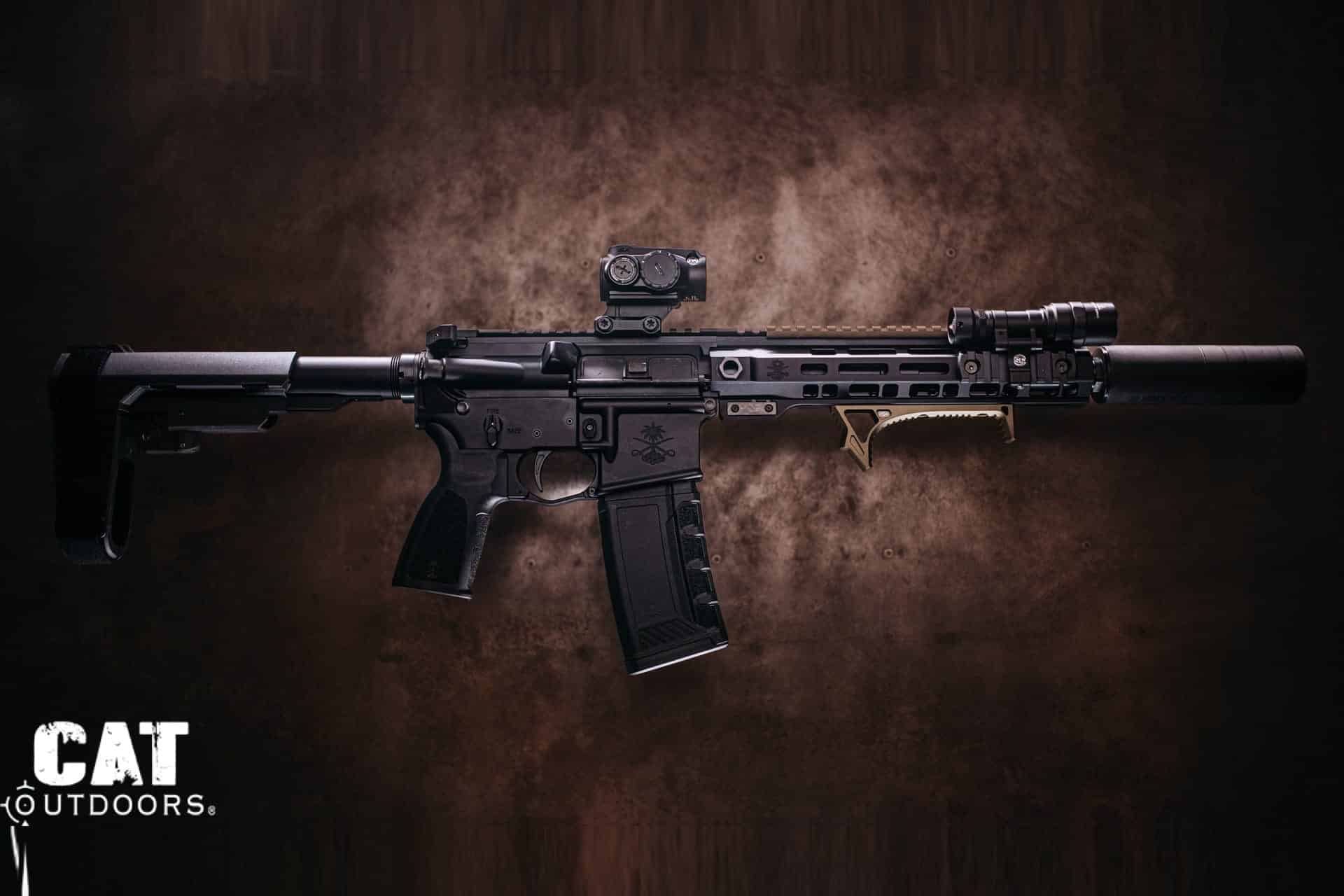
Somewhere in the last twelve months, suppressor ownership stopped being a hazing ritual. The $200 federal tax stamp dropped to zero in January, approvals collapsed from most of a year to about a week, and every manufacturer with a metal printer answered by shipping the best cans we have ever run. Great news for your ears. Bad news for your wallet and self-control.
Our test guns run from 16-inch rifles to 10.3-inch gas monsters that hate everyone standing near them. We’ve run ten of the thirteen picks below on them ourselves. The other three we haven’t shot yet, but each is either the benchmark its class gets measured against or the can everyone keeps asking about this year, so they’re marked as researched picks with the case made in each section. Here’s what’s worth your now untaxed money.
TL;DR
In a hurry: the SureFire SOCOM RC2 is still the can every other can gets measured against, the most combat-proven 5.56 suppressor in production. The Otter Creek Polonium K is the most suppressor per dollar on this list by a comfortable margin. And if quiet is the entire mission, the PTR Vent 3 holds the highest at-ear suppression score Pew Science has ever published on an MK18. Everything else is nuance. Good nuance. Keep reading.

Best AR-15 Suppressors
Our top picks. Jump straight to a product review or open the full retailer list.
Every Pick, Head to Head
| Suppressor | Best for | Pew SR (ear) | Weight | Length | Mount | Full-auto | Price |
|---|---|---|---|---|---|---|---|
| SureFire SOCOM RC2 | Best overall | 35.7 | 17.3 oz | ~6″ | SureFire QD | Yes | $950-$1,169 |
| SureFire SOCOM RC3 | The upgrade pick | – | – | ~6.4″ | SureFire QD | Yes | $1,499-$1,709 |
| Banish 30 V2 | Multi-caliber | – | 12.4 / 9.5 oz | 8.2″ / 6.4″ | Direct + QD | Bursts | $999 |
| Anechoic AnechoX 30 | Editor’s pick | – | – | – | HUB | Yes | $1,053 |
| PTR Vent 3 | Quietest | 42.6 | 11.8 oz | 7.8″ | Direct / HUB | Yes (120rd) | $1,154+ |
| HUXWRX Flow 556k | Short barrels | 33.1 | 12.2 oz | 5.5″ | QD | Yes | $1,054+ |
| Aero Precision LAHAR-30 | Best value modular | – | 15.4 / 12.9 oz | – | HUB | Yes | $472-$630 |
| Otter Creek Polonium K | Best budget | 37.7 | 11.9 oz | 4.8″ | HUB | Yes | $522-$540 |
| CGS Sci-Six | Full-auto abuse | – | ~17 oz | ~6.5″ | CGS taper | Yes | $898-$1,050 |
| Q Trash Panda | .300 BLK/5.56 crossover | – | 11.8 oz | 6.9″ | Taper-lock | Yes | $849-$1,050 |
| Banish 223 | Lightweight 5.56 | – | 11.4 oz | 7″ | Direct thread | Limited | $621-$849 |
| Banish Speed K | Ultra-compact | – | – | 4″ | HUB | Yes | $999 / $1,099 Ti |
| SilencerCo Velos LBP 556 | Low-backpressure value | 31.9 | – | – | HUB | Yes | $799 |
Pew SR is the Pew Science Suppression Rating at the shooter’s ear on the MK18 (higher is quieter); a dash means Pew Science hasn’t published a result for that can on this host. Weights and lengths come from our scales or the maker’s spec. Prices are street, checked July 2026, and they move.
How We Tested
Ten of these thirteen cans have lived on our rifles: range days, carbine drills, loaner guns, and the occasional mag dump that taught us which ones hold zero when they’re glowing. Our judgments on tone and gas-to-the-face come from shooting. For laboratory numbers we defer to Pew Science‘s at-ear testing and we cite it by name where we use it, because at-ear measurement is the number your ears live with.
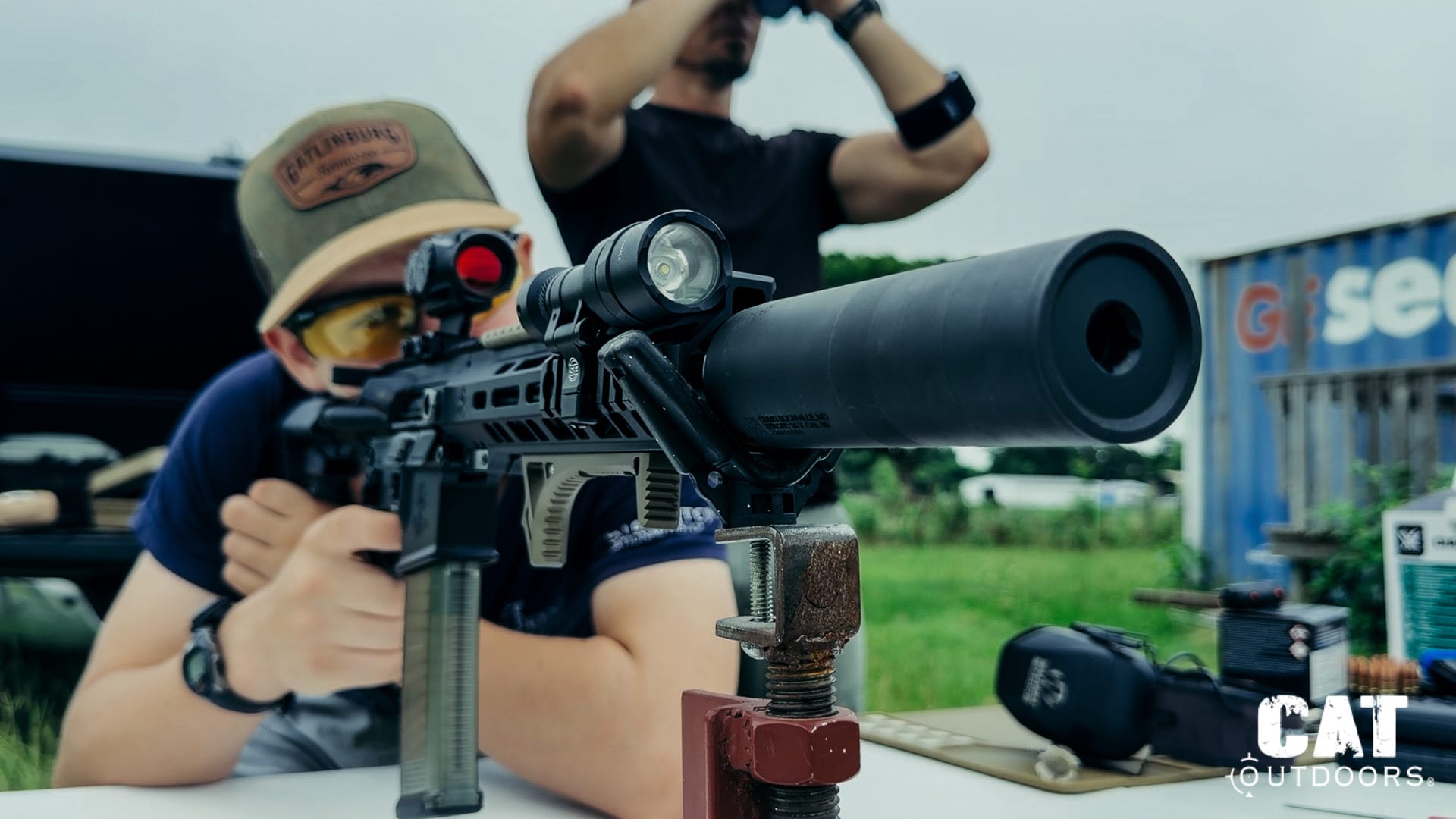
Three picks are labeled RESEARCHED. We haven’t run those yet. Each is here for a reason its section spells out: a benchmark its class measures against, or the can we get asked about more than any other. Full reviews will follow as we get them on hand.
We earn a commission if you buy through our links, at no cost to you. Prices are dated because undated prices are lies with good posture.
The Poll
Where does your carry gun ride?
This week's holster coverage has us curious. Tap your pick.
The Poll · Live Standings
Your vote is in.
0 votes so far. Winner announced in next week’s issue.
Want to Know the Final Results?
We tally the votes and name the winner in next week’s email. Sign up and the final standings come straight to your inbox, and you’ll be first to hear when the review goes live.
By signing up you agree to our Terms of Service and Privacy Policy. No spam, and we never sell your address. Unsubscribe anytime.
That didn’t go through. Check the address and try again.
Done. Watch your inbox.
You’re on the list. The final standings land in next week’s issue, and if your pick loses, take it up with the other voters.
Suppressors in 2026: The $200 Toll Booth Is Gone
Quick word before the list, because the rules changed twice and most guides haven’t noticed. As of January 1, 2026, the $200 federal transfer tax on suppressors is gone. Zeroed out. The government no longer charges you two hundred dollars for the privilege of hearing protection. Then a federal judge in Texas ruled that NFA registration can’t stand on a tax that no longer exists, and since that injunction took effect on August 12, covered buyers skip the Form 4 and the registry entirely. You still pass the background check. Covered is the catch: the ruling isn’t nationwide. It reaches the plaintiffs, their members and their customers, so joining a group like Gun Owners of America or buying from SilencerCo, B&T or Palmetto State Armory gets you in. Living in one of the 15 plaintiff states may not; those states have asked the judge to clarify that it covers every transfer inside their borders, and the government disagrees.
The waits collapsed too. Covered buyers have been walking out of gun shops on a plain Form 4473 and a background check. How fast that shows up at your counter depends on your dealer. Everyone else still files a Form 4. What used to be a six-to-ten-month character-building exercise now clears in days for most individual eForm 4 filings; NSSF puts the median at six days. If a long approval was the thing keeping you on the fence, the fence is gone. State law didn’t move, though: a can that’s banned in your state is still banned. Michigan’s suppressor law, for one, leans on federal paperwork for its exemption, so know your state’s law before you buy.
Two practical upshots. First, the math changed for every can below, especially the budget picks. Second, demand went through the roof, so when a pick shows in stock at a good price, that price has a shelf life.
1. BEST OVERALL AR-15 SUPPRESSOR: SureFire SOCOM RC2
RANGE-TESTED: We’ve tested this can hands-on.
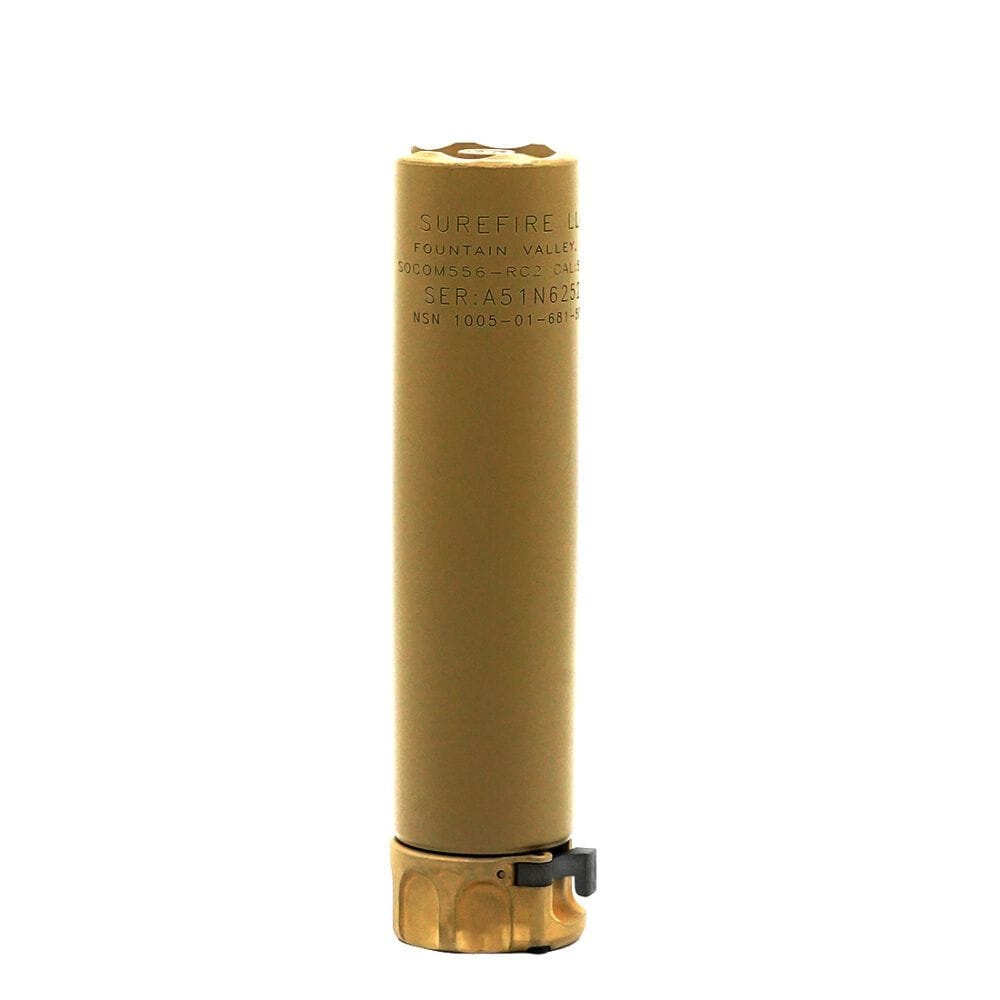
The Short Version
- Weight / length: 17.3 oz, about 6 inches
- Build: Inconel and stainless, laser-welded stack
- Mount: SureFire Fast-Attach (proprietary)
- Sound: mid-130s dB at the muzzle with full-power 5.56
- Full-auto: yes, the SOCOM-trials kind of yes
- Street price: $950-$1,169 as of July 2026, down hard from the $1,400+ this can commanded for years
We have watched an RC2 come off an Mk18 glowing orange, cool in the dirt, and go right back on without a hiccup or a shifted zero. That is the whole review, really. Everything else is footnotes.
Born out of USSOCOM’s suppressor trials and still riding shotgun on M4A1s and Mk18s around the globe, the RC2 isn’t the lightest, shortest, or quietest option on the rack. It is the suppressor that has gone to war more than any other 5.56 can in production. SureFire laser-welds the Inconel-and-stainless stack so nothing rattles loose after a few mag dumps, and the Fast-Attach mount locks up with a quick twist and stays locked: no tools, no carbon-frozen threads, no wandering point of impact.
The backpressure is better than its reputation. On a 16-inch rifle the gas signature feels comparable to many newer low-pressure cans, and on 10.3-inch setups you can keep the charging handle out of your teeth without a gas-buster. The sound is honest. Mid-130s dB at the muzzle is audibly louder than the flow-through crowd, but firmly hearing-safe with ear pro, and the tone is a deep thump instead of a crack.
And here’s the 2026 plot twist: the price finally broke. Cans that spent years north of $1,400 are sitting at $950 to $1,169 street right now. The benchmark went on sale.
Flaws but Not Dealbreakers
At just over 17 ounces and six inches, the RC2 adds more weight and length than the titanium options, and you’re locked into SureFire’s muzzle devices for mounting. Great if you like the Warcomp. Less great if you want to mix brands. And if absolute Hollywood quiet is the goal, other cans on this list shave off a few more decibels, though none of them can point to the same service record.
Bottom line: If your AR is a range toy, a lighter or quieter can might serve you better. If you want the suppressor vetted by the guys who roll out of helicopters for a living, and you’d rather buy once and trust it forever, the RC2 is still the benchmark.
SureFire SOCOM RC2
We have watched an RC2 come off an Mk18 glowing orange, cool in the dirt, and go right back on without a hiccup.
2. THE UPGRADE PICK: SureFire SOCOM RC3
RESEARCHED PICK: We haven’t tested this one yet, but we know its place in the industry, and it deserves a spot in the lineup. We’ll post a full review if we get one on hand.
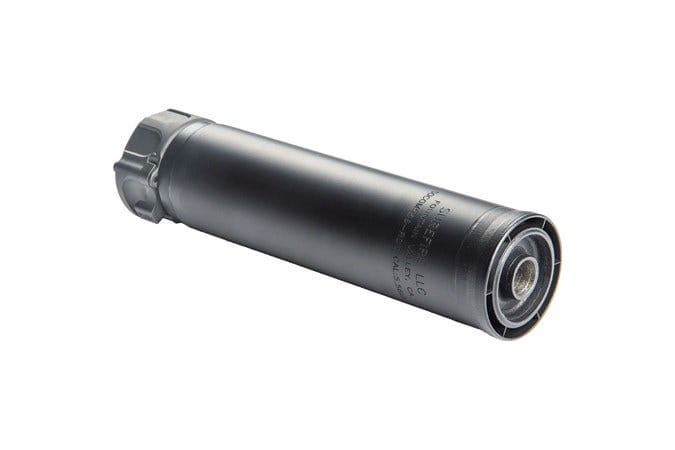
The Short Version
- The claim: roughly 60 percent less gas blowback than the RC2 (SureFire’s number, not ours yet)
- Mount: the same SOCOM Fast-Attach devices you already own
- Build: hybrid machined and additively manufactured internals
- Street price: $1,499-$1,709 as of July 2026
Everything the RC2 does, the RC3 claims to do with most of the gas gone. SureFire’s pitch is about 60 percent less blowback, which on paper means less filth in your face, a happier bolt carrier group, and short-barrel manners the RC2 never quite had.
The detail RC2 owners should clock first: it runs the same SOCOM fast-attach mounts. Your muzzle devices carry over. No new parts, no re-timing, just a swap at the muzzle. That is a rare courtesy in this industry and worth saying out loud.
Flaws but Not Dealbreakers
The price is the flaw. At $1,499 to $1,709 street it costs a used RC2 more than the RC2, and until we run one ourselves we can’t tell you whether the gas claim survives a 10.3-inch barrel. It’s the next can headed for our bench, and this section gets the full treatment when it does.
Bottom line: Already own an RC2? The upgrade is a want, not a need. Buying your first SureFire with room in the budget? This is the one we’d be looking at hardest.
SureFire SOCOM RC3
Everything the RC2 does, with most of the gas gone. That's the claim. We intend to check it.
3. BEST MULTI-CALIBER SUPPRESSOR: Banish 30 V2
RANGE-TESTED: We’ve tested this can hands-on.
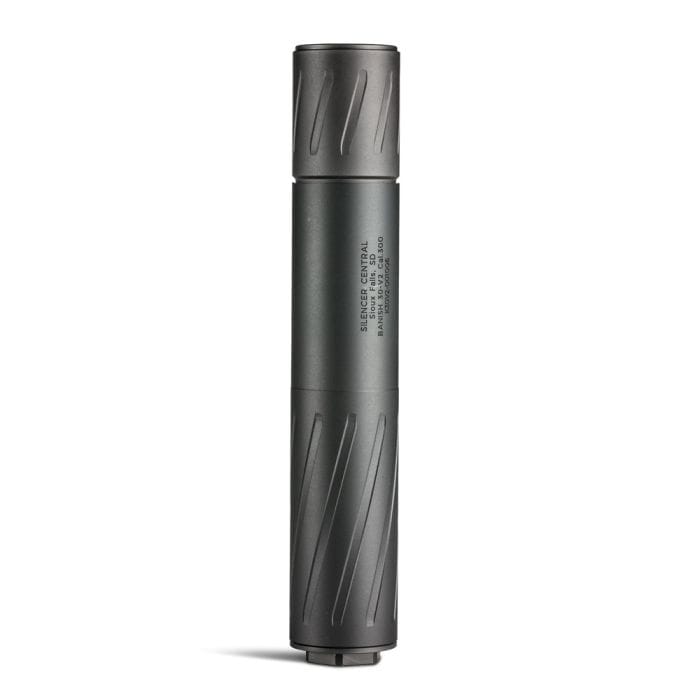
The Short Version
- Calibers: 5.56 through .300 Win Mag class, one can for the whole safe
- Configurations: 8.17 in. / 11 baffles, or 6.4 in. / 8 baffles
- Weight: 12.4 oz full-length, 9.5 oz short
- Measured: about 34.5 dB reduction on a .308 in testing
- Serviceable: fully, baffle stack slides out for cleaning
- Price: $999 MSRP, unchanged from the V1
Open your safe. Count the calibers. If the answer is more than one, this is the section for you, because the Banish 30 V2 is the one-can-does-all play: 5.56, .223, .300 BLK, 6.5 Grendel, and bigger bores on other platforms, all through the same titanium tube.
It’s modular in a way that gets used, not just advertised. Run all eleven baffles at 8.17 inches when sound reduction is the priority, or drop to the 6.4-inch, 9.5-ounce short config for a home-defense carbine. Switching is as simple as removing a threaded segment. It’s absurdly light for a .30 can. Most of this class runs 15 to 20 ounces; the V2 is 12.4 at full length. And it comes apart. After a day of dirty subsonic .300 BLK you can slide the stack out and scrub it, which sealed-can owners will envy exactly once per cleaning cycle, forever.
Flaws but Not Dealbreakers
It’s still a traditional baffle design, so an AR pushes a bit more gas at you than a true flow-through can. An adjustable gas block or heavier buffer fixes that fast. It handles bursts and rapid fire, but as a lightweight can it isn’t built for prolonged cyclic abuse. And a dedicated 5.56-only can will squeak out a few extra decibels, at the cost of the V2’s whole superpower.
Bottom line: If your safe holds more than one caliber, and whose doesn’t, the Banish 30 V2 is the smartest single purchase you can bolt onto an AR-15 in 2026. One free tax stamp, one lifetime warranty, and every rifle you own suddenly sounds better.
Banish 30 V2
One free tax stamp, one lifetime warranty, and every rifle you own suddenly sounds better.

4. EDITOR’S PICK: Anechoic AnechoX 30 w/ Flow Cap
RANGE-TESTED: We’ve tested this can hands-on.
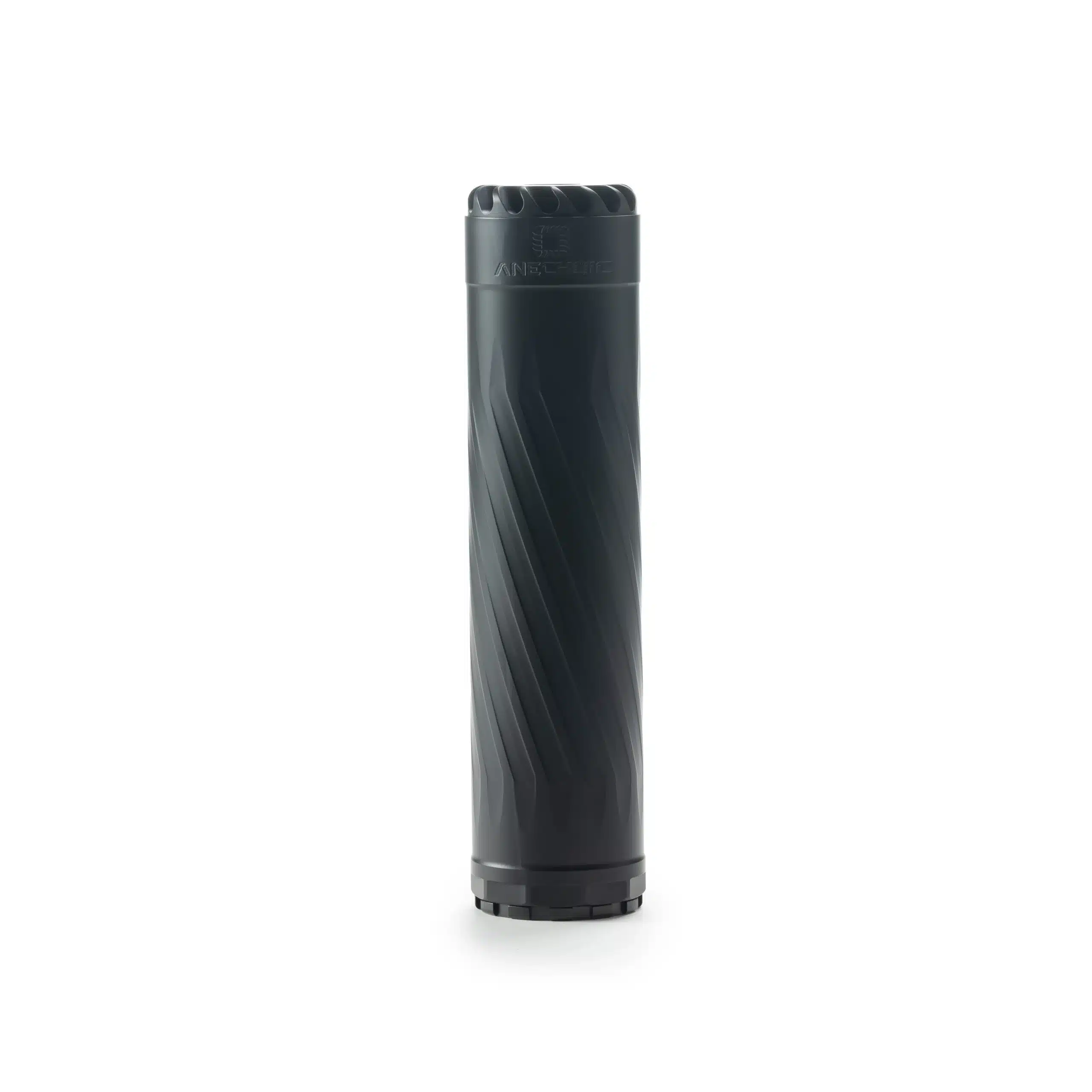
The Short Version
- Build: Grade 5 titanium, high-temp Cerakote
- Backpressure: flow-through via the angled-vent Flow Cap
- Mount: universal HUB, ships with direct-thread
- Serviceable: yes, left-hand-thread front cap, full stack comes out
- Full-auto: rated, with a cool-down caveat
- Street price: $1,053 at GrabAGun as of July 2026
The sound is a dull thump where the crack should be. The gas is somewhere up ahead of you instead of in your sinuses. That combination is why this is the can we grab when we plan to shoot suppressed all day instead of just demonstrating it.
The AnechoX 30 pulls off a rare trifecta: low-backpressure flow-through gas handling, full user serviceability, and multi-caliber versatility, in a Grade 5 titanium package that feels practically weightless. Inside, nested X-baffles with tiny serrations and ports strip and slow the gas before it can hammer you or your action, an idea borrowed from flash hider design. The Flow Cap’s angled vents give the propellant an exit up front, so drills and extended range time stop feeling like a chemistry accident.
The HUB mount means no marriage. Ships direct-thread, mounts on almost any common quick-attach system you already prefer. And it breaks down without drama: left-hand thread the cap, slide the titanium stack out, scrub, re-stack, shoot. Few rifle cans let you do that. None this light.
Flaws but Not Dealbreakers
Titanium is great until it glows. Anechoic rates the can for full-auto, but after a mag dump give it a breather; cook it cherry-red and you’ll shorten its life fast. It also isn’t the absolute quietest meter reading in the class, and the price lands north of many steel competitors. You’re paying for weight, serviceability, and geometry.
Bottom line: If you want your AR light, quiet, and mercifully free of backpressure without locking into a proprietary mount, the AnechoX 30 is tough to top.
Anechoic AnechoX 30 w/ Flow Cap
The can we grab when we plan to run suppressed all day, not just for a demonstration string.
5. QUIETEST 5.56 SUPPRESSOR: PTR Vent 3
RANGE-TESTED: We’ve tested this can hands-on.
The Short Version
- Weight / length: 11.8 oz, 7.8 in., full titanium
- Tech: 3D-printed porous lattice internals (PTR’s PIP)
- Sound: ~130 dB at the muzzle after first-round pop
- Benchmark: 42.6 Pew Science composite on an MK18, the highest published
- Limits: 10.3 in. minimum barrel, ~120 rounds continuous before a 10-minute cool-down
- Street price: $1,154 and up as of July 2026
42.6. That number won’t mean anything to you yet. Give it a paragraph.
Pew Science rates suppressors by at-ear composite score, measured where your ear sits, and 42.6 on an MK18 is the highest composite they have ever published. That is this can. PTR got there with what they call Purposely Induced Porosity: the internals are 3D-printed titanium with a foam-like lattice that lets gas permeate and cool through the entire structure. In less geeky terms, they crammed a warehouse of gas-trapping volume into 11.8 ounces by printing a titanium sponge.
The tone is the surprise. Not just fewer decibels: a softer, deeper report you stop flinching from. The backpressure is the second surprise. Ultra-quiet cans usually pay for it in gas to the face; the Vent 3 vents in stages through that porous medium, so your action stays cleaner and your eyes stay open.
Liking this one? Add CAT Outdoors as a preferred source on Google and stories like it show up first.
Add on GoogleFlaws but Not Dealbreakers
It costs $1,154 and up, hundreds more than mid-tier cans, for a 2 to 3 dB improvement you’ll only feel if quiet is the actual mission. It’s a full-size 7.8-inch can, about two inches longer than an RC2, and PTR mandates a 10.3-inch minimum barrel, which rules out the ultra-shorties. First round out of a cold can pops 2 to 3 dB louder. And the porous internals can’t be user-serviced: heavy use means periodic solvent baths, not a scrub brush.
Bottom line: If you want the quietest 5.56 experience that current physics and a titanium printer can deliver, this is it, and it isn’t especially close.
PTR Vent 3
42.6 on an MK18. The highest at-ear composite Pew Science has ever published.
6. BEST FOR SHORT-BARREL ARs: HUXWRX Flow 556k
RANGE-TESTED: We’ve tested this can hands-on.
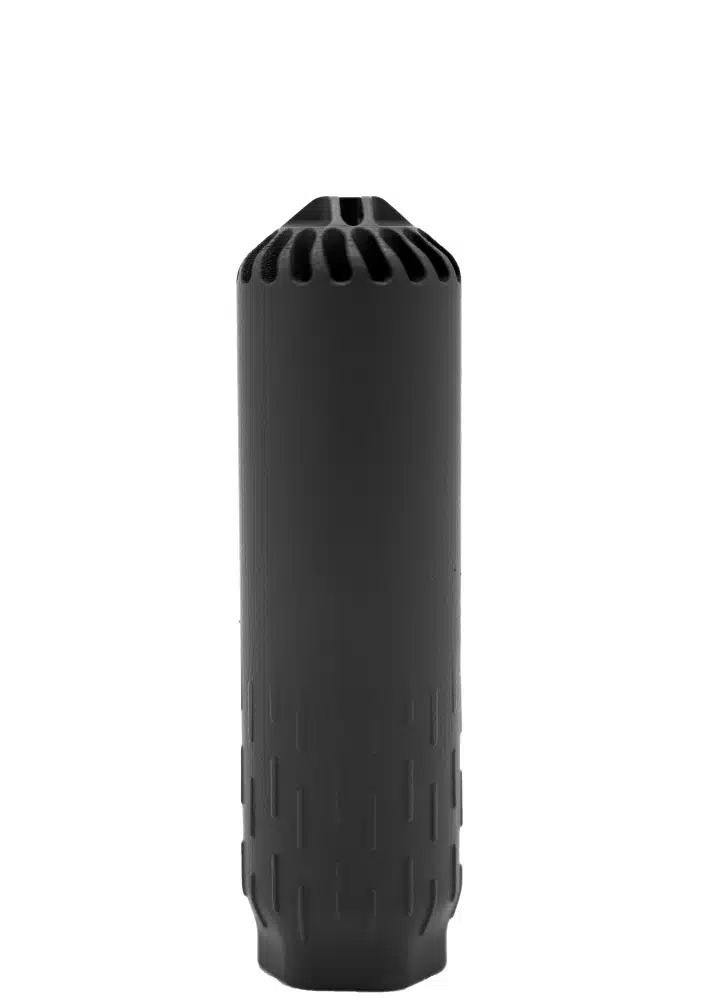
The Short Version
- Length / weight: 5.5 in., 12.2 oz, 3D-printed stainless
- Backpressure: Flow-Through, vents forward not backward
- Benchmark: first 5.56 can to score 30+ at-ear on an Mk18 in Pew Science testing
- Flash: GeoFlash end cap tames the short-barrel fireball
- Limits: no minimum barrel length, clean it every 2,000-2,500 rounds
- Street price: $1,054 and up as of July 2026
For SBR shooters the biggest complaint about most cans isn’t weight or length. It’s the face full of gas every time the bolt cycles. HUXWRX built the Flow 556k specifically for short-barrel rifles, and it fixes that problem in a way no conventional baffle stack can match.
Even on 10.3 and 11.5-inch uppers, the Flow-Through core vents hot gas forward and out instead of back through your action, so the 556k doesn’t choke you, doesn’t jack up your cyclic rate, and doesn’t demand special gas plugs or heavy buffers just to make your shorty livable. On an Mk18, one of the gassiest and loudest platforms in the AR world, it was the first 5.56 can ever to clear a 30+ at-ear suppression rating in Pew Science testing, and the GeoFlash end cap tamps down the fireball short barrels are notorious for.
You’re adding barely five inches and twelve ounces, so an 11.5-inch gun stays a genuinely handy gun. Between mags, you can breathe. You can even talk to your buddies, assuming they’ve stopped shooting long enough to hear you.
Flaws but Not Dealbreakers
At the muzzle it’s a bit louder than the big traditional cans like the RC2; the win is at your ear and your sinuses, not the meter across the bay. It heats up fast and holds heat, so after a few quick mags you’ll want a glove or a cover. And the baffle-less internals want an occasional solvent soak every couple thousand rounds, an easy but real maintenance step.
Bottom line: For ARs with 10 to 12-inch barrels, this is hands-down our pick. It makes a suppressed shorty pleasant, which is a sentence we couldn’t write about most of this category.
HUXWRX Flow 556k
It makes a suppressed shorty pleasant. That sentence took the industry thirty years to earn.
7. BEST VALUE MODULAR SUPPRESSOR: Aero Precision LAHAR-30
RANGE-TESTED: We’ve tested this can hands-on.
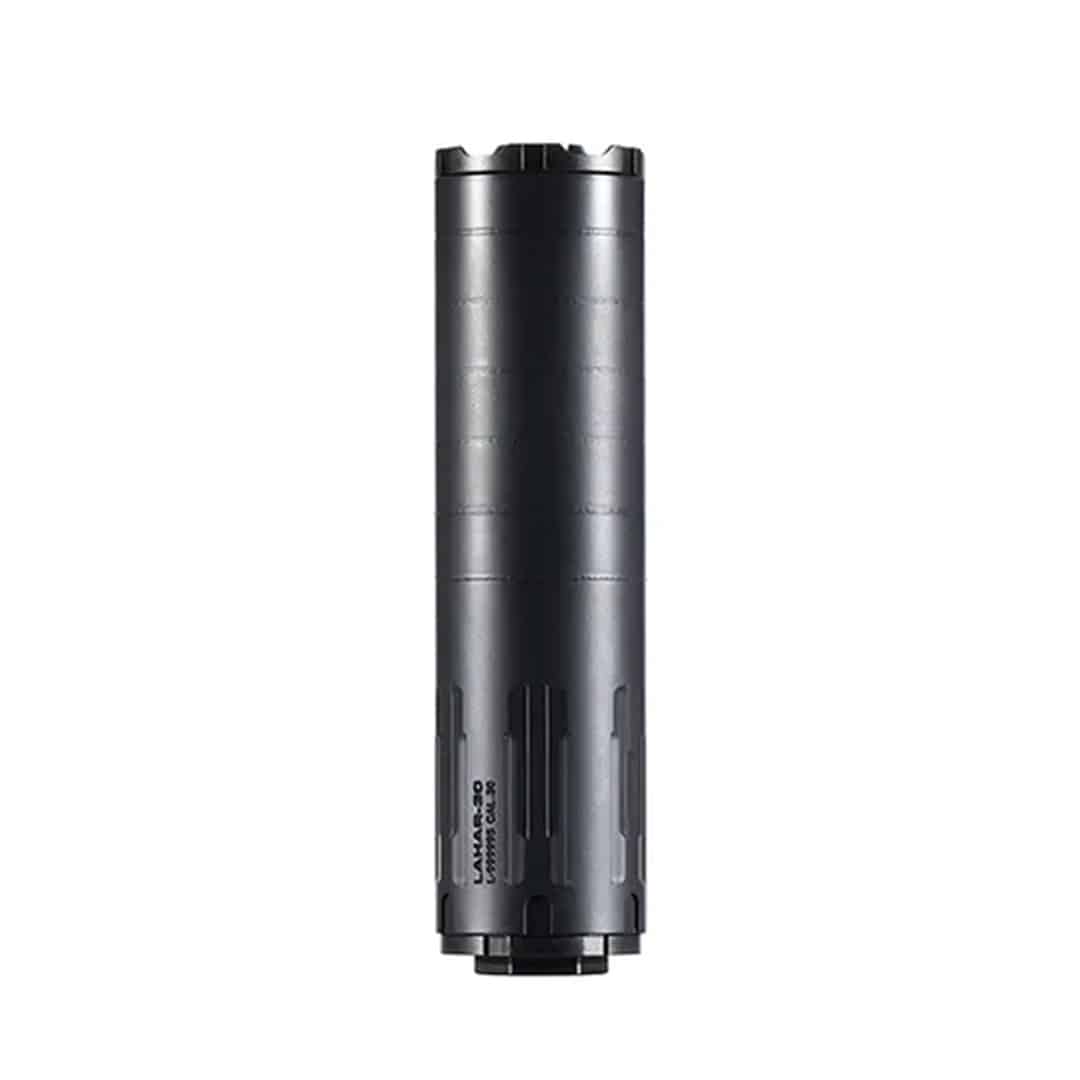
The Short Version
- Build: fully welded 17-4 stainless, Inconel blast baffle
- Weight: 15.4 oz (LAHAR-30), 12.9 oz (30K)
- Mount: industry-standard HUB 1-3/8×24, direct-thread included
- Ratings: full-auto, no minimum barrel length, up to .300 Win Mag
- Street price: $472-$630 as of July 2026 depending on size and sale
Everything above this line costs four figures. The LAHAR-30 asks a rude question: what exactly are you getting for the second thousand?
In independent short-barrel 5.56 testing, this budget-priced .30 can outperformed most of its class, beating well-known models like the Dead Air Nomad-30 and Sandman-S in overall suppression. On a 10.5-inch AR the noise level hangs with dedicated 5.56 cans, with a deeper tone and noticeably less gas to the face. The build is fully welded 17-4 stainless with an Inconel blast baffle, full-auto rated with no barrel-length restrictions, which means the cheap can on this list is also one of the harder-use cans on this list.
The HUB mount seals the argument. Direct-thread out of the box, or drop in your preferred KeyMo or ASR mount and it rides whatever muzzle devices you already own. All of it for roughly six hundred dollars, and closer to five during sales.
Flaws but Not Dealbreakers
All that stainless makes it chunky: 15.4 ounces for the full-size, and the 5.1-inch 30K gives up some quiet for its compactness, especially on subsonic .300 BLK. Aero includes only the direct-thread mount, so budget for a QD adapter if that’s your style.
Bottom line: For a high-performing multi-caliber can at an entry price, the LAHAR series is extremely hard to beat. It outclasses suppressors that cost significantly more, and with the stamp at zero, the all-in number is the can’s price and nothing else.
Aero Precision LAHAR-30
The cheap can on this list is also one of the harder-use cans on this list.
8. BEST BUDGET AR-15 SUPPRESSOR: Otter Creek Polonium K
RANGE-TESTED: We’ve tested this can hands-on.

The Short Version
- Length / weight: 4.8 in., just under 12 oz
- Build: fully welded 17-4 stainless
- Mount: HUB 1.375-24, plays with Key-Mo, Rearden Atlas, Plan B
- Warranty: lifetime, no fine print worth mentioning
- Street price: $522-$540 as of July 2026
This isn’t a good-for-the-price can. It’s just plain good, and then you see the price.
At 4.8 inches and a hair under 12 ounces, the Polonium K keeps short-barrel ARs nimble instead of turning them into front-heavy clubs, and the fully welded 17-4 stainless construction laughs off mag dumps and 800-degree heat without loosening or warping. The HUB pattern means no proprietary trap: thread it on Otter Creek’s own adapter or drop it onto the popular mounts you already own.
Tone and flash suppression are both excellent for a K-length 5.56 can. The bite is gone, the report pushes down toward the muzzle, and backpressure stays low enough that gassy 10.5-inch setups remain pleasant. Add a no-nonsense lifetime warranty and a street price just north of five hundred bucks, and this is the rare budget pick that requires zero apologies. If you want something that works, doesn’t cost a kidney, and won’t cry when you actually shoot it, this is your huckleberry.
Flaws but Not Dealbreakers
It’s not the quietest suppressor you’ll ever hear. That’s not a knock, it’s the physics of a compact 5.56 can; if minimum decibels are the priority, look longer and heavier. And Otter Creek isn’t a household name yet, so stock comes and goes.
Bottom line: If you’re running 5.56 and don’t want to spend more on the suppressor than the rifle, start here. Short, tough, and it sounds better than it has any right to at this price.
Otter Creek Polonium K
The rare budget pick that requires zero apologies.
9. BEST FULL-AUTO RATED SUPPRESSOR: CGS Sci-Six
RANGE-TESTED: We’ve tested this can hands-on.
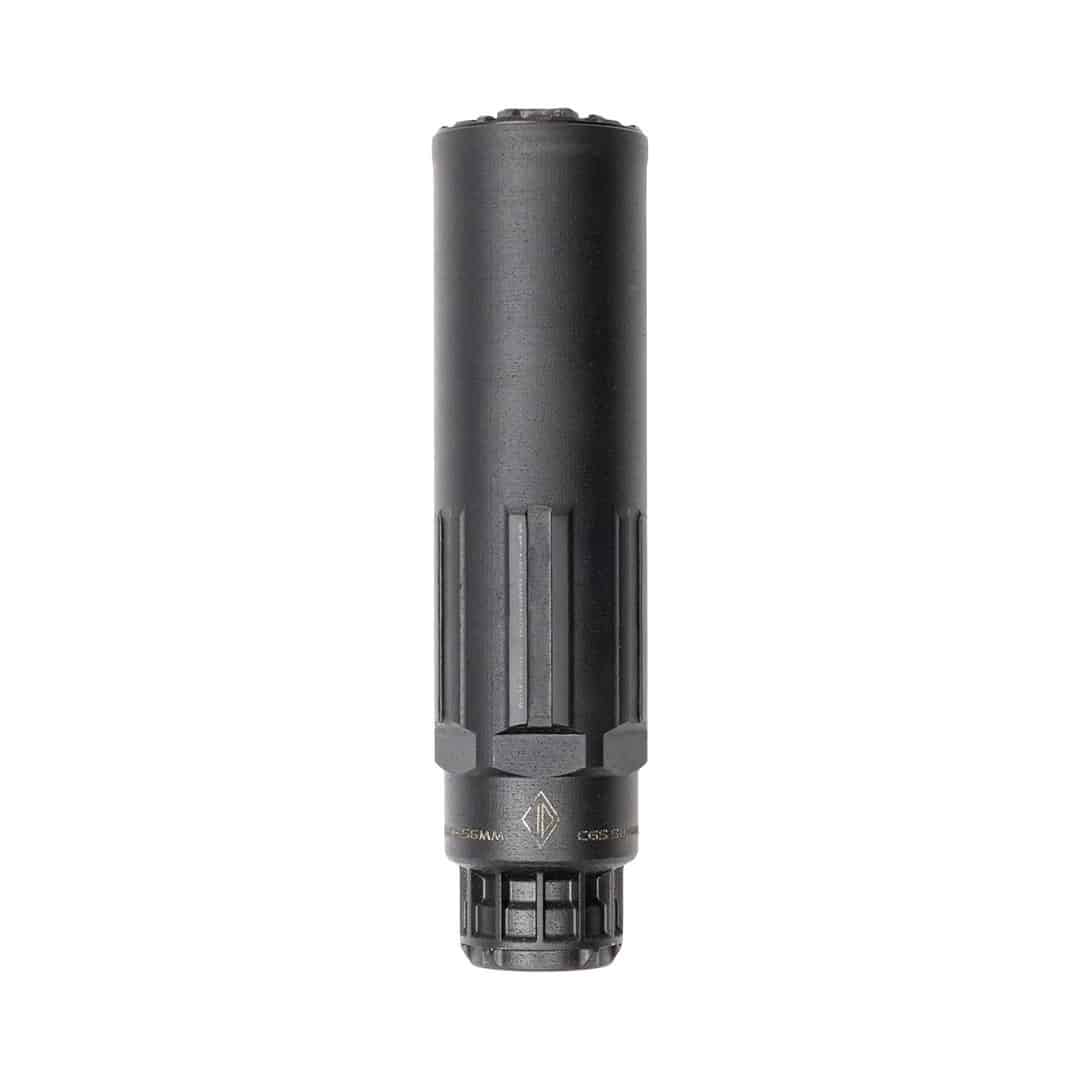
The Short Version
- Build: one-piece DMLS 3D-printed 718 Inconel, zero welds
- Size: ~6.5 in. with mount, ~17 oz
- Mount: CGS taper with left-hand threads (recoil tightens it)
- Limits: none. No barrel minimum, dedicated 5.56
- Street price: $898-$1,050 as of July 2026
Plan on treating a suppressor the way a rented mule fears being treated? This is the section. The Sci-Six was designed with input from special-operations veterans for exactly one job: live on a hard-use 5.56 carbine and never, ever be the reason the gun stops.
The whole can is printed as one piece of 718 Inconel. No welds, no weak points, no barrel-length restrictions, no round-count anxieties. Despite the bomb-proof build it stays compact, similar in footprint to an RC2 but with a larger diameter for more internal volume, and the variable-core geometry vents gas forward into an annular space instead of back through your receiver. In testing its suppression ran right up there with the RC2 and the Flow models while edging out other heavy-duty cans, with noticeably less gas in your face and minimal flash from the integrated end cap.
The taper mount with left-hand threads is a quietly brilliant detail: recoil tightens it. The can literally cannot shoot itself loose.
Flaws but Not Dealbreakers
At $898 to $1,050 street it’s a real investment, in line with other top-tier hard-use cans, and the tapered CGS mount means you live in their muzzle-device ecosystem. It’s also a dedicated 5.56 can: superb at its one job, useless for your .30-cal plans. And at about 17 ounces it gives up the weight race to the titanium crowd, which is the tax you pay for surviving what kills them.
Bottom line: If your rifle sees carbine classes, vehicle racks, and firing schedules that would gas-cut lesser cans to pieces, the Sci-Six is the one built for that life.
CGS Sci-Six
The can literally cannot shoot itself loose.
10. BEST .300 BLK/5.56 CROSSOVER SUPPRESSOR: Q Trash Panda
RANGE-TESTED: We’ve tested this can hands-on.
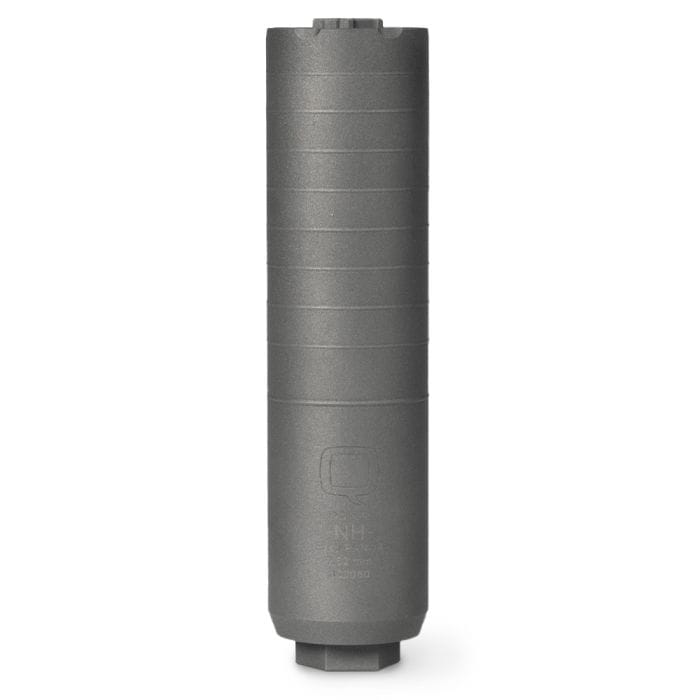
The Short Version
- Weight / length: 11.8 oz, 6.91 in., 3D-printed Grade 5 titanium
- Rated to: .300 Win Mag
- Mount: taper-lock, TWO Cherry Bomb brakes in the box (1/2×28 + 5/8×24)
- Party trick: subsonic .300 BLK becomes a low whoosh
- Street price: $849-$1,050 as of July 2026
The Trash Panda was engineered by the team that invented .300 AAC Blackout, which is a bit like buying a lasagna from the guy who invented lasagna. Some products come with pedigree. This one comes with provenance.
It hits the sweet spot for shooters splitting range time between a .300 BLK SBR and a 5.56 upper. At 6.91 inches and a shade under twelve ounces it barely changes rifle balance, yet it drags subsonic .300 BLK down to a low, pleasant whoosh and trims 5.56 well into comfortable territory. The 3D-printed Grade 5 titanium core keeps the baffles feather-light but strong enough for sustained heat.
Q’s smartest move is in the box: two Cherry Bomb muzzle brakes, 1/2×28 and 5/8×24, so moving the can between rifles is a half-turn twist with no shims and no re-timing. The taper seats solid and repeatable, preserving zero across swaps, and because the brake sits ahead of the blast chamber it eats the worst erosion. Burn one out and you replace a seventy-five-dollar brake, not the suppressor.
Flaws but Not Dealbreakers
On a short 5.56 gun expect some gas to the face; efficient .30-bore baffles quiet the muzzle at the expense of blowback, and the Trash Panda is no exception. First-round pop is pronounced with subsonics. Titanium wears faster than steel under real abuse, so high-round-count courses and habitual mag dumps will age it. And if you ever shoot a rifle with the bare Cherry Bomb and no can, pack ear pro for everyone in the county.
Bottom line: One suppressor for a .300 BLK and a 5.56 that swaps in half a turn and shines brightest with subsonics. If that describes your safe, this is your can.
Q Trash Panda
A bit like buying a lasagna from the guy who invented lasagna.
11. BEST LIGHTWEIGHT 5.56 SUPPRESSOR: Banish 223
RANGE-TESTED: We’ve tested this can hands-on.

The Short Version
- Weight / length: 11.4 oz, 7 in., all titanium
- Measured claim: up to 34 dB reduction, and it lives up to it
- Mount: direct-thread 1/2×28, no QD complexity
- Full-auto: limited
- Street price: $621-$849 as of July 2026
11.4 ounces. On a bathroom scale that’s a burrito. On the end of a 16-inch barrel it’s the difference between a rifle you run all day and a rifle you put down between drills.
The Banish 223 is the dedicated 5.56 answer for shooters who refuse to hang weight on the muzzle. The all-titanium build sheds ounces without shedding durability, balance on a 16-inch AR stays neutral, and the advertised 34 dB reduction holds up: this is one of the few 5.56 cans we’d call genuinely hearing-safe with the right ammo and ear pro. The direct-thread simplicity is a feature, not a compromise. Fewer moving parts, fewer failure points, and it threads just as happily onto a .223 varmint bolt gun as onto your carbine.
Flaws but Not Dealbreakers
It’s a one-cartridge specialist: no .30-cal flexibility, so if you want one can for the whole safe, that’s the Banish 30 V2 three sections up. It’s a traditional baffle design, so gassier and shorter setups will notice backpressure the flow-through cans avoid. And direct-thread means slower swaps between rifles than any QD system.
Bottom line: If weight is the priority, this is the recommendation. Simple, quiet, and light. It’s just a good suppressor.
Banish 223
On a bathroom scale that's a burrito. On the muzzle it's your whole afternoon back.
12. BEST ULTRA-COMPACT: Silencer Central Banish Speed K
RESEARCHED PICK: We haven’t tested this one yet, but we know its place in the industry, and it deserves a spot in the lineup. We’ll post a full review if we get one on hand.
The Short Version
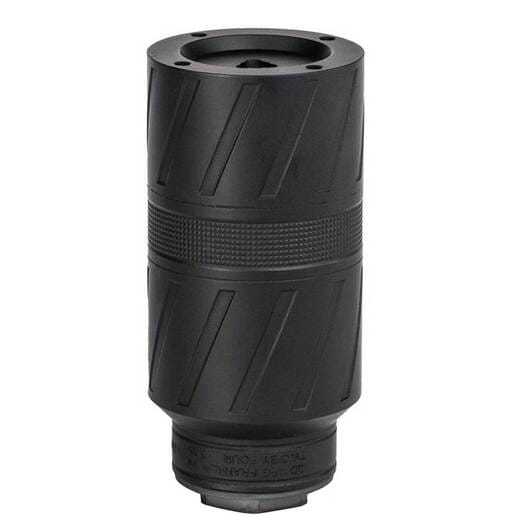
- Length: 4 inches. Barely longer than a muzzle brake
- Build: 3D-printed Inconel, developed with Federal
- Credential: survived seven rounds of SOCOM testing, full-auto rated
- Street price: $999 standard, $1,099 titanium Ti as of July 2026
Four inches of Inconel that thinks it’s a full-size can. That’s the pitch, and it’s why the Speed K became the most-asked-about suppressor of the year. Ours hasn’t hit the range yet; full review when it does.
A four-inch, full-auto-rated 5.56 can printed from Inconel, developed with Federal, that survived seven rounds of SOCOM testing. Owners consistently report it hangs with cans twice its length on flash and tone, though nobody pretends a K can is quiet like a full-size. What it promises is real suppression on a carbine that still fits through a doorway the way the rifle gods intended.
Flaws but Not Dealbreakers
At $999, and $1,099 for the Ti, it isn’t cheap for its size, and until we run one the flash-and-tone reports are other people’s ears, not ours. Rounds first, verdict after. When we get one on a gun, this section gets the full treatment.
Bottom line: The least-compromised short can we’ve seen on paper. Consider this a pointer, not a verdict.
Banish Speed K
Four inches of Inconel that thinks it's a full-size can.
13. BEST LOW-BACKPRESSURE VALUE: SilencerCo Velos LBP 556
RESEARCHED PICK: We haven’t tested this one yet, but we know its place in the industry, and it deserves a spot in the lineup. We’ll post a full review if we get one on hand.
The Short Version
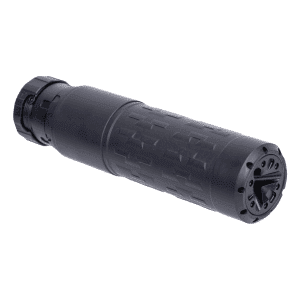
- Backpressure: low, flow-through lane
- Mount: HUB pattern, no proprietary marriage
- Full-auto: rated
- Street price: $799 at Primary Arms as of July 2026
Low-backpressure cans usually charge a premium for keeping gas out of your face. The Velos LBP’s whole argument is the price tag: $799 as of July 2026, undercutting most of the flow-through field by a couple hundred dollars, with SilencerCo’s dealer network behind it and HUB mounting so your existing muzzle devices stay relevant.
If you want the flow-through experience and the HUXWRX above is out of budget, this is the value play in that lane.
Flaws but Not Dealbreakers
Same caveat as the Speed K: ours is still boxed. The spec sheet and the price make the case; the range will confirm or deny it, and this section will say which.
Bottom line: The budget door into the low-backpressure lane. Rounds first, verdict after.
SilencerCo Velos LBP 556
The budget door into the low-backpressure lane.
How to Choose an AR-15 Suppressor
Mounting: HUB vs proprietary QD. HUB-pattern cans accept mounts from practically anybody, so you’re never locked into one company’s muzzle devices. Proprietary quick-detach systems like SureFire’s cost more per rifle but lock up like a bank vault and repeat their zero. One rifle? Direct thread is fine. Several? Budget for mounts the way you budget for the can.
Backpressure: traditional vs flow-through. Traditional baffle cans win on raw decibels. Flow-through designs vent gas forward so less of it comes back through your receiver and into your eyes. On a 16-inch rifle shot at a leisurely pace, buy the quiet one. On a short barrel or anything you shoot fast, buy the flow-through and thank us later.
Read at-ear numbers, not marketing numbers. Manufacturer decibel claims are measured wherever makes the can look best. Independent testing that measures at the shooter’s ear, the way Pew Science does, is the number that reaches your ears. When we cite suppression data in this guide, that’s the kind we reach for.
Recommended Accessories
Two cheap additions that make every can on this list better to live with.
Burn Proof Gear Suppressor Cover (also at Palmetto State Armory). After a mag or two, any suppressor is a branding iron. A good cover keeps the heat haze out of your optic, protects your hands and gear, and quiets that telltale ping when the can bumps a barricade. If you train hard, this is the first accessory to buy.
Cajun Patriots Suppressor Grease. Not exciting. Extremely practical. It prevents carbon lock so your can comes off after a long session, and it protects the threads from wear and corrosion. A small tube lasts most of a year.
On the Bench
This list is never finished. Two cans are in the queue right now: the CMMG Zeroed 36 K, which has already been out for its first 300 Blackout range day (you can see how it ran in our PSA Sabre 300 Blackout review) and is getting the full workup next, and the SureFire SOCOM RC3 above, with the RC2 as its measuring stick. When a bench can earns a slot or misses one, the Latest Updates log below will say so either way.
Final Thoughts
Remember the $200 you’re no longer paying the government? Here’s how we’d spend it: on ammo for whichever can you just picked. The RC2 if you want the benchmark. The Banish 30 V2 if your safe holds more than one caliber. The Flow 556k or AnechoX 30 if you’re tired of eating gas. The Vent 3 if quiet is the whole mission, and the Polonium K if the budget is the mission. Every one of them will outlive your rifle.
The tax is gone, the waits are days, and the cans have never been better. There has never been a cheaper time to protect your hearing. Your ears don’t grow back. Your excuses just ran out.
What’s your go-to AR-15 suppressor? Got one you love that didn’t make the cut? Drop a comment below and tell us what you want on the test bench next.
Also, be sure to check out our roundup of the Best 9mm Suppressors and the Best AR-15s to hang one on.
FAQ
Is there still a $200 tax stamp on suppressors?
No. The $200 transfer tax dropped to zero on January 1, 2026. Since August 12, a federal injunction in Silencer Shop Foundation v. ATF has also barred ATF from enforcing NFA registration against the plaintiffs, their members and their customers, who buy on a Form 4473 and a background check. Everyone else still files a Form 4, and the stamp on it costs $0. The toll is gone either way.
How long does suppressor approval take in 2026?
If the injunction covers you, there is no approval to wait on: the can goes out on a Form 4473 and a background check, as fast as your dealer has adapted. Everyone else waits days, not months, on most individual eForm 4 filings; NSSF puts the median at six days. Trusts run a little longer. Wait times drift week to week, so check current numbers when you file, but the era of forgetting you bought a suppressor is over.
Suppressor vs silencer: is there a difference?
Same thing. Silencer is the legal term written into the National Firearms Act; suppressor is the more accurate word, since nothing makes a rifle silent. Use either. The ATF and your gun counter will both know what you mean.
Will one suppressor work on multiple rifles?
Usually, and it’s the cheapest way to do this. A .30-caliber can like the Banish 30 V2 or AnechoX 30 swallows 5.56, .300 BLK, and .308 with the right mounts, at a small cost in peak quiet versus a dedicated 5.56 can. Buy once, put muzzle devices on everything.
What does flow-through or low backpressure get me?
Less gas in your face, a cleaner-running gun, and far less eye-sting during rapid fire, in exchange for a little raw suppression versus a traditional baffle can. On short barrels and hard-use guns we think the trade is easily worth it.
What’s the quietest AR-15 suppressor?
By published at-ear measurement, the PTR Vent 3: its 42.6 Pew Science composite on an MK18 is the highest score they have published for this class. For short barrels specifically, the HUXWRX Flow 556k was the first 5.56 can to clear a 30+ at-ear rating on an Mk18.
Latest Updates
- July 2026: Complete rebuild. Rewrote the guide for the 2026 suppressor rules ($200 tax stamp is now $0, approvals in days), rebuilt every store link, added spec snapshots and the comparison table, and added the SureFire RC3, Banish Speed K, and SilencerCo Velos LBP 556 as researched picks. Removed the Thunder Beast Ultra 7 (great can, wrong guide). Every price on the page is dated.
Keep the research going.
![7 Best 9MM Suppressors [2026]: Hands-On Tested](https://catoutdoors.com/wp-content/uploads/2025/08/dead-air-silencers-mojave-9-suppressor-scaled-768x512.jpg) ALSO TESTED
ALSO TESTED7 Best 9MM Suppressors [2026]: Hands-On Tested
Running a pistol-caliber carbine or just want a quieter handgun? Our 9mm suppressor roundup covers the full-size and compact options worth your NFA wait.
 PAIR IT WITH
The 7 Best AR-15 Barrels to Upgrade Your Rifle in 2026
A suppressor's only as good as what it mounts to. Our AR-15 barrel picks cover 1/2x28 threaded options from $150 budget to match-grade precision.

Justin Trump is the managing editor and owner of CAT Outdoors. The son of a Vietnam veteran, he’s a Certified Glock Armorer, an avid gun enthusiast and 2A advocate. He holds two firearm patents for the CAT M4 and Talon tools. When not managing CAT Outdoors, he enjoys spending time with his family and friends, rooting for Michigan sports teams, and serving his church.