New Mexico Lost Its Gun Waiting Period Case Three Times. It’s Enforcing the Law Anyway.
A federal appeals court struck down New Mexico’s seven-day gun waiting period, the full court refused to rehear it, and a judge entered final judgment. The state is still enforcing it on everyone but the two plaintiffs, so nine more just sued.

The New Mexico waiting period lawsuit filed Monday challenges a 2024 state law that makes gun buyers wait seven days to take home a firearm after they have passed a background check. The National Shooting Sports Foundation, the National Rifle Association and the Second Amendment Foundation, joined by two state associations, three Albuquerque gun shops and a retired police officer, filed NSSF v. Torrez, No. 1:26-cv-03514, in the U.S. District Court for the District of New Mexico on October 19.
What makes this case unusual is that the law has already been struck down. A federal appeals court held it unconstitutional in August 2025, the full court refused to rehear that decision in December, and a district judge entered final judgment against the state this August. New Mexico is enforcing the law anyway, against every buyer and dealer in the state except the two people who won that case, and it has told gun shops they could face criminal charges if they don’t comply. The new lawsuit asks the court to make the state stop.
What the law does: House Bill 129, passed in 2024 and codified at N.M. Stat. § 30-7-7.3, requires “a waiting period of seven calendar days” between the sale of a firearm and its transfer to the buyer. The seven days include the time it takes to run the federal NICS check, so a buyer whose check clears in minutes still waits the full week while the gun sits with the dealer. Transferring it early is a misdemeanor for the dealer and the buyer, each gun is a separate offense, and the only exemptions are sales to federal licensees, to holders of a New Mexico concealed handgun license, to or between law enforcement officers, and between immediate family members. In plain terms: you pass the background check, you pay, and the state makes you leave without the gun for a week.

What the courts said: Samuel Ortega and Rebecca Scott sued the day the law took effect in May 2024. U.S. District Judge James O. Browning declined to block it. On August 19, 2025, a Tenth Circuit panel reversed him, 2 to 1. “Cooling-off periods infringe on the Second Amendment by preventing the lawful acquisition of firearms,” Judge Timothy Tymkovich wrote for the majority, and the court found the “constitutional injury to the Plaintiffs is so broad and clear” that they had cleared the higher bar for an injunction that changes the status quo. A footnote described the law’s application to buyers who pass their check as “obviously unconstitutional,” carving out only buyers whose checks are still pending after three days. Judge Scott Matheson dissented. New Mexico asked the full court to rehear the case, and on December 22, 2025, the Tenth Circuit refused, 10 to 2.
Back in Browning’s courtroom, the state argued that he wasn’t “strictly bound” by the appeals court’s conclusions. On August 27, 2026, Browning wrote that he still believes the law is constitutional and that his belief doesn’t matter: “an inferior court has no power or authority to deviate from the mandate issued by an appellate court.” He granted summary judgment to Ortega and Scott, enjoined the governor and the attorney general from enforcing the statute against them, and entered final judgment the same day. A judge who personally sides with the state ruled against it anyway, because that is what the law required of him. The state filed its notice of appeal on September 28, and the Tenth Circuit has given it until November 23 to file its opening brief.
The state’s answer: Browning’s injunction names only Ortega and Scott, partly because the Supreme Court held in Trump v. CASA last year that federal courts can’t hand out remedies broader than what the parties in front of them need. New Mexico’s Department of Justice read that limit as permission. The complaint quotes a governor’s office official telling Source NM in August that the order “only states that the two named plaintiffs are able to purchase firearms without having to go through the waiting period. The law remains in effect otherwise.”
The plaintiffs’ lawyers, who also represent Ortega and Scott, say they contacted the state’s counsel of record and asked whether New Mexico would stand down. The answer, according to the complaint, was that the state “can and will enforce HB129 against everyone but Samuel Ortega or Rebecca Scott,” and that buyers and sellers who don’t comply “should be prepared to face criminal charges in state court.” The complaint’s first sentence is “Plaintiffs regret that they have been left with no choice but to file this lawsuit.”
In practice, that position means this: a published Tenth Circuit opinion binds every federal court in New Mexico, so any resident who sues on these facts wins, and the state knows it. Its answer is that each of them has to go do it, one at a time, with a lawyer, while the law stays on the books for everyone who hasn’t yet. The dealers absorb the cost of that. Every time a clean NICS check comes back, a shop has to choose between a federal court’s holding and a state misdemeanor.
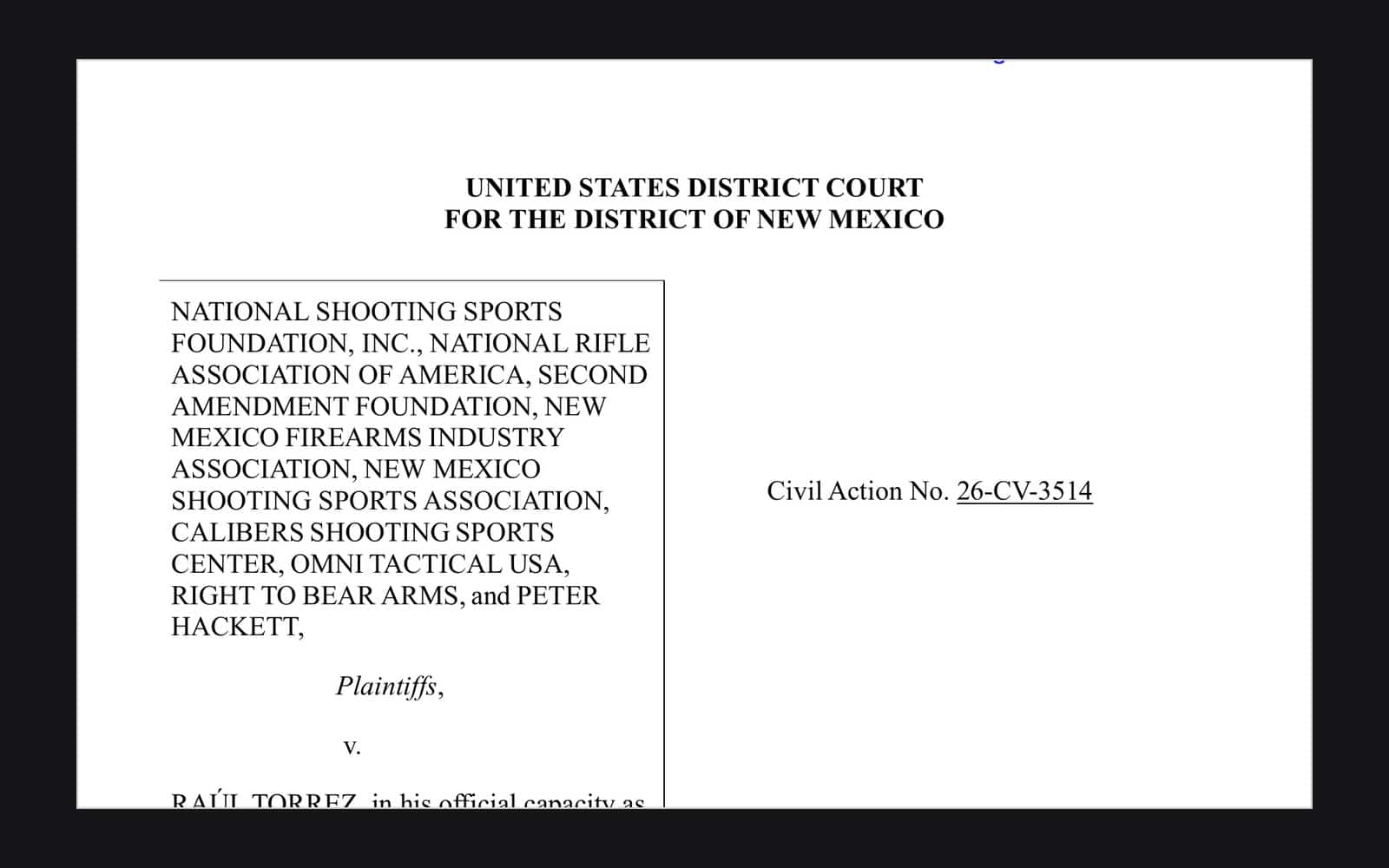
Who is suing this time: The plaintiff list is built to take the “only two people” answer off the table. Calibers Shooting Sports Center, with two Albuquerque stores, Omni Tactical USA and Right to Bear Arms are federally licensed dealers facing the misdemeanor on their side of the counter. The New Mexico Firearms Industry Association and the New Mexico Shooting Sports Association, the NRA’s state affiliate, sue for their members. And Peter Hackett, who spent more than twenty years with the Albuquerque Police Department and holds a Department of Energy Q clearance, says he plans to buy a Glock 21 Gen 5 MOS from Right to Bear Arms on or about October 24 and will be told to come back in a week. A man the federal government trusts with nuclear secrets is, in New Mexico’s view, a risk to himself for seven days after buying a handgun.
They ask for a declaration that HB 129 is unconstitutional as applied to buyers who pass the federal check, an injunction barring the attorney general from enforcing it against them, their customers and their members, and attorneys’ fees. Attorney General Raúl Torrez is the only defendant, sued in his official capacity; the governor isn’t named this time. As of Tuesday the docket showed two magistrate judges assigned and no motion for a preliminary injunction yet.
What everyone said: Lawrence G. Keane, NSSF’s senior vice president and general counsel, said: “Twice now federal courts have ruled this law is unconstitutional.” Alan Gottlieb, SAF’s founder, said: “It’s a sad state of affairs when a state attorney general won’t follow the rulings set by a court of law.” Adam Kraut, SAF’s executive director, called it “incredibly concerning that state officials would flaunt a federal circuit decision.” The governor’s office told the Santa Fe New Mexican, “We haven’t yet been served and need time to evaluate before we comment,” and the state Department of Justice didn’t respond to the paper.
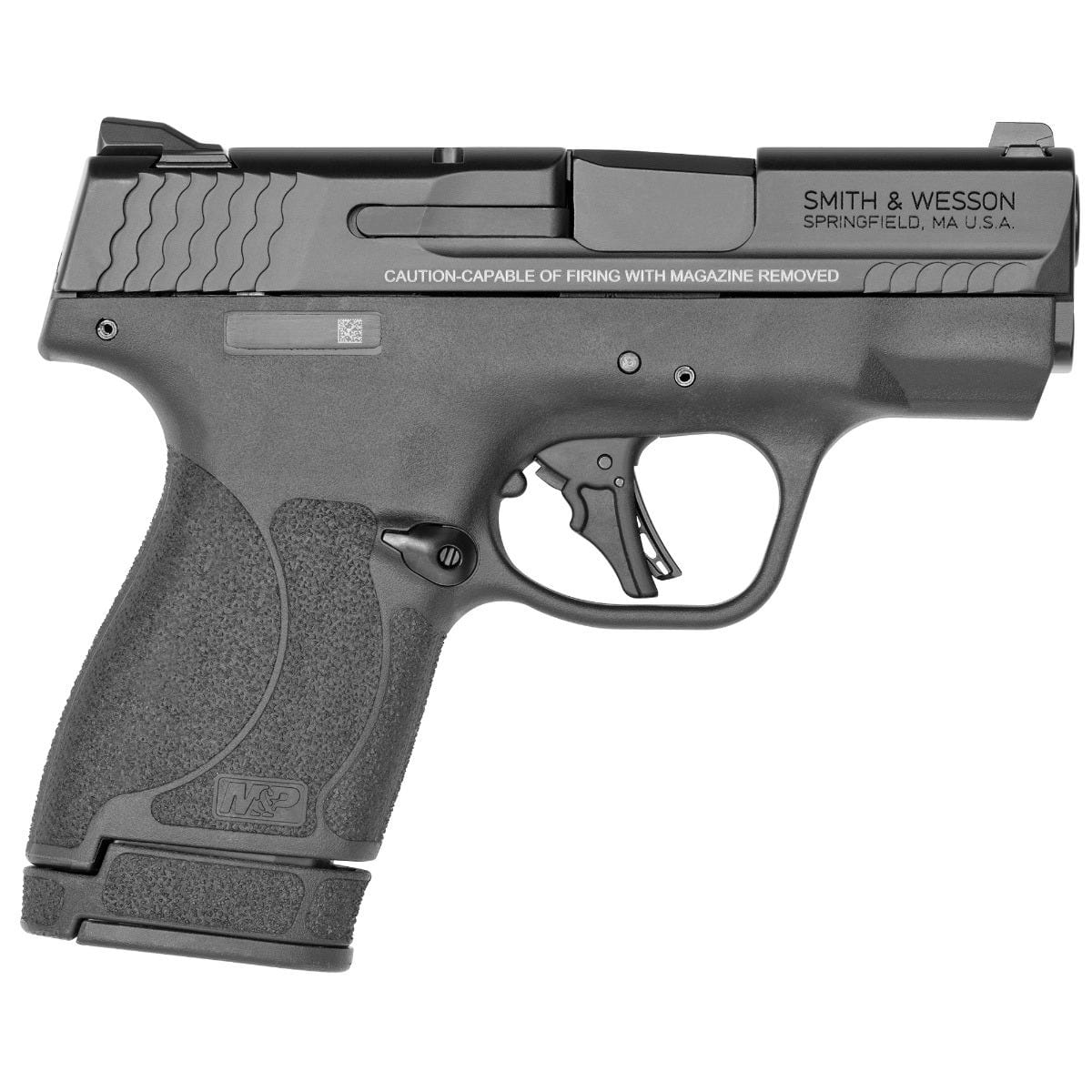
Smith & Wesson M&P9 Shield Plus 9mm (13248, no thumb safety)
A 13+1 micro nine at the price most first-time buyers land on. Under HB 129 it waits seven days with the dealer after a clean NICS check unless you hold a New Mexico carry license. Three retailers under $400 below.
The state’s best argument: It has one, and it deserves a straight answer. After CASA, a federal court can’t enjoin a statute for people who aren’t in the case, and the Tenth Circuit itself sent the scope question back to Browning for that reason. The state is also appealing the final judgment, and a judgment on appeal protects the parties who won it, not the public at large. On paper, enforcing against non-parties while the appeal runs is within the letter of the rules.
The answer is that CASA limits what a court may order, not what a state may do with a ruling it has already lost. Nothing in it tells officials to keep enforcing a statute their own circuit has called obviously unconstitutional until each resident hires a lawyer. And the appeal argument runs out quickly: the state already asked all twelve active judges of the Tenth Circuit to reconsider and got two votes. The appeal can only ask the same court to change its mind.

Why it matters past the state line: On the same Monday this complaint was filed, the Supreme Court declined to hear Beckwith v. Frey, leaving Maine’s 72-hour wait in place and a First Circuit ruling that waiting periods never reach the Second Amendment standing next to the Tenth Circuit’s ruling that they infringe it (our coverage of the Maine denial is here). The Justice Department, meanwhile, is suing Minnesota over its own purchase delays. According to the complaint, Florida went the other way in June and filed an offer of judgment in Dunn v. Glass conceding that its three-day wait violates the Second Amendment. Where you live now decides whether the gun you paid for comes home today, in three days, in seven, or after a lawsuit. And New Mexico is testing something bigger than a waiting period: whether a state can lose a constitutional case and simply keep going.
What to watch: A motion for a preliminary injunction, which would put a ruling weeks out instead of months; the attorney general’s answer, and whether the case lands with Browning as related to Ortega; the state’s Tenth Circuit brief, due November 23; and whether Hackett walks out of Right to Bear Arms on October 24 with his pistol or a receipt.
Bottom line: New Mexico has been told by a court of appeals, by that court’s full bench, and by its own district judge that this law can’t be applied to buyers who pass a background check. It is applying it anyway, to everyone who hasn’t personally sued, and it told the people now suing that they could face criminal charges if they didn’t comply. Every court that has looked at this law has said the same thing. The only open question in New Mexico is whether the state has to listen.
Should a state be allowed to keep enforcing a law its own circuit court has struck down until every resident sues? Let us know in the comments.
Waiting-period cases are moving in three circuits and the Supreme Court this month. Sign up for the CAT Outdoors newsletter and we’ll send you the next ruling when it lands.
Sources: Complaint, NSSF v. Torrez, No. 1:26-cv-03514 (D.N.M. Oct. 19, 2026) and docket; Ortega v. Grisham, No. 24-2121 (10th Cir. Aug. 19, 2025); Order denying rehearing en banc (10th Cir. Dec. 22, 2025); Order on summary judgment and Final Judgment, Ortega v. Lujan Grisham, No. 1:24-cv-00471 (D.N.M. Aug. 27, 2026); HB 129 (2024); NSSF release, Oct. 20, 2026; NRA-ILA, Oct. 19, 2026; Second Amendment Foundation, Oct. 20, 2026; Santa Fe New Mexican, Oct. 20, 2026. Featured photo: Pete V. Domenici United States Courthouse, Albuquerque, via Wikimedia Commons, public domain.

Justin Trump is the managing editor and owner of CAT Outdoors. The son of a Vietnam veteran, he’s a Certified Glock Armorer, an avid gun enthusiast and 2A advocate. He holds two firearm patents for the CAT M4 and Talon tools. When not managing CAT Outdoors, he enjoys spending time with his family and friends, rooting for Michigan sports teams, and serving his church.