The DOJ Says Minneapolis Makes Handgun Buyers Wait Nearly 60 Days Under a Law That Promises 30
A federal lawsuit asks a judge to end Minnesota’s 30-day wait on handgun and AR-15 purchases and its purchase permit. Here’s how the law works, what the complaint proves, and what it only alleges.
The Minnesota gun waiting period is now the target of a federal civil rights lawsuit. On September 24, the Justice Department sued the State of Minnesota, the City of Minneapolis and the City of St. Paul, asking a federal judge to strike down both the state’s 30-day wait on handgun and AR-15 purchases and the permit-to-purchase system that sits beside it.
The 13-page complaint (United States v. State of Minnesota, No. 0:26-cv-04123) makes a claim that goes past the text of the statute. It says 30 days isn’t what buyers in the Twin Cities actually get: “Waiting periods for approvals from chiefs of police in St. Paul and Minneapolis commonly exceed the statutory limit of 30 days. Some citizens have been forced to wait nearly 60 days.”
How the wait works: Under Minn. Stat. § 624.7132, a dealer who agrees to sell you a pistol or what the statute calls a “semiautomatic military-style assault weapon” (a category the complaint says includes AR-15-style rifles) has to report the sale to your local police chief or sheriff. The gun can’t be delivered “until 30 days after the date the agreement to transfer is delivered” to that office. The number used to be five business days. The legislature raised it to 30 in a 2023 public safety bill, effective August 1 of that year.

There are two ways around the wait, and both run through the same office. A buyer can apply for a permit to purchase under § 624.7131, which the chief or sheriff has 30 days to issue or deny and which expires after one year. Or a buyer can hold a permit to carry, which the statute accepts in place of the purchase permit.
The complaint is blunt about the first option. The purchase permit, it says, “creates a potential exception to the original 30-day delay by substituting a different delay that may last up to 30 days.” And because the permit lapses every year, the arrangement “amounts to an annual thirty-day waiting period every single year for Minnesota citizens who merely wish to defend their home.”
Who’s standing in the line: The complaint counts 375,551 valid carry permits, a figure from the Minnesota BCA’s March report, against a state population of 5,830,405. Its conclusion is that “over 93 percent” of people in the state don’t hold the one document that skips the wait.
That percentage is measured against every resident, children included, so the share of adults is somewhat lower. The point survives the adjustment. The large majority of Minnesota adults who walk into a gun store to buy a handgun walk out without it.
The 60-day allegation: This is the part of the complaint that matters most, and it’s the part with the least behind it so far. The filing offers no data, no named applicants and no source for the claim that Minneapolis and St. Paul commonly miss the deadline. It’s an allegation, and the cities will get their chance to answer it. St. Paul told FOX 9 it doesn’t comment on active litigation, and Minneapolis hadn’t responded to the station’s request.
The complaint’s next sentences are easier to check: “There is no statutory penalty for law enforcement agencies that fail to act on applications within the statutory 30-day limit. Nor is there a remedy for applicants when this happens.” On the permit side, the statute bears that out. Nothing in § 624.7131 treats an application as approved once the deadline passes, and the court appeal it provides is open to a person who was denied, not a person who was ignored.
The dealer-report route does have a backstop. If the dealer hears nothing from the chief within 30 business days, the gun may be delivered. Thirty business days is about six weeks on a calendar, so the law’s own safety valve opens well after the 30 days the law promises.
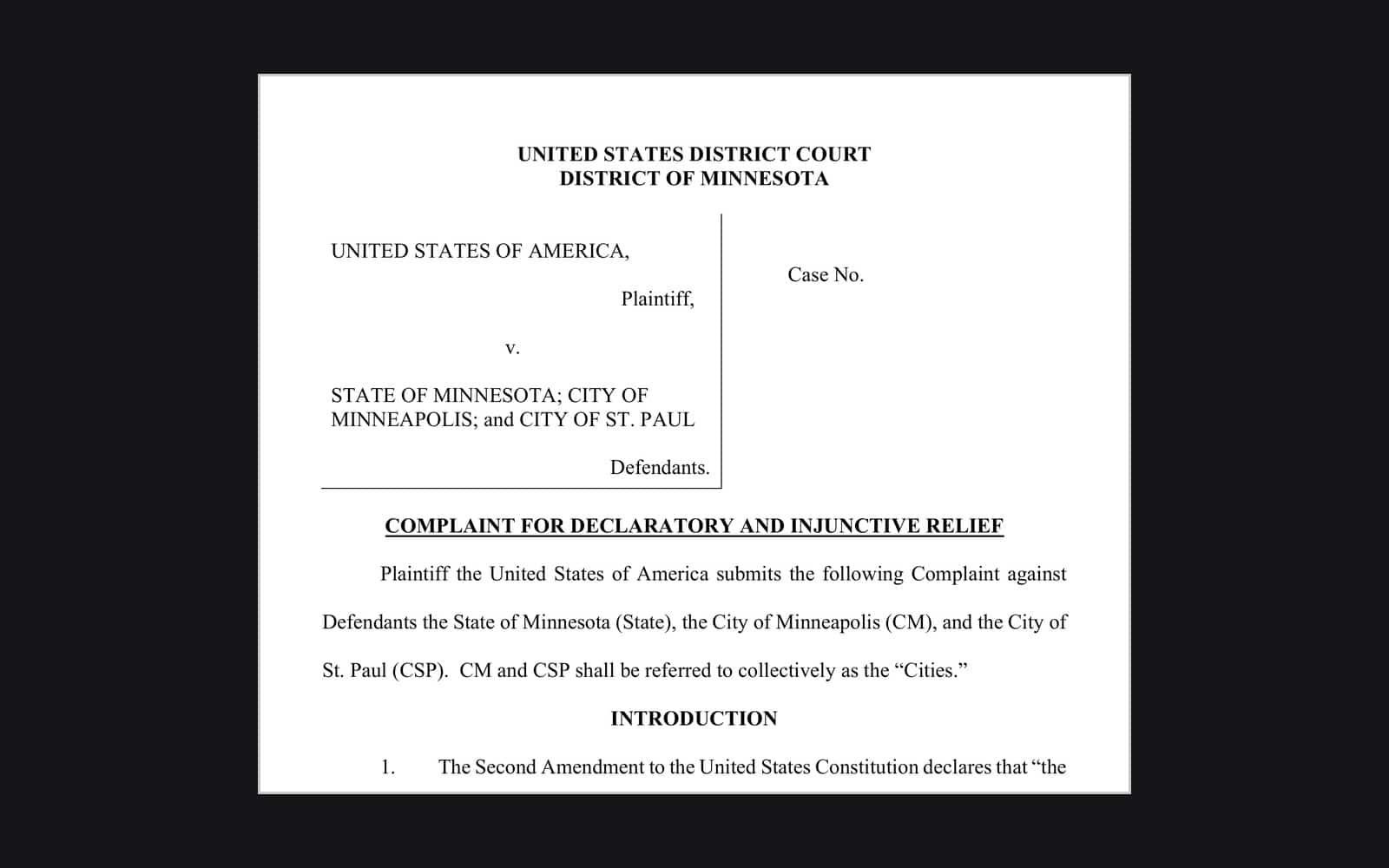
The legal theory: The complaint brings a single claim, and it isn’t a conventional Second Amendment count. It rests on 34 U.S.C. § 12601, the pattern-or-practice statute from the 1994 crime bill that the federal government normally uses to put police departments under consent decrees. It’s the same statute the Civil Rights Division pointed at San Jose’s $1,591 carry permit fee in September.
The reasoning is short. Police are obligated to enforce state law; the complaint quotes the Supreme Court: “Police are charged to enforce laws until and unless they are declared unconstitutional.” If the law is unconstitutional, the argument goes, the officers enforcing it are engaged in a pattern of depriving people of their rights. That’s how two cities ended up as defendants in a suit over a statute they didn’t write. Their police chiefs are the ones processing the paperwork.
Want the next one the day it lands? Add CAT Outdoors as a preferred source on Google and our coverage shows up first.
Add on GoogleOn the constitutional question, the complaint leans on two appeals courts. It cites the Tenth Circuit’s 2025 decision in Ortega v. Grisham as holding a seven-day waiting period unconstitutional, and the Ninth Circuit’s Nguyen v. Bonta, which threw out California’s limit of one gun purchase every 30 days (the same kind of law New Jersey is defending right now). Neither ruling binds Minnesota’s federal courts, which answer to the Eighth Circuit. What they show is that a wait less than a quarter the length of Minnesota’s has already failed in a federal appeals court.
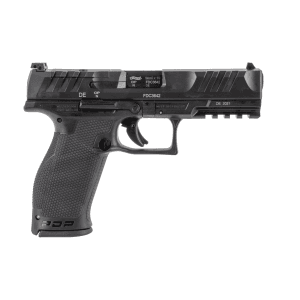
Walther PDP Full Size (9mm, 4.5", 18+1, optics-ready)
The complaint is about one thing: a handgun kept at home for defense. The PDP is a full-size, 18-round, optics-ready 9mm with one of the better factory triggers in its class, at about $600.
The state’s answer: Attorney General Keith Ellison responded in a statement carried by CBS Minnesota and Courthouse News. “These laws, which Minnesota’s elected representatives passed democratically, are in place to ensure permits to purchase or transfer handguns and assault rifles are issued only to eligible purchasers,” he said, calling them “common-sense background check laws.”
The state has a better argument available than that one, and it’s in the statute. A chief or sheriff may waive the wait once the buyer clears the check, or on finding that the buyer needs the gun “because of a threat to the life of the transferee or of any member of the household.” On paper, nobody in real danger has to wait 30 days.
The trouble is who holds the waiver. It’s discretionary, and it belongs to the same offices the complaint says can’t meet a 30-day deadline. The threat-to-life clause is also an admission written into the law itself: the legislature understood that a delay can cost someone, and left the decision about whose emergency counts to the police chief. Assistant Attorney General Harmeet Dhillon made the government’s version of the point in the DOJ’s announcement: “When a person needs to defend their home, they need to defend it now, not thirty to sixty days from now.”
As for “background check laws,” the complaint doesn’t ask the court to end background checks. Dealer sales are still subject to the federal background check, and that isn’t part of this case. The targets are the 30 days and the permit.

What happens now: The case is assigned to U.S. District Judge Katherine M. Menendez. The government asked for a declaratory judgment and a permanent injunction, and as of the latest docket entries it hasn’t filed a motion for a preliminary injunction, the tool that would suspend the law while the case is argued. Without one, both statutes stay in force until there’s a final ruling. Rob Doar of the Minnesota Gun Owners Caucus told WCCO the case “could take years.”
So for Minnesota buyers, nothing changes today. The Minnesota gun waiting period is still 30 days, the purchase permit is still an annual errand, and the fastest legal route to a handgun is still a permit to carry.
The larger stake is the theory. If a federal judge agrees that a police department violates § 12601 simply by administering a waiting period, the same complaint could be filed against any state that has one, with the names swapped out. That’s the ruling to watch for, and the first sign of how hard the government intends to push will be whether it asks for that preliminary injunction.
Is 30 days a reasonable wait, or is the DOJ right that it fails the Second Amendment? Tell us in the comments.
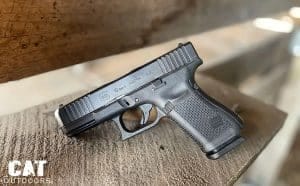
Using the wait to pick the gun? Our Glock 19 Gen 5 review covers two years and 1,800 rounds with the pistol most compacts get measured against.
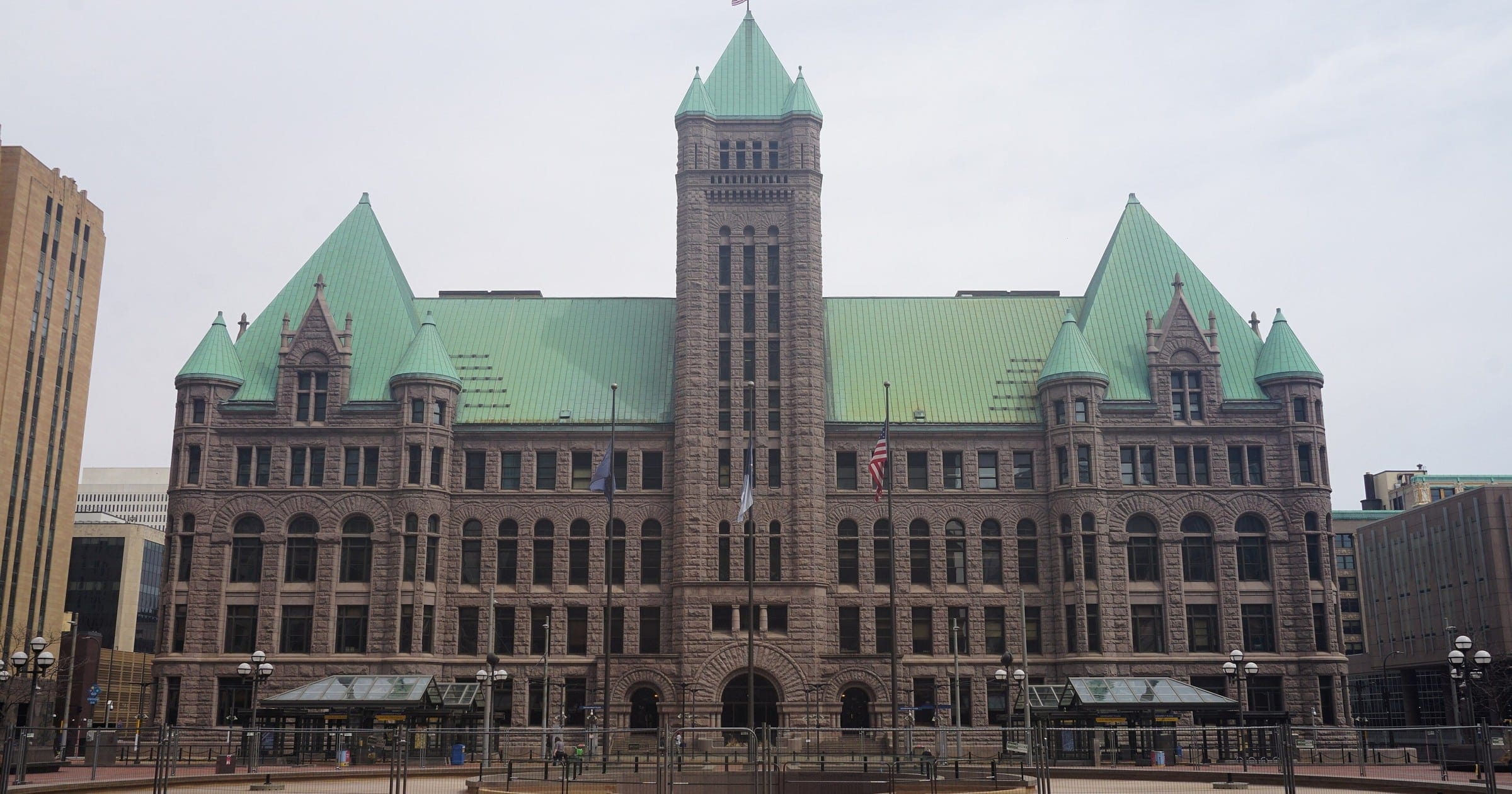
Sources: Complaint, United States v. State of Minnesota (D. Minn. No. 0:26-cv-04123); U.S. Department of Justice announcement; Minn. Stat. § 624.7131 and § 624.7132; Minnesota Laws 2023, chapter 52; Minnesota BCA 2025 Permit to Carry report; court docket; FOX 9; CBS Minnesota (WCCO); Courthouse News. Featured photo: Minneapolis City Hall by Michael Barera, CC BY-SA 4.0.

Justin Trump is the managing editor and owner of CAT Outdoors. The son of a Vietnam veteran, he’s a Certified Glock Armorer, an avid gun enthusiast and 2A advocate. He holds two firearm patents for the CAT M4 and Talon tools. When not managing CAT Outdoors, he enjoys spending time with his family and friends, rooting for Michigan sports teams, and serving his church.