Springfield Hellcat Review: 6 Years, 1,200 Rounds (2026)
The Springfield Hellcat has been our carry gun for six years and roughly 1,200 rounds. Here’s the full reliability log, measured trigger data, and whether it’s still the micro-compact to buy in 2026.
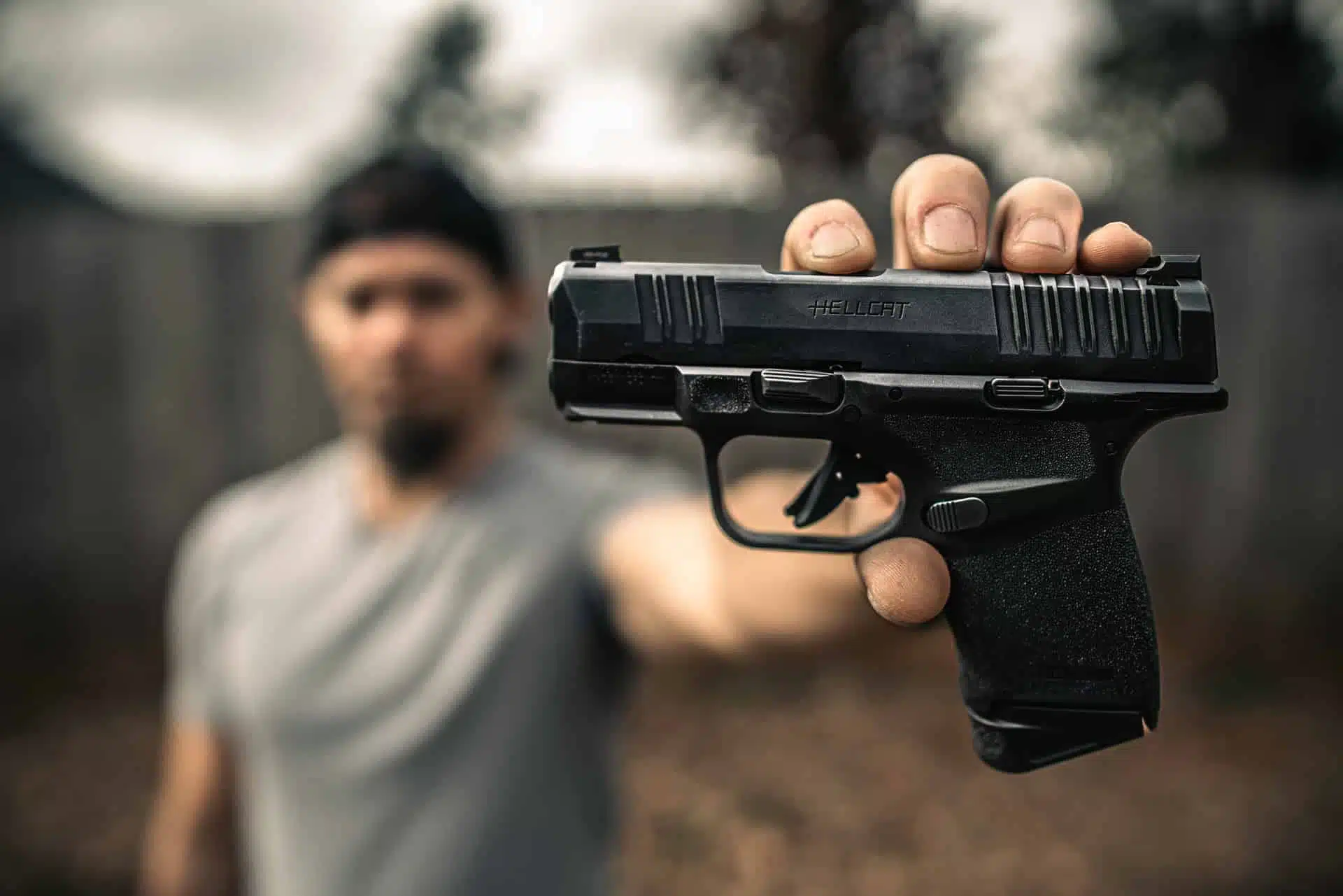
Six years on my hip and roughly 1,200 rounds: zero failures to fire, the best factory irons in the class, and 11+1 in a gun that hides under a t-shirt. A heavy trigger and four logged lock-back misses on light ammo keep it from a 10. $653 MSRP, $500-$600 street right now.
Reasons to Buy
- Highest standard capacity in the micro-compact class (11+1 flush)
- Factory tritium U-Dot iron sights are best in class at this price
- Adaptive Grip Texture is genuinely effective without being abrasive
- Zero failures to fire in six years; four slide lock-back misses, logged and explained
- Springfield's lifetime warranty stands behind it
Reasons to Skip
- 5.74 lb measured trigger pull, heavier than the segment average
- Snappy recoil, expected for a 17.9 oz / 3-inch 9mm but not for everyone
- Trigger reach may not fit shooters with larger hands (high-grip beavertail bite is a known issue)
- Four failures to lock back over 226 rounds with light 115gr FMJ
This Springfield Hellcat review took six years and roughly 1,200 rounds to write: the micro-compact 9mm streets around $550, spent that whole time on my hip, and sat through one 226-round session where I logged every malfunction. Not many carry guns get that kind of bookkeeping. This one earned it.

The pitch hasn’t changed since 2019: more rounds in less space than anything else in the segment. Sig cracked the micro-compact market open the year before with the P365 at 10+1, and Springfield answered with 11+1 in essentially the same envelope. Why not just make 10 louder? Because these go to 11.
Six years later that pitch still holds. The segment got crowded, the lineup sprouted Pro and RDP and Comp variants, and the optic cut went from option to standard equipment. Mine is the original solid-slide version from 2020; mechanically, it’s the same gun you’d buy today. Full breakdown below.
Specs
- Caliber: 9mm
- Barrel: 3.0″ hammer-forged, Melonite finish
- Overall Length: 6.0″
- Height: 4.0″ flush mag / 4.5″ extended
- Width: 1.0″
- Weight: 17.9 oz unloaded
- Capacity: 11+1 flush, 13+1 extended (both magazines included)
- Trigger: 5.74 lb measured average (5.5 lb published spec)
- Sights: Tritium U-Dot front, steel Tactical Rack U-notch rear
- Country of Origin: HS Produkt, Croatia
- Warranty: Springfield Armory limited lifetime
- MSRP: $653 on Springfield’s product page; street $500-$600
Why You Can Trust This Review
Full disclosure works both ways, so here’s mine: I bought this Hellcat in 2020 with my own money, for around $500 at a local shop. Springfield didn’t send it. No retailer paid for placement. Nobody at Springfield saw a word of this before you did.
- Pistol Tested: Springfield Armory Hellcat (standard non-OSP, 9mm, black), legacy configuration
- Currently Available: Hellcat OSP (mechanically identical, optic-cut slide)
- Price Paid: ~$500 in 2020 (MSRP is $653 today; street $500-$600)
- Years Owned: 6
- Lifetime Rounds: ~1,200 (Winchester, AAC, Fiocchi, and Federal 115gr FMJ, plus defensive hollow-points)
- Most Recent Test Session: 226 rounds, January 20, 2026, outdoor range, 50°F and partly cloudy
I’ve carried it in an Amberide Kydex IWB at 4 o’clock for most of those six years. One housekeeping note for new buyers: my unit is the discontinued non-OSP configuration, and the current Hellcat ships only with an optic-cut slide. Same gun otherwise; the next section sorts it out.
This review is based on our actual experience with the gun, both the good and bad.
The Poll
Where does your carry gun ride?
This week's holster coverage has us curious. Tap your pick.
The Poll · Live Standings
Your vote is in.
0 votes so far. Winner announced in next week’s issue.
Want to Know the Final Results?
We tally the votes and name the winner in next week’s email. Sign up and the final standings come straight to your inbox, and you’ll be first to hear when the review goes live.
By signing up you agree to our Terms of Service and Privacy Policy. No spam, and we never sell your address. Unsubscribe anytime.
That didn’t go through. Check the address and try again.
Done. Watch your inbox.
You’re on the list. The final standings land in next week’s issue, and if your pick loses, take it up with the other voters.
Which Hellcat Is This?
Quick housekeeping before you buy: Springfield killed the plain-slide Hellcat. Every Hellcat sold new in 2026 ships with an optic-cut slide, across every retailer listing. The original non-OSP I bought in 2020 is out of production.
That changes nothing about this review. My gun and the current production Hellcat are mechanically identical. Same 3-inch hammer-forged Melonite barrel. Same 11+1 flush and 13+1 extended magazines, both included. Same Adaptive Grip Texture, same trigger, same iron sights, same rail. The only physical difference is the slide top: mine is solid, the current one is milled for a Shield RMSc-footprint micro red dot. Not running a dot? The cut comes covered with an included plate and you use the iron sights, which are excellent.
So this is a review of the gun you can actually buy, written by someone who has run the same platform for six years.
The rest of the family, so you don’t buy the wrong one:
- Hellcat OSP. “OSP” stands for Optical Sight Pistol, and as of 2026 it simply is the standard Hellcat. This is the one you’re buying new, dot or no dot.
- Hellcat Pro. Slightly bigger frame, 3.7-inch barrel, 15+1 capacity. Softer to shoot than the standard Hellcat at the cost of a marginally larger envelope.
- Hellcat Pro OSP / Pro OSP Comp. The Pro frame with the optic cut, and the Comp adds a barrel compensator. If you want to throw the kitchen sink at the platform, this is the kitchen sink.
- Hellcat RDP. Standard frame with a threaded barrel and a self-indexing comp. Different gun for different priorities.
If you’re cross-shopping the Hellcat against its peer group, our Glock 43X review gives one of its closest competitors the same multi-year hands-on treatment.

First Impressions: The Counter Sell
In 2020 the Hellcat was a counter sell. I walked in shopping for a P365 because that’s what the internet was talking about, the store was out, and the clerk pointed me at the Hellcat instead. A few minutes of handling later I paid cash. Six years on, I haven’t second-guessed that decision once.
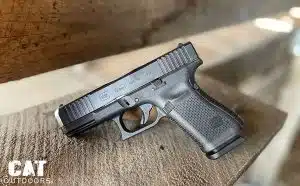
Out of the box: polymer frame, striker fired, 3.0-inch hammer-forged Melonite barrel. 6 inches long, 1 inch wide, 17.9 ounces unloaded. Two magazines in the case, an 11-round flush and a 13-round extended. The P365 ships with two magazines too (both 10-rounders), so the Hellcat’s edge isn’t the count; it’s the split. One mag that hides completely, one that buys you two more rounds and a full grip. Two magazines included is a small thing, but it’s also $30 to $40 of value before you’ve left the store.
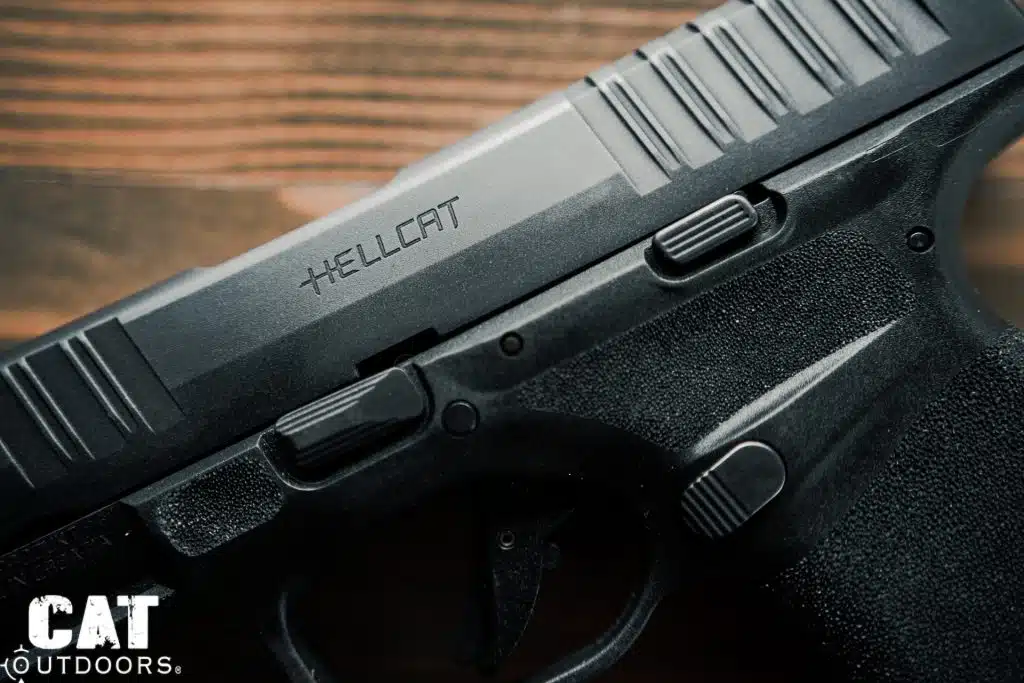
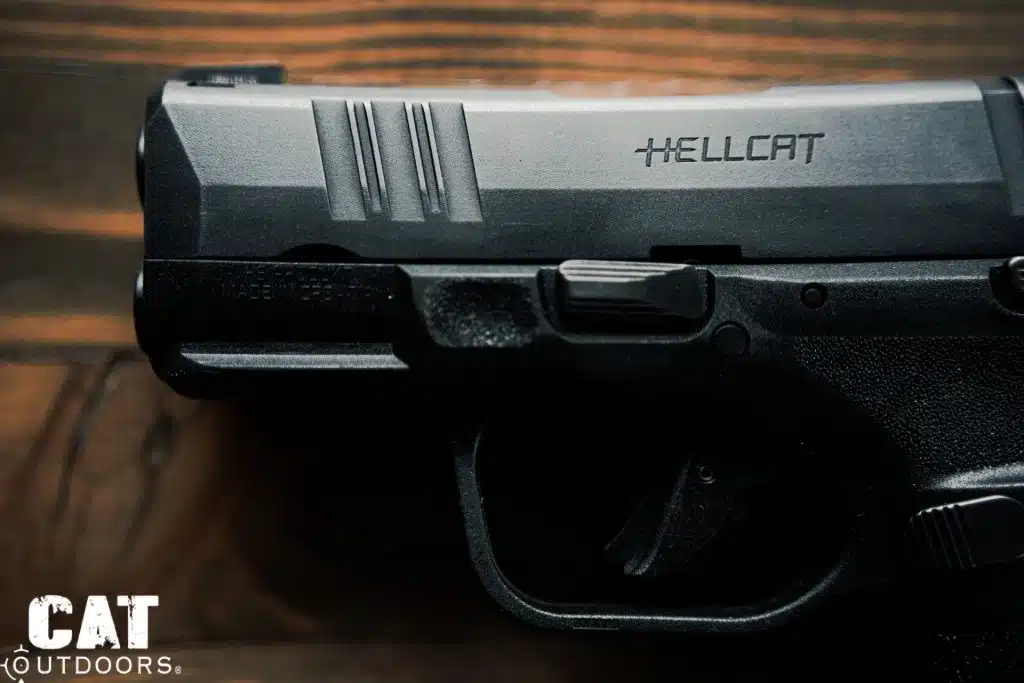
The slide-to-frame fit is tight without being stiff. The Melonite finish is even across the slide and barrel with no visible flaws, and the polymer frame is solid, with no flex or creak. “HS Produkt Made in Croatia” is etched above the trigger guard, and that’s the actual manufacturer: Springfield Armory imports and sells, HS Produkt builds. It’s the same arrangement Springfield has run for the XD line for years, and the build quality reflects the practice.
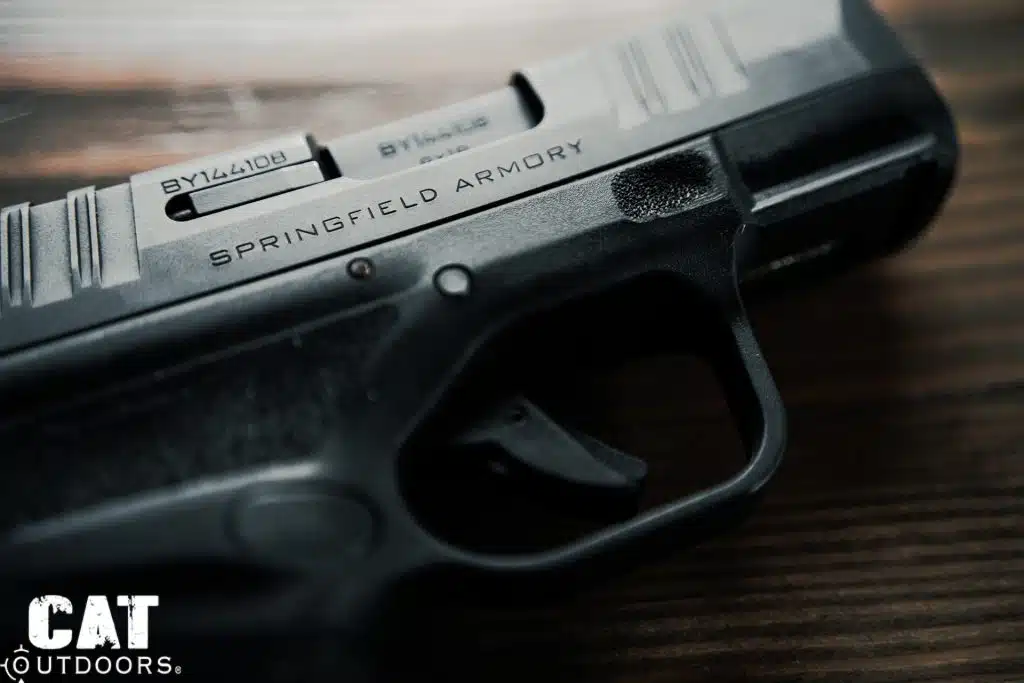
The trigger is the most polarizing thing on the gun, and it gets its own section below. Short version: it does its job. Whether you’ll enjoy it doing its job is another question.
The Adaptive Grip Texture is the marquee feature on the frame. Springfield’s pitch: the texture stays subtle against bare skin (so it doesn’t sand your abdomen raw during IWB carry) but bites in firmly when you actually squeeze the grip to fire. It works. Whether that’s the staggered pyramid pattern doing something clever or just aggressive texture feeling gentler through a shirt, I can’t say for certain. The practical result is exactly what’s promised: a confident grip when shooting, manageable comfort when carrying.
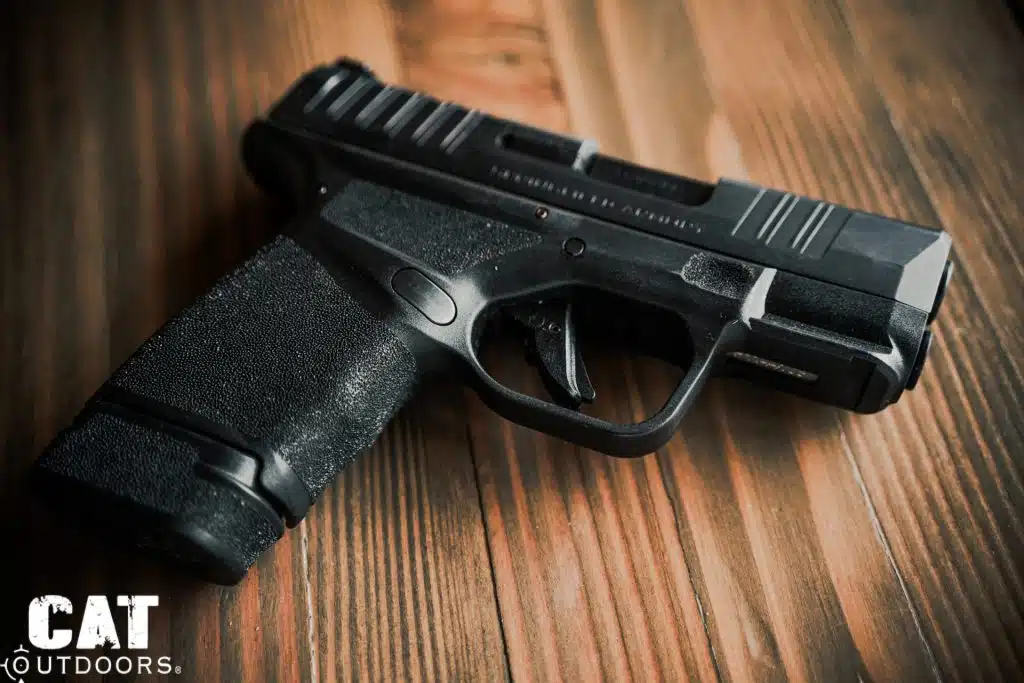
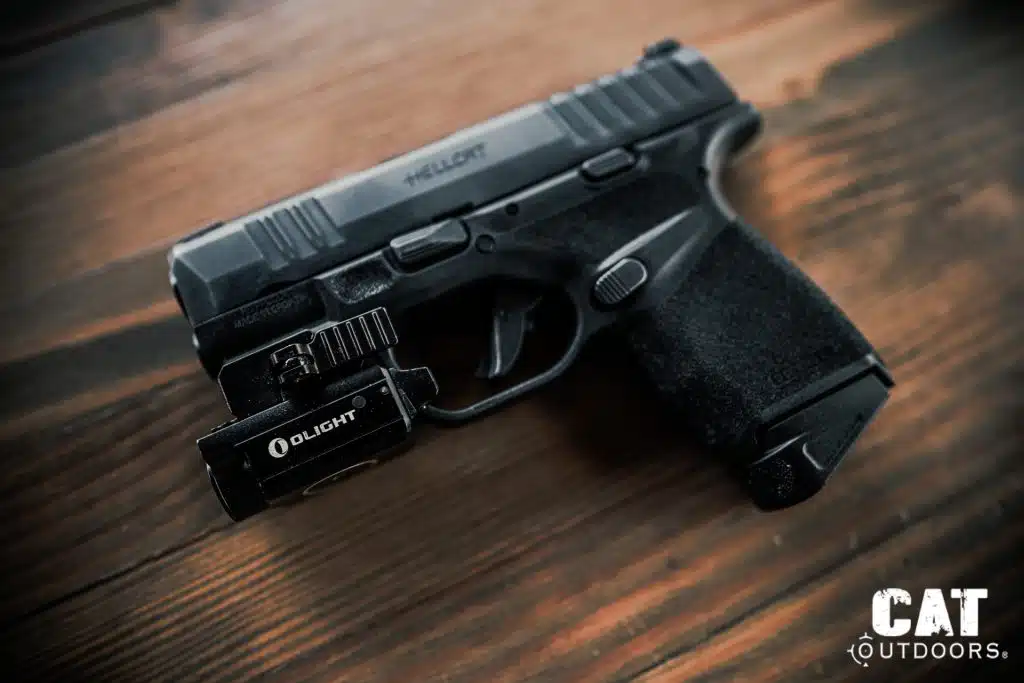
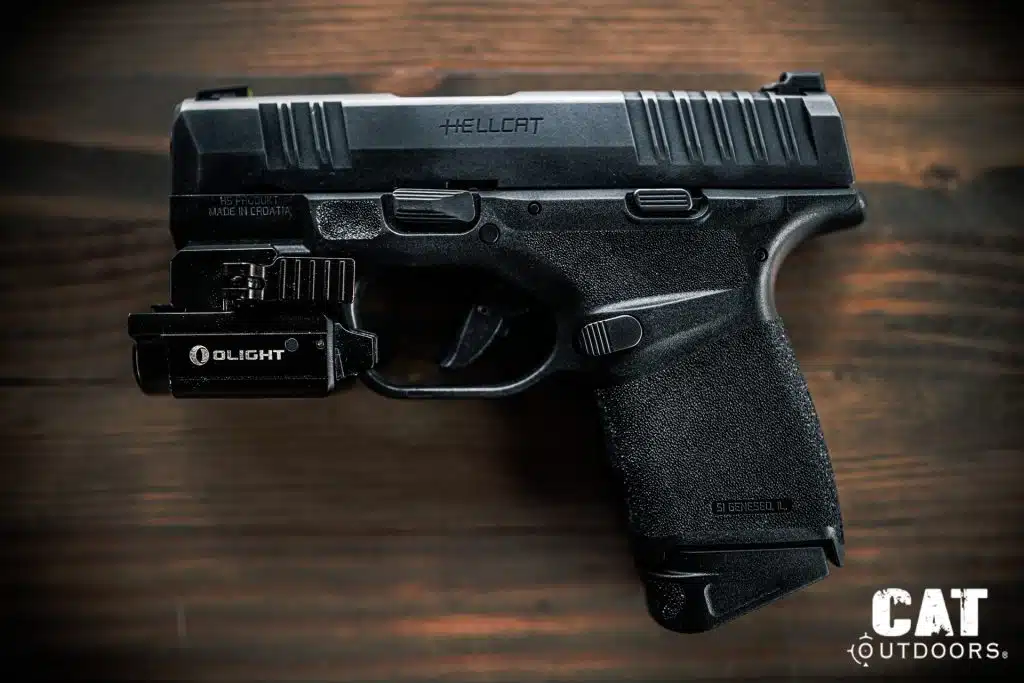
The beavertail is generous without adding bulk. Slide serrations are aggressive front and rear, function over aesthetics. The slide stop is on the smaller side, usable but not the easiest reach for a thumb-up grip. And the accessory rail on the dust cover accepts proprietary subcompact lights only; standard Picatinny lights won’t fit, but the Olight Baldr Mini and Streamlight TLR-7 Sub for Hellcat are factory-supported options.
1,200 Rounds of Boring (That’s a Compliment)
Six years, roughly 1,200 rounds, and the most exciting thing this gun has ever done is nothing. The gun has been ridden hard and put away wet for most of its life and never failed me until I started counting carefully.
Across the entire ownership window: zero failures to feed. Zero failures to fire. Zero failures to extract or eject. Zero light primer strikes. It has fed 115 grain FMJ from Winchester, AAC, Fiocchi, and Federal, and defensive hollow-points without complaint. I clean it regularly, sometimes after every range trip, sometimes after every other. I’ve never buried it in mud or dropped it through lake ice. This isn’t a torture-test channel; it’s what six years of real carry looks like.
Liking this one? Add CAT Outdoors as a preferred source on Google and stories like it show up first.
Add on GoogleThen I started counting. The recent 226-round session, all Winchester 115 grain FMJ, surfaced one thing worth documenting: four failures to lock back on an empty magazine. Three on the 13-round extended, one on the 11-round flush. In each case the gun fired the last round, ejected the case, and the slide closed on an empty chamber instead of locking open. Zero feeding, firing, extraction, or ejection failures in the same session.
To be clear, this is not a stoppage. Every round fired. But in a defensive context, the slide locking open is your empty indicator. You’d notice, but you’d notice slightly later than you should. I don’t recall this happening in earlier years of ownership; then again, I wasn’t logging data at this granularity before.
Three possibilities:
- Light 115gr FMJ may not drive the slide rearward hard enough to engage the slide stop on a tightly sprung micro-compact. Practice FMJ runs softer than defensive loads (SAAMI’s published pressure specs are the rabbit hole if you’re curious). Higher-pressure 124gr or defensive ammo could resolve it; I haven’t tested that yet.
- The recoil spring in a six-year-old gun may simply be due. Springfield specifies a service interval; mine is overdue.
- A sample-specific quirk in the slide stop spring or magazine follower geometry. Other Hellcat owners report the same behavior on the forums. Not rare, not universal.
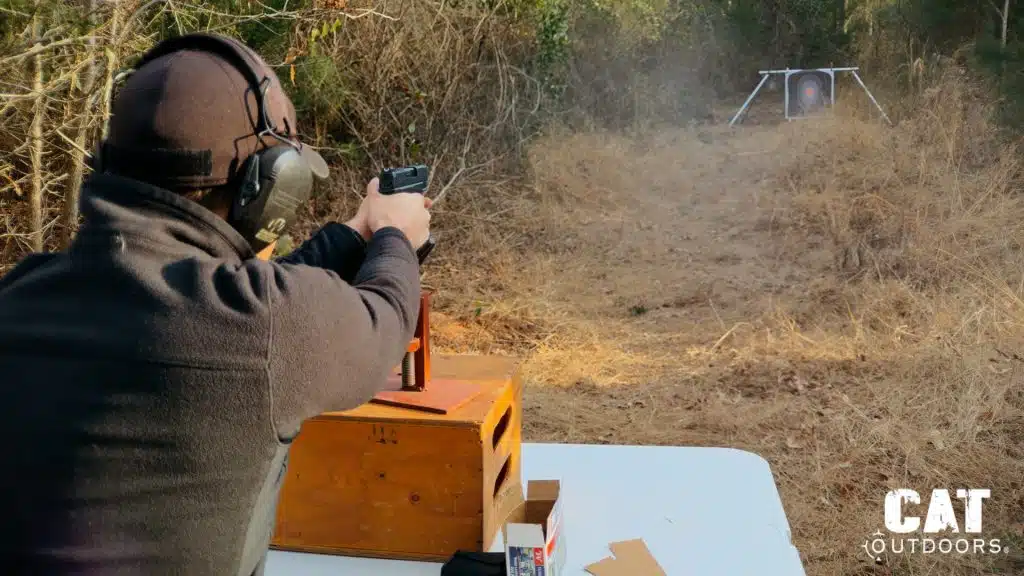
For a carry gun this is a yellow flag, not a red one. Nothing in the firing cycle has failed in 1,200-plus rounds. It needs a follow-up with heavier loads, and it belongs in a review someone might bet their life on. It doesn’t disqualify the gun. It does cost it: 8.5 instead of 10.
The Trigger: 5.74 Pounds of Commitment
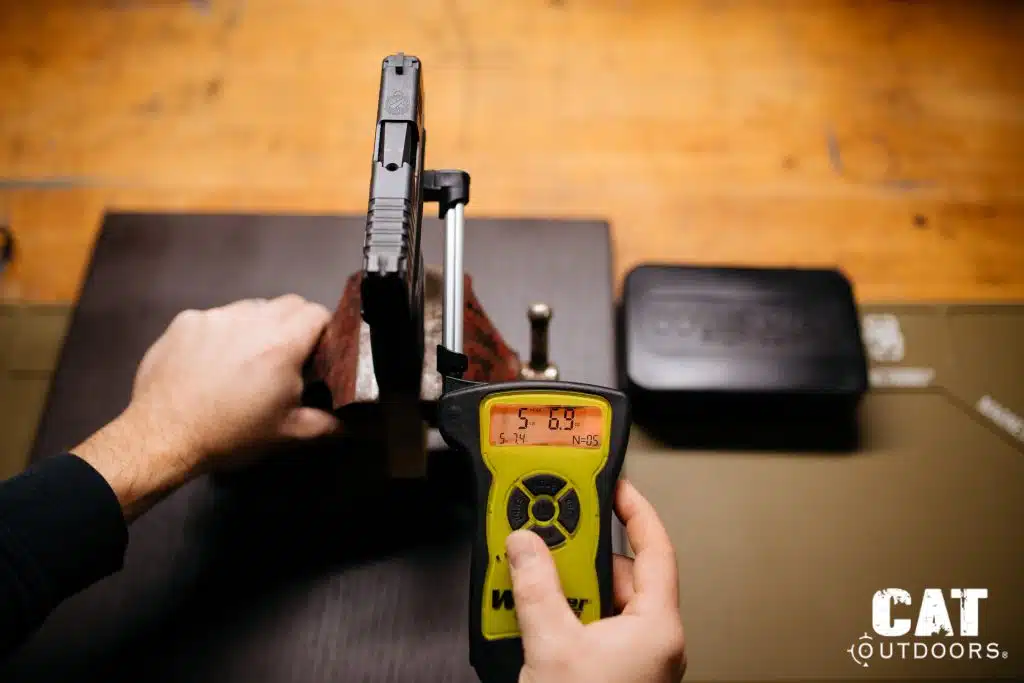
I put the Hellcat on a Wheeler digital trigger gauge and pulled five times. The average worked out to 5.74 pounds (the display read 5 lb 6.9 oz on one of those pulls, if you like your data raw). Springfield’s published spec is 5.5, so plan on it running about a quarter pound heavy in real life.
It feels like every ounce of it. The take-up is short and clean, a brief travel through a light spring before you hit the wall. The wall is clear and well-defined. So far, so good. Then comes the break, heavier than the take-up suggests, with a fraction of mush between the wall and the sear letting go. The reset is crisp but long; the trigger travels further forward than I’d like, and fast follow-up shots pay a small tax for it.
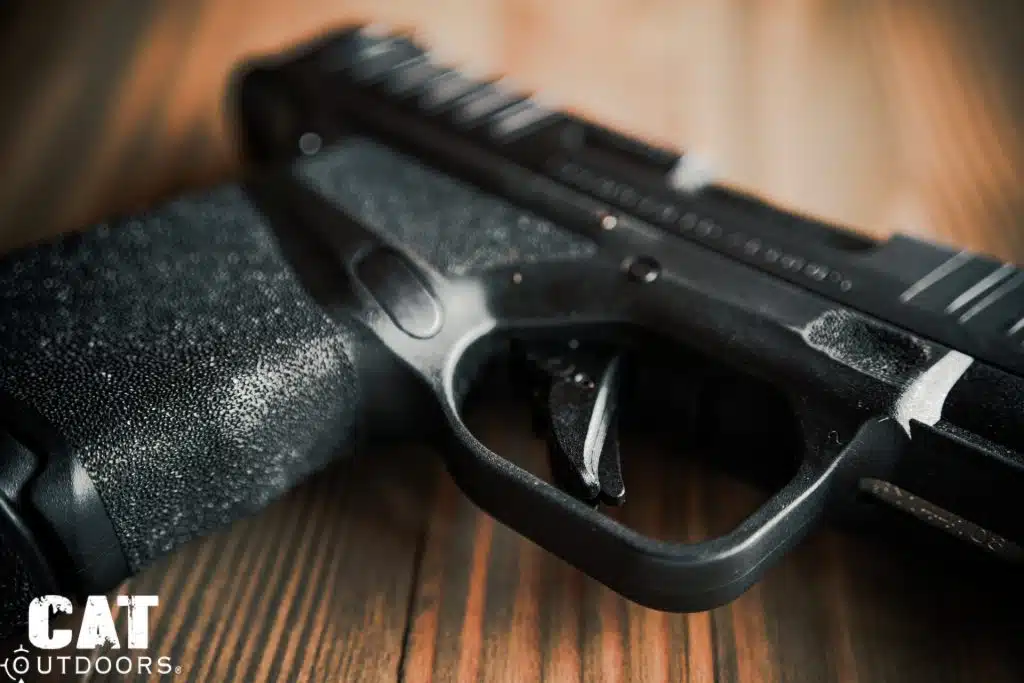
To be fair: this is a defensive trigger on a striker-fired gun with no manual safety, and IWB carry means the trigger guard sees more incidental contact than any range gun’s ever will. Springfield engineered it to demand a deliberate, intentional pull, and it does exactly that. It’s just not pleasant the way an aftermarket Apex or Powder River trigger is pleasant, which is why Hellcat owners who care about trigger feel often swap after a few thousand rounds.
Coming from a 1911 or a custom carry gun, you’ll call it heavy and slightly mushy. Coming from a stock Glock or M&P, it’s the same neighborhood: slightly heavier, slightly less crisp at the break. A new shooter won’t care. A competition-minded shooter should budget $150 to $250 for the aftermarket fix after a few hundred rounds on the factory unit.
It’s not a bad trigger. It’s just not a good one. That’s the honest read.
Shootability: The Day It Out-Shot My P99
Bench accuracy from a seated rest, four distances, Winchester 115 grain FMJ:
| Distance | Rounds | Group Size |
| 7 yards | 12 | 2.5″ x 2.5″ |
| 15 yards | 13 | 3″ x 4″ |
| 20 yards | 13 | 7″ x 8″ |
| 25 yards | 13 | 5″ x 8″ |
| 25 yards | 13 | 7″ x 7″ |
| 25 yards | 52 (sustained) | 11.5″ x 16″ |
Every group trended left of point of aim. Could be the sights, could be my trigger press; a bench rest removes a lot of shooter error, not all of it. Either way, the takeaway stands: bench-test your carry gun. Most people never do, and a defensive encounter is a terrible time to discover your point of impact is off.
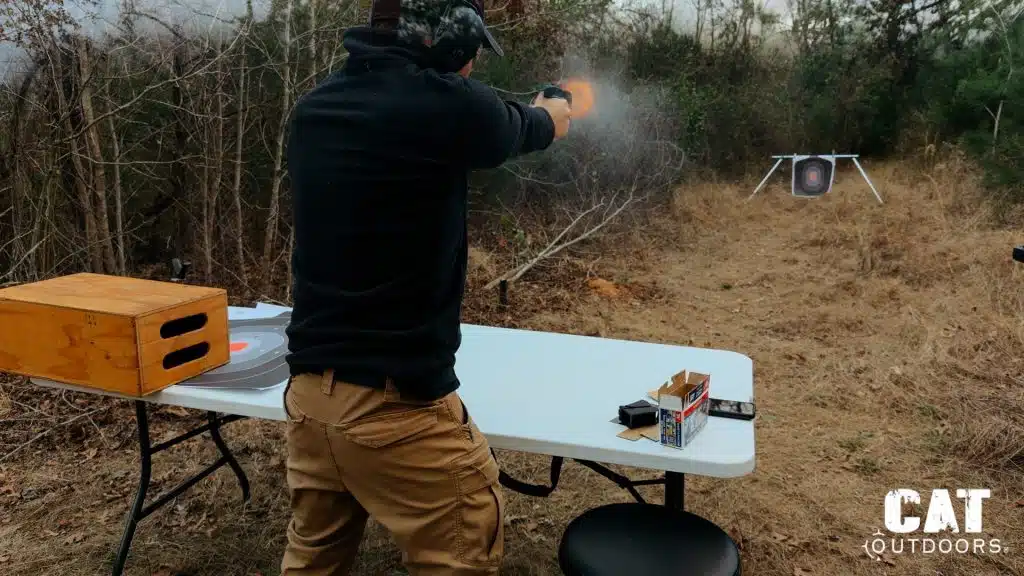
Recoil at 17.9 ounces with a 3-inch barrel is what you’d expect: snappy. Newton’s third law has very little mass to push against. It doesn’t feel like a full-frame 9mm, and it doesn’t feel uncontrollable either. It feels like a competent micro-compact that returns to target faster than its size suggests, helped by the grip texture and where the bore sits over the hand. Fired side by side with a friend’s P365 (one range session, not a formal A/B), the two were practically interchangeable. Slightly different recoil signature, slightly different flip, same result on paper. The Hellcat just hands you one more round.
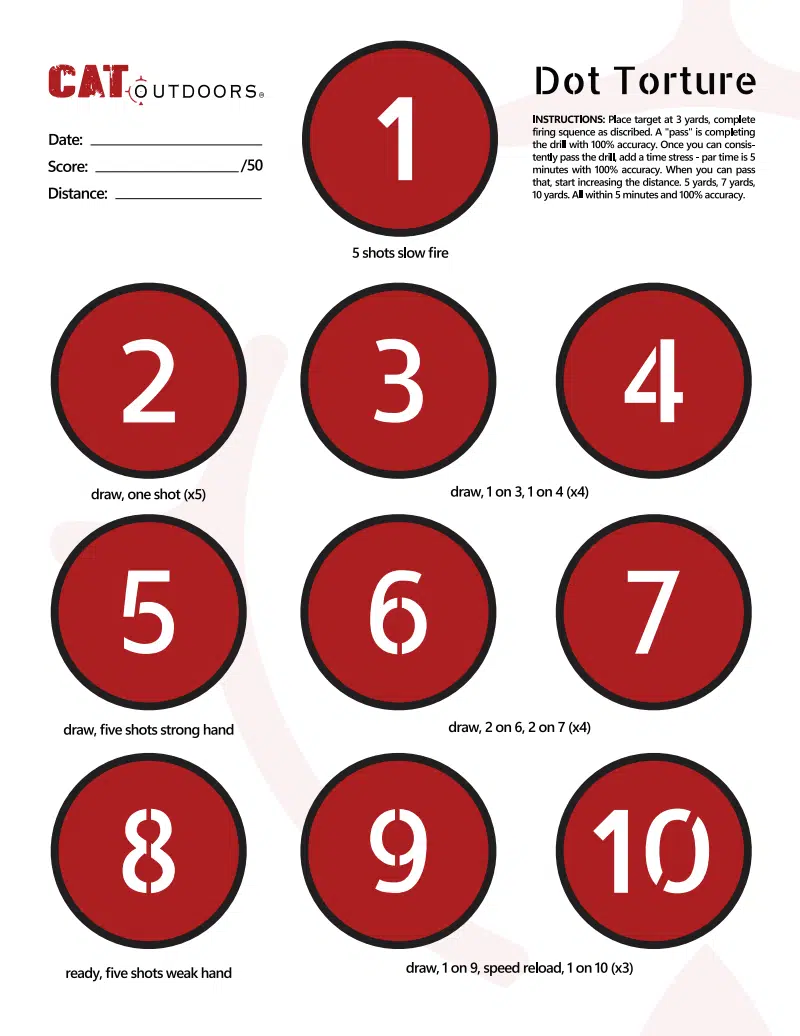
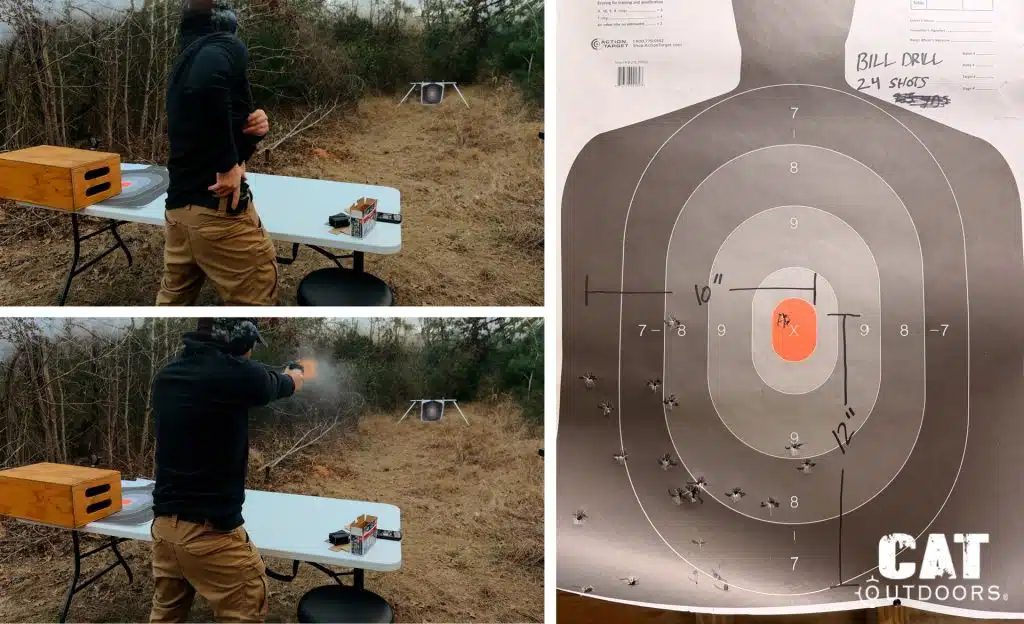
Bill Drill at 7 yards: draw from the holster, six shots as fast as I can confirm hits. I keep all six inside a 10×12-inch zone every run; the composite photo below is 24 rounds across four runs, all in the zone. Acceptable, not impressive. A more practiced shooter shrinks that to 8 inches, a competition shooter to 4. The limiting factor is the trigger, then me. In that order. I’m almost sure.
First time at the range with the Hellcat, I out-shot my Walther P99, which I’d had for years and was much more practiced with. That stung a little, and it told me something: this gun is genuinely shootable for its size. Six years on, I trust this gun over most of my other carry options. Not because it’s the most refined, but because it’s the most predictable.
Sights, Grip, and the Dive-Watch Test
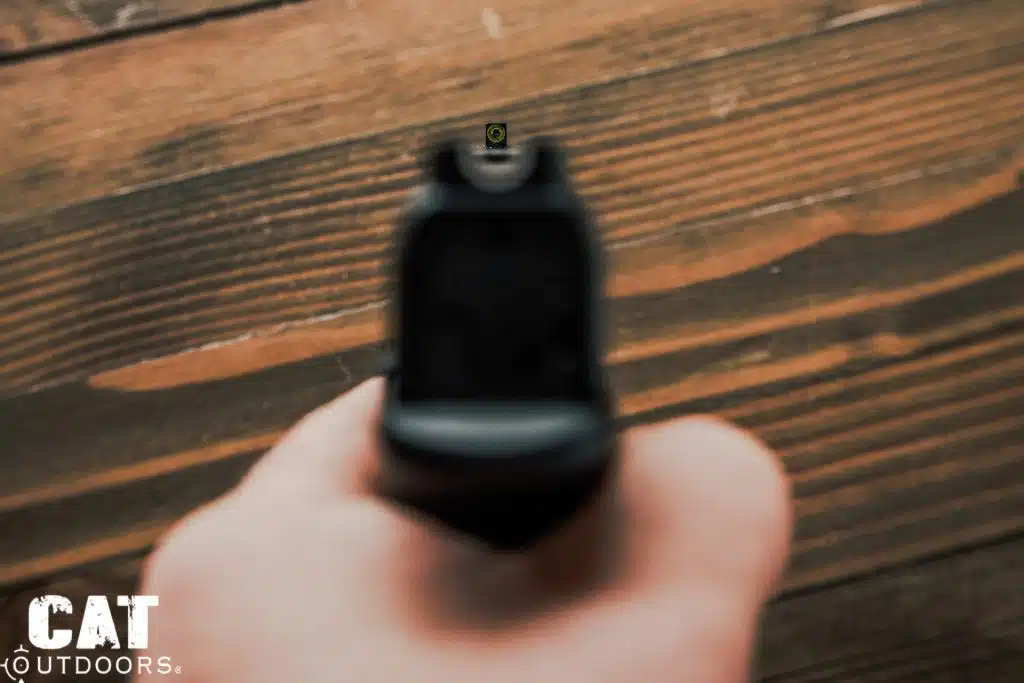
The iron sights are the best thing on this gun, full stop. Front: a tritium vial inside a bright luminescent ring. Rear: Springfield’s steel Tactical Rack U-notch, squared off at the front face so you can run the slide one-handed off a belt or boot edge if a hand is out of commission.
The sight picture is fast to acquire and easy to verify. The front slots cleanly into the rear U, and in daylight the luminescent ring reads like a bright bullseye against any target. In low light the tritium glow is comparable to the tritium dial on a quality dive watch (actually visible, not theoretical visible). I’d still take a tritium rear from the factory for a fully illuminated picture, and aftermarket rears are easy to install, but the U-Dot system works as shipped.
Grip fit: I have small to medium hands. The flush 11-round magazine puts my pinky on the baseplate without leaving it dangling, which is the ideal compromise on a micro-compact. The 13-round extended fills the hand completely and feels substantially better, at the cost of a slightly more visible grip in concealment. Larger hands will lose the pinky entirely on the flush mag; for those shooters the 13-rounder is the carry magazine. Smaller hands than mine will find the flush more than sufficient.
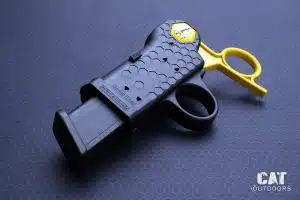
The Adaptive Grip Texture under live fire is exactly what Springfield advertises: secure, confident, not painful. Sweaty hands don’t slip, and the slide serrations grip cleanly even when wet. The slide stop is my one gripe; I find myself shifting grip slightly to lock the slide back. The reversible magazine release is well-placed and correctly sized. Magazine springs are stiff out of the box, so I load with a speed loader, and so will you after the third magazine.
Round-Count and Failure Log
The numbers behind everything above:
| Metric | Value |
| Lifetime rounds (6 years ownership) | ~1,200 |
| Most recent session rounds | 226 |
| Most recent session date | January 20, 2026 |
| Most recent session ammo | Winchester USA 115gr FMJ |
| Most recent session location | Outdoor range, 50°F partly cloudy |
| Magazines used in recent session | 11-round flush + 13-round extended |
| Failures to feed (lifetime) | 0 |
| Failures to fire (lifetime) | 0 |
| Failures to extract (lifetime) | 0 |
| Failures to eject (lifetime) | 0 |
| Light primer strikes (lifetime) | 0 |
| Failures to lock back on empty (recent session) | 4 (3× 13-rd mag, 1× 11-rd mag) |
| Stoppages requiring tools (lifetime) | 0 |
Carry and Long-Term Use
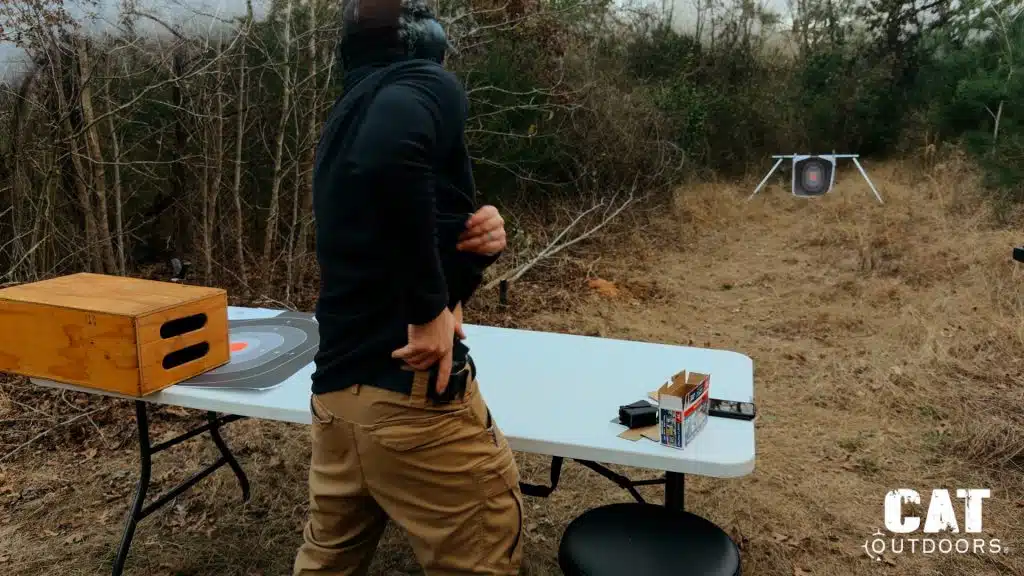
I’ve carried this Hellcat in an Amberide Kydex IWB at the 4 o’clock position for most of six years; that’s the draw you saw at the top of the page. The carry footprint is small: 6 inches long, 4 inches tall with the flush mag, 1 inch wide. It disappears under a t-shirt for most body types. The 13-round extended adds half an inch of height; under a tucked-in shirt you’re still fine, under a fitted polo the bottom edge of the magazine might print.
Long-term wear: the Melonite finish has held up well. There’s holster wear at the muzzle end of the slide and along the leading edge of the dust cover, both typical for a Kydex-carried gun. No rust, no corrosion, no chips. The polymer frame shows no wear at all. The trigger feels exactly as it did out of the box (neither smoother nor stiffer after 1,200 rounds), and the slide-to-frame fit has stayed tight without binding.
Field stripping is painless. Lock the slide back, rotate the takedown lever, release the slide forward off the rails. Three components: slide, frame, recoil spring assembly with barrel. No tools, no pinch points, and the recoil spring assembly is captured, so it won’t launch across the garage during cleaning. Anyone who has launched an uncaptured spring across the garage knows exactly why that matters.
Springfield Armory’s lifetime warranty applies, and their wording is about as unambiguous as warranties get: free of defects in workmanship or material “for life. Period.” In practice Springfield runs one of the better warranty programs in the industry, solidly top tier if not the absolute fastest. I’ve never had cause to file a claim, which is its own kind of data.
Magazines, Holsters, and Light Compatibility
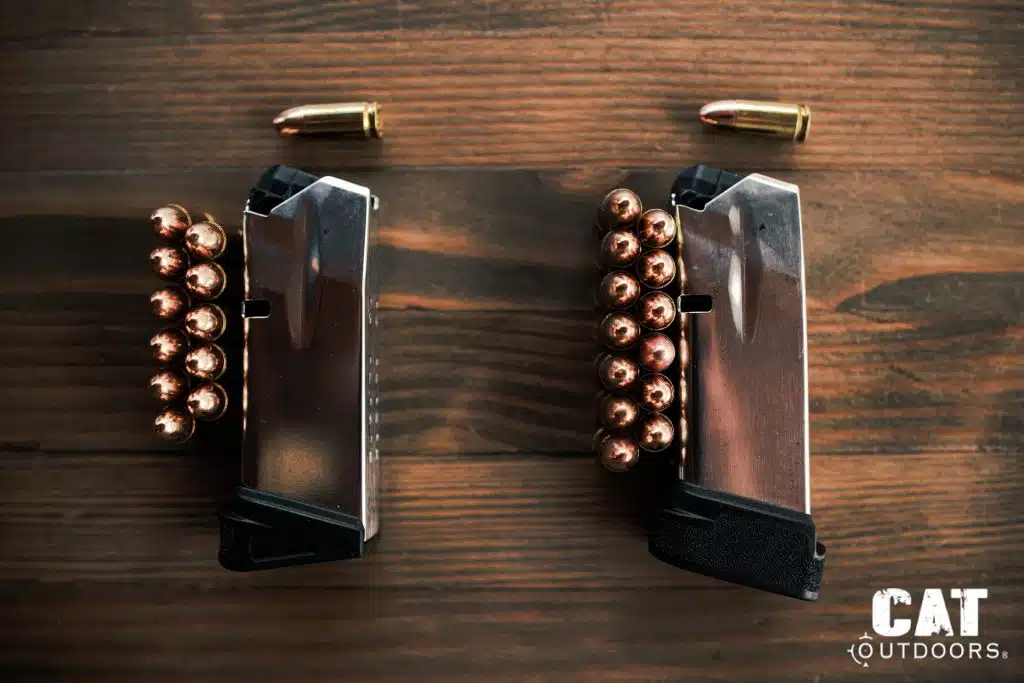
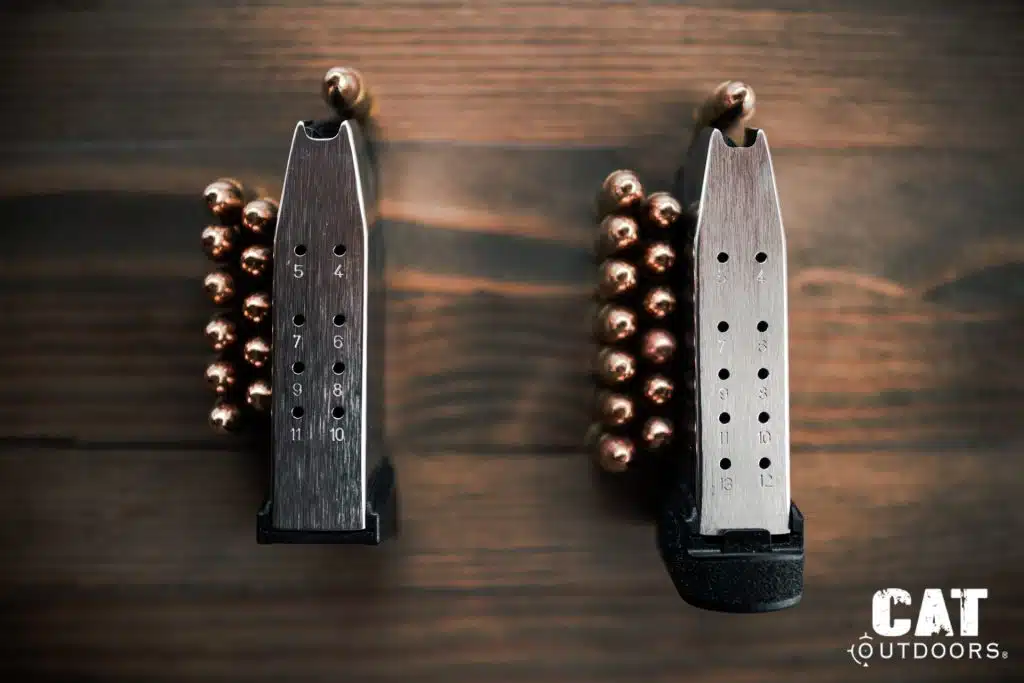
Magazines: the factory 11-round flush and 13-round extended both ship in the box. Springfield’s 15-round Hellcat Pro magazines fit the standard frame and extend below the grip; useful as range mags or spares, less useful for concealment. Aftermarket options exist, but given how sensitive the lock-back behavior is to magazine geometry, I’d stick to factory mags for any defensive role.
Holsters: the Hellcat has been on the market long enough that holster availability rivals a Glock’s. Kydex IWB, leather, OWB, appendix, ankle, pocket, shoulder: all covered, from multiple makers. I’ve run the Amberide Kydex IWB for six years. Vedder, Tier 1, Tenicor, T.Rex Arms, and StealthGearUSA all make Hellcat-specific rigs with strong reputations; they’re the same brands we vetted in our Glock holster guide.
Lights: the rail accepts proprietary subcompact weapon lights only. The Streamlight TLR-7 Sub for Hellcat and the Olight Baldr Mini are the two most commonly recommended. Don’t try to mount a TLR-1 or any full-size light; the Hellcat rail is shorter than a standard MIL-STD-1913 rail and they won’t fit. I run the Baldr Mini for home-defense duty, when the gun comes off my hip and onto the nightstand.
Improvements I’d Like to See
Three things Springfield could fix tomorrow:
A lighter factory trigger. The measured 5.74 pounds runs heavier than the segment average. The P365 ships at around 5 pounds, the Glock 43X at around 5.5 with a cleaner break, the Shield Plus at around 4.5 with the Performance Center option. A factory trigger in the 4.5 to 5 pound range with a crisper break and shorter reset would close the single biggest gap between the Hellcat and its peers without compromising the safety case. Springfield’s confirmed change on newer production is a revised trigger, not a new generation of the gun, and I haven’t tested it.
A tritium rear sight from the factory. The U-Dot front is excellent; the rear is functional but unlit. A tritium rear at the same MSRP would make the iron-sight package unambiguously the best in the segment. Springfield offers TruGlo tritium on some configurations; make it standard.
A larger slide stop. The factory lever makes me shift my grip to lock the slide back from a normal firing hold. Not a daily problem, but a repeated one during range sessions, and a slightly longer lever wouldn’t change the gun’s profile in any meaningful way. It would resolve the only real ergonomic complaint I have.
Who It’s For (and Who It’s Not For)
It’s for:
- CCW shoppers who prioritize capacity-per-cubic-inch above all else. The 11+1 flush is still the highest standard capacity in the micro-compact class, and the 13+1 extended adds depth without much extra footprint.
- Iron-sight purists who want a quality tritium U-Dot package out of the box rather than as an aftermarket upcharge. The factory sights are best in segment at this price.
- Shooters cross-shopping the P365, Glock 43X, Max-9, or Shield Plus who want a less-common option with strong factory features. The differences come down to grip fit and preference more than mechanical capability.
It’s not for:
- Shooters with larger hands. The standard 3-inch frame is sized for small-to-medium hands; big hands end up with a pinky off the gun on the flush mag and more felt recoil through a less-secure grip. The Hellcat Pro’s 3.7-inch frame fits better.
- Recoil-sensitive shooters who haven’t handled a 3-inch, 17.9-ounce 9mm before. The Hellcat is snappy by class standards; the Pro is the softer-shooting gun in a barely larger envelope.
- Trigger snobs. The factory trigger is acceptable for its purpose, not exceptional. If trigger feel matters more to you than capacity, the Shield Plus and P365 both ship crisper, or budget $150 to $250 for the aftermarket swap.
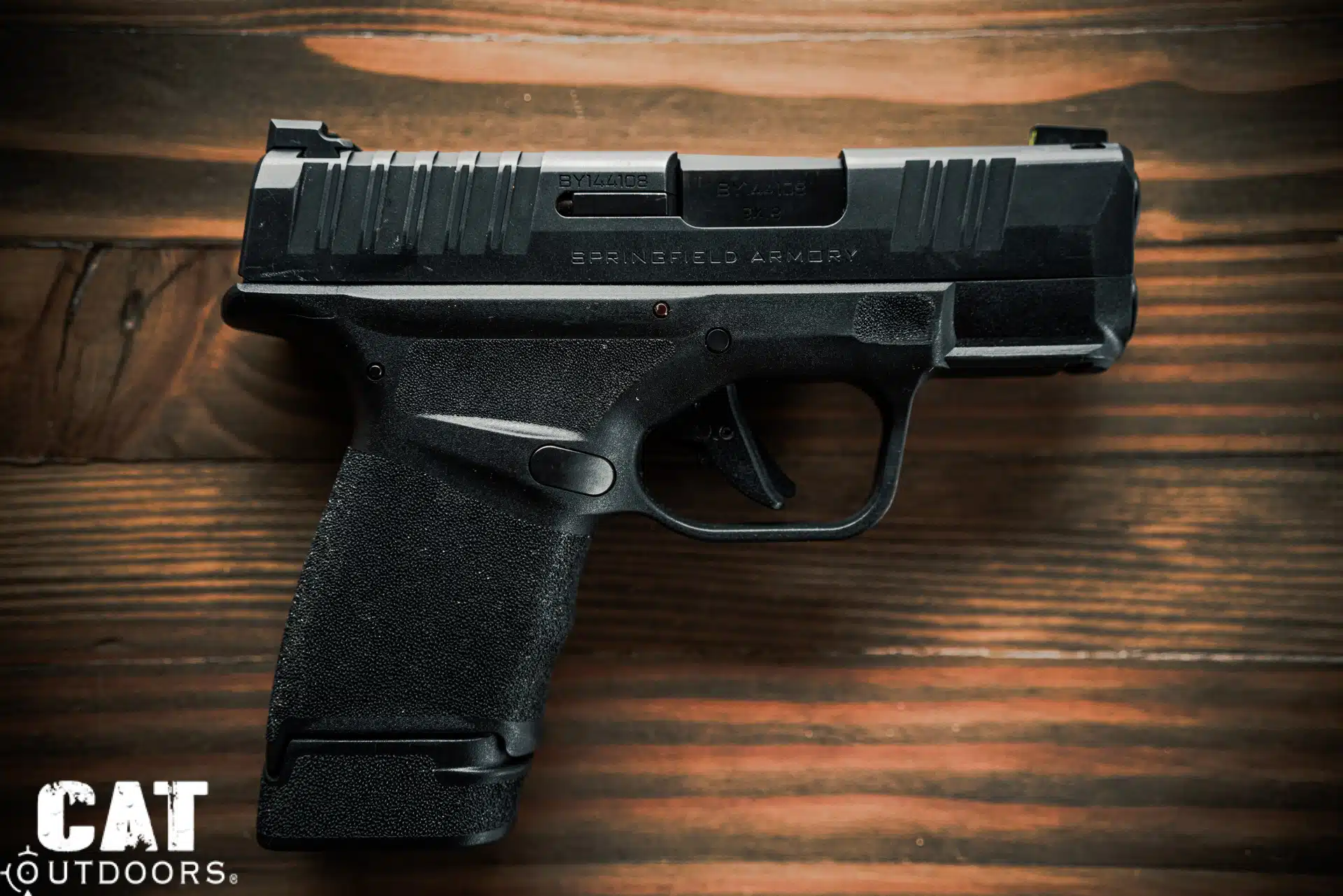
Springfield Armory Hellcat
Six years of daily carry and roughly 1,200 rounds later, it's still the gun on my hip every morning.
Our Verdict
Six years ago I bought a Hellcat as a backup plan for a P365 I couldn’t get. Six years later it’s still my carry gun. Not because it’s dramatically better than the alternatives; the segment has converged to the point where every gun in this class is genuinely good. It’s because this one has been reliable for me, the sights have earned their keep, and the capacity edge matters when the gun in your holster is the whole plan.
The price math has shifted since the segment’s early days. MSRP is $653 as of this writing, but nobody pays MSRP; street prices run $500 to $600, typically around $550, and current P365 and Glock 43X street prices land close enough that the gap shouldn’t decide this on its own (check live listings; these numbers move weekly). Which leaves the actual trade: the Sig counters with a slightly cleaner trigger, the Glock with the Glock parts ecosystem. The Hellcat’s answer is the best factory irons in the class, the eleventh round, and an optic cut that no longer costs extra. That last one is real added value: buyers used to pay an upcharge for the OSP slide, and now it’s just what a Hellcat is.
Within the lineup: if you want softer recoil and a fuller grip, the Pro gives you a 3.7-inch barrel and 15+1 for a modest step up in size. If you want a compensator, the Pro Comp exists. Threaded barrel, RDP. The standard 3-inch Hellcat is the smallest of the family and the right answer when the smallest possible carry envelope is the entire point.
Where it lost points:
- Trigger pull measured 5.74 lb with a long reset
- Snappy recoil by class standards (physics, not a flaw, but real)
- Four lock-back misses on light 115gr FMJ, logged and not yet resolved
- Slide stop is a stretch from a normal firing grip
Final Score: 8.4/10
Six years in, it still rides at 4 o’clock every morning. That’s the whole review in one sentence.
FAQ
Is the Springfield Hellcat worth it in 2026?
If capacity-per-cubic-inch and factory tritium iron sights top your list, yes. Street prices run $500 to $600 right now (MSRP is $653), which puts the Hellcat within arm’s reach of the P365 and Glock 43X on price (check current listings). Pick on capacity, sights, and grip fit, not the sticker.
Hellcat vs. Sig P365: which is better?
Functionally interchangeable in the hand. Both ship with two magazines; the Hellcat’s edge is the capacity split (11+1 flush and 13+1 extended included) versus the P365’s two 10-rounders, plus a better factory iron-sight package. The P365 counters with a slightly cleaner trigger and a slightly smaller grip. Our side-by-side session showed essentially equal recoil and accuracy. Pick the one that fits your hand and is actually in stock.
Is the Hellcat reliable?
Across roughly 1,200 rounds and six years of carry, ours has had zero failures to feed, fire, extract, or eject. A logged 226-round session surfaced four failures to lock back on an empty magazine with light 115gr FMJ; the gun fired every round, but the slide closed instead of locking open. That’s a behavior worth replicating with heavier ammo, not a stoppage. The platform’s broader reputation across thousands of owners is strong.
What’s the difference between the Hellcat and the Hellcat OSP?
As of 2026, nothing you can buy separates them: Springfield consolidated the lineup, and every new Hellcat ships as an OSP with an optic-cut slide (cut for Shield RMSc-footprint red dots). If you don’t run a dot, a cover plate is included and the iron sights are excellent. Older non-OSP units, sold roughly 2019 to 2023, are mechanically identical minus the cut.
What’s the trigger pull on the Springfield Hellcat?
Our unit measured 5.74 pounds on a Wheeler digital trigger gauge over a five-shot average; Springfield’s published spec is 5.5 pounds. It’s a flat-faced striker trigger with a blade safety: short take-up, clear wall, slightly mushy break, long reset. Fine for defensive carry, not refined. Aftermarket replacements run $150 to $250.
Can I conceal a Hellcat under a t-shirt?
Yes, for most body types. The Hellcat is 6 inches long, 4 inches tall with the flush magazine, 1 inch wide, and 17.9 ounces unloaded. With a quality Kydex IWB holster at the 4 o’clock position, it conceals under most fitted t-shirts without printing. The 13-round extended magazine adds half an inch of height and may print at the bottom edge under tighter shirts.
Does the Hellcat fit Glock 43X holsters?
No. The frame profiles are different enough that holsters don’t cross-fit reliably. Buy a Hellcat-specific holster; Vedder, Tier 1, Tenicor, T.Rex Arms, StealthGearUSA, and Amberide all make well-regarded ones.
How many rounds does the Springfield Hellcat hold?
11+1 with the flush magazine and 13+1 with the extended, and both magazines come in the box. That 11+1 flush is still the highest standard capacity in the micro-compact class. Springfield’s 15-round Hellcat Pro magazines also fit the standard frame, extending below the grip.
Where is the Springfield Hellcat made?
Croatia. HS Produkt builds the Hellcat and Springfield Armory imports and sells it, the same arrangement behind the XD line for years. The frame is etched ‘HS Produkt Made in Croatia’ above the trigger guard.
Springfield Hellcat vs Hellcat Pro: which should I buy?
Buy the standard Hellcat if the smallest possible carry envelope is the point: 3-inch barrel, 11+1 flush, and it disappears under a t-shirt. Buy the Pro if you want a softer-shooting gun with a fuller grip: 3.7-inch barrel, 15+1 capacity, still concealable but a touch larger. Larger-handed and recoil-sensitive shooters should lean Pro.
Carrying a Hellcat? Cross-shopping the P365 or the 43X? Drop a comment below and tell us what you want tested next.
Also, be sure to check out our Glock 43X review for the same long-term treatment of its closest rival!
Keep the research going.
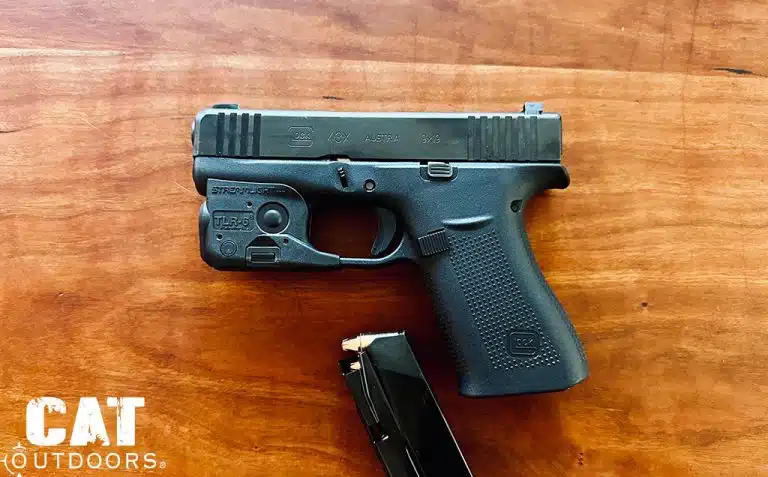 COMPARE
Glock 43X Review: Best Concealed Carry Gun?
The Glock 43X is Glock's best-selling single-stack 9mm for concealed carry — but is it actually better than the older 43 or the competing 48?...
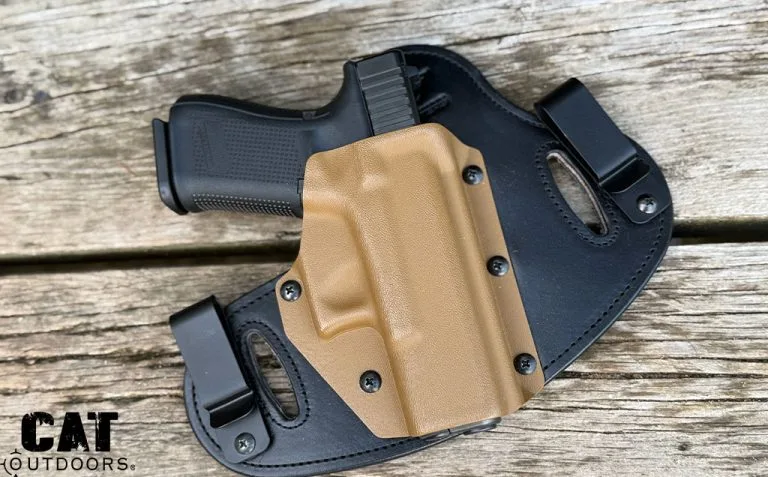 GO DEEPER
9 Best Glock Holsters for 2026: Hands-On Tested
The wrong Glock holster prints through your shirt, digs into your hip, or dumps your pistol on the ground. These are the Kydex, leather, and...
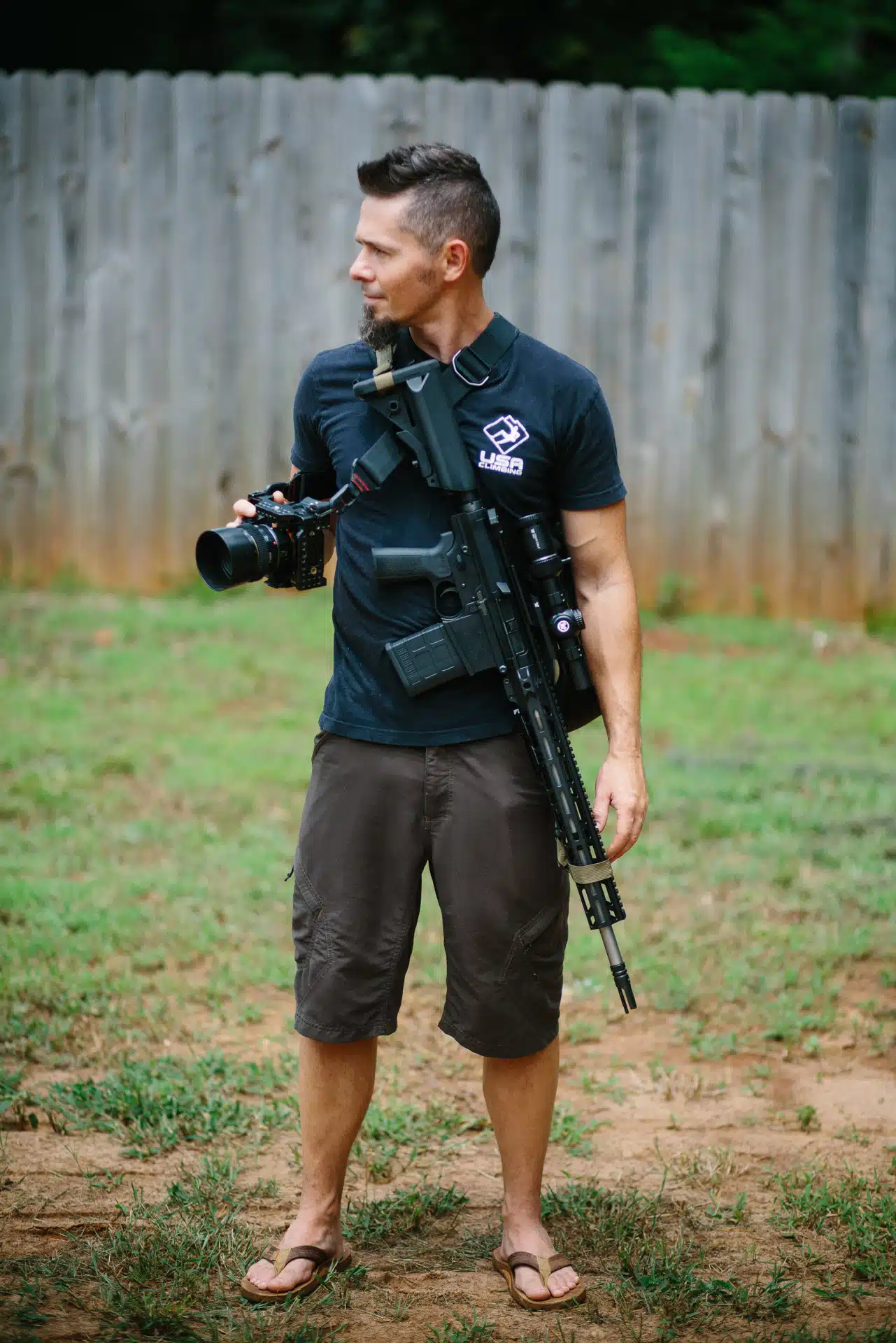
Brad Lanphear is a professional videographer by day and a gun enthusiast by night. When he’s not behind a camera, he’s usually at the range, in the workshop, or testing gear he probably didn’t need but wanted anyway. He enjoys practical firearms setups, well-designed tools, and helping others avoid common (and expensive) mistakes.