
Mira Safety CM-8M Review: Hands-On Gas Mask Test
The Mira Safety CM-8M is a premium full-face CBRN respirator that survived everything we threw at it: smoke, sweat, and a full workout. Here’s our hands-on review, and why the $340 price tag is only the start of the math.
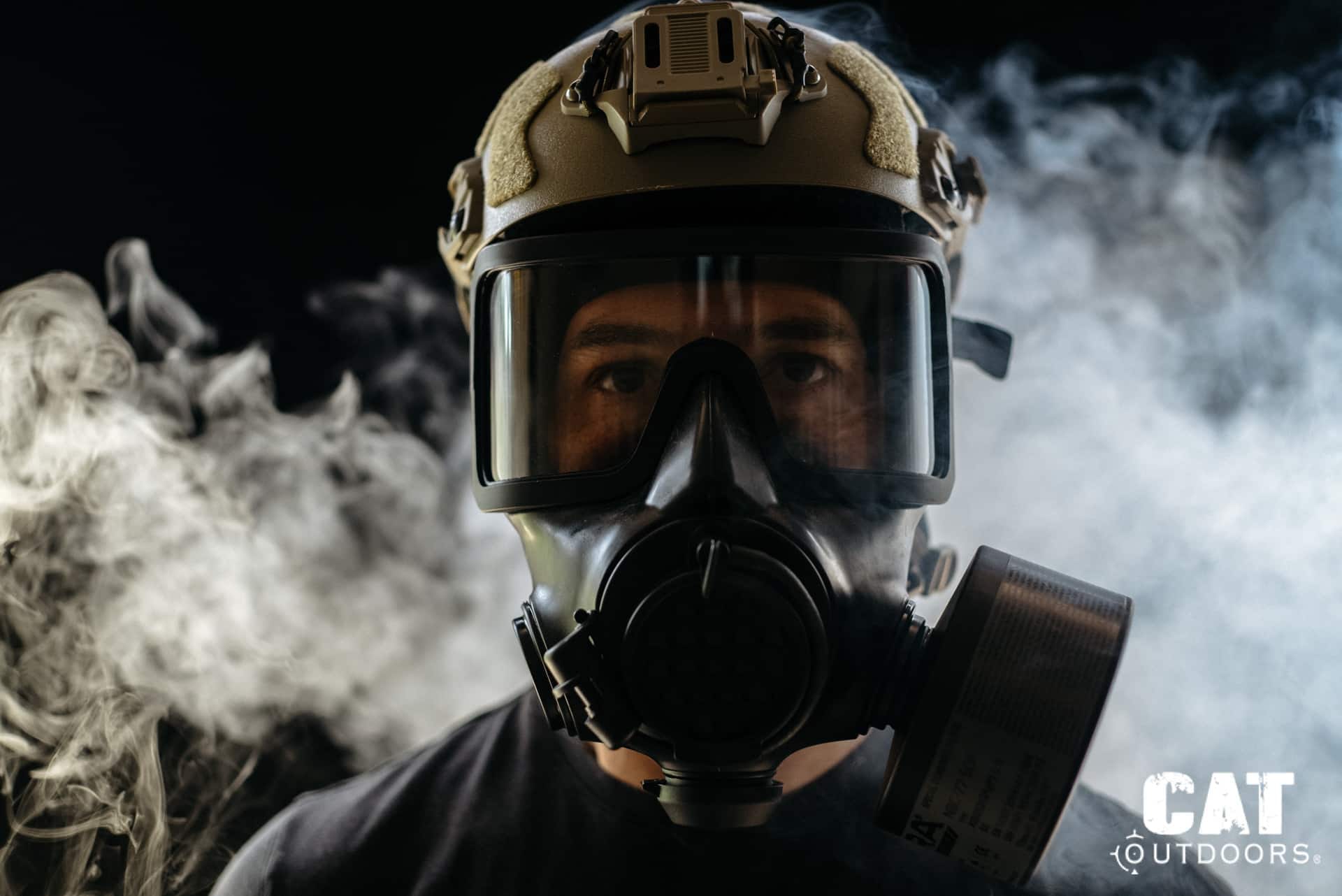
The CM-8M survived everything I threw at it: stage smoke, isopropyl, a full workout, and a rifle. The seal held even with a short goatee, the visor refused to fog no matter how hard I pushed it, and the voicemitter is clearer than it has any right to be. It gets uncomfortable past the hour mark and the cheek weld is awkward, but this is legitimate protective equipment, not tacti-cool cosplay. $340 before filters; $420-$800 all in.
Reasons to Buy
- Excellent seal confidence, even with short facial hair
- Anti-fog visor that genuinely would not fog
- Very good field of view for a full-face respirator
- Ambidextrous filter mounting for left/right rifle use
- Surprisingly clear voicemitter communication
- Standard 40mm NATO threads open up a huge filter ecosystem
Reasons to Skip
- Gets uncomfortable across the bridge of the nose on long wears
- Rifle cheek weld still feels awkward
- $420+ realistic buy-in once you add a filter
- Hydration tube flow is slow
- No storage case included at this price
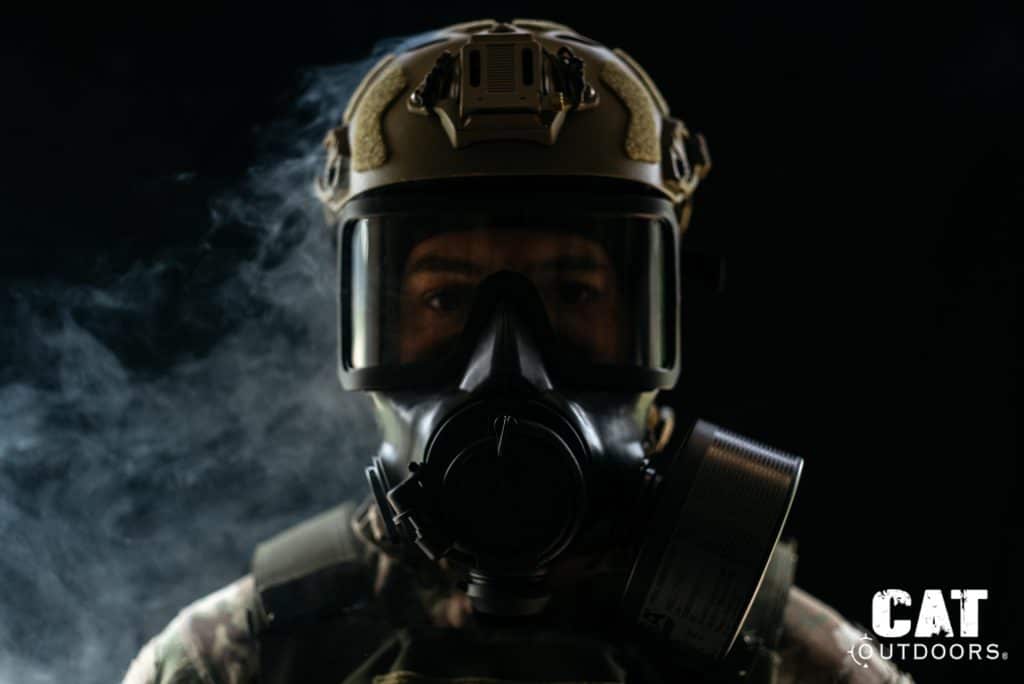
This Mira Safety CM-8M review is built on smoke tests, a full workout, and rifle drills: I wore the $340 full-face CBRN respirator until it showed me its breaking point. If you’re new to the emergency preparedness world, ordering a gas mask online might seem like overkill. Having one actually show up at your door? Downright surreal.
Before 2020, owning a gas mask felt paranoid. In 2026, after pandemics, riots, chemical train derailments, wildfire smoke, and endless videos of people sprinting through tear gas clouds holding iPhones, it honestly feels a lot more practical than most people want to admit.
So when a box from Mira Safety showed up at my door containing the CM-8M full-face respirator and a pair of NBC-77 SOF CBRN filters, I had two immediate reactions:
- “I wonder what my neighbors will think.”
- “I need to drop everything I’m doing and put this on right now.”
Keep both of those in mind. They become a theme.
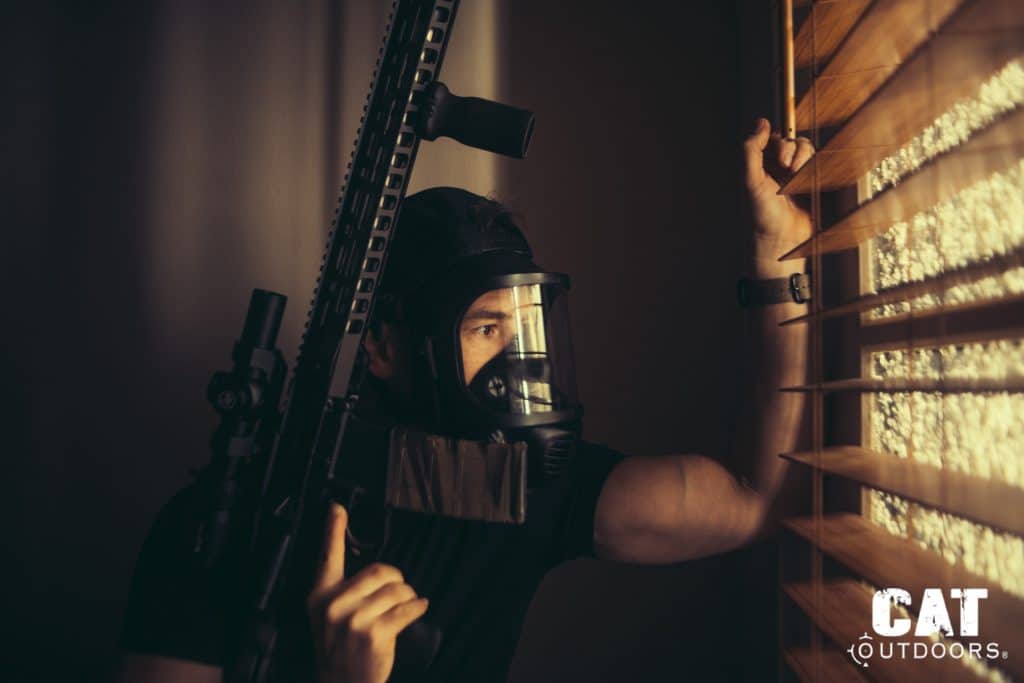
The CM-8M is Mira’s premium tactical respirator, sitting above the CM-6M in the lineup and alongside the CM-7M, aimed at shooters and preparedness-minded civilians. It’s also the mask you buy if your job involves the phrase “riot control.” Mira provided this one at no cost for review (full transparency below), and I spent weeks trying to find its breaking point.
Specs
- Weight: 540 g / 1.19 lb
- Materials: Bromobutyl rubber body, polycarbonate visor, 6-point mesh harness
- Field of View: 92.5% (manufacturer claim)
- Filter Thread: 40mm NATO (Rd 40 x 1/7″, EN 148-1), dual ambidextrous ports
- Certifications: EN 136 Class III, EN 168, CE
- Extras: Integrated voicemitter, closed hydration system with included canteen
- Shelf Life: 20 years (stored properly)
- Warranty: 1 year (Mira Safety)
- Country of Origin: Czech Republic
- MSRP: $339.95 (mask only; filters sold separately)
Why You Can Trust This Review
Full disclosure – Mira Safety provided the gear for this review at no cost. Here’s exactly what that means:
- Product Provided: CM-8M full-face respirator + two NBC-77 SOF filters, free of charge from Mira Safety
- Date Received: April 2026
- Tested By: Brad Lanphear, over multiple weeks of hands-on use
No money changed hands, Mira had no input on this review, and nobody there saw it before you did. Nobody at Mira knew the workout montage was coming.
This review is based on our actual experience with the mask, both the good and bad.
First Impressions: Cold War Vibes, Modern Build
For someone like me who has never used a military-grade gas mask before, taking it out of the box is an experience all by itself. The look is modern, but the moment you feel and smell the fresh bromobutyl rubber, anyone born in or before the ’80s gets an instant Cold War flashback. Nostalgia, a little paranoia, and a slightly unhinged smile.
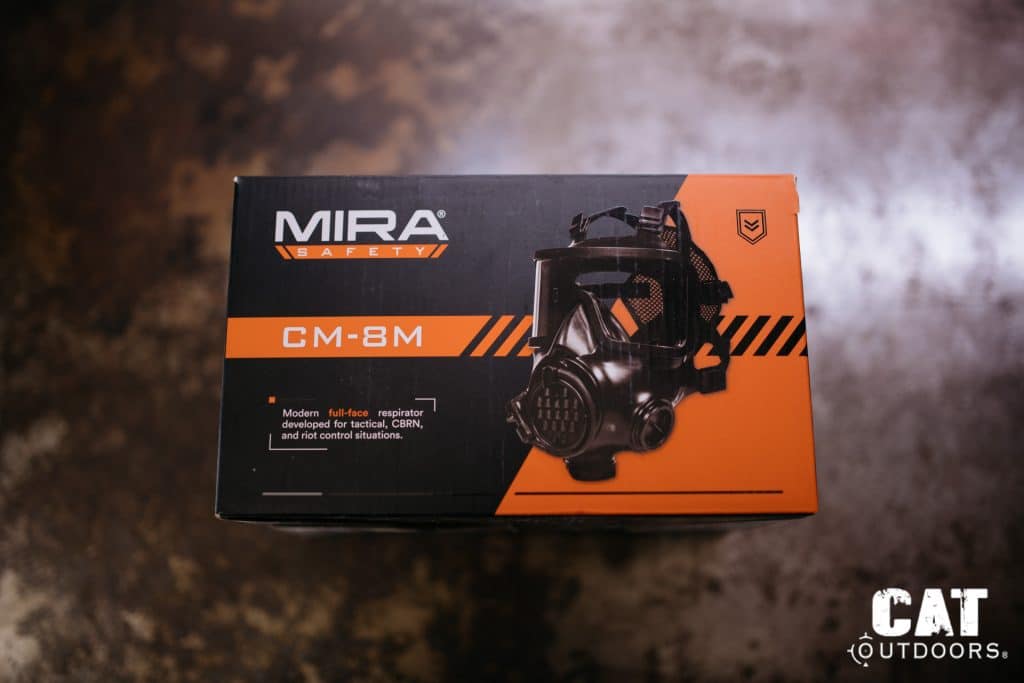
And to Mira’s credit, the CM-8M does not feel like costume-grade prepper gear once you actually handle it. The rubber, the visor, the harness system, the filter mounting hardware: everything about it communicates military grade.
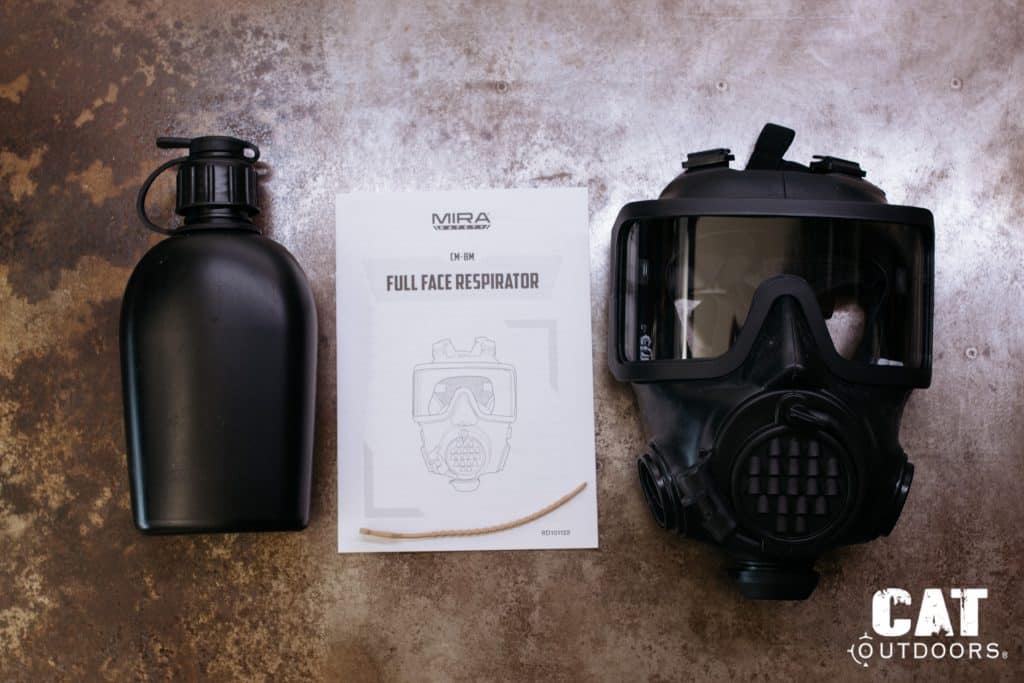
In the box: the mask, a drinking canteen with hose, and the manual. No carry case, which we’ll come back to.
You won’t spend very long holding it before the compulsion to put it on becomes irresistible. The harness is a mesh back panel with six elastic straps and tightening buckles.
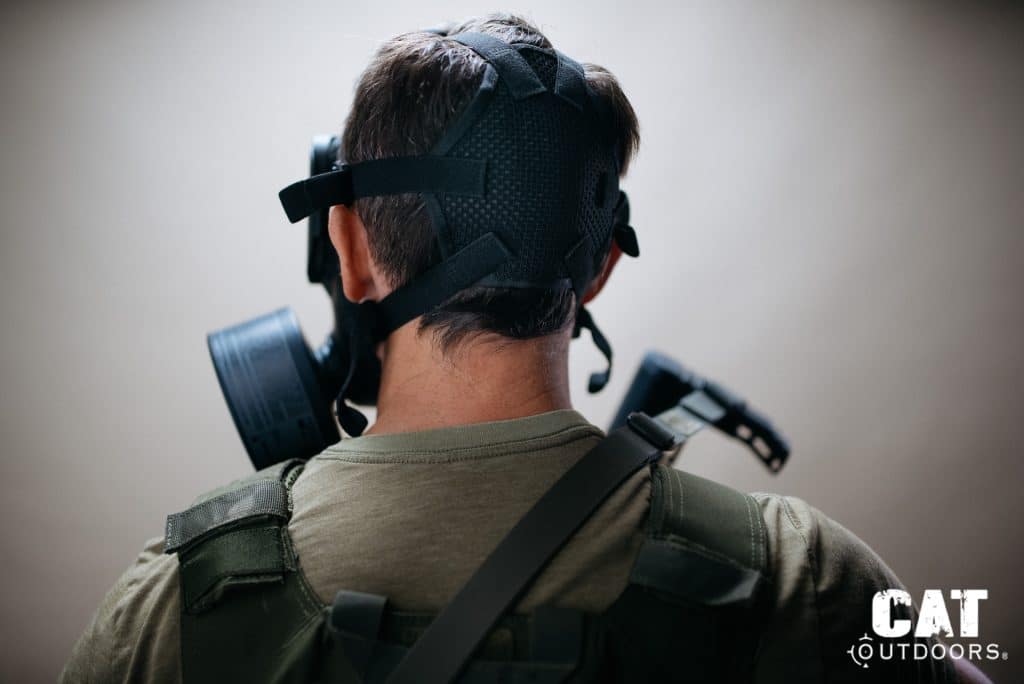
Adjusting the straps is a simple matter of pulling on the tail end. It takes some effort, and (pro tip) tighten the right and left sides at the same time instead of separately. Using both hands keeps the tension even. Ask me how I know.
That effort pays for itself in confidence: the straps stay exactly where you put them. You definitely don’t want a loose and leaky gas mask. That would probably be a one-time mistake.
Doffing is quick: pull the release tabs on the buckles. Trust me, you will come to appreciate that quick release.
How We Tested
We’re civilians, so there are limits to what we can responsibly evaluate. No CBRN test chamber, no live agents. I can test seal integrity, smoke, particulates, and practical usability. I cannot ethically (or legally) acquire VX for content.
So this review focuses on the real-world experience: comfort, ergonomics, visibility, communication, rifle usability, breathing resistance under physical stress, and the reasons a civilian might actually buy one of these.
The Poll
Which deer rifle should we test first?
Rifles, optics and gear tied last week. Starting with rifles. Pick one and we will buy it.
The Poll · Live Standings
Your vote is in.
0 votes so far. Winner announced in next week’s issue.
Want to Know the Final Results?
We tally the votes and name the winner in next week’s email. Sign up and the final standings come straight to your inbox, and you’ll be first to hear when the review goes live.
By signing up you agree to our Terms of Service and Privacy Policy. No spam, and we never sell your address. Unsubscribe anytime.
That didn’t go through. Check the address and try again.
Done. Watch your inbox.
You’re on the list. The final standings land in next week’s issue, and if your pick loses, take it up with the other voters.
Fit & Seal: The Part That Actually Matters
A leaky gas mask is a decorative object, so this is where the CM-8M had to earn its keep.
The face seal is actually two separate seals. The outer seal runs the full perimeter of your face; the inner seal keeps your breathing air separated from the eye chamber, which is a big part of why the visor doesn’t fog. The breathing chamber has three one-way valves: one on each side for the filters, one at the bottom for exhalation.
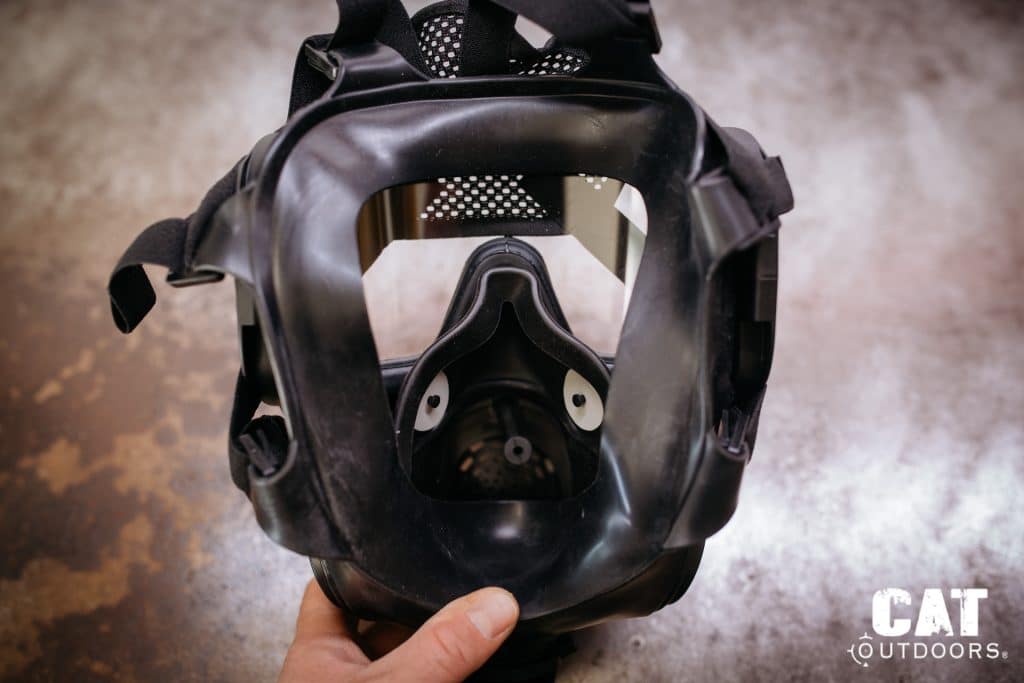
During testing I spent a combined total of two or three hours inside this mask, and even with my goatee I had no trouble getting what felt like a trustworthy seal immediately. (Clean-shaven would definitely make for a perfect seal.) The longer I wore it, the better the seal felt; as the rubber warms up, it slightly adheres to your skin in a good way.
The negative pressure test is the standard check: cover the filter inlet, inhale, and the mask should suck down against your face and hold. It instantly formed a tight suction with no noticeable leaks.
One quirk worth knowing: exhaled air vents through the one-way valve at the bottom of the mask. If your neck is exposed, you’ll feel it blowing against your skin. At first I thought I’d found a leak. I hadn’t. It’s just the exhaust.
The Smoke Test (and My Wife’s Perfume)
Static seal checks only tell you so much, so I escalated.
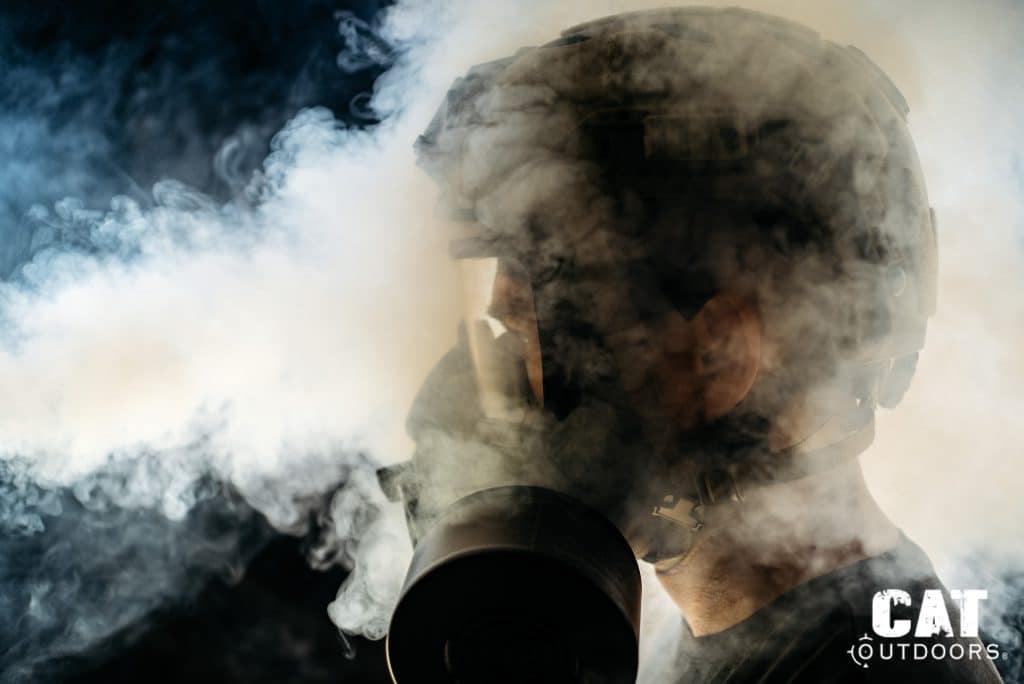
First: stage smoke, the kind used for concerts. It’s safe to breathe but has an unmistakable smell. With smoke blowing directly into my face, I couldn’t smell it at all. Next I held a bottle of isopropyl alcohol up to the filter and breathed deep. Nothing. Febreze? Nothing. My wife’s perfume? Nothing. No smells came through the filter at all.
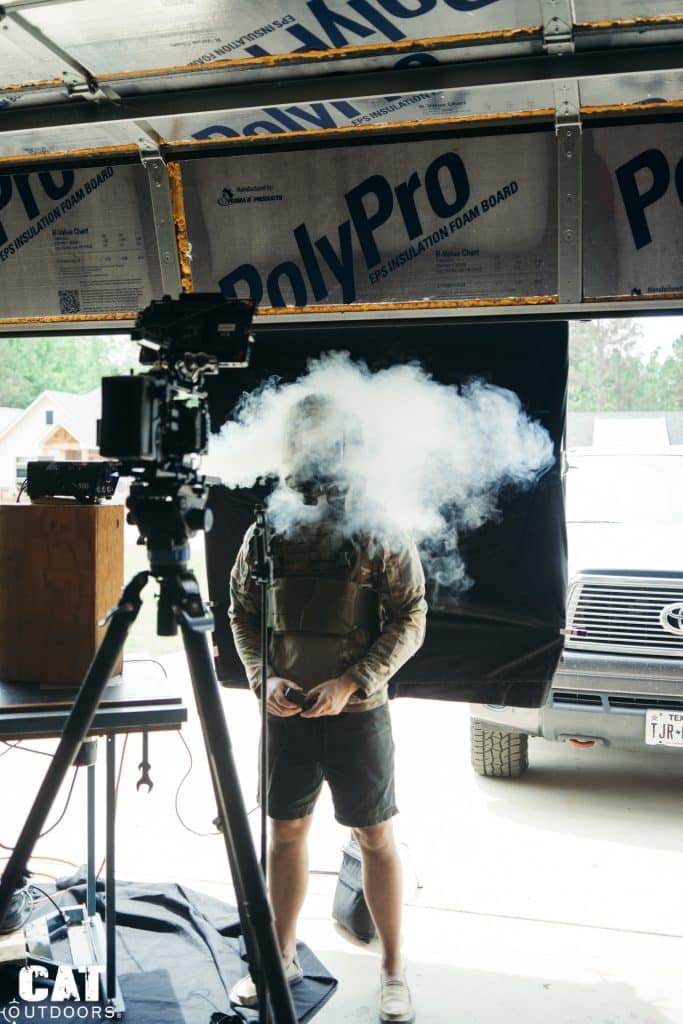
Based on these tests, I’m confident the filters work as intended. At a certain point civilian testing hits a ceiling, and past that ceiling live things I should not be experimenting with in my garage.
Worth noting from Mira’s own documentation: this mask is not for low-oxygen environments (below 19.5% oxygen, like structural fires or heavy smoke conditions). It filters air; it does not supply it. Extreme heat or cold can also affect the rubber seals and valves.
Field of View: The 92.5% Claim
The field of view feels very reasonable for a full-face mask. I wore it while setting up lighting and cameras for all of these photos and mostly forgot about it. There is some distortion at the edges of the polycarbonate, but it’s so minor that even as a photographer, where optics are everything, I wasn’t concerned with it.
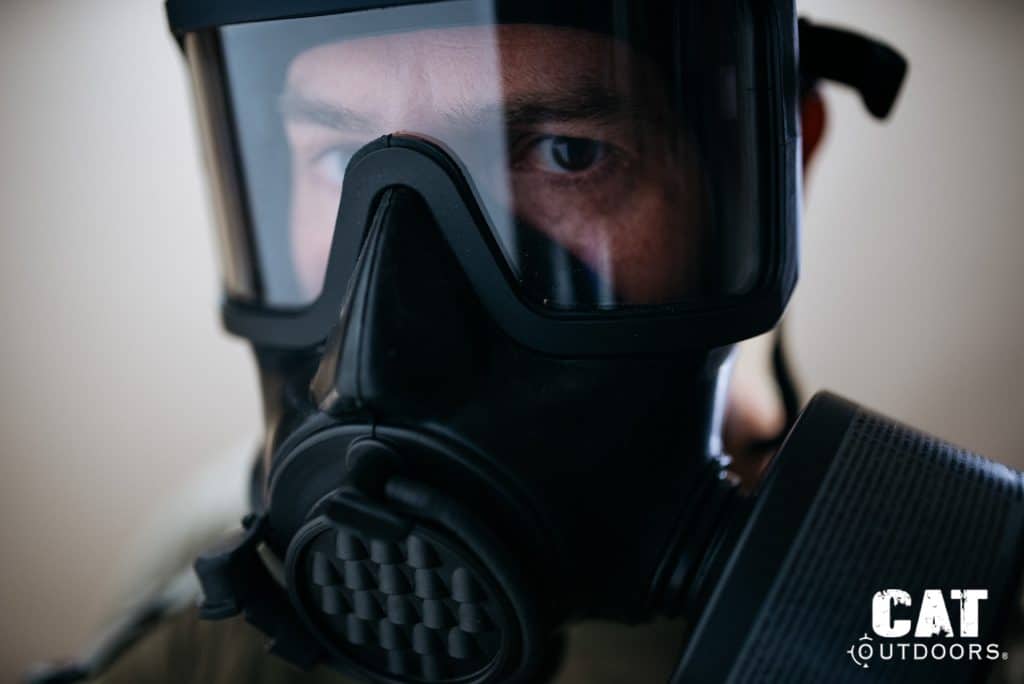
But the real surprise was the fog. Or the total lack of it.
Despite sweating heavily, breathing hard, sprinting, and generally trying my best to overwhelm the system, the visor never fogged. Not once.
That impressed me more than almost anything else in testing. I’ve spent countless hours sanding, painting, and doing physical work in basic PPE dust masks and safety goggles that constantly fog up. Same story with airsoft masks. They always fog eventually.
This thing wouldn’t. I genuinely tried to make it fail, and I couldn’t do it.
The Workout Test
Static testing only told part of the story. To really understand what it’s like to operate inside a gas mask, I needed to put myself under stress.
Cue the Rocky music.
I did a full workout wearing the CM-8M: crunches, squats, bench press, chin-ups, suspension chest flys, and sprint intervals. Worked up a serious sweat, had myself breathing hard, and did it all while teaching my 14-year-old son how to take professional photos. That last part sounds cute, but communicating detailed instructions to an inexperienced photographer through a full-face respirator while gassed from sprints was legitimately part of the test.
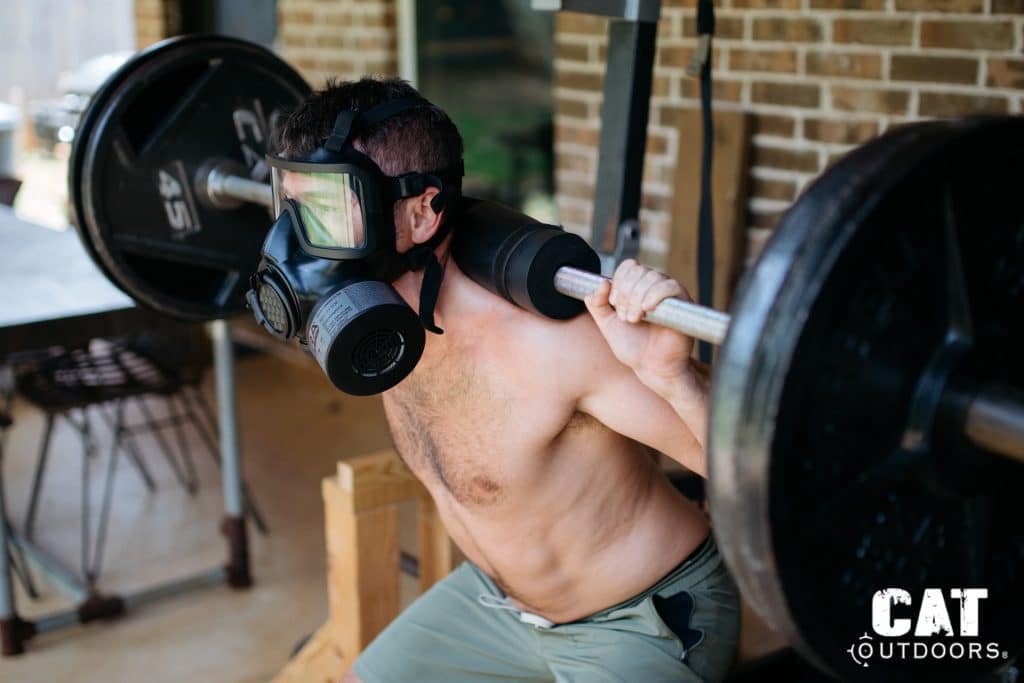
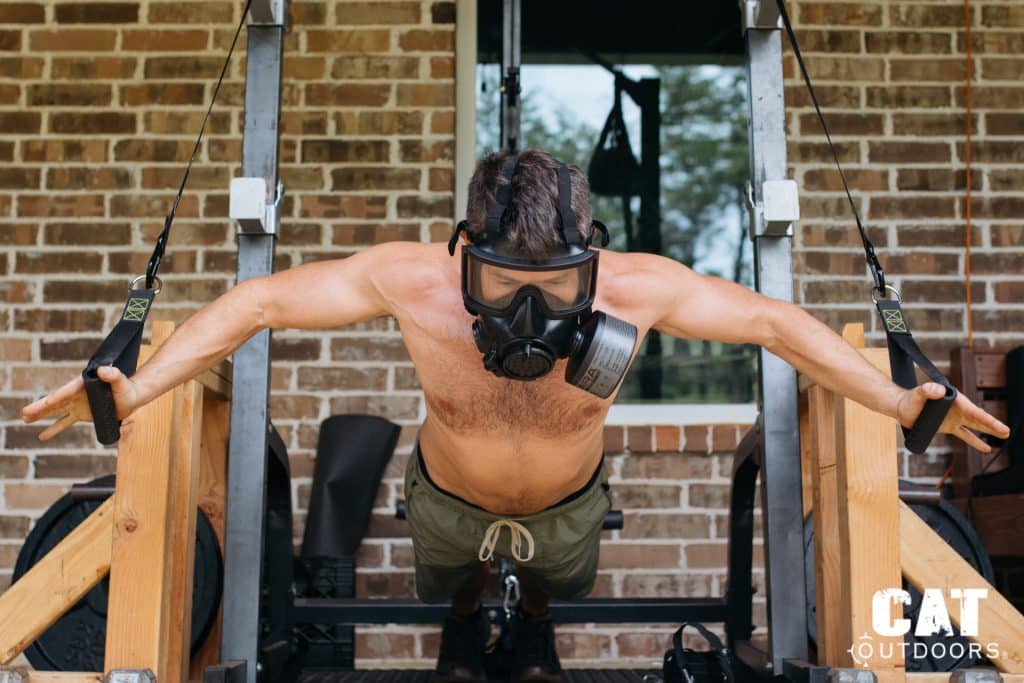
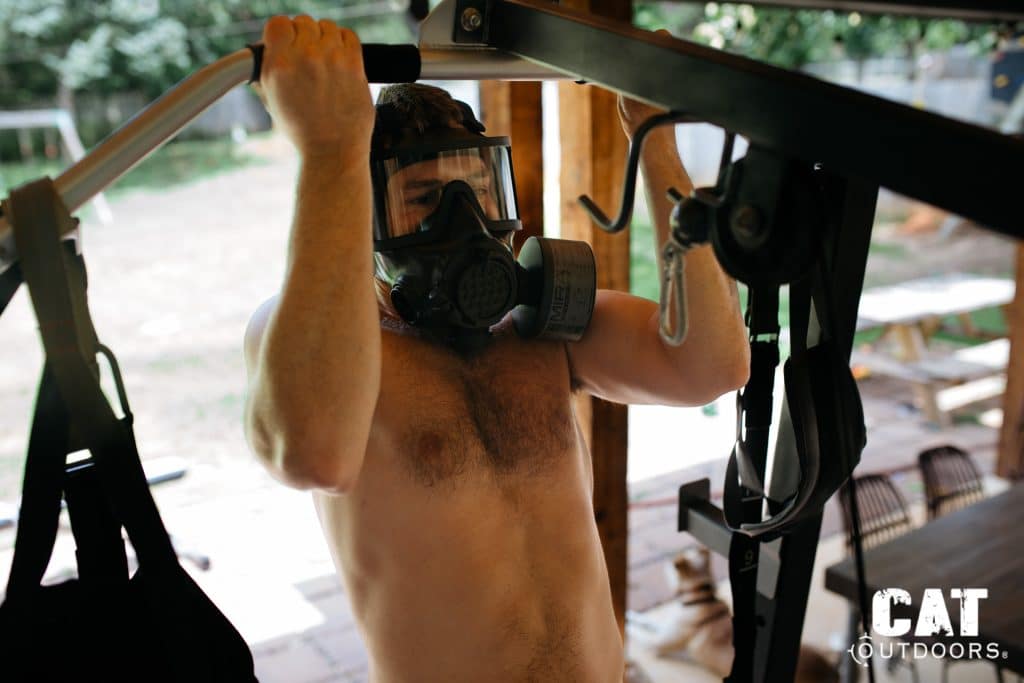
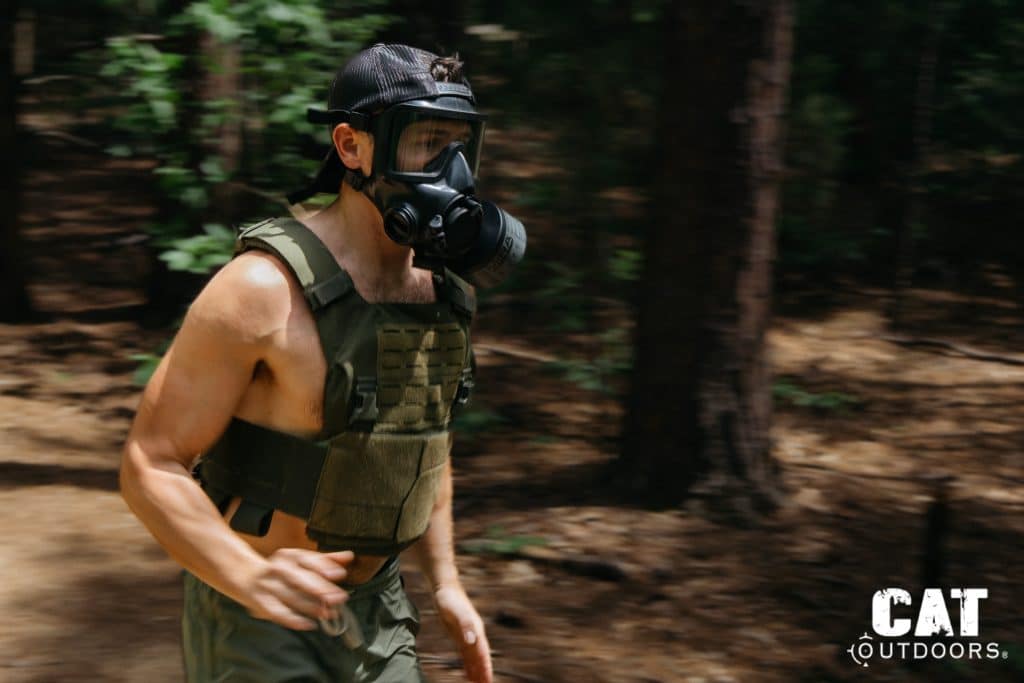
I could have done this with both filters attached, which would have made breathing easier. I wanted to embrace the suck and run one filter, the way you would with a rifle up. I figure if I can handle it the hard way, everything else is just easier.
I didn’t pass out or die, but I’ll be honest: that sucked. Not because of any problem with the mask. Sweating and doing hard things in any gas mask is inherently miserable.
A few honest observations from the other side:
- Breathing: At a resting heart rate, breathing through a single NBC-77 SOF is completely comfortable. Under real exertion it feels restricted but doable. And here’s the reassuring part: this is Mira’s most protective filter with the most breathing resistance of their whole line. I had moments where I needed to stop and catch my breath. I never had a moment where I felt like I couldn’t breathe. Every other filter only gets easier from here.
- The seal held. There were moments where I thought heavy breathing and sweat had broken the seal, so I stopped and cinched the straps tighter. Once tightened down firmly, the overall pressure around my face became very noticeable. The mask never lets you forget you’re wearing it.
- Comfort has a clock. At first it feels comfortable enough, considering what it is. But the longer I wore it, the more pressure built across the bridge of my nose. After about an hour of continuous wear, I was getting genuinely anxious to take it off. In a real scenario you’d have to force yourself to ignore that discomfort, because relieving it means breaking the seal. There’s no getting around that.
Shooting With It: The Ambidextrous Filter Mount
The left/right filter swap is one of the CM-8M’s biggest selling points for shooters, and it works like this: mount the filter on the side opposite your rifle, cap the unused port, and your cheek weld side stays clear.
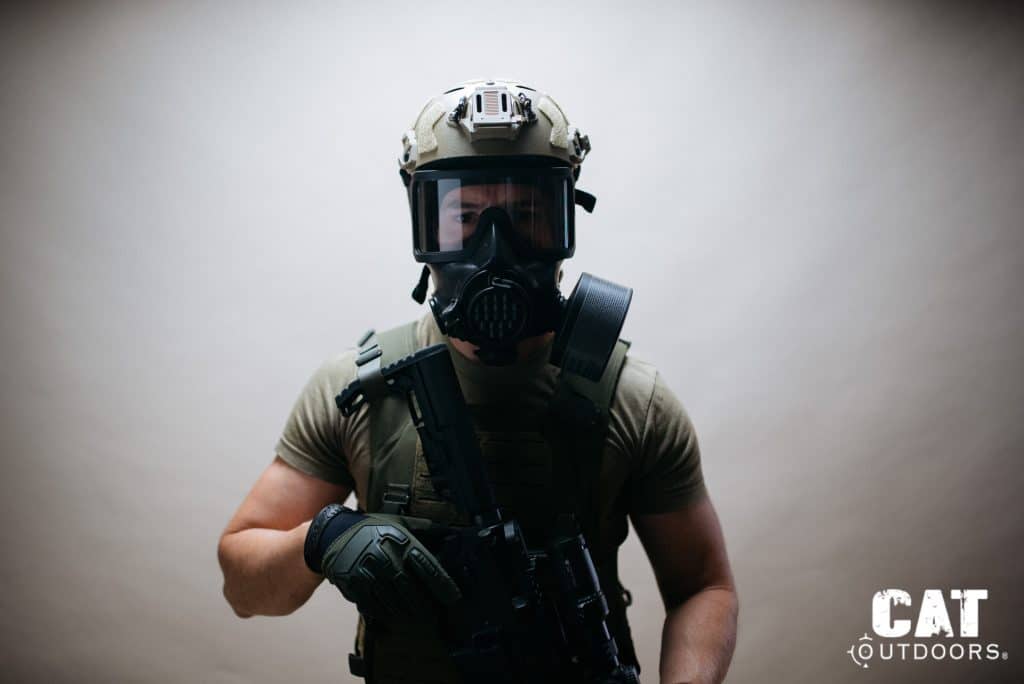
Getting a good sight picture with a scoped rifle is another matter though.
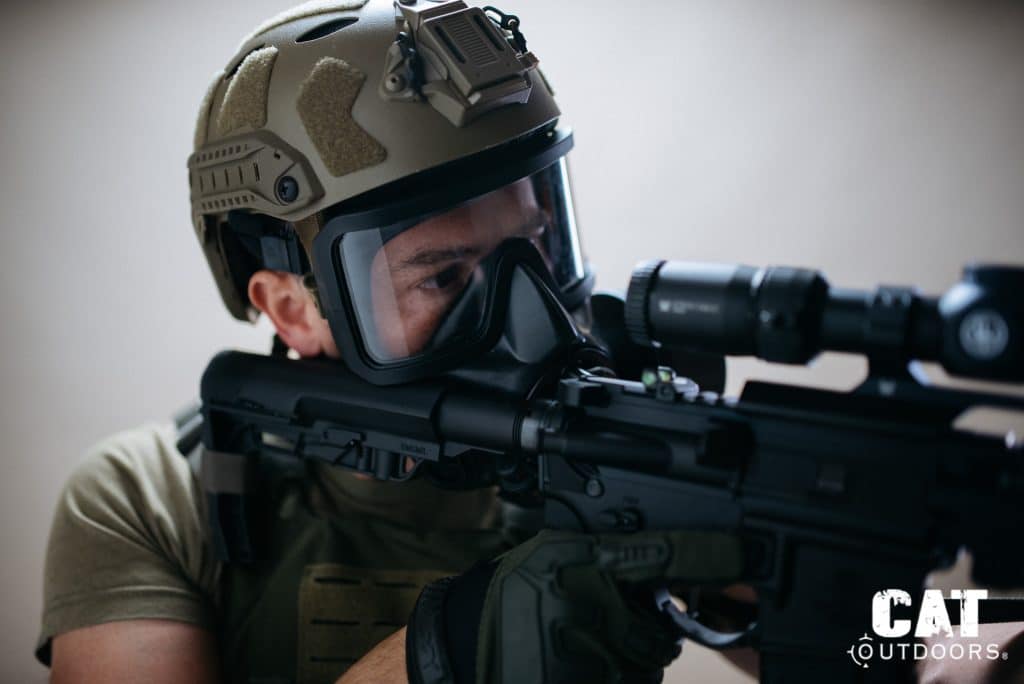
Calling it awkward would be an understatement. It’s possible, but it’s not quick, and it definitely doesn’t feel like a natural posture. I had to position my head so the edge of the visor sat on top of the stock, then push my face down against the mask to get aligned with the scope. A scope riser would make it easier, but you’d need that set up in place before you actually needed it. If you’re running a low-profile optic or iron sights that sit lower than a scope: forget it.
If you’re used to timing yourself from standing to first shot, add a few awkward seconds. Left-handed shooters aren’t left behind either: attach the filter to the right port and cap the left.
The CM-8M absolutely feels designed by people who understood tactical use requirements. But it also reminds you very quickly that there’s a limit to how ergonomic a full-face respirator can ever be behind a rifle.
Talking, Drinking, and Living in It
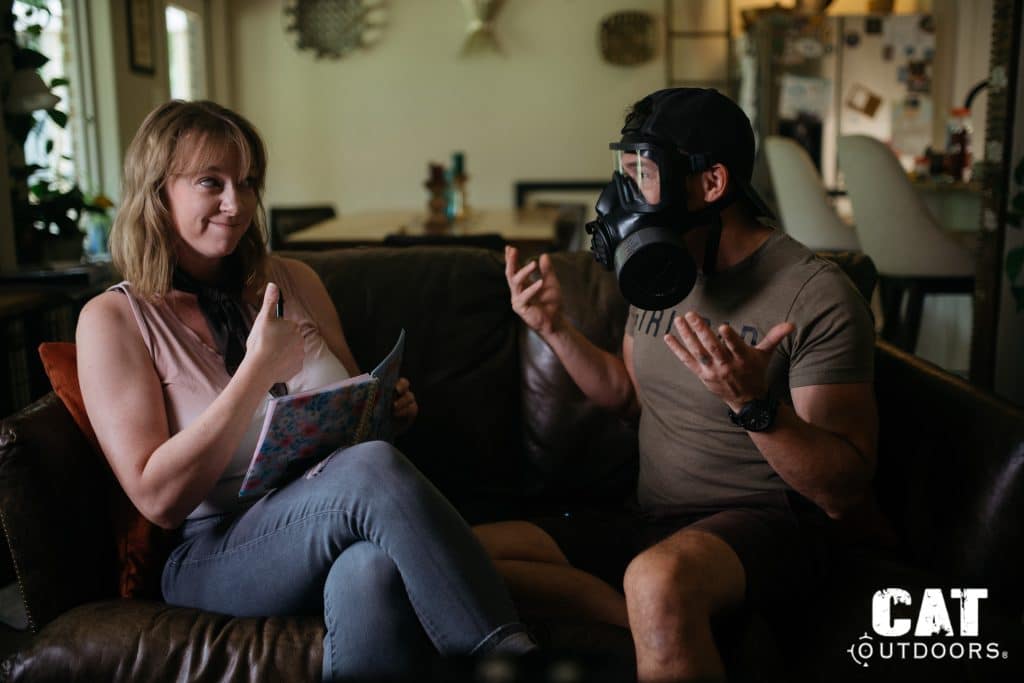
The voicemitter does a surprisingly good job. Speaking to someone outside the mask is no problem at all: sound comes through clearly and only slightly muffled. I had zero problems communicating how cool this mask is to my completely unimpressed wife.
The hydration system is a completely closed dual-valve setup: a drinking hose with a spring-loaded connector on the canteen end and a rotating valve on the front of the mask. Push the connector into the canteen’s receiver, rotate the internal mouthpiece into position, and drink. Rotate it away and the system seals back up. The dual-valve design means you stay protected even if the hose accidentally disconnects.
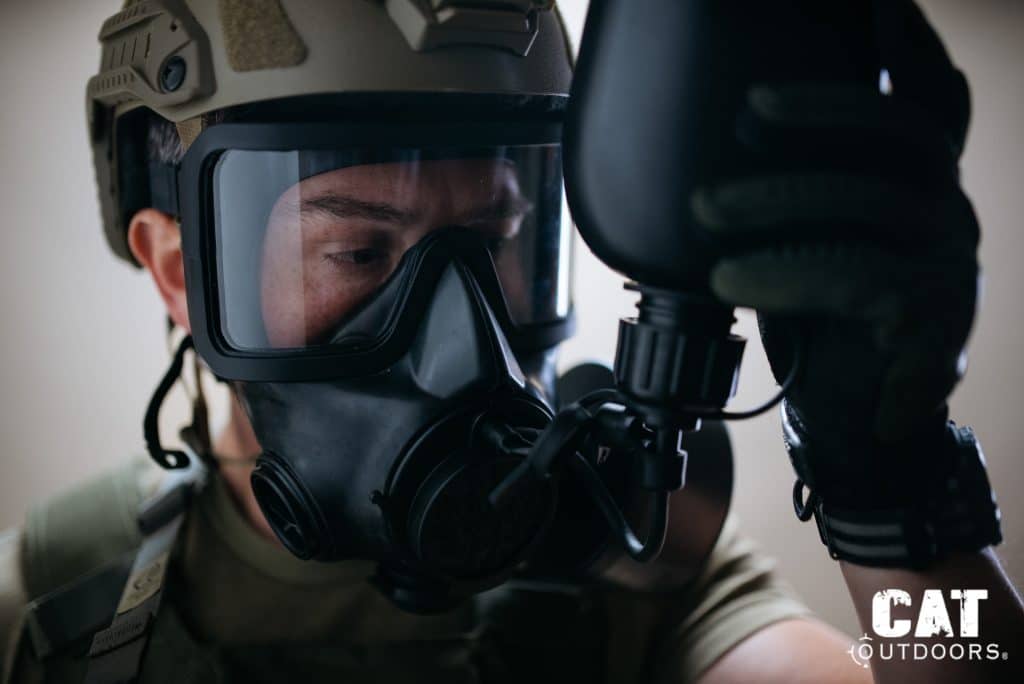
In practice: the tube is small, so drinking is slow. Sip. Take a breath to equalize the canteen’s air pressure. Repeat. Mira sells an adapter to run a standard hydration bladder instead, which adds capacity and skips the pressure-equalizing ritual.
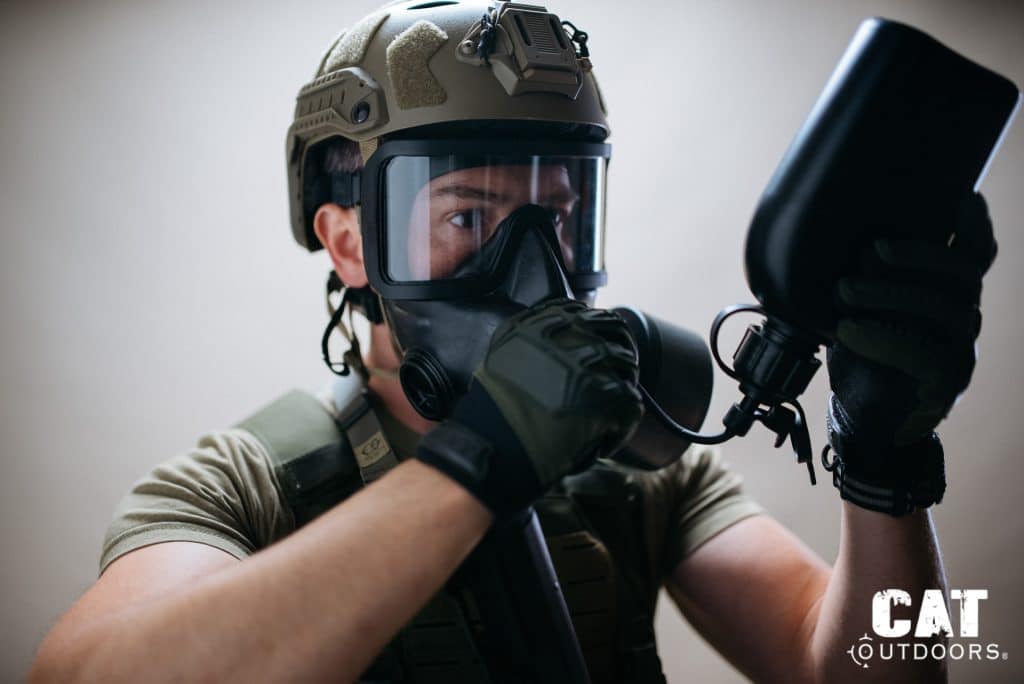
Overall it’s kind of a strange experience, but also kind of cool: you can drink and breathe while staying completely isolated from the environment.
Donning and doffing got fast with practice. Pull the mask on, tighten the straps evenly, run a quick negative pressure check. Hats and helmets have to come off first, but once the mask is on, headgear over the harness caused no issues. Facial hair is the real variable: my short goatee still gave me what felt like a good seal, but if you’re committed to a full beard and can’t get a tight seal… well, it was nice knowing you.
Mira also sells an accessory radio microphone that attaches to the bottom exhaust valve.
Reliability & Durability
The thing I like most: there’s really nothing fragile here. It’s a shield, not an instrument.
It’s mostly rubber except for the visor, voicemitter, and water valve, and even the visor is flexible polycarbonate, not glass. Glass would be clearer and more scratch-resistant, but it would also be breakable. For gear that’s supposed to work in rigorous conditions, forgiving is the right call.
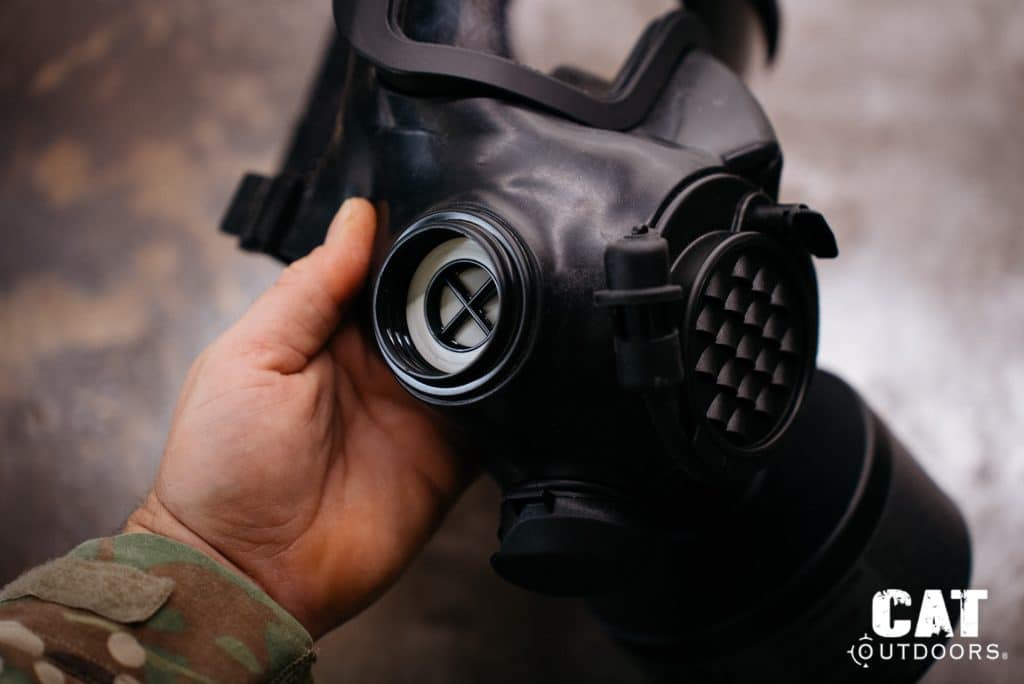
Mira backs the CM-8M with a 1-year warranty covering defects and malfunctions, with possible extended coverage if you register within 30 days. The 20-year shelf life claim is impossible to verify in a review, but the construction, the thick bromobutyl, the replaceable components, and Mira’s parts ecosystem all look like something designed to sit in a go-bag for two decades and still work.
Storage matters, though. This isn’t something you want baking in the back seat of a truck for three Texas summers while covered in dust and Doritos crumbs. Cool, dry, dark, away from UV and chemicals, filters sealed in their packaging until needed.
The NBC-77 SOF Filters (and the Dual-Mount Test)
The filters Mira sent are the NBC-77 SOF: their flagship 40mm CBRN canister, rated against the full spectrum of chemical warfare agents, biological agents, radiological particulate, and toxic industrial chemicals. About $85–110 each, roughly 358 g, made in the Czech Republic, with a 20-year sealed shelf life.
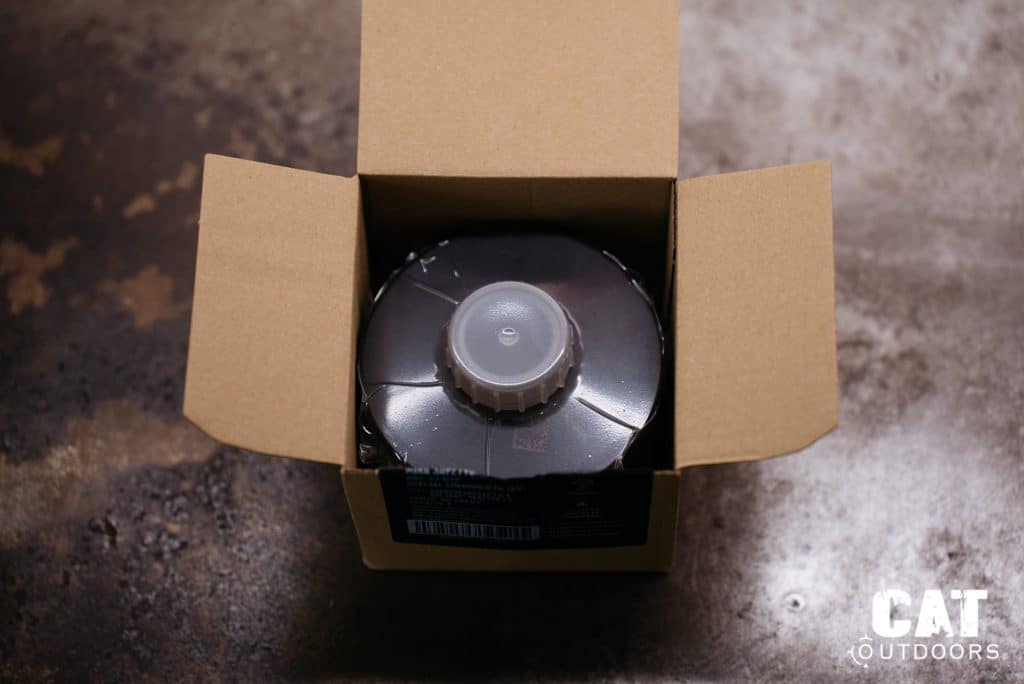
That “sealed” part is a deployment strategy, not fine print. You can’t just thread a filter on and store the mask fully assembled “just in case.” Once the factory seal is broken and the filter media meets ambient air and humidity, service life starts dropping whether you use it or not. Keep filters sealed until you actually need them.
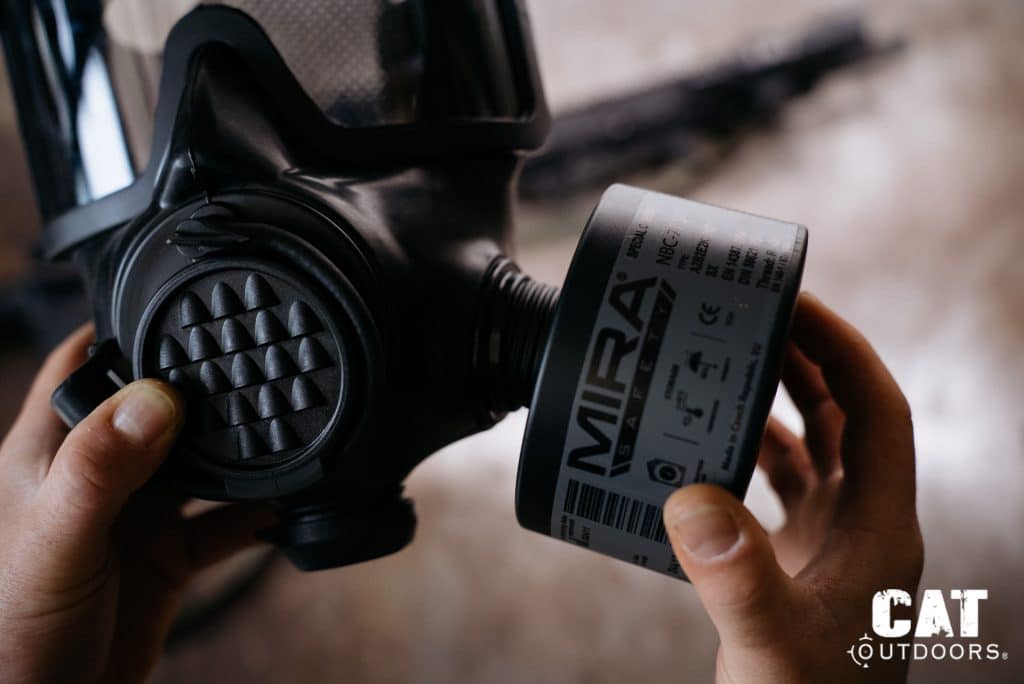
Both filters mounted without drama during testing. The CM-8M also accepts filters on both ports at once, something most reviews skip. Running dual NBC-77s noticeably reduces breathing resistance: two paths, less effort per breath.
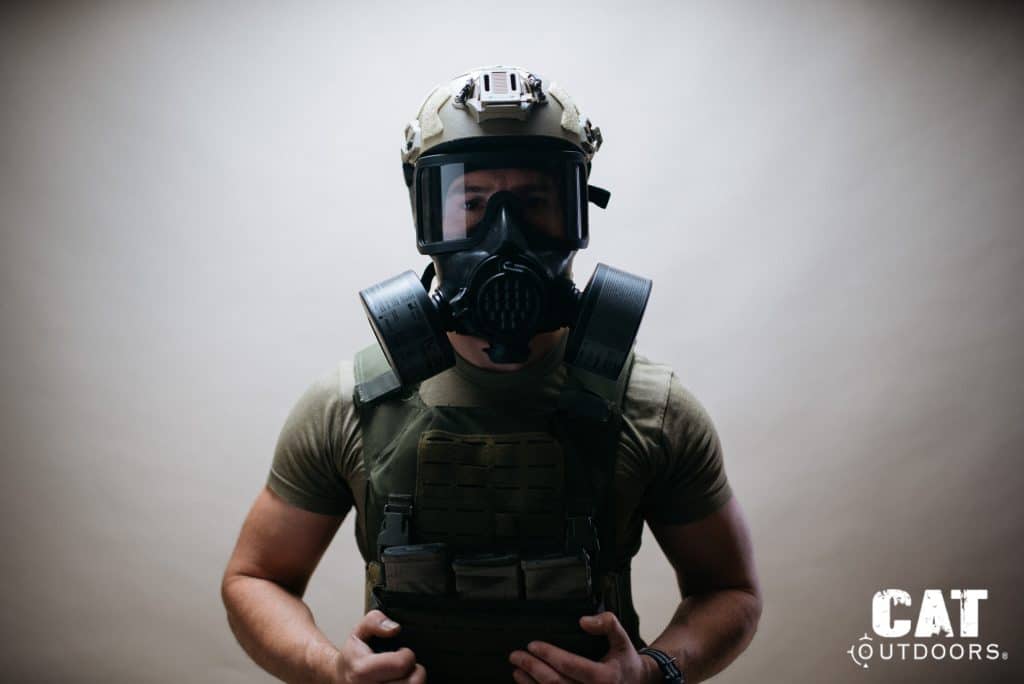
One hard catch: you can’t get a rifle cheek weld with dual filters. Both cheeks are occupied. So the practical playbook is: rifle = one filter on the support side; no rifle = two filters and easier breathing. And that decision gets made before entering a contaminated area, because you can’t add or remove a filter in a bad environment without being exposed.
Which Filter Do You Actually Buy?
Now that we’ve effectively burned through about $200 so I could attempt to huff my wife’s perfume through filters designed to protect me against anthrax, let’s talk use cases and economics.
The NBC-77 SOF is the “covers everything” buy, and at roughly $100 each, treating it like the one filter to rule them all is hardly economical for routine work. Mira’s line runs from $25 disposable-grade filters up to the NBC-77:
| Filter | Best For | Breathing Resistance | Approx. Cost |
|---|---|---|---|
| NBC-77 SOF (full-spectrum CBRN) | Preparedness, unknown threats | Highest | $85–110 |
| P-CAN Compact (riot control / tear gas) | Journalists, protest environments | Moderate | ~$40 |
| VK-530 (smoke + carbon monoxide) | Wildfire evacuation | Moderate-high | ~$90 |
| ParticleMax P3 (particulate / biological) | Pandemic prep, dust, debris | Lowest | $25–35 |
| DotPro 320 / 330 (industrial chemical) | Trade and hazmat work | Moderate to moderate-high | $50–80 |
The buying advice: if you can only afford one filter, get the NBC-77 SOF and know it covers everything. If you’re stockpiling, mix by threat profile. And since the CM-8M runs standard 40mm NATO threads, the filter ecosystem extends well beyond Mira’s own catalog.
For managers equipping labor crews, that math changes again: one serious respirator with $25–35 work filters beats a drawer of disposable masks over a year. The NBC-77 SOF is listed at $79.99 at Brownells and MidwayUSA as of this writing.
Improvements I’d Like to See
- The visor could lose a little vertical height on the bottom edge to make rifle cheek welds feel more natural. It might cost a bit of FOV; for a tactical mask, the trade would be worth it.
- The hydration bladder adapter is a good idea, but a larger tube with native compatibility with standard hydration tubes would make more sense.
- Softer rubber across the bridge of the nose.
- A storage/carry case included at this price.
Who It’s For (and Who It’s Not For)
It’s for:
- Preparedness-minded civilians with a pro-mask budget who want one mask that covers the realistic scenarios
- Shooters and range users who want filter-on training capability with a proper cheek weld option
- Journalists, photographers, and drone operators working around riots, tear gas, heavy smoke, or airborne debris
- Commercial and industrial users handling hazardous materials who’d rather buy one serious respirator than a drawer of disposables
It’s not for:
- Early-stage preparedness buyers who still need to cover basics like food, water, medical supplies, communications, and backup power first (this is a later-stage purchase)
- Budget shoppers hoping for a cheap “just in case” buy
- Bearded users unwilling to shave for a proper seal
True story: I once turned down a gig offer to film the 2020 riots in Portland because I wasn’t equipped for that kind of high-risk work.
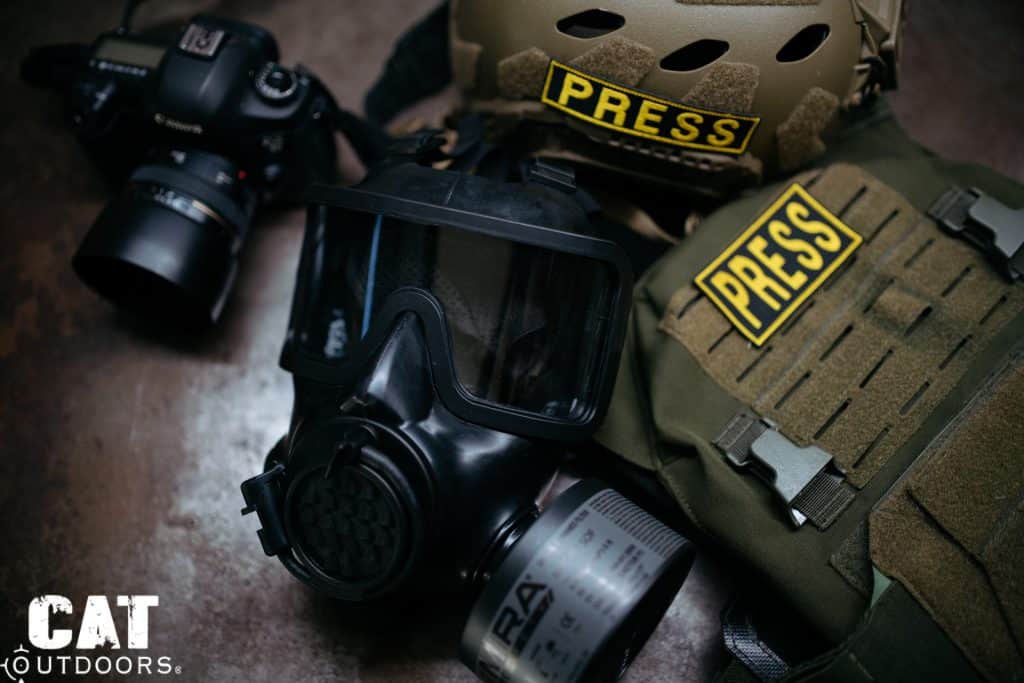
If that offer came in today, I’d be much more inclined to say yes. It pays to be prepared.
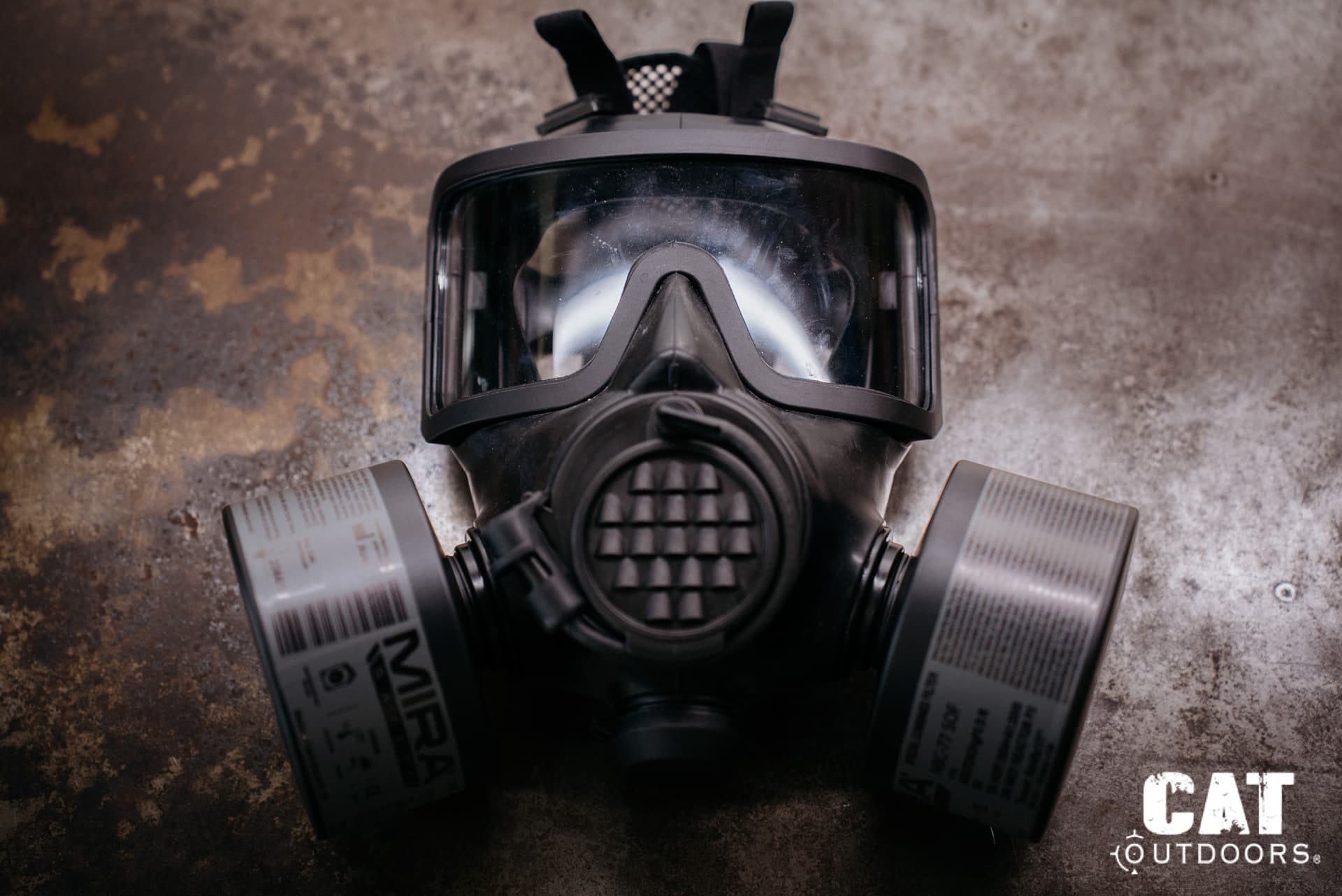
Mira Safety CM-8M Full-Face Respirator
It feels far more like legitimate protective equipment than tactical novelty gear.
Our Verdict
After several hours of wearing it, working in it, exercising in it, and generally trying to overwhelm it, I came away convinced the Mira Safety CM-8M is legitimate professional-grade protective equipment. It’s not tacti-cool cosplay. It feels like a serious tool designed around the assumption that the air outside the mask may genuinely want to hurt you.
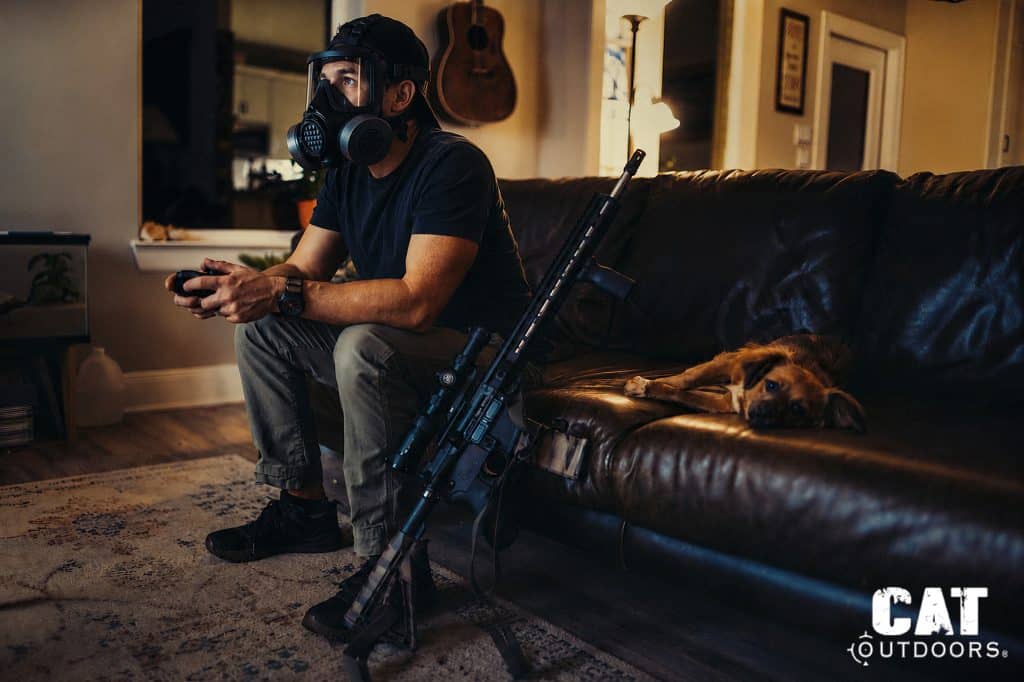
Know the honest number going in: the mask is $340, and roughly $420 gets you in the door with one filter. Realistically, expect $500 to $800 once you buy the filters you’ll actually want.
Where it lost points:
- Pressure builds across the bridge of the nose past the 45-minute mark
- Rifle cheek weld remains awkward despite being designed for exactly that
- Minor but noticeable distortion at the visor edges
- Single-filter breathing gets laborious under heavy exertion
- No included storage case at $340
Final Score: 9.2/10
The CM-8M is expensive, and it does get uncomfortable over long stretches. But after testing it, I believe it’s one of those rare pieces of equipment where, if you ever truly need it, absolutely none of those complaints will matter anymore.
My wife remains unimpressed. Me? I’m still finding excuses to put it on.
FAQ
Can you shoot a rifle while wearing the Mira Safety CM-8M?
Yes, and it’s one of the mask’s main selling points. Mount the single filter on the side opposite your rifle (either port works, so left-handed shooters are covered) and the cheek-weld side stays clear. Expect an awkward sight picture with scoped rifles; a riser helps. Dual filters and a rifle don’t mix.
Will the CM-8M seal with a beard?
A short goatee still gave what felt like a solid seal in our testing; clean-shaven is the only way to guarantee it. A full beard will likely keep you from sealing at all, and with a gas mask the seal is the whole ballgame. If you’re keeping the beard, this isn’t your mask.
Are filters included with the Mira Safety CM-8M?
No. The $339.95 list price is mask-only (it does include the drinking canteen). Filters run about $25 to $110 each depending on type; the full-spectrum NBC-77 SOF is $85 to $110. Budget $420 or more for a real CBRN-ready setup.
How long do the CM-8M and NBC-77 SOF filters last in storage?
Mira claims a 20-year shelf life for both the mask and factory-sealed NBC-77 SOF filters when stored cool, dry, and dark. Critically, filters only keep that shelf life while sealed. Once opened, service life drops fast whether you use the filter or not.
Is the CM-8M NIOSH certified?
No. It carries European certifications (EN 136 Class III and EN 168, with CE marking) rather than a NIOSH approval. If your job specifically requires NIOSH-certified equipment, look elsewhere.
Can you drink water while wearing the CM-8M?
Yes. The built-in hydration port connects to the included canteen through a closed dual-valve hose, so you stay sealed while drinking. Flow is slow (small sips), and Mira sells an adapter for standard hydration bladders.
What’s your take on the CM-8M, and what’s in your go-bag? Drop a comment below and tell us what you want tested next.
Also, be sure to check out our roundup of the Best SHTF Gear!
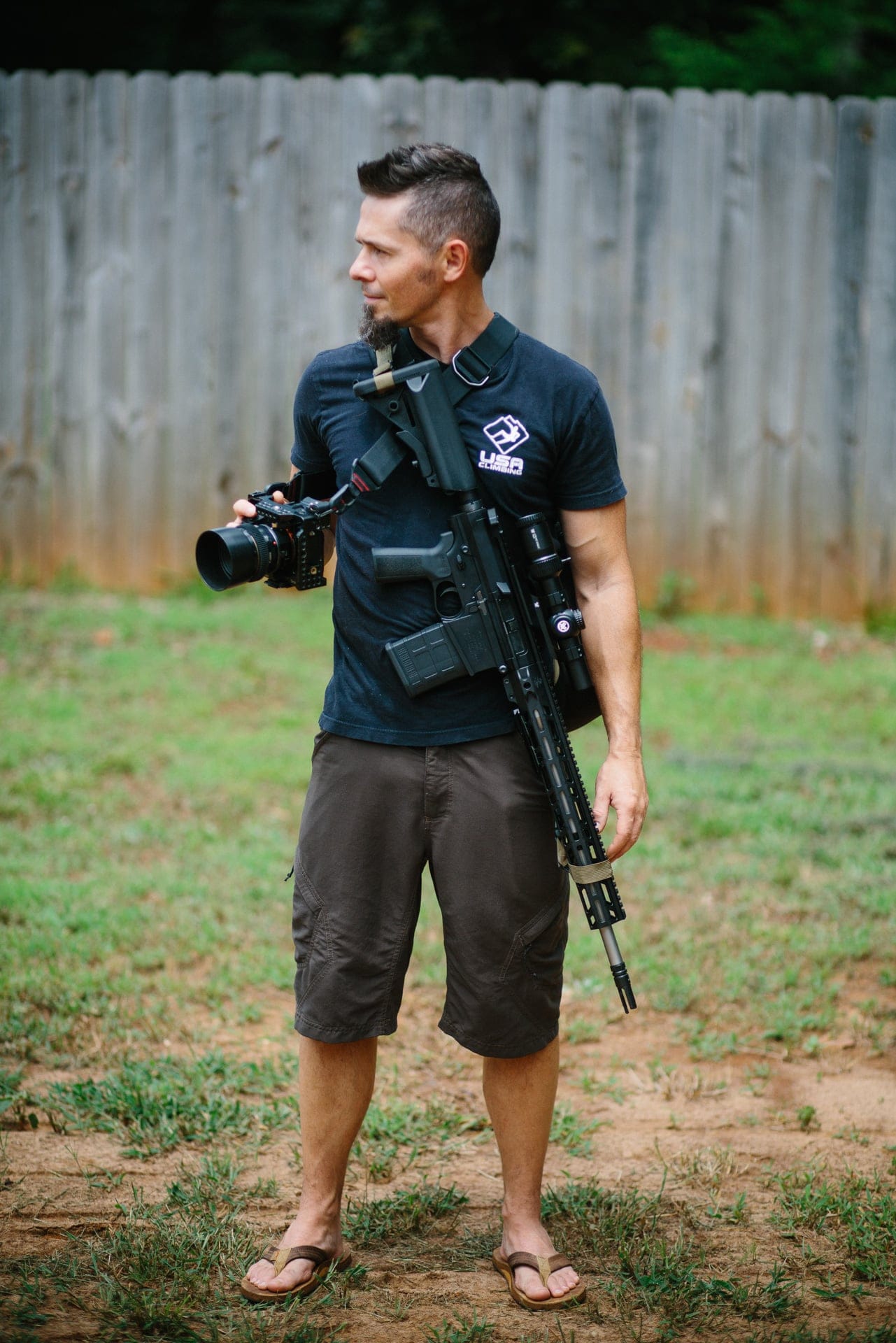
Brad Lanphear is a professional videographer by day and a gun enthusiast by night. When he’s not behind a camera, he’s usually at the range, in the workshop, or testing gear he probably didn’t need but wanted anyway. He enjoys practical firearms setups, well-designed tools, and helping others avoid common (and expensive) mistakes.