15 Best AR-15s [2026]: Top Rifles for Every Budget and Skill Level
From $700 budget builds to $3,500 precision rigs, we’ve put rounds through dozens of AR-15s. Here are the ones worth your money at every price point.
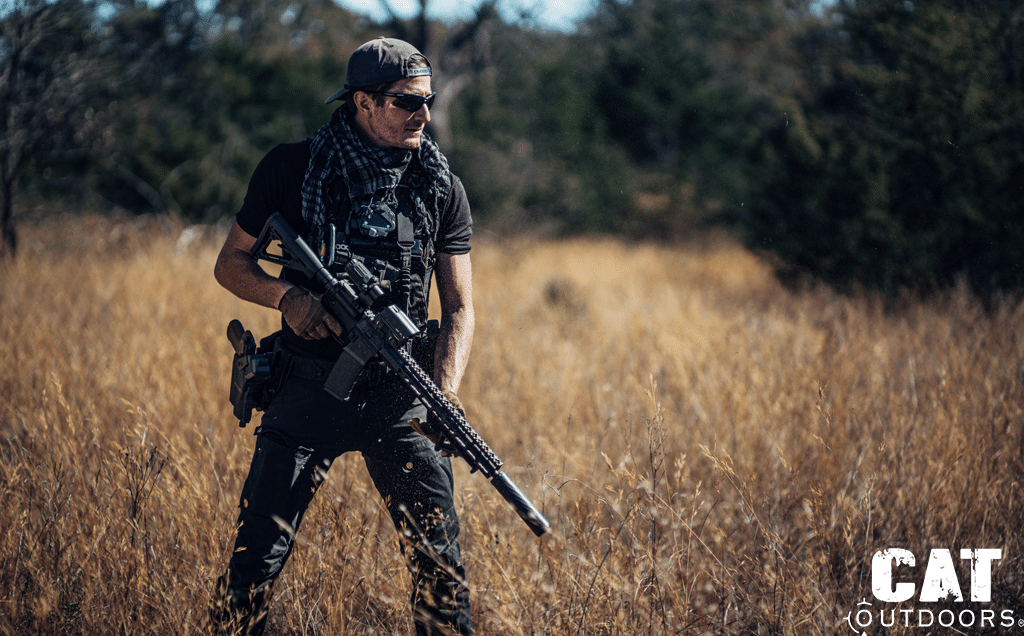
Looking for your first AR-15 but not sure where to start?
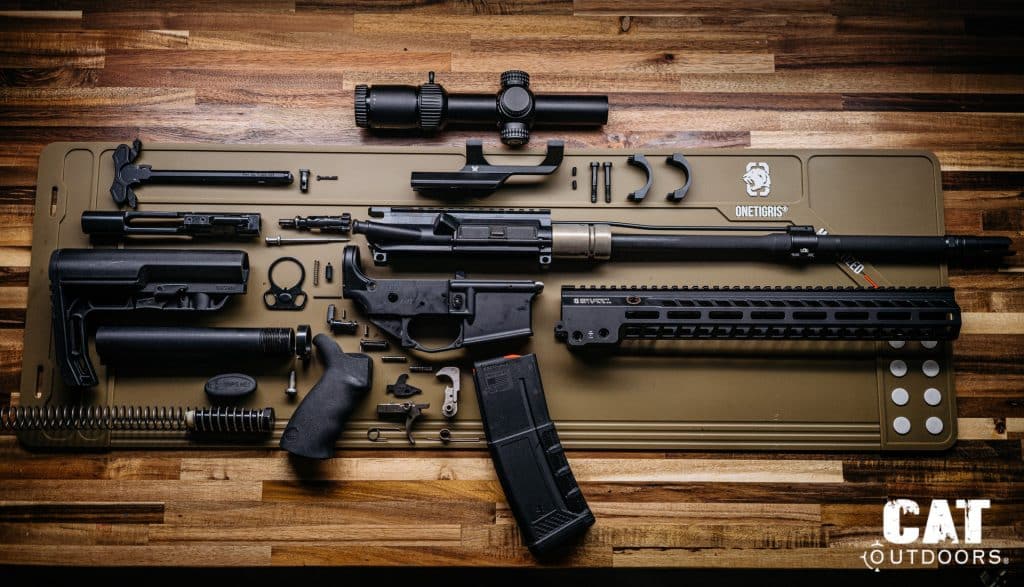
The AR-15 is America’s favorite rifle for a reason. It’s lightweight, customizable, and easy to shoot, which makes it just as useful for beginners as it is for seasoned shooters. Whether you want something for home defense, range days, or tinkering in the garage like it’s a grown-up LEGO set, the AR-15 can be built to do it.

Sure, it won’t turn you into John Wick overnight, but the platform is accurate, reliable, and endlessly adaptable. Change a few parts and you can take it from a simple range gun to a slick, dialed-in setup that fits you perfectly.

But with so many brands and builds on the market, figuring out which AR-15 to buy can feel overwhelming. What’s truly the best AR-15? What won’t cost an arm and a leg? Which one is the best, ahem…bang for your buck?
After testing, shooting, and comparing a pile of rifles—budget-friendly, mid-range, and “treat yourself” tier—we’ve narrowed down our list of the best AR-15s. These are the rifles that run well, hold up to abuse, and don’t leave you regretting your purchase.
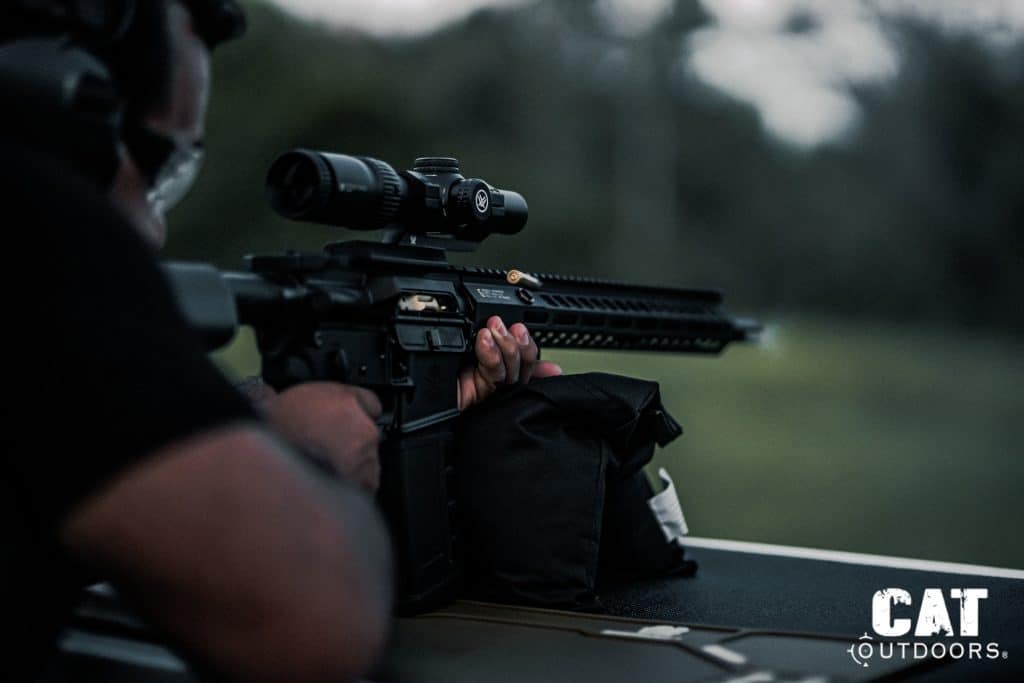
By the end of this guide, you’ll have a clear view of the landscape and a solid handle on which AR-15 fits your needs. And if you’re still curious about bigger calibers, check out our guide on the best AR-10s next.
Ready to find the one that fits you?
Bada bing, bada pew pew…
Best AR-15s
Our top picks. Jump straight to a rifle or open the full retailer list.
Quick Comparison Chart
| Model | Best For | Price Tier | Operating System | Barrel Class | Gas System | Handguard | Weight Class | Ambi Controls | Out-of-Box Setup | Notable Strength | Tradeoff |
|---|---|---|---|---|---|---|---|---|---|---|---|
Daniel Defense DDM4 V7 Duty / Proven
Duty
Proven
DI | All-around hard use | Premium | Direct Impingement | 16" class | Mid-length (common) | Free-float M-LOK | Mid | Some models vary | Ready to run | Fit/finish + reliability track record | Costs more than “good enough” rifles |
BCM Recce / MCMR 16 Duty value
Duty
Value
DI | Workhorse rifle at a value | Upper-mid | Direct Impingement | 16" class | Mid-length (common) | Free-float M-LOK | Mid | Limited / varies | Ready to run | “Duty spec” feel without top-tier pricing | Less “feature-flex” than boutique builds |
PSA PA-15 Starter budget
Budget
Starter
DI | First AR / range time | Budget | Direct Impingement | 16" class (varies) | Carbine/Mid (varies) | Varies by SKU | Mid–Heavy (varies) | Typically no | Good starter kit | Gets you shooting for less | More variation between models—pick carefully |
S&W M&P15 Sport II Simple budget
Budget
Simple
DI | Reliable “basic” AR | Budget | Direct Impingement | 16" class | Carbine/Mid (varies) | Basic free-float / varies | Light–Mid | Typically no | Low fuss | Brand-backed budget option | Fewer premium features |
Aero Precision M4E1 Complete Rifle Recce value
Recce
Value
DI | “Do more” budget build | Budget–Mid | Direct Impingement | 16"–18" class (varies) | Rifle/Mid (varies) | Free-float M-LOK | Mid | Typically no | Feature-rich for the money | More capability per dollar | Can feel longer/heavier than basic carbines |
BCM RECCE-16 MCMR Hard-use recce
Recce
Duty
DI | All-around serious use | Upper-mid | Direct Impingement | 16" class | Mid-length (common) | MCMR M-LOK | Mid | Limited / varies | Ready to run | Hard-use reputation | Not the cheapest way to “BCM quality” |
SOLGW M4-76 / Patrol Rifle Buy-once
OOB
Premium
DI | Buy once / minimal upgrades | Premium | Direct Impingement | 16" class | Mid-length (common) | Free-float M-LOK | Mid | Limited / varies | “Done” feel | Strong overall component package | Pricey compared to value builds |
DIY Build (Parts List) Builder value
Build
Value
Modular | DIY build / best bang per part | Budget–Mid | Varies by build | Varies by build | Varies by build | Varies by build | Varies | Varies | Customizable | Control every component | Requires build knowledge/tools |
KAC SR-15 Refined premium
Premium
Clean
DI | High-end “refined” rifle | Premium | Direct Impingement | 16" class (common) | Mid-length (common) | Free-float | Light–Mid | Often yes (varies) | Very polished | Premium feel + execution | Paying for refinement |
LMT MARS-L True ambi
Ambi
Duty
DI | Lefty-friendly / serious use | Premium | Direct Impingement | 16" class (varies) | Mid-length (common) | Free-float | Mid | Yes | Purpose-built | True ambi control set | Cost + parts ecosystem can be pricier |
Foldable AR Platform Packable niche
Folding
Packable
Niche | Storage / travel / compact carry | Premium | Direct Impingement | 16" class | Varies | Varies | Mid | Varies | Compact-first | Fold/pack convenience | More moving parts + niche support |
Top-Tier DI Rifle Elite DI
DI
Top-tier
Duty | High-end DI performance | Premium | Direct Impingement | 16" class (common) | Mid-length (common) | Free-float | Mid | Some features vary | Elite DI feel | Proven system with a reputation | Availability + pricing can be rough |
Premium Piston AR Cleaner running
Piston
Clean
Duty | Cleaner-running hard use | Premium | Short-stroke piston | 16" class | Piston system | Free-float | Mid | Some models yes | Low-maintenance vibe | Piston benefits + quality build | Parts/feel differ from “classic DI” |
Soft-Shooting Piston AR Smooth impulse
Piston
Soft
Recce | Smooth shooter / piston fans | Premium | Long-stroke piston | 16" class | Piston system | Free-float | Mid | Varies | Piston “feel” | Soft impulse / clean running | Heavier than some DI builds |
DMR-Style Factory Rifle Precision bias
DMR
Precision
DI | Factory “precision-ish” role | Upper-mid | Direct Impingement | Longer barrel class (common) | Rifle/Mid (varies) | Free-float | Heavy | Varies | DMR-oriented | Purpose-built for accuracy bias | Less “handy” than 16" do-it-alls |
Our Picks
1. BEST AR-15: Daniel Defense DDM4 V7
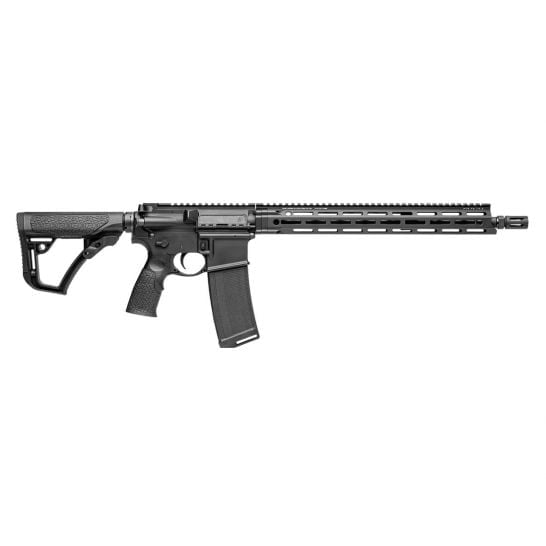
Daniel Defense DDM4 V7
The rifle to buy when you want one AR that does everything and passes every boring test. Cold hammer forged barrel, staked gas key, MIL-SPEC BCG, and a rail that's actually rigid.
The Daniel Defense name carries weight in the AR-15 world, and the DDM4 V7 is the rifle that defines why.
Built around a cold hammer-forged, 16-inch barrel and a tuned mid-length gas system, this carbine brings together durability, precision, and shootability in a package that has found favor with civilians, law enforcement, and military users alike. At roughly 6.2 pounds, it’s light enough to carry all day yet feels planted during rapid strings of fire.
Yes, its ~$1,600 street price positions it at the higher end of the AR market, but the V7 isn’t just trading on its name—it earns that price with execution and attention to detail that make it one of the most complete rifles you can buy.
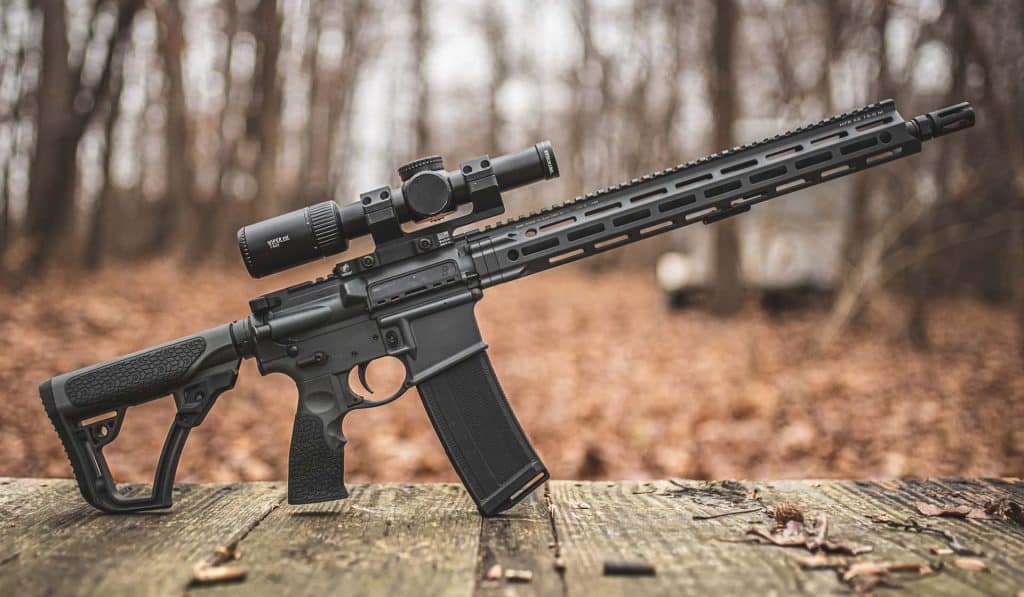
Why We Like It: What separates the DDM4 V7 is that it isn’t just another run-of-the-mill gun of assembled parts; it presents a wholly integrated firearm built with components predominantly crafted in-house by Daniel Defense.
If you’re used to firing regular mil-spec ARs, you’ll notice a significant improvement right away.
The recoil impulse is the first thing that stands out. If you take it out to the range, you’ll notice how the V7 shoots flat and smooth. The gas porting and H-buffer take the edge off recoil, so instead of the sharp snap you get with cheaper carbines, the V7 just pushes back and settles. It’s the kind of rifle that lets you stay on target shot after shot without fighting the gun.
The handguard is another highlight. It’s slim, lightweight, and long enough to give you room for a modern support-hand grip, lights, or a sling without crowding your space. Because it locks to a solid steel barrel nut, it doesn’t flex or loosen up, so optics and accessories stay where you mount them.
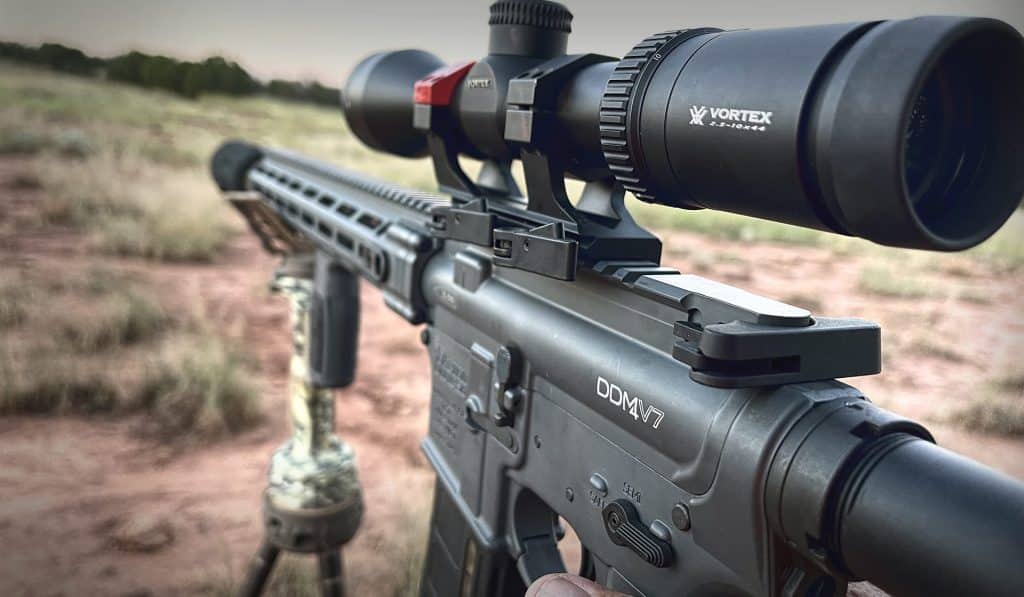
As for accuracy, the chrome-lined barrel consistently punches above its weight. With heavier 69–77 grain ammo, the V7 can get down near 1 MOA at 100 yards, and even bulk 55 grain stays in the 2 MOA ballpark. For a general-purpose AR, that’s plenty of precision—whether you’re stretching to 500 yards or running drills at 25.
Little touches add to the appeal. The GRIP-N-RIP charging handle is ambidextrous and feels like something you’d normally upgrade to; the flared magwell speeds reloads without looking cartoonish; and the overmolded grip and stock, while not for everyone, offer a soft-touch feel that’s comfortable out of the box.
Even the included 32-round magazine is a subtle upgrade that gives you a couple extra rounds without extra bulk.

Flaws But Not Dealbreakers: The price is the elephant in the room. At nearly double what a solid Aero or PSA setup might cost, the DDM4 V7 is undeniably a premium purchase. For a casual range plinker, it’s overkill. This rifle makes sense for those who demand long-term durability, or who want to skip the parts-swapping process that cheaper rifles often require.
Ergonomics are another mixed bag. The DD pistol grip has a steeper angle reminiscent of old-school A2 grips, and not everyone finds it comfortable during extended range days. The stock is solid but basic—it doesn’t lock up as tight as a B5 or Magpul SOPMOD, and it doesn’t have extra features like storage compartments. Both are easy to swap, but they’re worth mentioning.
The trigger is serviceable but unremarkable—a standard mil-spec unit with a 6–7 lb pull. It will not hold you back in practical shooting, but if you want to wring out every ounce of accuracy potential, you’ll probably budget for a Geissele or LaRue trigger down the road.
Finally, the lack of included iron sights means you’ll need to add optics or backups before hitting the range. At this price, some shooters will expect a more “ready-to-go” package.
Bottom Line: The Daniel Defense DDM4 V7 nails the fundamentals—reliability, accuracy, and handling. For law enforcement, dedicated home defenders, or enthusiasts who want one rifle that does just about everything well, it’s an easy recommendation. For us, we love the way it feels in our hands and shoots on the range. Yes, cheaper rifles exist, but none feel this dialed-in straight from the box. If you’re looking to trade up to the DDM4 V7, selling your firearms can help raise funds for the purchase.
2. BEST DUTY-GRADE VALUE: Sons of Liberty Gun Works M4-76
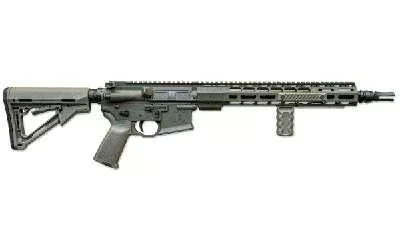
Sons of Liberty Gun Works M4-76
Duty-grade specs without the duty-grade price tag. You're trading name recognition for parts that meet the same standards as rifles costing several hundred dollars more.
Sons of Liberty Gun Works built its reputation the hard way, by earning trust in classes and patrol cars. The M4‑76 reflects that ethos. It is a 16‑inch, mid‑length carbine that reads like an armorer’s checklist, not a parts catalog. You get a properly gassed barrel, a conservatively paired buffer and spring, a rock‑solid free‑float rail, and a duty‑minded fire control group.
If you’re looking for a rifle that’s ready for abuse, you won’t find another brand that gives you this many correct parts and tuned details at this price point. Yes, it’s expensive—but compared to its true peers, it’s the smartest spend.
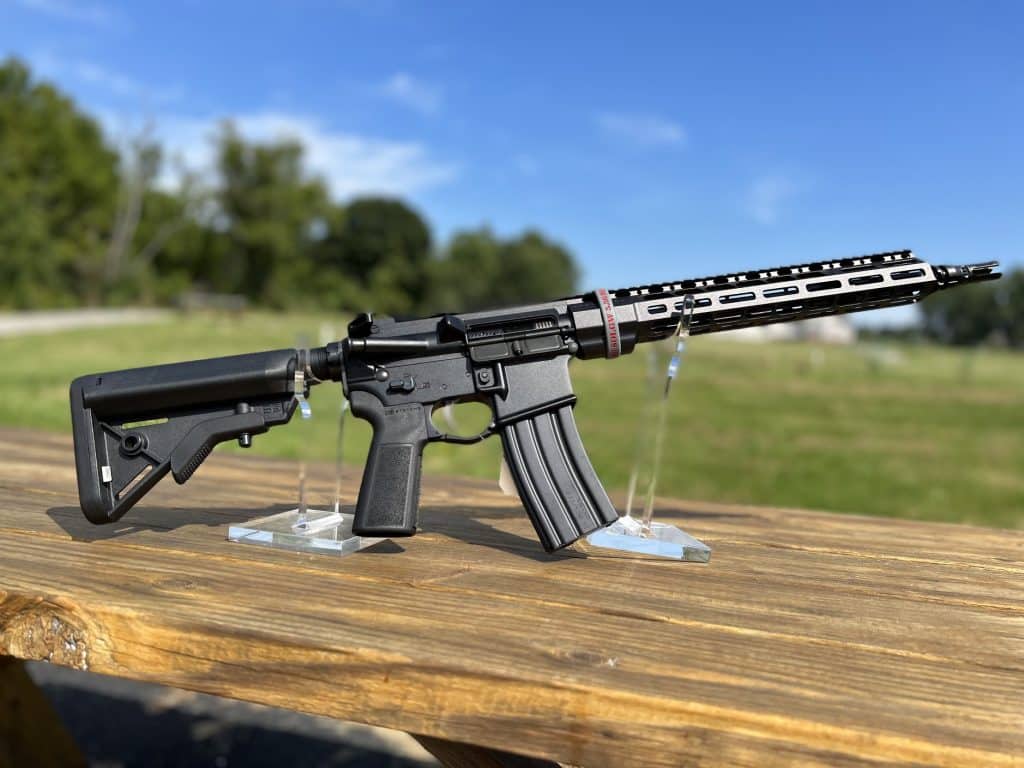
What We Like: We love that you get some upgraded components as a part of the standard configuration. Most rifles, even DD and BCM, ship with carbine buffers, and shooters often spend $150-$200 swapping to A5 setups. SOLGW gives you that out of the box.
On that note, the gas and recoil system feel sorted from the first magazine. Mid‑length timing with a conservative port and a matched buffer spring gives you a calmer cycle that stays predictable across mixed ammo and seasonal temps.
The rifle pushes rather than snaps, which shows up in cleaner sights, less shooter fatigue, and fewer “mystery malfunctions” when things get hot and dirty. If your range life includes long training blocks or back‑to‑back drills, that tuning matters more than any single accessory.
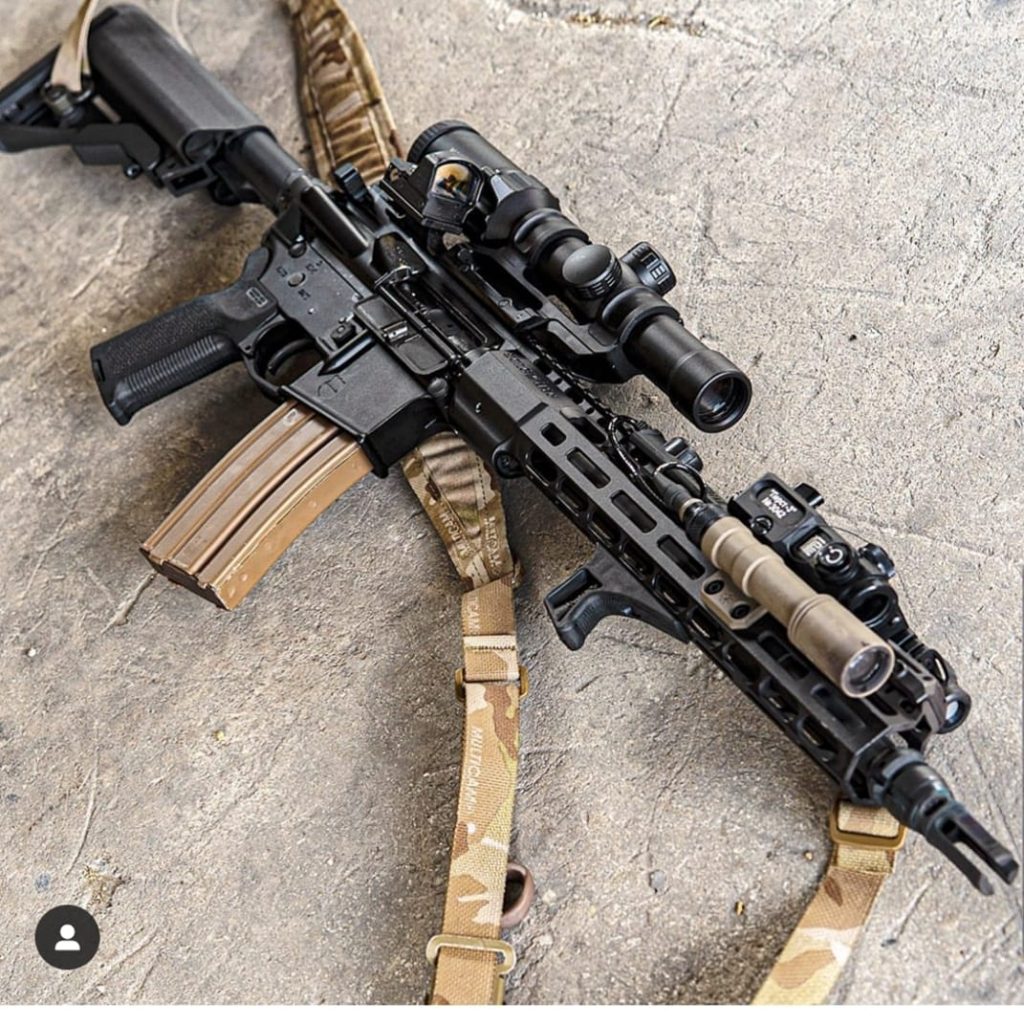
The M76 Wedge Lock handguard is another value upgrade. It clamps to a steel barrel nut with real surface engagement, so it stays put when you load a sling hard, wedge the rifle into a barricade, or hang a light and pressure pad out front. That rigidity keeps zeros honest, and the oval cross‑section is easy to index with a modern support‑hand grip. It is not the absolute lightest rail, but it is one you will stop thinking about once it is on the gun.
Controls and small parts show the same bias toward durability. The carrier is correctly staked, the bolt is shot‑peened and inspected, and the castle nut is not waiting to back out on you.
We also like the Liberty Fighting Trigger. It’s not flashy, but it is a reliable combat trigger included with the rifle. It has a straightforward single‑stage that breaks in the five‑to‑six‑pound range with a clean wall and a predictable reset. No drama, no grit, and no immediate need to budget for a replacement.
Lastly, B5 furniture rounds it out with a stock that gives a reliable cheek weld and a grip that works with gloves. None of this is flashy. All of it survives hard use.
Liking this one? Add CAT Outdoors as a preferred source on Google and stories like it show up first.
Add on GoogleFlaws but Not Dealbreakers: The same parts that keep the rifle honest add a few ounces. The steel barrel nut and sturdy handguard make the front third feel more planted than feathery, which is great for recoil control and less great for ounce counters. If your priority is the lightest possible 16‑inch build, this is not that gun. The fix is simple: pick a shorter rail or accept the weight as the cost of rigidity.
Configurations rotate and availability can be patchy. On top of that, SOLGW works with a limited number of retailers.
Verify the exact SKU for gas system, muzzle device, and furniture before you buy, especially if you are cross‑shopping a 13.7‑inch pinned version. A pinned muzzle gets you compact overall length, but it also means committing to that mount up front. Choose the device that matches the suppressor you plan to run, not the one that simply looks right on a product page.
The trigger is intentionally duty‑minded rather than match‑tuned. If you live for lightly sprung two‑stage units, you will upgrade. Think of the stock trigger as the reliable baseline that lets the rifle earn its keep on day one.
Finally, this lower is not a full‑ambi boutique showpiece. Right‑handed shooters will not notice. Left‑handed shooters who want mirrored controls should either plan for training around standard controls or look to an ambi‑centric lower. If you need ambi controls, the SOLGW L89 model is more up your alley.
Bottom Line: Buy the M4‑76 if you want a rifle that feels armorer‑tuned out of the box and you plan to use it like a tool. It delivers the cycle, parts, and rail integrity that make long training days and mixed‑ammo practice boring in the best way. If you want full‑ambi controls, a match trigger, or the lightest possible build, those are valid preferences and easy upgrades or different lanes. For duty, defense, and high‑round‑count training at a price that undercuts boutique peers, this is the pick that earns its place in the cart.
The Poll
Where does your carry gun ride?
This week's holster coverage has us curious. Tap your pick.
The Poll · Live Standings
Your vote is in.
0 votes so far. Winner announced in next week’s issue.
Want to Know the Final Results?
We tally the votes and name the winner in next week’s email. Sign up and the final standings come straight to your inbox, and you’ll be first to hear when the review goes live.
By signing up you agree to our Terms of Service and Privacy Policy. No spam, and we never sell your address. Unsubscribe anytime.
That didn’t go through. Check the address and try again.
Done. Watch your inbox.
You’re on the list. The final standings land in next week’s issue, and if your pick loses, take it up with the other voters.
3. BEST ENTRY-LEVEL AR-15: Palmetto State Armory (PSA) Complete AR
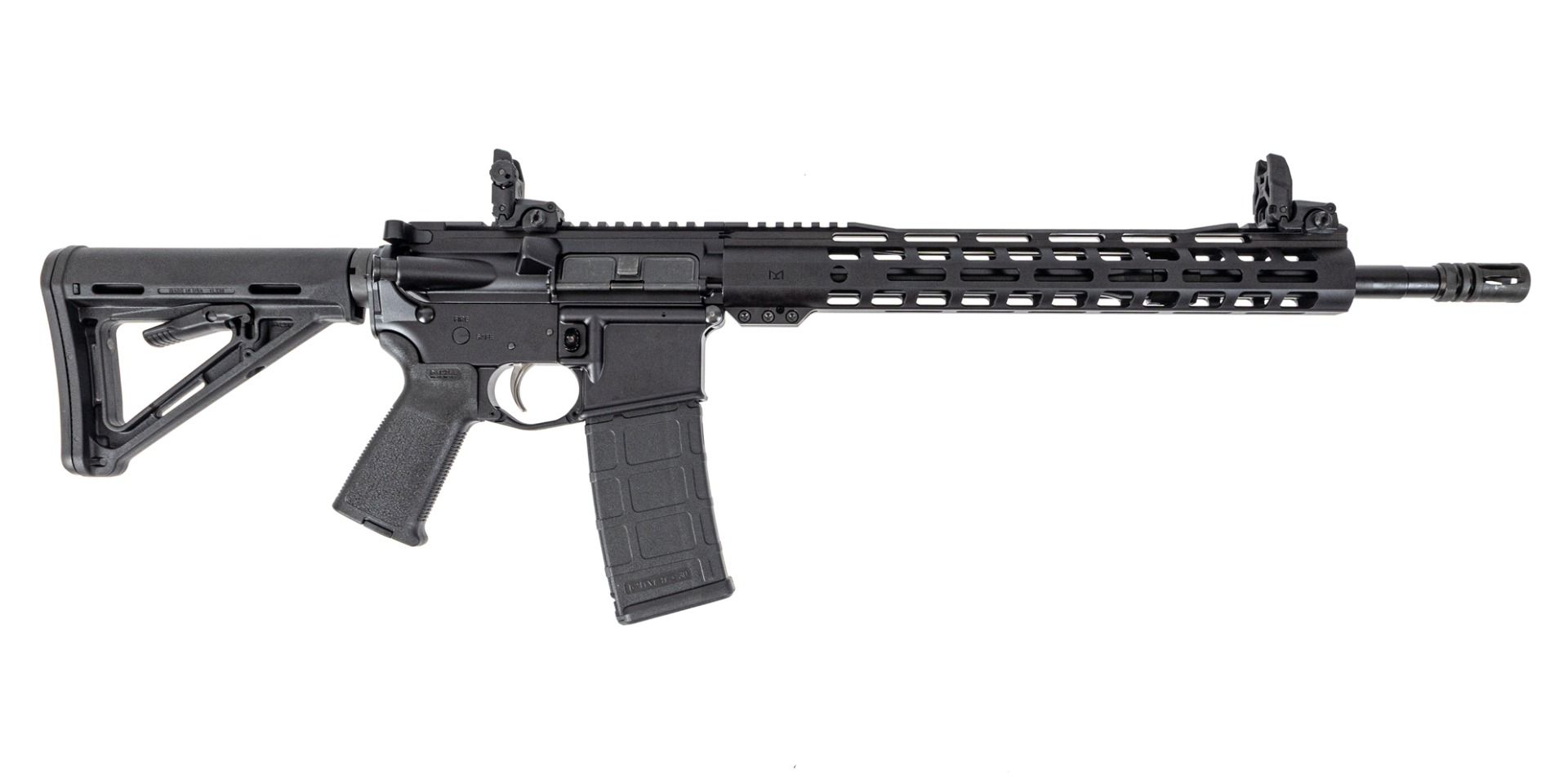
Palmetto State Armory (PSA) Complete AR-15
The cheapest way into a real AR without ending up with a rifle you'll want to replace in two years. Good enough to learn on, good enough to keep.
Palmetto State Armory built a following by doing one thing very well. They make a dependable, American‑made AR at a price beginners can actually swing, and they back it with a true lifetime warranty.
The classic PA‑15 16‑inch M4‑profile carbine is the baseline I like to judge their entry rifles by. You get a 4150 CMV nitride barrel, a forged 7075 receiver set, a properly staked full‑auto profile BCG, Magpul furniture with an MBUS rear, and PSA’s Enhanced Polished Trigger.
Sale pricing often hovers in the mid‑$400s, which is why this is the entry rifle that brings the most people into the platform without cutting critical corners. Add the lifetime warranty coverage and it is easy to see why the PA‑15 owns this lane.
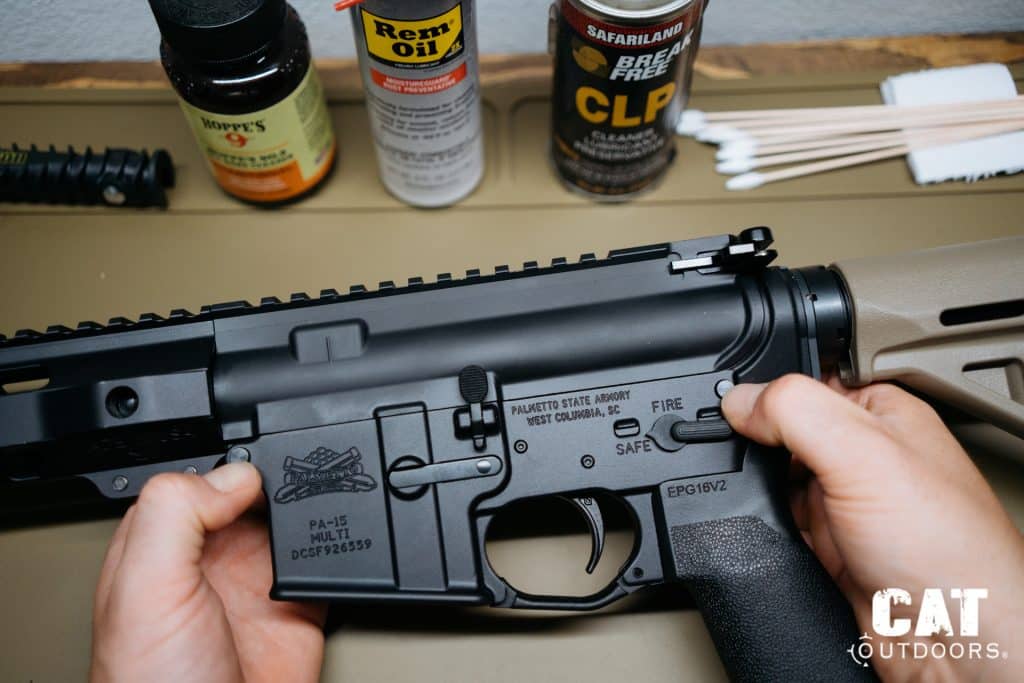
What We Like: The core specs land exactly where a first AR should. The 16‑inch 5.56 barrel uses 4150 CMV steel with a nitride finish, a 1:7 twist, and an M4 extension. The carbine‑length gas system with an F‑marked front sight base is as simple and proven as it gets. It is the configuration new shooters can learn on, parts are everywhere, and it will eat common 55 and 62 grain ammo all day.
Fit and materials are correct for the price class, and PSA publishes the details most people ask about, including Carpenter 158 bolt steel and proper gas‑key staking.
Out of the box usability is better than you expect at this price. The rifle ships with Magpul MOE furniture, a 6‑position stock, and a rear MBUS, so you can mount an optic later without waiting to shoot now.

The Enhanced Polished Trigger is not a competition unit, but it is a noticeable step up from a gritty GI pull. That small upgrade helps new shooters develop a clean press and it makes the rifle feel less “budget” on the line.
PSA’s warranty is the safety net that makes this recommendation easy. The coverage follows the gun for the serviceable life of the product, and PSA publicly states they pay shipping both ways on valid claims. For an entry‑level buyer that kind of support matters. If something shows up out of spec, you are not stuck with a wall‑hanger. You can send it in and get it right.
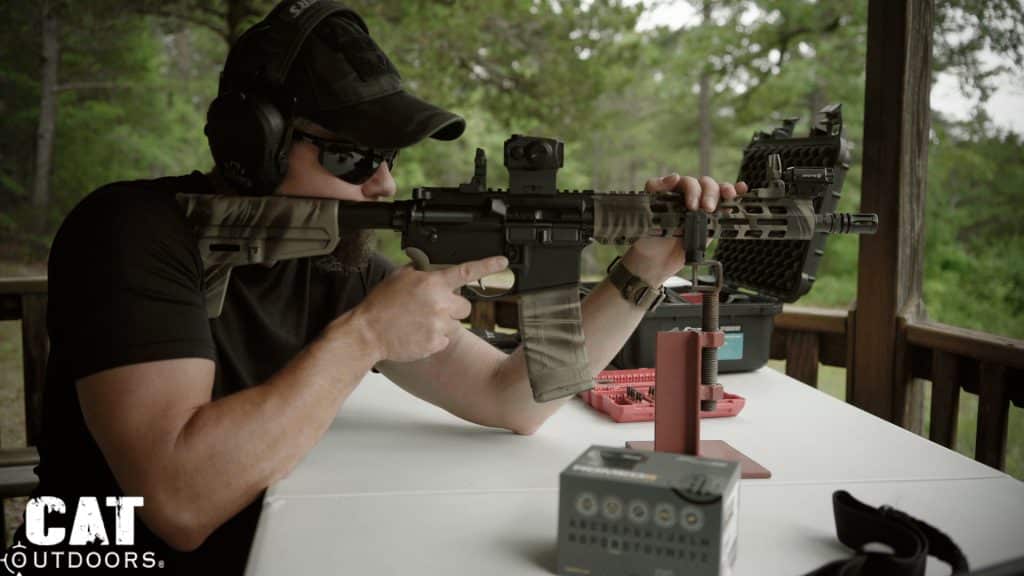
On the range the PA‑15 behaves like a solid service‑grade carbine. There’s a variety of PSA uppers and complete rifles: all of them cycle ammo reliably and still accurately land in the two to three MOA zone. For a first AR that is exactly the level of consistency you want. It is reliable, predictable, and ready to learn on while you figure out your preferences for optics, slings, and lights.
I know what you’re asking. Am I just buying a piece of junk? Well, part of the reason for PSA’s bottom prices is because of full vertical integration. Unlike many of their competitors, PSA handles everything from raw metal to the finished product, cutting out middlemen and passing the savings on to you.
And, if you’re reeeaally stretched on budget, PSA offers blemished units at an even greater discount. Many of our friends have bought blem units and told us they couldn’t find what’s wrong with it.
One of the things I love about PSA is their commitment to the 2nd Amendment. Their MO is to arm the people to protect them from the tyranny of the government. In our conversations with PSA, they’ve told us they will not sell to government buyers. They don’t want to arm the government with inexpensive firearms. It is truly a company that is by the people and for the people.
Flaws but Not Dealbreakers: You are buying an honest entry rifle, not a boutique build. The carbine gas system can feel a little sharper than a tuned mid‑length when you start doing rapid strings, and the nitride barrel is about utility rather than heirloom longevity.
If you know you want the softest recoil impulse possible for high round count classes, you will eventually step up to a mid‑length configuration.
Finish consistency and small‑part feel can vary more here than on premium brands. Most rifles arrive tight and clean, others may show a safety with a lighter click or a handguard that benefits from a re‑seat. The good news is PSA’s warranty process is straightforward, so true defects get corrected.
For the price, I accept the occasional rough edge, especially when the core function is there.
You will also outgrow certain choices as your skills accelerate. The EPT trigger is fine to start, but a quality two‑stage or a refined single‑stage will make accuracy work easier later on. The A2 flash hider is practical, though a modern comp or a suppressor‑ready mount will change how the muzzle behaves during drills. Those are normal progression upgrades, not red flags.
Stepping Up to PSA Sabre‑15 for More Value
If your budget has room and you want a rifle that feels “sorted” from day one, the Sabre‑15 series is the natural PSA upgrade path.
Sabre models layer in premium parts and better tuning, including options like FN cold hammer forged chrome‑lined barrels on 16‑inch builds, RifleSpeed adjustable gas blocks on select SKUs, upgraded triggers from Hiperfire, Radian charging handles and safeties, Sprinco buffer springs, B5 furniture, and rails that hold zero under sling tension.
The result is a PSA that lands closer to duty‑grade feel without jumping into boutique pricing.
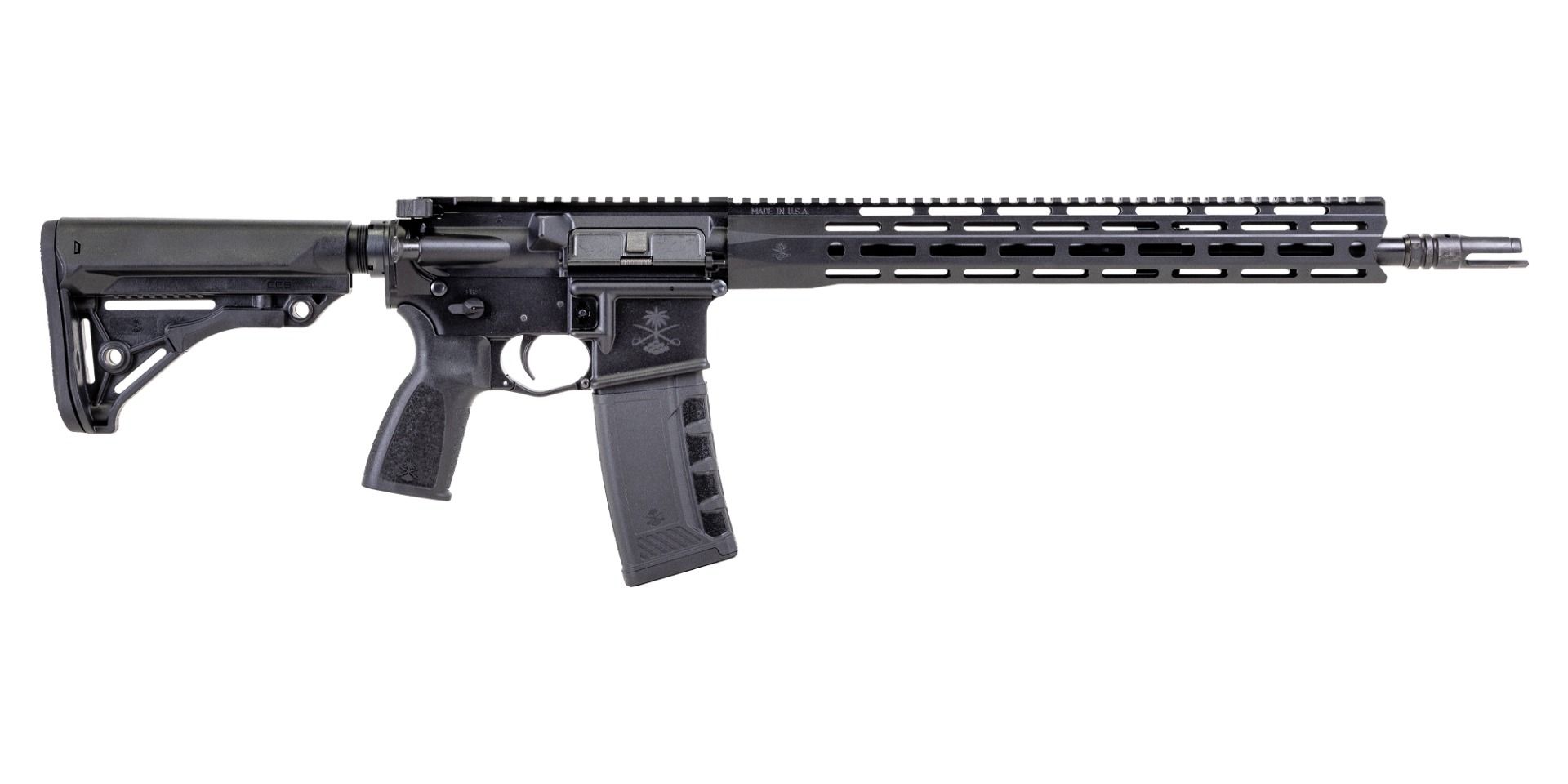
PSA Sabre-15
Save 5% on all SABRE products at PSA. Use code CO2SABRE5
We’ve put our Sabre‑15s through thousands of rounds with solid results, and can testify to the build quality. It is cleaner, more controllable, and spec’d for shooters who want to skip the immediate upgrade chase.
Bottom Line: Buy the PA‑15 if you want the most trustworthy gateway into the AR platform at a true entry price. It gives you the right materials, the right configuration, and a warranty that removes the fear of a bad draw. If your plan is to take classes, add a suppressor, or you simply want a rifle that arrives with better gas control, ambi touches, and upgraded small parts, jump straight to a Sabre‑15. The PA‑15 is the smart starting point. The Sabre‑15 is the smarter finish line if you can stretch a bit further.
4. MOST BUDGET FRIENDLY AR-15: Smith & Wesson M&P15 Sport III
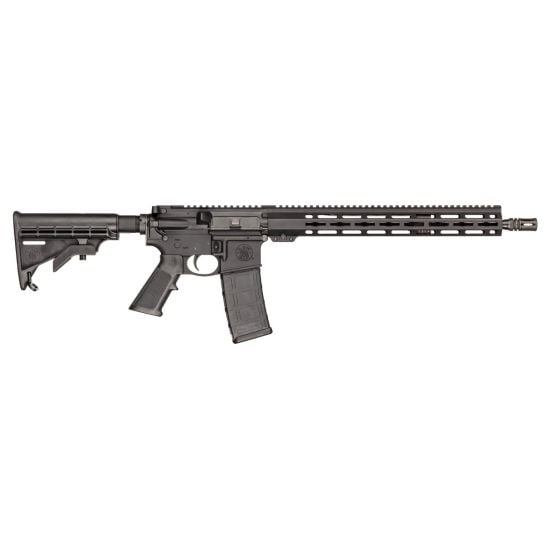
Smith & Wesson M&P15 Sport III
The budget pick for buyers who want a known brand on the receiver. Reliable, accurate enough, and backed by a company that isn't going anywhere.
Smith & Wesson refreshed its entry AR with the Sport III and quietly fixed the things budget buyers used to upgrade first.
The new model moves to a free‑float 15 inch M‑LOK handguard and a mid‑length gas system on a 16 inch barrel, so recoil is calmer and accessory space is finally generous. The barrel uses 5R rifling with a 1:8 twist, which broadens the ammo it shoots well compared with older 1:9 sport models. All that to say, at about $700, price positioning is on point.
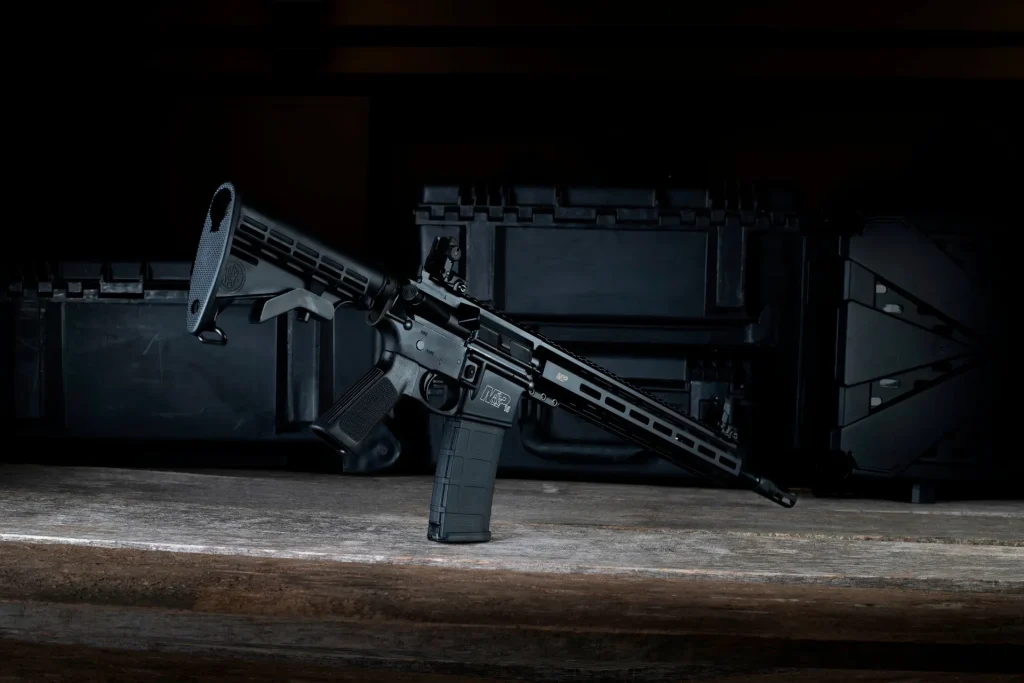
Why We Love It: On the spec sheet front, the mid‑length system and free‑float handguard change how the rifle behaves when you actually run it. Gas timing is softer, so sights track cleaner during rapid strings and you do not get the sharp snap common to carbine‑gas budget guns.
The 15 inch rail gives you proper hand placement and room for a white light, pressure pad, and front BUIS without crowding the muzzle. Because the rail is free‑floated, resting the rifle on barricades does not nudge your zero the way old two‑piece guards could. These are the upgrades most shooters used to pay for after the fact, now included out of the box.
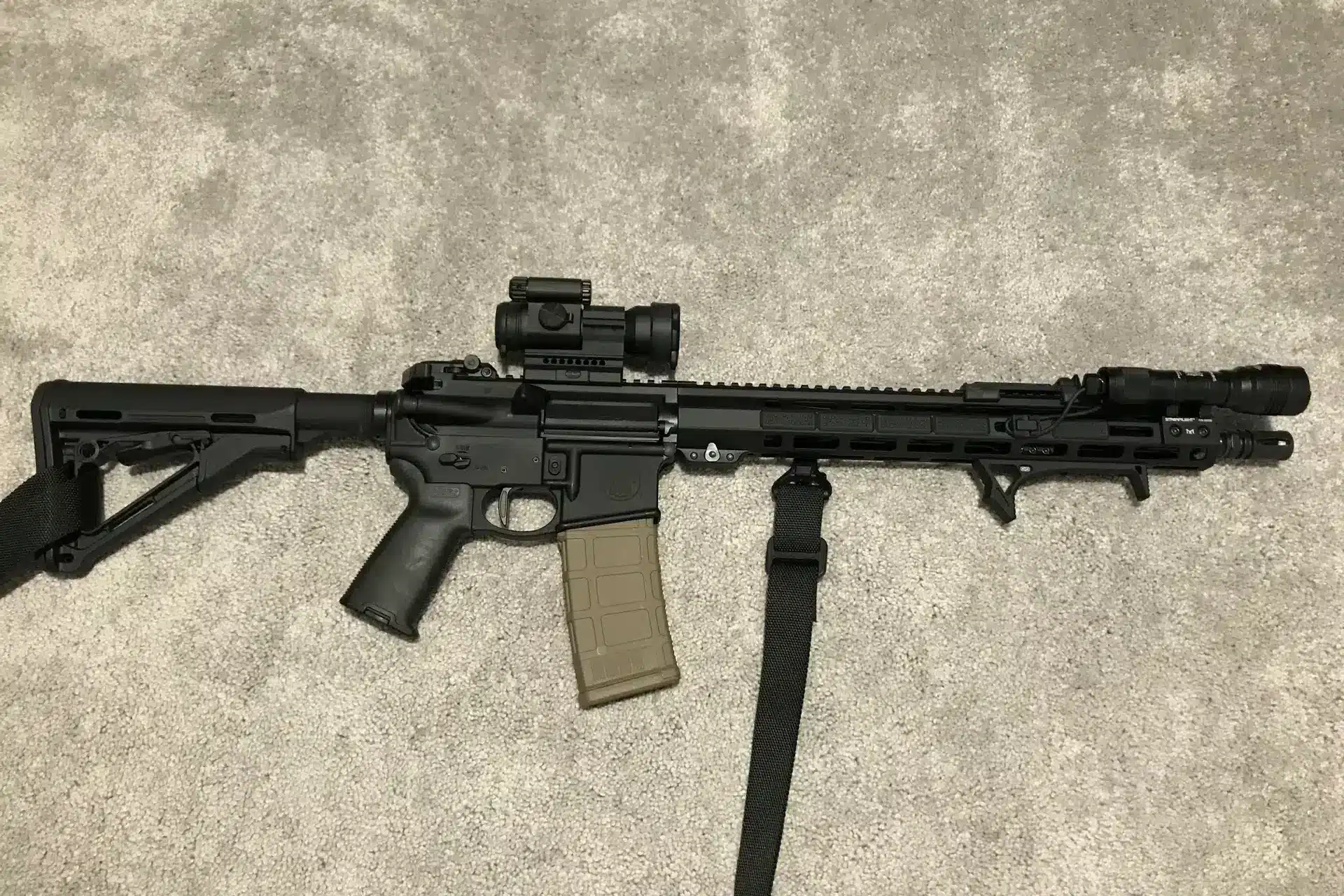
The 16 inch Armornite barrel with 5R rifling and a 1:8 twist is a smart choice for beginners. It resists corrosion, cleans easily, and tends to shoot common 55 and 62 grain loads respectably while also stabilizing heavier 69 to 77 grain match loads when you start chasing accuracy.
For a rifle in this price band, it undercuts many competitors that still ship carbine‑gas and non‑free‑float configurations. That puts a modern feature set within reach for buyers looking to save some cash.
Once broken in, you’ll find accuracy in the two to three MOA range with common ammo, though you can get better groups if using quality loads. That is exactly what a first rifle should deliver.
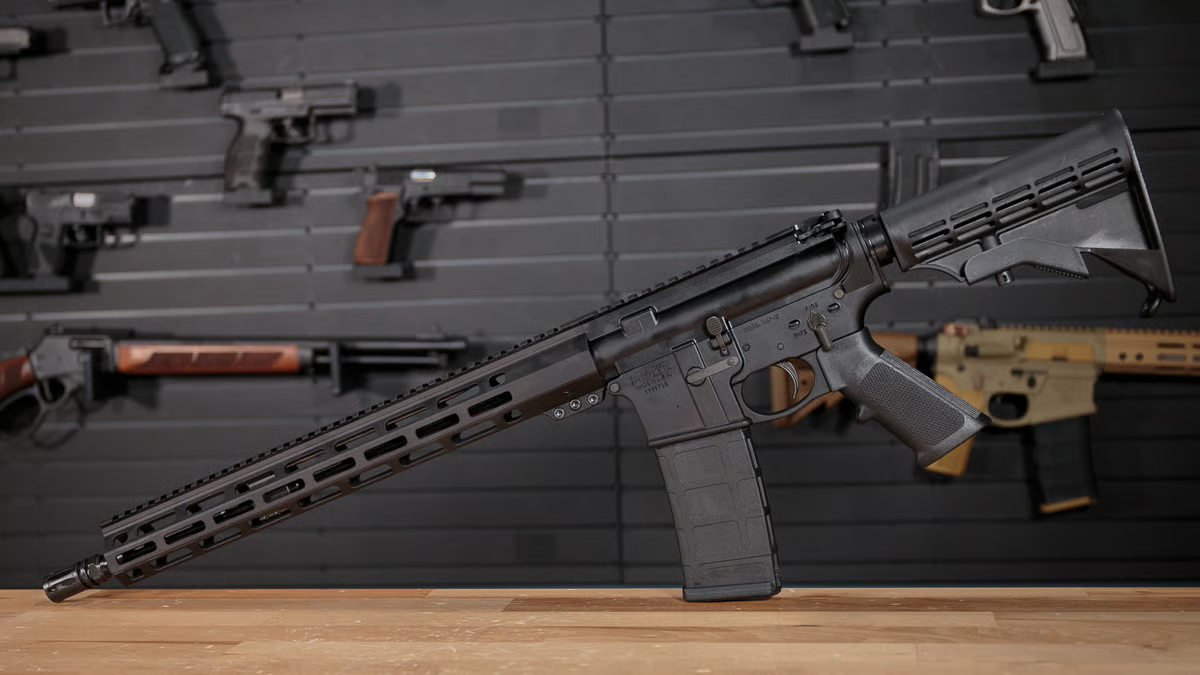
Flaws but Not Dealbreakers: You are not getting boutique touches at this price. The barrel is Armornite treated 4140 rather than cold hammer forged and chrome lined, and the muzzle device is a basic A2 flash hider. Nothing to write home about.
Those choices keep cost down and they work, but high‑volume shooters may eventually want a different muzzle device for recoil control or a different barrel if they plan to live in high round count classes year after year.
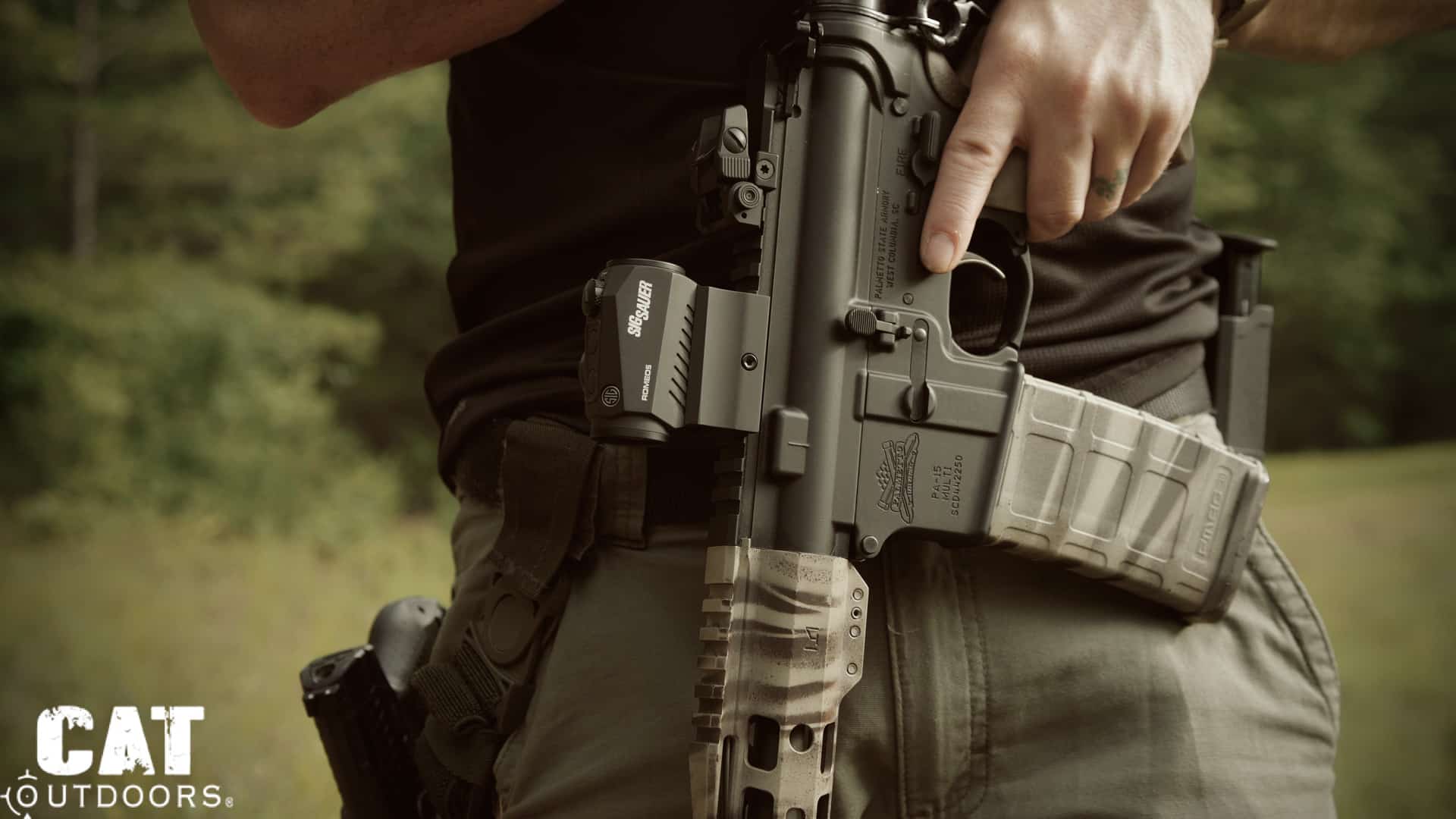
Controls are standard rather than fully ambidextrous and the trigger feels like a typical service pull. Left‑handed shooters who want mirrored controls will add parts, and accuracy chasers will eventually drop in a two‑stage or a clean single‑stage. Neither is a knock on reliability; it just frames where the value lands on day one.
Most packages ship without iron sights, so plan your optic and BUIS purchase as part of the budget rather than an afterthought.
Quality variation at the margins is the trade for the price tier. The majority of rifles run fine, while a small percentage will show teething issues that retailers or the factory will resolve. You’ll also find a bit of wiggle between the receivers. It’s not perfect.
That is par for the course with entry rifles and why buying from a dealer with a clear return process matters. Nonetheless, the feature set gives this model a stronger starting point than most budget standards.
Bottom Line: Buy the M&P15 Sport III if you want a true entry‑level price without being stuck in yesterday’s configuration. Mid‑length gas, a free‑float rail, and a versatile 1:8 barrel make it the modern baseline for first‑time AR owners who plan to train and accessorize sensibly. If you already know you want ambi controls, match triggers, or long‑term hard‑use barrels, you will spend more or upgrade later. For most new shooters who value reliability, shootability, and room to grow, this is the budget pick that makes the fewest compromises.
Now take that extra cash and buy yourself some cleaning gear. Before you hit the range, learn how to clean your AR-15 properly.
5. BEST BUDGET RECCE: Ruger AR-556 MPR
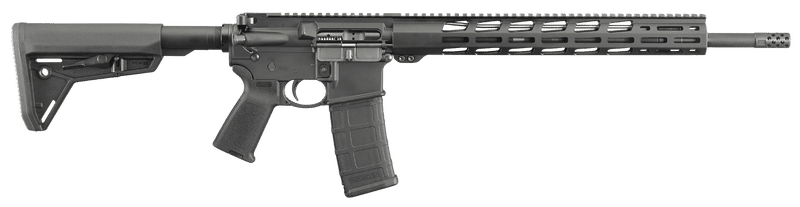
Ruger AR-556 MPR
An 18-inch rifle-length gas system for less than most people pay for a carbine. The cheapest way to get real reach out of an AR-15.
Recce is shorthand for reconnaissance and, in AR terms, it means a lightweight, accuracy‑leaning general‑purpose setup you can carry all day, run fast inside 50, and still make confident hits past 300 from field positions. Ruger’s AR‑556 MPR is the best budget rifle that actually fits the Recce brief.
The recipe is straightforward: a free‑floated handguard that keeps zero honest on barricades, a balanced gas system for a calm cycle, a barrel that shoots common 55 and 62 grain loads well but also likes heavier match ammo, and a trigger you can live with as you stretch distance.
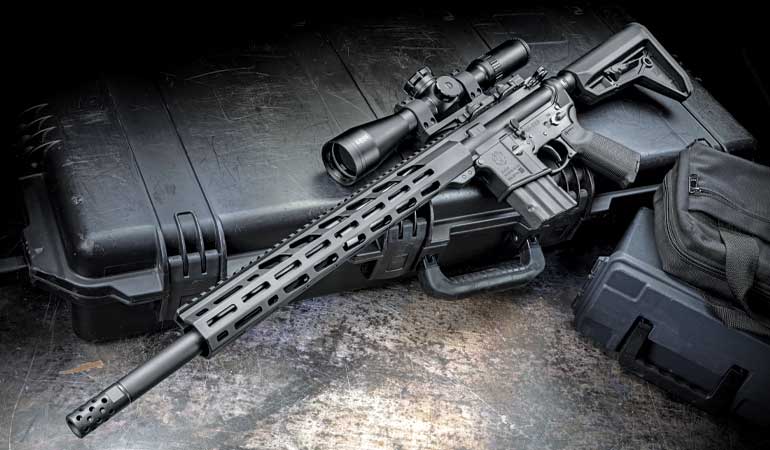
What We Like: The gas system and barrel combo do the heavy lifting. A rifle‑length system on an 18‑inch tube lowers port pressure and smooths out the cycle, which shows up as less snap in the sight picture and less fatigue across longer strings.
Ruger calls out the recoil benefit directly, and it tracks with what you see on the line when you run drills back‑to‑back. The nitrided, cold‑hammer‑forged barrel uses a 1:8 twist that happily stabilizes common 55‑ and 62‑grain ball as well as heavier 69‑ to 77‑grain match loads. It’s five‑groove rifling and has been described by reviewers as 5R, which helps with consistent jacket engagement and easy cleanup.
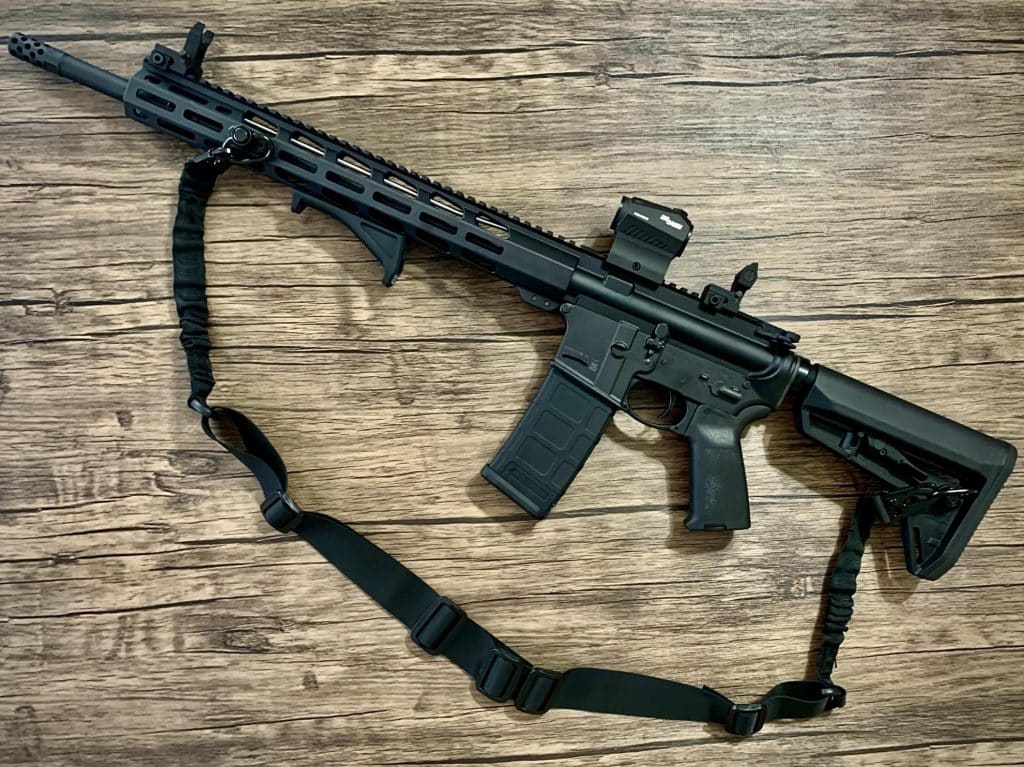
The trigger also adds some real value at this price. Ruger ships the Elite 452 two‑stage at roughly 4.5 pounds with a clean wall and a fast, consistent reset. For newer shooters that means fewer pulled shots when you slow down for accuracy work. For experienced shooters it removes an immediate “first upgrade” from the list. It’s not a competition hair trigger, and it doesn’t need to be.
The 15‑inch free‑float handguard gives you the Recce ergonomics you actually feel. There is room for a flashlight, front sight, and a pressure pad without crowding the muzzle, and because the barrel is fully floated you can drive the rifle into a barricade without nudging your zero.
The rail is slim enough to index comfortably with a modern support‑hand grip and retains a continuous top rail for easy optic and BUIS placement. Accuracy wise, when we’ve run it, it has produced sub‑MOA groups. You should be able to get in the 1 to 1.5 MOA range.

Ruger rounds it out with a couple little things that reduce tinkering. You get a chrome‑lined BCG interior with proper staking, a Magpul MOE SL stock and MOE grip, and a radial‑port brake that meaningfully reduces rise for quick doubles. It ships with a PMAG and no sights so you can pick the optic you want from day one.
Flaws but Not Dealbreakers: The brake is effective but loud. Radial designs trade blast for control, and you’ll notice it during indoor sessions and on covered bays. If you shoot a lot around others or you plan to suppress later, swapping to a linear comp or a suppressor‑compatible mount is an easy quality‑of‑life upgrade.
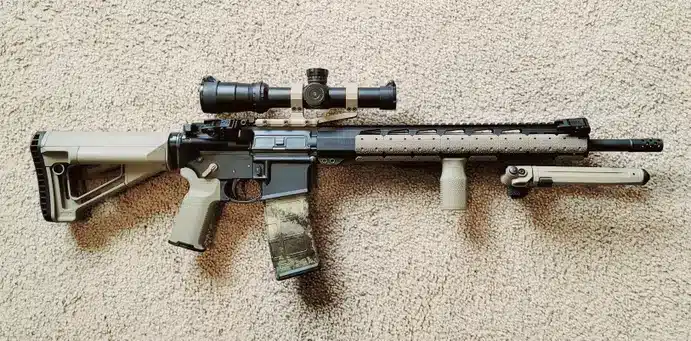
Length is the other consideration. An 18‑inch barrel and 15‑inch rail give you stability and velocity but add overall length compared with a 16‑inch mid‑length. Not my favorite setup, personally.
If you live on tight indoor ranges, in and out of vehicles, or you simply prefer something handier, Ruger’s 16.1‑inch MPR variant exists with a mid‑length system and similar furniture. For field shooting, barricades, or a “one rifle to learn on” setup, the 18‑inch remains the more forgiving choice.
Not every SKU is identical, so confirm details before you buy. The model we recommend here is the 8514 in 5.56 NATO with the rifle‑length gas, Elite 452 trigger, 15‑inch handguard, and 6.8‑pound listed weight. Other MPR models include different handguard lengths, stocks, or even PROOF carbon barrels at much higher price points. The value sweet spot is the standard 18‑inch 8514.
Bottom Line: Choose the AR‑556 MPR if you want a soft‑shooting, accuracy‑leaning rifle that feels sorted without premium pricing. Rifle‑length gas, an 18″ CHF barrel, a two‑stage trigger, and a 15″ free‑float rail make it a true budget Recce you can grow with. If you need something handier or shoot in blast‑sensitive bays, pick the 16″ version or swap the brake. For most new shooters, this is the sensible path to better hits.
6. RUNNER-UP DO-EVERYTHING: Bravo Company RECCE-16 MCMR
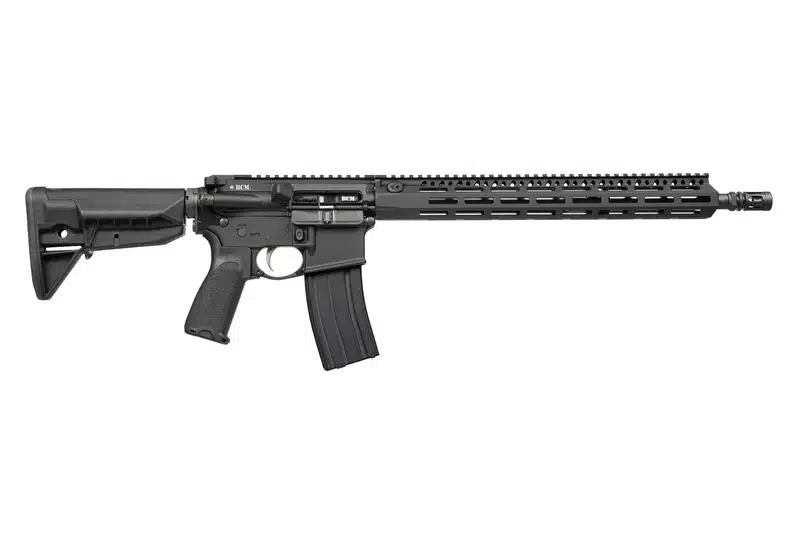
BCM Recce-16 MCMR AR-15
The pick if the DDM4 is sold out or you just don't want a Daniel Defense. Same duty-grade standards, different flavor.
Labeling the BCM Recce 16 as the ‘Runner-Up’ just seems like a disservice to this incredible rifle.
It’s a classic workhorse 16‑inch, mid‑length AR that favors reliability and balance over flash. In our lineup it sits just under the Daniel Defense DDM4 V7 for Best Overall and beside SOLGW’s M4‑76 on the hard‑use value lane. BCM nails the do‑everything brief: duty‑sensible specs, soft enough recoil, and a proven track record.
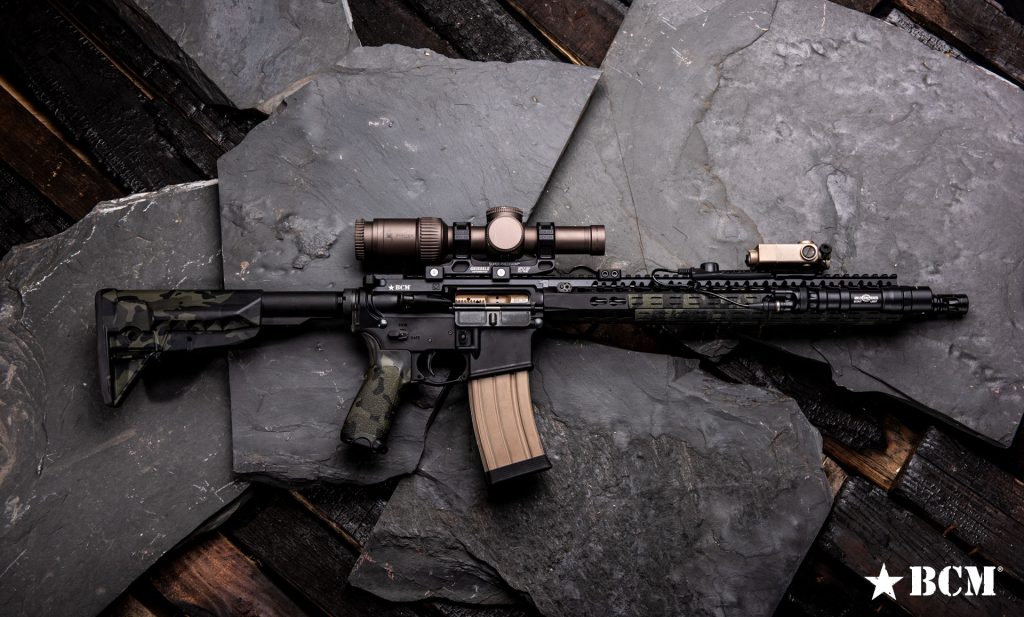
What We Like: The core recipe is right. You get a 16″, mid‑length system with an 11595E chrome‑lined, 1:7 barrel and a properly staked carrier. That’s the boring, dependable baseline you want in a general‑purpose carbine.
Weight stays friendly at about 6.1 lb, so the gun carries light and points quick, even once you add a light and optic.
We really like the MCMR free‑float handguard. It uses the company’s barrel‑nut and lockup that earned a following on the KMR series, translated to M‑LOK. It’s a stiff rail that keeps zero when you load a sling or drive the gun into a barricade, with a slim profile that’s easy to index with a modern support‑hand grip.

Additionally, the little “Gunfighter” touches add up. Factory guns commonly ship with a BCM charging handle, Mod 0 comp, QD end plate, QD M‑LOK sling socket, SOPMOD‑style stock, and the PNT trigger. None of these parts are flashy, but together they replace the aftermarket swaps most owners make to improve an out-of-the-box gun.
On the line the Recce 16 behaves like a carbine you can forget about. The mid‑length gas and modest muzzle device keep the impulse controlled, so sights track clean and doubles are easy. Overall, we felt like it had great reliability, good ergonomics, and “decent to solid” accuracy with quality 55–77‑grain ammo. That’s exactly what a do‑everything rifle should deliver.
Compared to the DDM4 V7, the BCM gives up a bit of finish polish and comes with a plainer trigger, but it lands at a friendlier real‑world price and an equally proven field record. Versus SOLGW’s M4‑76, BCM is the safer “buy it anywhere” pick with similar reliability and a lighter overall feel; SOLGW leans more “armorer‑tuned” with duty extras. It’s the broadest second choice for most shooters.
Flaws but Not Dealbreakers: You’re not getting boutique controls or a match trigger. The PNT is a clean mil‑spec pull, not a two‑stage. If you’re chasing tiny groups, budget for a trigger swap later.
The longer rails, heavier barrel, and features optimized for mid-range can be overkill or less practical for general patrol or close-quarters use. For users who mostly shoot 0-200 yrs, the Recce 16 might be extra weight or length without much benefit.
Parts compatibility is somewhat restricted. The upper requires a BCM bolt carrier group and charging handle. You may run into fit or tolerance issues with other parts.
Bottom Line: Pick the BCM Recce 16 MCMR if you want a proven, low‑drama carbine that covers classes, defense, and general range work with equal confidence. It’s lighter than many duty guns, spec’d the right way, and backed by a long record of reliability. BCM is the versatile do-everything that most shooters can adopt immediately and never second‑guess.
7. BEST “READY OUT OF THE BOX”: Geissele Automatics Super Duty MOD1 16″
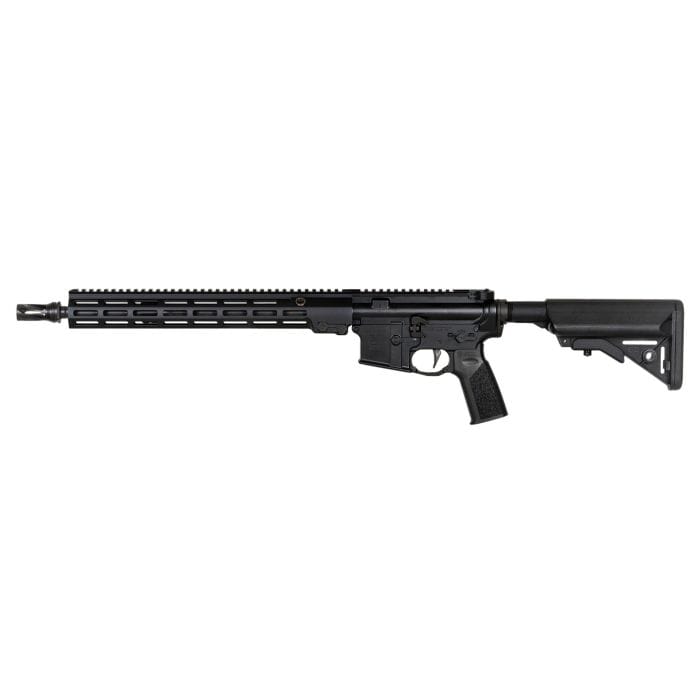
Geissele Automatics Super Duty MOD1 16"
The rifle that ships ready to fight with zero aftermarket spend. Geissele trigger, Geissele rail, Geissele everything, and it shows.
Geissele built its name on bombproof rails and triggers, then poured that DNA into a turnkey rifle.
The Super Duty MOD1 is the brand’s current evolution, pairing a cold hammer forged, chrome‑lined 16 inch barrel with the URGI‑proven MK16 rail, a Nanoweapon‑coated Reliability Enhanced BCG, and the SSA‑E X two‑stage trigger.
It adds practical touches like a Maritime bolt catch, Airborne charging handle, and a HUXWRX QD flash hider for immediate suppressor compatibility. In a market full of “assemble it yourself later” rifles, this one shows up finished.
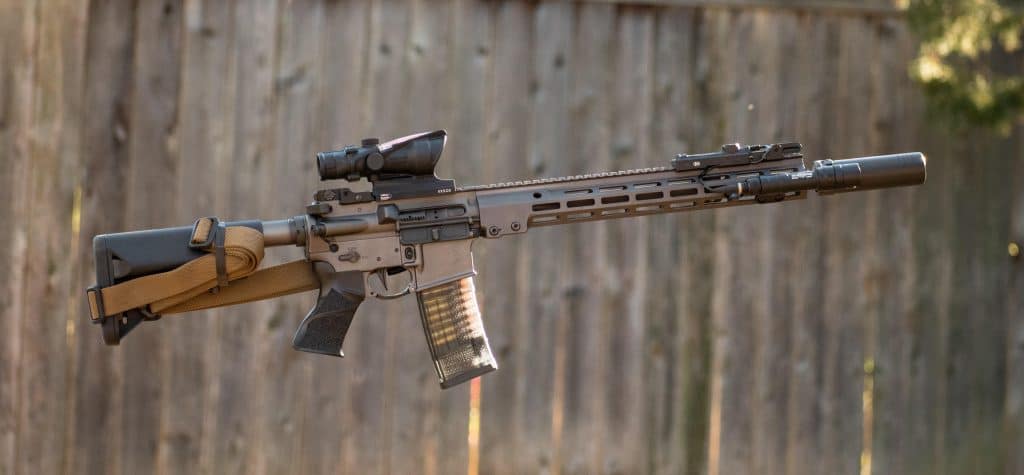
What We Like: Shootability feels sorted before you touch a single wrench. Geissele mates a CHF chrome‑lined tapered barrel to its own gas recipe and a Super Compact Gas Block, then backs the cycle with the Super 42 braided spring.
The result is a calm, reliable impulse that keeps sights flatter in rapid strings and stays predictable across ammo types and weather. It reads like marketing until you live with it, then it reads like someone actually tuned the system.
The parts that matter are already upgraded. The Reliability Enhanced BCG arrives with a chrome‑lined, properly staked key, extended upper rails for smoother feeding, an H13 tool‑steel cam pin, and a Nanoweapon finish that shrugs off fouling.
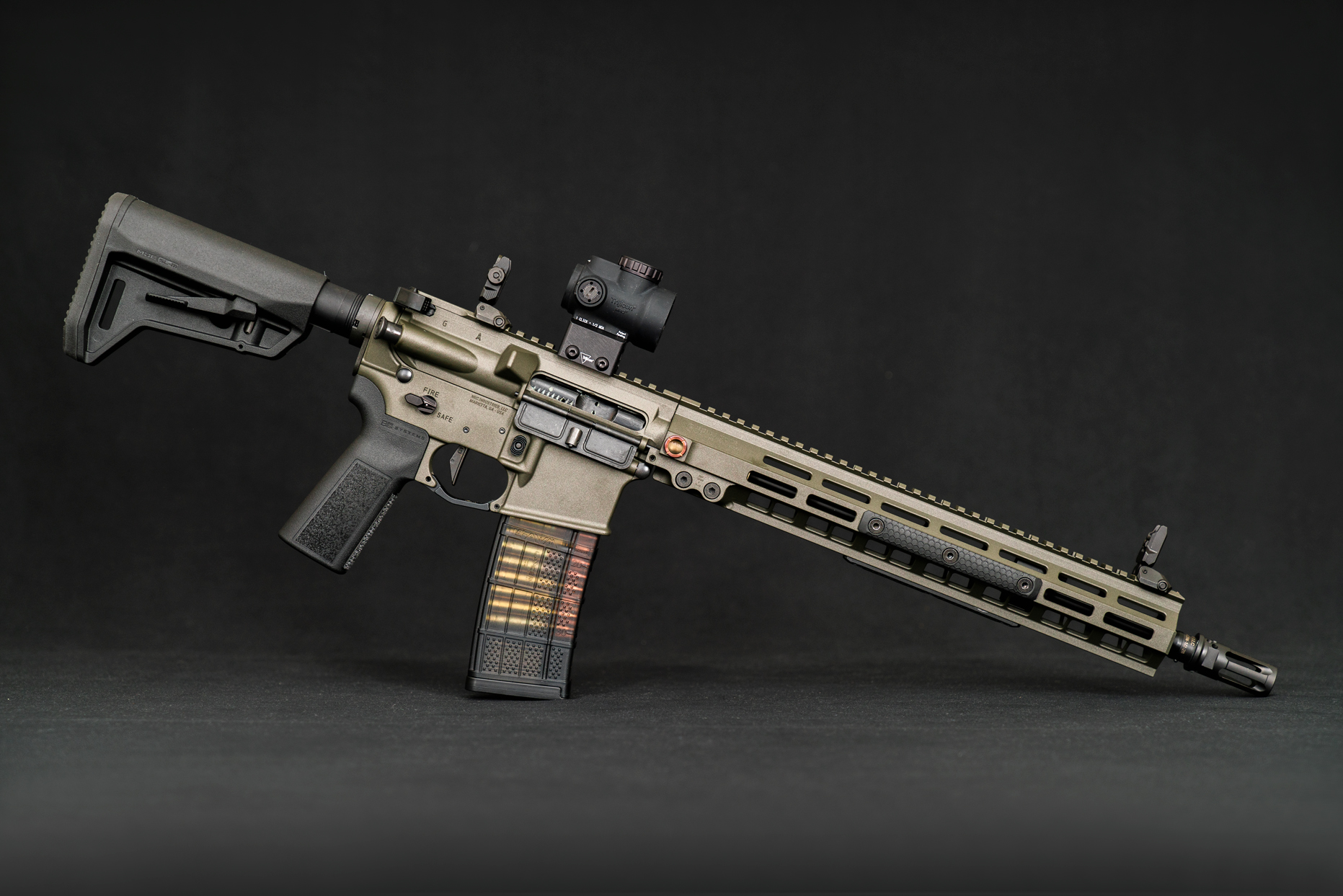
The trigger is the SSA‑E X with the wide Lightning Bow, a crisp two‑stage that breaks in the three to four pound window and makes accuracy work feel easy without compromising duty manners. These are common end‑user upgrades that you do not have to chase.
The MK16 rail is the same rigid geometry popularized on the military’s URGI program, and it matters in real use. The 15 inch handguard gives modern support‑hand placement and accessory space while staying slim in the grip. Because the barrel is truly free‑floated and the rail is stout, loading a sling or driving the gun into a barricade does not wander your zero.
That is how a “ready out of the box” rifle should behave when you stop babying it.
Little details complete the package. The Super Configurable ambi safety has a positive click without feeling gritty. The HUXWRX flash hider makes the rifle suppressor‑ready on day one and does not punish partners on the line like an aggressive brake. Real‑world reviewers and users report strong reliability and better‑than‑service‑grade accuracy, which tracks with what the specs promise. It is a premium build that shoots like one.
Flaws but Not Dealbreakers: Price is up there. Factory listings commonly sit around two thousand dollars depending on finish and barrel option, which places the Super Duty above mainstream duty rifles like BCM or SOLGW and right beside other high‑end picks.
If your budget caps lower and your plan includes heavy customization, buying a basic rifle and upgrading slowly can make more financial sense. Here you pay to skip the parts chase and end up with a cohesive system.
Geissele’s rifles have evolved, and older internet chatter about QC from the 2020 window still floats around. More recent owner reports trend positive, and the current MOD1 spec addresses the kind of rough edges people previously nitpicked.
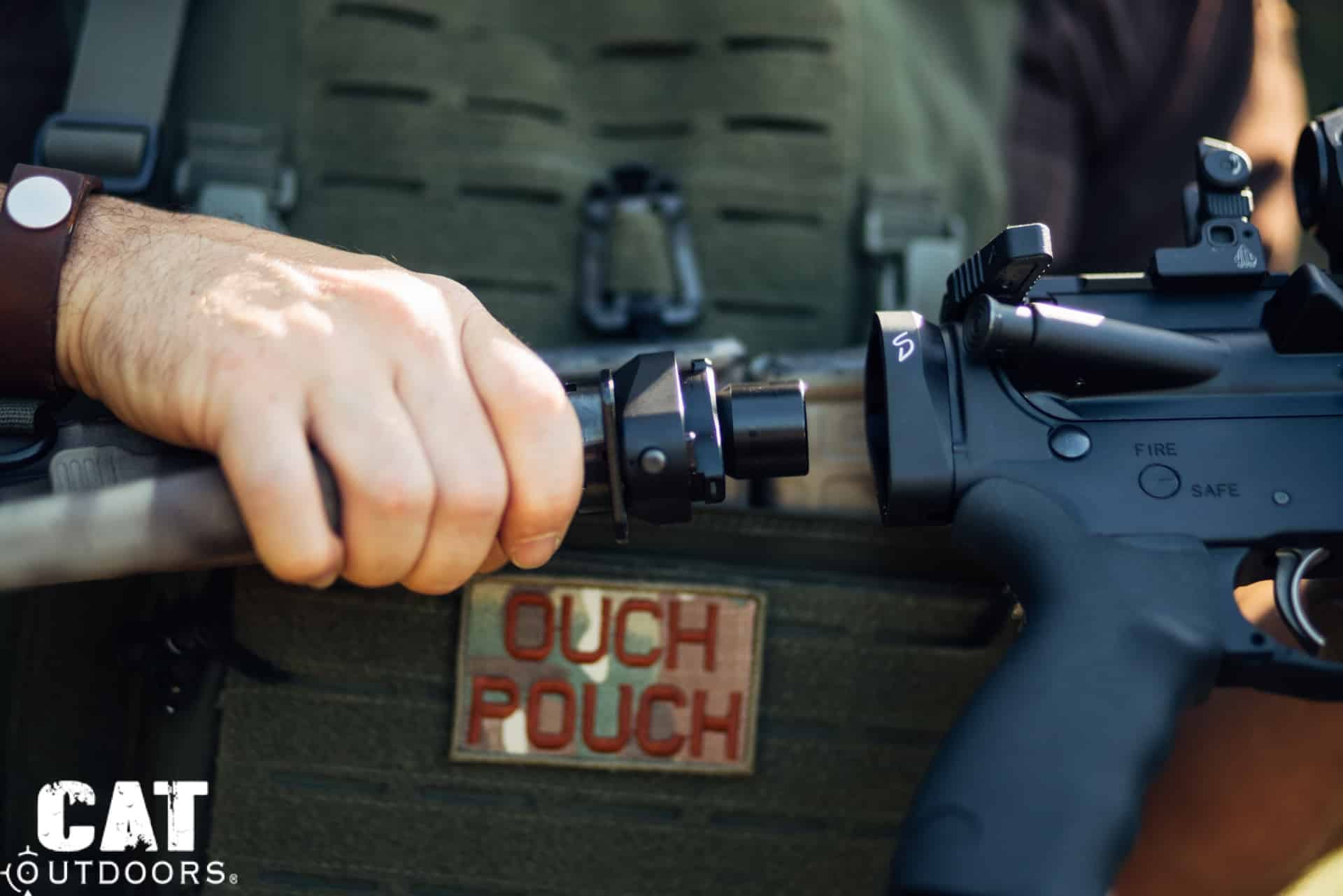
As always, vet the exact SKU. The company lists “Geissele Length” gas on some 16 inch rifles and publishes port sizes, so you know what you are getting. Confirm rail length, trigger, and muzzle device on the model you buy.
If you need fully mirrored ambi bolt and mag controls at the lower, this is not an LMT‑style ecosystem. The included ambi safety and charging handle cover most users, but left‑handed shooters chasing true bilateral controls may prefer an ambi lower. That does not change the value here. It just frames who will appreciate the package most.
Bottom Line: Buy the Super Duty if you want a rifle that arrives like a well‑built project already finished. The CHF chrome‑lined barrel, tuned gas, MK16 rail, Nanoweapon BCG, SSA‑E X trigger, and HUXWRX QD mount make it genuinely ready on day one. It costs more than mainstream duty guns, but you skip upgrade roulette and get a cohesive setup that performs at a high level for training, defense, and suppressed use.
8. BEST BUILD YOUR OWN FROM SCRATCH: Aero Precision M4E1
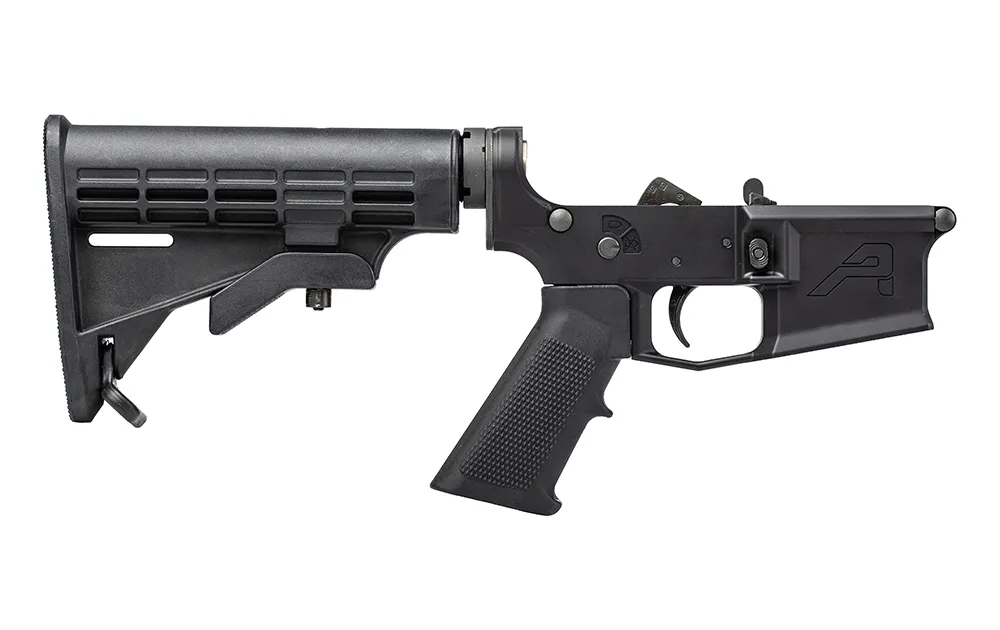
Aero Precision M4E1 Lowers
The receiver set to start with if you want to build the rifle yourself. Tight tolerances, integrated trigger guard, and an ecosystem of parts designed to fit it.
If you want the experience of building an AR, the M4E1 from Aero Precision is our favorite for getting started. The brand cut its teeth on clean machining and smart revisions to the AR pattern that make assembly faster, tidier, and harder to screw up.
The stripped lower gives you billet‑style touches in a forged package, while the matching uppers let you choose between a standard threaded route for broad handguard compatibility or an enhanced interface focused on stiffness and consistency. Pricing stays approachable for first builds, with stripped M4E1 lowers commonly in the low‑to‑mid hundreds and the newer ambi PRO lower sitting higher due to its mirrored controls.

What We Like: The M4E1 lower fixes the fiddly parts of an AR build. A threaded bolt‑catch pin installs with a hex key instead of a roll‑pin punch, which saves finishes and tempers. The takedown detent hole at the rear is threaded for a 4‑40 set screw, so you trap the spring cleanly and avoid that classic detent‑to‑the‑ceiling moment. An upper‑tension screw under the grip lets you dial out play between receivers.
These are small changes that make a first build feel like your third.
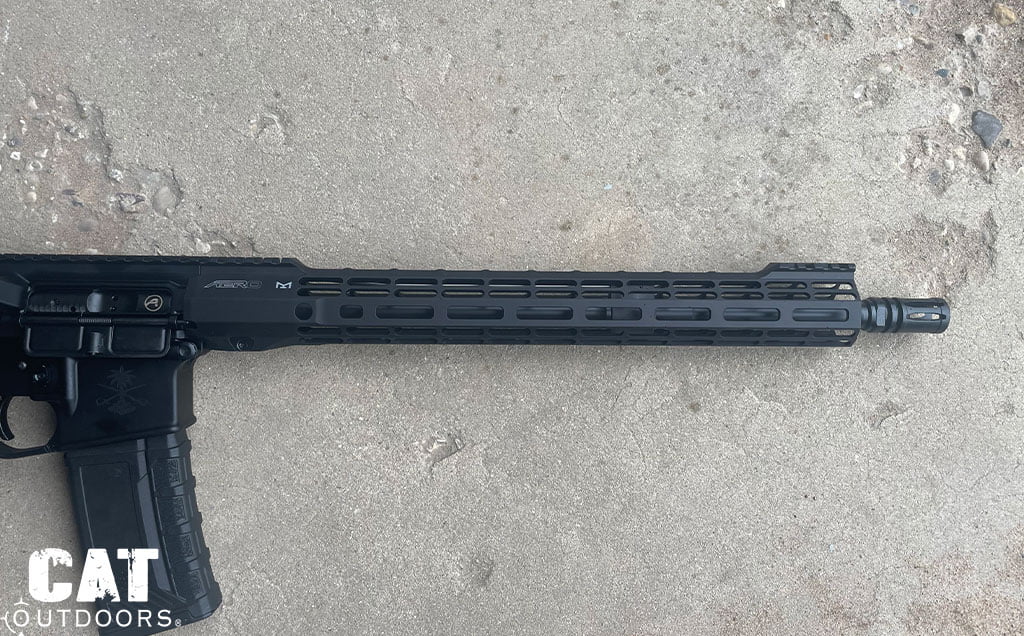
There’s a couple different models you need to choose from. The M4E1 Enhanced upper forges the handguard mounting surface directly into the receiver, which removes a clamped barrel‑nut interface from the equation. Fewer parts bear on the barrel and the free‑float is truly free, so hard sling loads and barricade pressure are less likely to wander your zero.
If you prefer maximum rail choice, the M4E1 Threaded upper keeps the classic barrel‑nut approach and plays nicely with most modern handguards. Pick stiffness or compatibility based on how you shoot.
Another thing we like, especially for beginners doing their first build is that the install guidance is clear and builder‑friendly. Aero publishes torque ranges for its current ATLAS barrel nut and keeps legacy instructions for the older BAR nut, which helps you match the spec to the hardware in front of you.
Plan on 35 to 65 foot‑pounds for ATLAS systems and 30 to 45 for BAR nuts, with anti‑seize and staged torque to settle the threads. A drop of blue threadlocker on the 4‑40 detent set screw prevents walk‑out over time.
And if you want ambidextrous controls without chasing third‑party parts, the M4E1 PRO lower bakes in mirrored bolt catch, magazine release, and safety while retaining mil‑spec compatibility for everything else. The proprietary bits arrive preinstalled, so you keep the easy‑build vibe and gain true left‑ or right‑hand operation. For duty or training where bilateral manipulation matters, that is a meaningful upgrade path in the same ecosystem.

Aero Precision M4E1 Uppers
Flaws but Not Dealbreakers: Choose your upper deliberately. The Enhanced upper’s integrated rail mount is the stiff, clean solution, but it commits you to Aero’s Enhanced‑pattern handguards. If your plan involves mixing brands or chasing a very specific third‑party rail, the Threaded upper is the safer starting point. Neither is wrong, they simply steer you toward different accessory pools.
Torque specs can confuse first‑timers because Aero has supported multiple handguard systems over the years. The ATLAS nut runs a higher range than the older BAR nut, and mixing those numbers can lead to an over‑torqued part or a loose install. Match the instructions to the hardware in your hand and use anti‑seize on the threads before you begin. That one prep step makes removal and future service painless.
The PRO ambi lower is excellent but not cheap. If you do not need mirrored controls, the standard M4E1 lower saves real money for your barrel and optic. Also expect occasional finish or fit variance when pairing receivers and rails from different makers. The good news is the M4E1’s tension screw lets you fine‑tune upper‑to‑lower fit without shims, which keeps the DIY experience frustration‑free.
Bottom Line: Pick the M4E1 if you want a first build that assembles cleanly, runs reliably, and leaves room to grow. The lower’s threaded pins and tension screw reduce risk, while the Enhanced or Threaded upper options let you optimize for stiffness or rail freedom. Add the PRO ambi lower if bilateral controls matter. Compared with generic forged sets, Aero’s choices save time, protect finishes, and make a scratch build feel purpose‑built from day one.
9. BEST FIT & FINISH AR-15: Radian Model 1
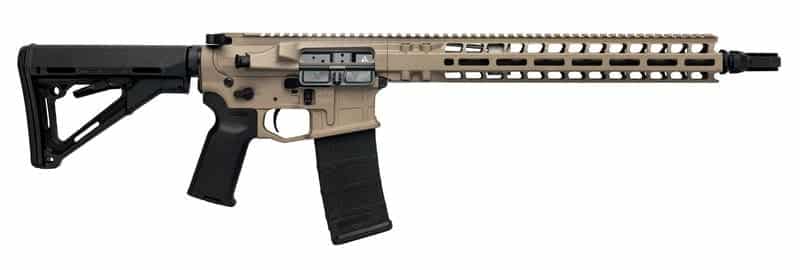
Radian Model 1
The AR that makes other ARs feel sloppy. Tolerances tight enough to feel the difference the first time you rack the charging handle.
The Radian Model 1 just feels awesome in your hands. There’s no rattle, clean seams, and controls that click instead of squish. The upper and handguard line up perfectly, the Cerakote is uniform, edges are eased where your hands live, and every control moves with the same crisp, repeatable feel.
Plenty of ARs run hard; very few feel this refined before the first shot. The tell is Radian’s native ambi lower with the A‑DAC system, which lets you lock the bolt using the right‑side mag button while working the charging handle. It is a small interaction that reveals a larger story.
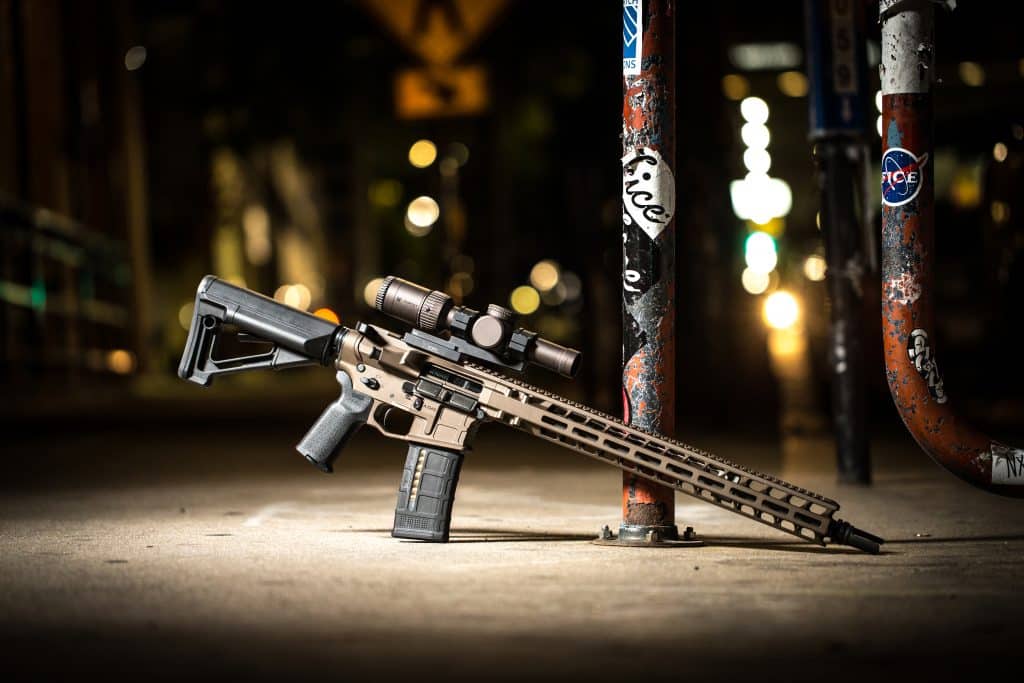
What We Like: The receiver set is the foundation. Radian machines both upper and lower from 7075‑T6, then Cerakotes the upper, lower, and handguard together so color and texture are a true set, not a guess. Tolerances are tight, the magwell is flared, and all the ambi controls are native to the lower.
The A‑DAC trick is more than a party trick; being able to lock the bolt from the firing hand speeds admin and malfunction work without breaking your grip. Once you learn the motion, it becomes second nature.
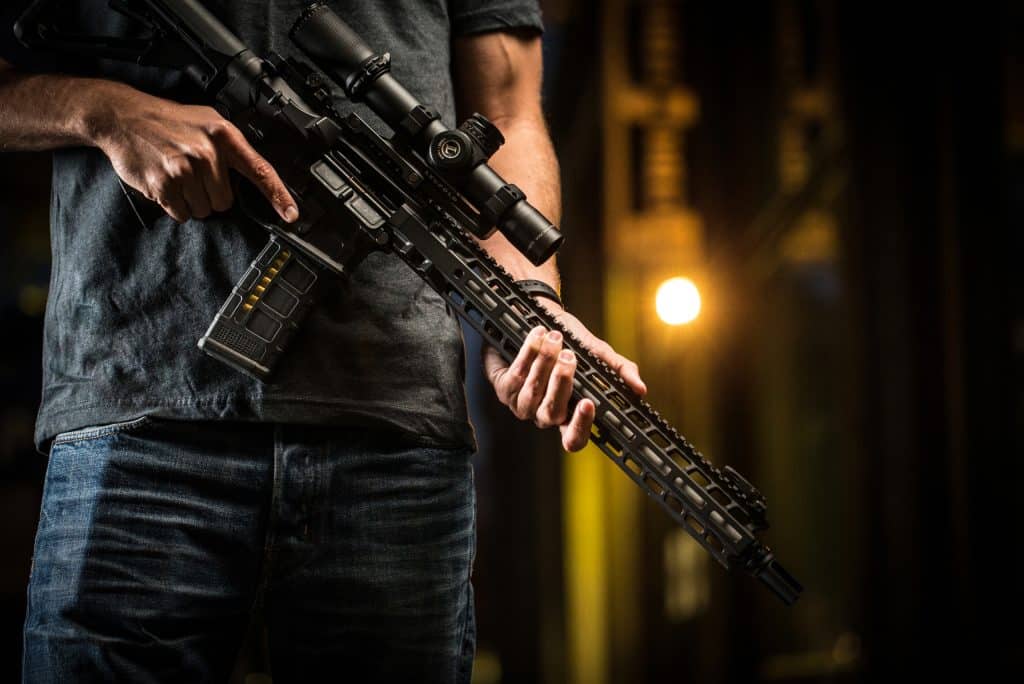
Barrels and gas are tuned like you’d hope at this tier. The standard .223 Wylde barrels are match‑grade 416R stainless, 1:8 twist, with mid‑length gas at 14.5 and 16 inches, and an intermediate option on 17.5. Radian backs them with a sub‑MOA guarantee using Black Hills Match—ambitious, but backed by plenty of third‑party sub‑MOA reports when shooters feed it 69–77 grain loads.
The result is a rifle that’s happy living at 50 yards and equally comfortable ringing steel well past 300.
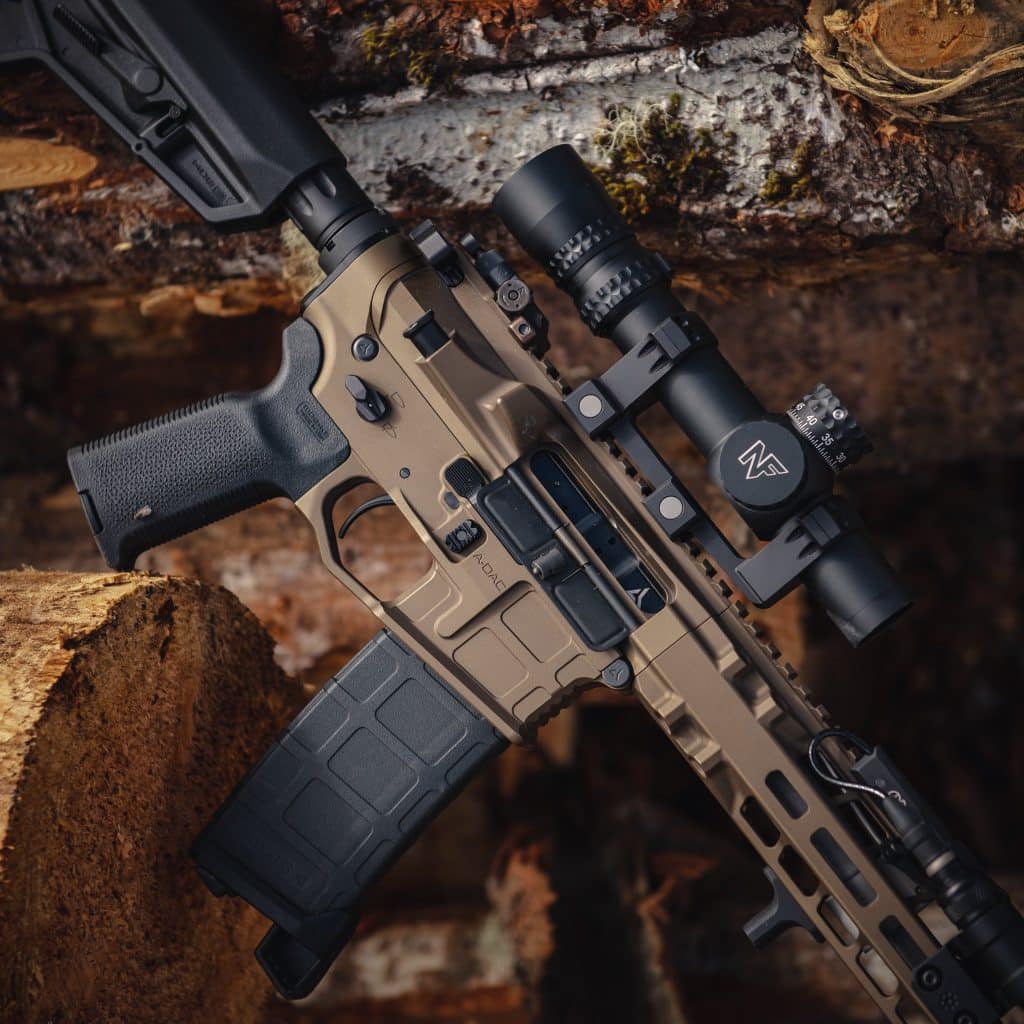
Another thing we like is that the supporting parts are equally thoughtful. A Raptor‑SD charging handle ships standard, the BCG is an enhanced M16 profile with black nitride, and the muzzle typically arrives with a Dead Air KeyMo device so you’re suppressor‑ready without a gunsmith.
Current builds list the in‑house Vertex trigger, while some retailer SKUs show two‑stage match options; either way, you’re not stuck with a gritty GI bridge to upgrade later. Fit, feel, and control surfaces are what you’d expect from a flagship.

Flaws but Not Dealbreakers: Price is the first reality check. Street numbers commonly sit around $3,000 depending on color and barrel length. That puts the Model 1 well above most mainstream rifles and squarely in boutique territory with KAC and LMT. You’re paying for machining, assembly, and the ambi ecosystem, not just a parts list.
If your budget is lower, you’ll find more value elsewhere even if you won’t match the refinement.
Weight and balance lean stout. The handguard feels stronger and a bit heavier than most others, which you feel up front with white light and IR. It’s the price of rigidity when you load a sling or drive into barricades; whether that’s a plus or minus depends on your use.
Also note that Radian builds to order with quoted lead times, and SKUs vary in triggers and muzzle devices, so confirm the exact spec before you buy.
Lastly, the A‑DAC control logic is excellent once learned, but it is different. Right‑side bolt lock via the mag button and charging handle is intuitive after a few reps; before that, you’ll fumble if you’re conditioned to a standard lower.
Bottom Line: Choose the Model 1 if you want premium machining and true ambi controls with accuracy that justifies the price. The .223 Wylde 416R barrel, sub‑MOA pedigree, Raptor‑SD, and native ambi lower make it a flagship that performs, not just a showpiece. It’s heavier on the wallet and a touch stouter up front, but if you value refinement, mirrored controls, and repeatable precision, this is the boutique DI rifle that delivers.
10. BEST FULLY AMBIDEXTROUS: LMT MARS-L
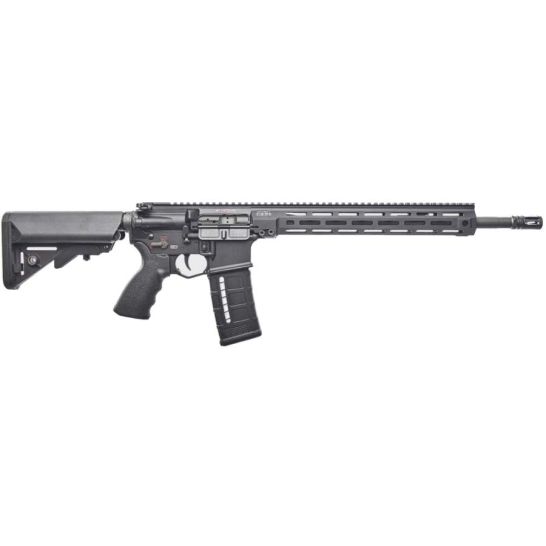
LMT MARS-L
The pick for left-handed shooters or anyone who runs the rifle from both shoulders. Every control is mirrored and works the same on both sides.
If you shoot left‑handed or train bilaterally, you know most ambi lowers are half measures. The MARS‑L is the real thing. LMT builds the rifle around a lower with mirrored controls for safety, magazine release, and bolt catch and release, then pairs it with their one‑piece Monolithic Rail Platform upper.
That combo matters because it changes how the rifle handles before the first shot. You can lock or drop the bolt from either side without shifting your firing grip, and the upper’s rigid, single‑forging rail keeps everything aligned under hard use. It is a professional tool with street pricing in the mid‑to‑high twos and adoption by serious users on its resume.
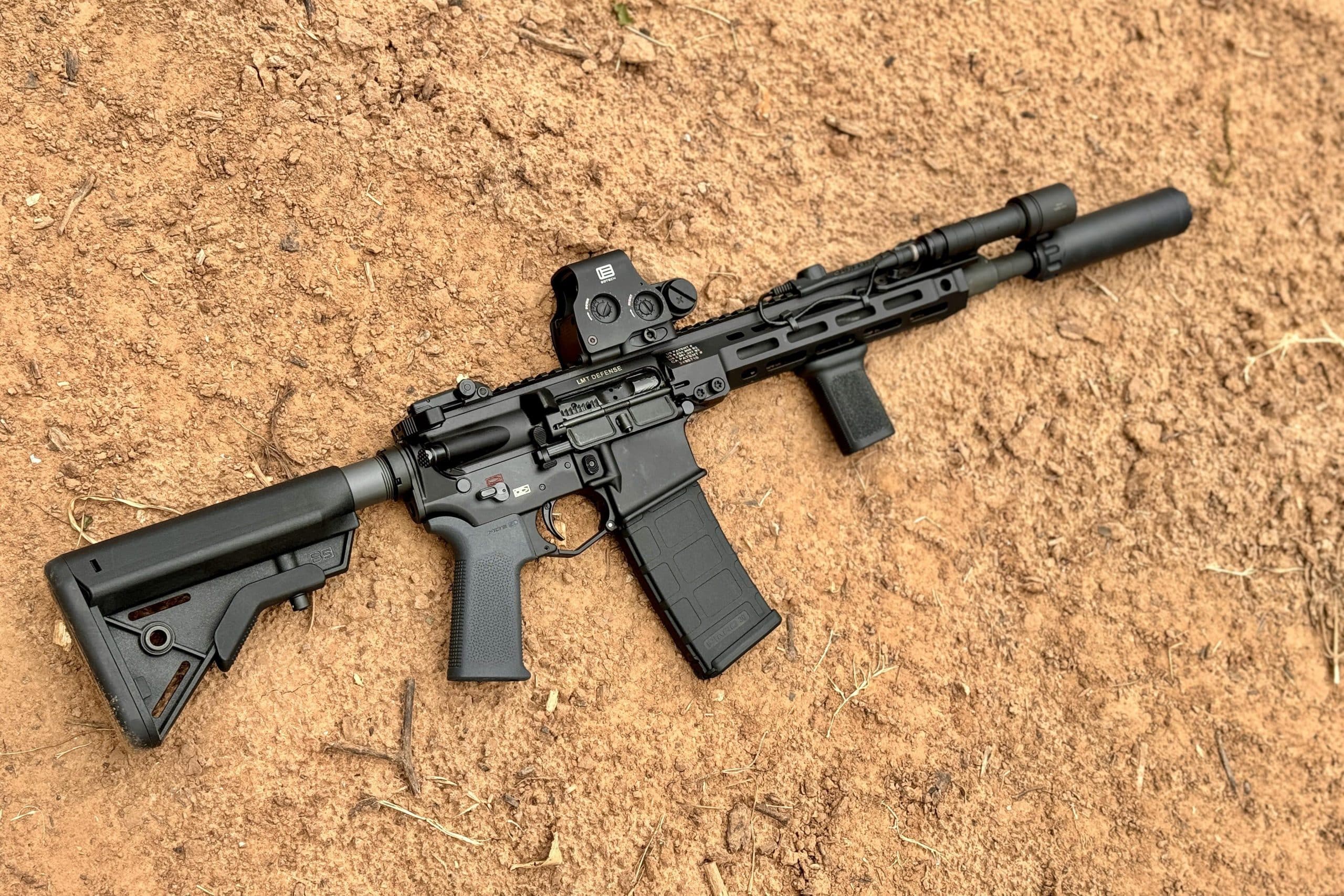
What We Like: The ambi layout is not an afterthought. On the right side, the bolt catch and release sit above the magazine button, so you can lock the bolt open or send it home with your trigger finger while your support hand stays on the fore‑end.
The mirror image on the left side keeps lefties from relearning workarounds built for right‑hand guns. This speeds admin tasks and clears without the grip gymnastics most lowers require. It also means a single manual of arms for mixed‑handed teams.
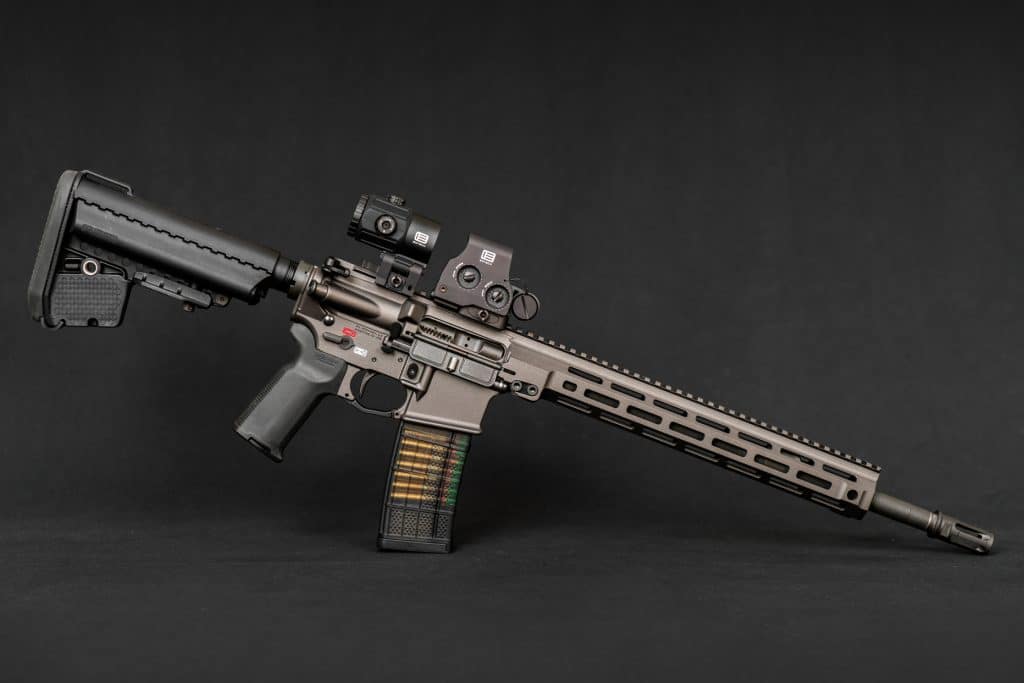
The MRP upper is a one‑piece forging with the handguard and receiver machined together. That buys you stiffness and alignment you can feel when you load a sling, drive the gun into a barricade, or hang a light, laser, and pressure pad on the front.
Barrel swaps happen at the operator level with a T30 bit. Torque the twin side bolts to 140 inch‑pounds and you are back on glass with minimal point‑of‑impact shift. Bring a preset wrench to classes and recheck torque after the first hot cycle.
LMT ships the MARS‑L with some useful furniture: SOPMOD stock, QD end plate, and an ambi charging handle. The current MLC and MLR uppers provide a continuous 1913 top rail and M‑LOK on the remaining faces, so modern support‑hand placement and accessory layout are easy.
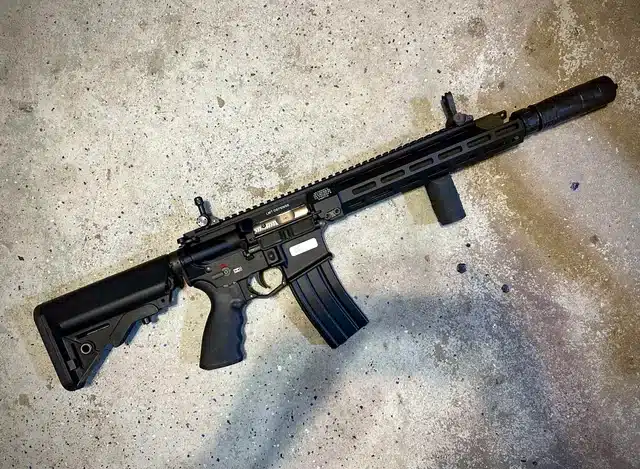
If your program needs suppressed options or specific barrel lengths and calibers, the MRP ecosystem covers 5.56, 300 BLK, and more with direct impingement or piston variants. The platform’s selection by the New Zealand Defense Force is a strong real‑world validator of the design.
Flaws but Not Dealbreakers: Price and parts lock‑in come with the territory. New complete rifles often list near or above 2,600 to 2,900 dollars and the monolithic system requires LMT‑pattern barrels.
That is the trade for true quick‑change simplicity and upper rigidity.
If you plan to tinker with third‑party barrels, this is not your sandbox. For buyers committed to the system, the ability to switch length or caliber in minutes is worth it.
The one‑piece upper is stout. Fully kitted rigs can feel front biased compared with ultra‑light two‑piece builds. If you are ounce counting, pick a shorter MRP length and keep accessories tight to the receiver.
Finally, the ambi control map is different enough to fumble for the first day. Spend ten minutes dry‑running lock‑back and bolt‑drop from both sides and it clicks. For barrel swaps, use a real torque wrench at 140 inch‑pounds and skip thread locker, which LMT does not require.
Bottom Line: Choose the MARS‑L if you want mirrored, duty‑ready ambi controls that speed real handling and a monolithic upper that stays aligned when you push the rifle hard. It costs more than mainstream duty guns and prefers its own barrels, but it delivers a cohesive system that supports left‑handed shooters, bilateral training, and fast configuration changes. If you do not need true ambi or quick‑change barrels, save money elsewhere. If you do, this is the standard.
11. BEST FOLDING AR: FoldAR Concealed Carry Rifle (16″)
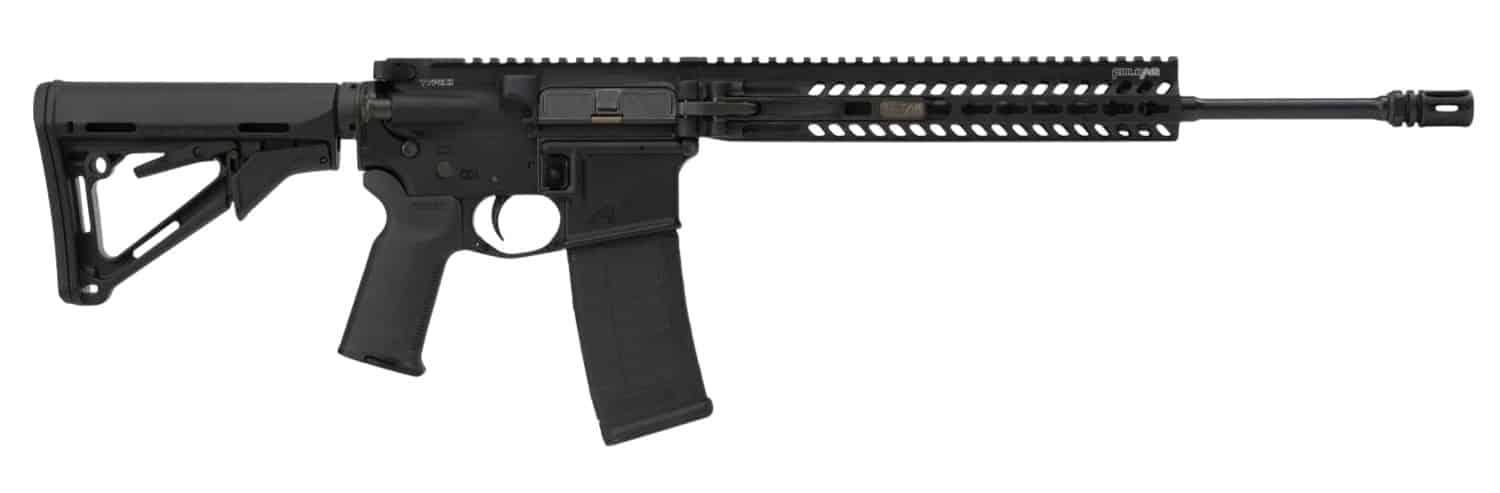
FoldAR Concealed Carry Rifle (16″)
A real 16-inch AR that folds in half for a footprint smaller than most pistol-caliber carbines. Zero compromise on barrel length, total compromise on convention.
FoldAR’s Concealed Carry Rifle folds the entire barrel/handguard back alongside the receiver, taking a full‑length rifle down to under 18 inches folded without going SBR or takedown.
The hook is a patented folding upper with a fast, simple latch that deploys in seconds—no tools, no re‑zero ritual. Think “full‑size rifle, carry‑size package,” then we’ll dig into what it gets right on the range.
Be sure to check out our full roundup of the best folding AR stocks.
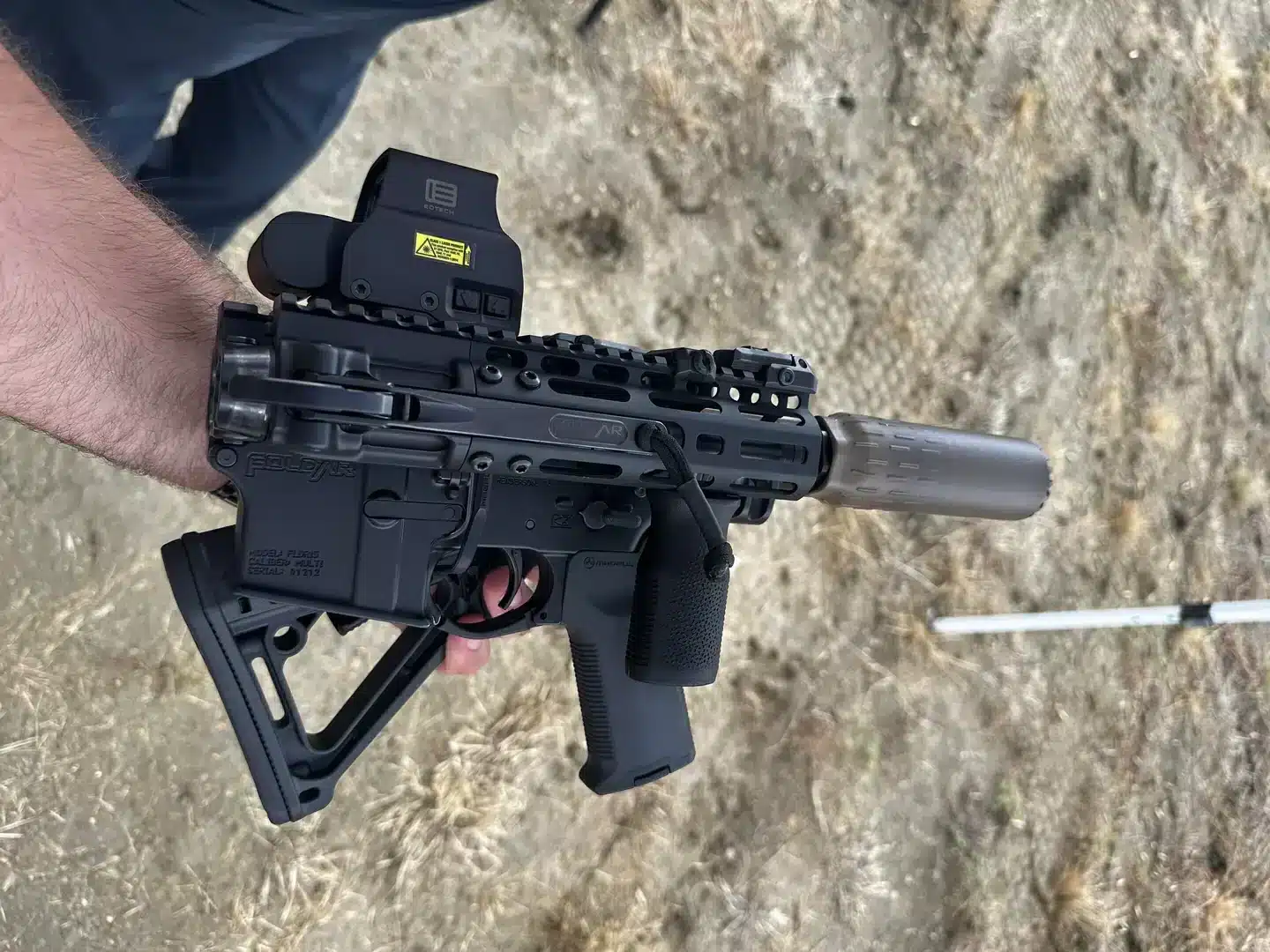
What We Like: If you need to get a rifle as compact as possible, FoldAR solves the problem. Folded, the CCR measures about 17.6 inches long and ~4.25 inches wide, which means it disappears into a small pack (FoldAR even bundles one on some SKUs). More important, is the deployment is intuitive: unfold, seat the latch, run the handle, shoot.
No “find the Allen key” delay, just a normal manual of arms once it’s locked.
Accuracy and repeatability are legitimately good. You should be see sub‑MOA groups in the 0.60-0.75 range. We also liked that there was virtually no zero shift after breaking the rifle down and re-seating it. Reliability was equally solid over 500 rounds with mixed ammo. In short, the hinge isn’t a gimmick; it returns to battery and keeps hitting where you left it.

The core build reads “duty sensible.” Typical CCR 16″ specs include a 4150 QPQ/Melonite barrel (1:7 twist), mid‑length gas, A2‑pattern muzzle, and 6.8‑lb weight—right where a practical carbine should land. You’re not trading weight or gas timing just to fold; it handles like a normal, well‑balanced 16‑inch rifle once open.
The newest generation adds some versatility. FoldAR’s 2025 update brings a tool‑less quick‑change barrel system, so caliber swaps (think 5.56 to .300 BLK) are quick and don’t require a workbench.
Flaws but Not Dealbreakers: Price sits around $2,199 direct, though some sales have hit the $1,699 mark. You’re paying for compactness and the folding/quick‑change architecture; if discrete carry isn’t a need, a conventional mid‑length carbine will be cheaper.
It’s not ready‑to‑fire while folded. You must unfold and latch before shooting—obvious, but worth stating for buyers comparing to short pistols/SBRs that live on a sling. Also, folded width is thicker than a flat upper (about 4.25″), so pick the right bag and compartment. None of this undercuts the concept; it just frames expectations for deployment and carry.
Proprietary parts live where the magic happens. The patented folding upper and barrel interface are unique to FoldAR. That’s the trade for a system that locks, repeats zero, and deploys fast; just don’t expect third‑party uppers or rails to “make it fold.”
Bottom Line: Buy the FoldAR CCR if you need true rifle performance that travels discreetly. It folds to under 18 inches, deploys in seconds, and shoots like a normal mid‑length carbine with repeatable zero and sub‑MOA potential. The price is premium and the upper is proprietary, but for backpacks, vehicles, and low‑profile carry, nothing else checks this many boxes without shrinking to an SBR.
12. BEST DIRECT IMPINGEMENT AR-15: Knight’s Armament SR-15 E3 Mod 2
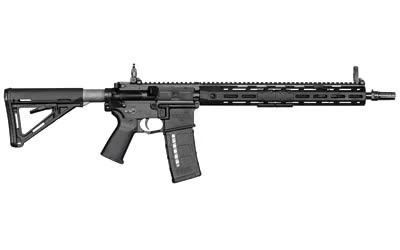
Knight's Armament SR-15 E3 Mod 2
The peak of what direct impingement can be. Improved bolt geometry, ambi controls, and the kind of build quality that explains the price.
When an AR cycles, gas from the fired cartridge has to be handled somehow. In a direct-impingement (DI) system, that gas is routed straight from the barrel into the bolt carrier group to push the action. It’s the reason many shooters prefer DI: fewer moving parts up front, less weight at the muzzle, and a more consistent barrel/rail interface for good accuracy.
KAC’s E3 bolt geometry and a slightly longer gas timing smooth the recoil impulse and lengthen service life. In plain terms: if you want the cleanest, truest DI feel (flat tracking, quick follow-ups, long-lived internals), then you should look at the SR-15.
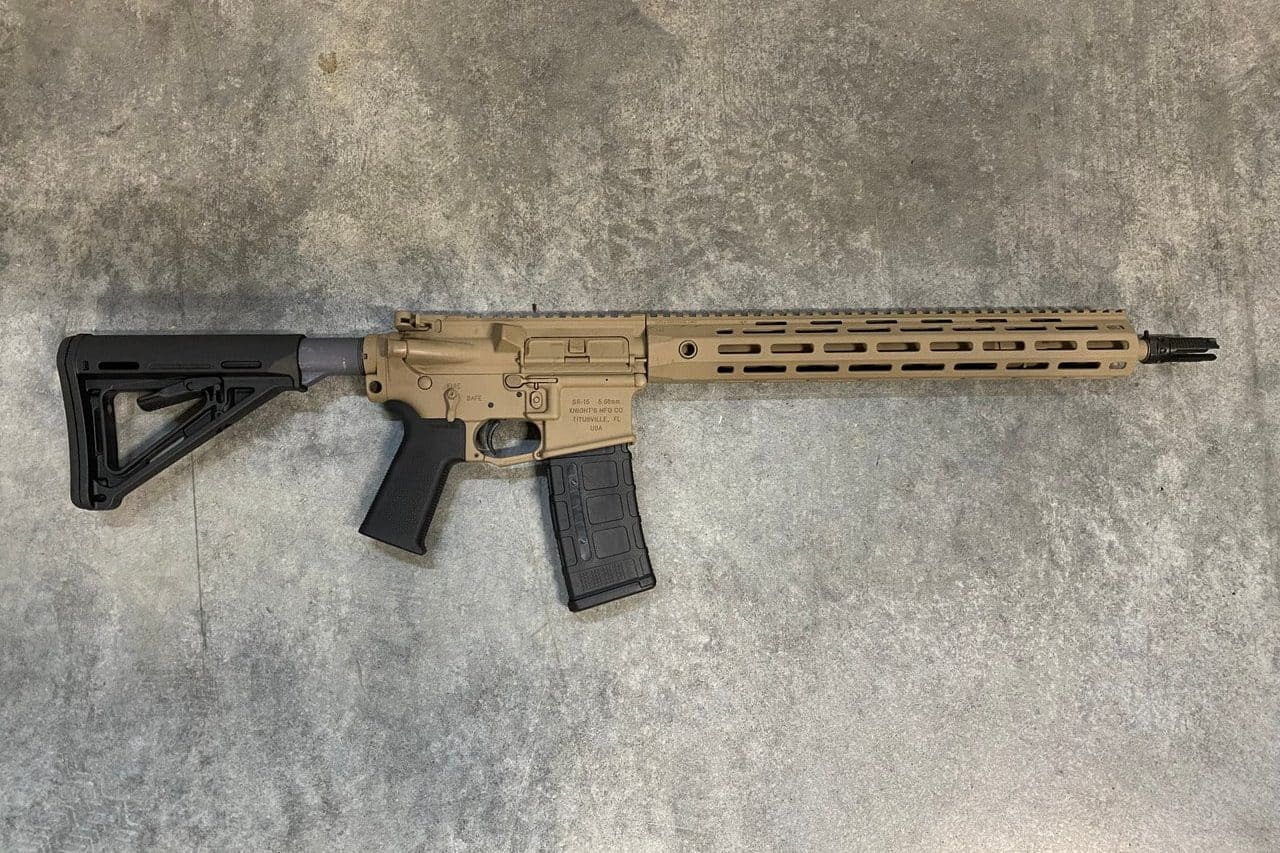
What We Like: Shootability is the first tell. The Mod 2’s intermediate gas keeps the cycle calm with duty ammo, and it stays civilized when you add a can. You’ll get minimal blowback and a conspicuous lack of “over‑gassed” behavior, which is rare for a 16‑inch DI gun run hard and suppressed.
On the line it simply feels easier to keep sights steady and splits consistent.
The E3/E3.2 bolt is the heart of the pitch. Rounded lugs reduce chipping, a reduced cam‑pin hole thickens the bolt web, and the forward‑pivot extractor runs dual extractor springs for a failsafe under abuse.
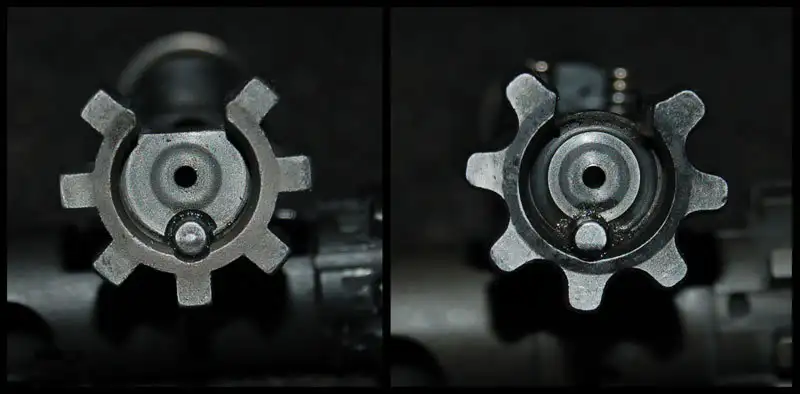
The latest E3.2 adds dual ejectors to improve consistency, especially on short barrels or suppressed guns. It’s durability and function baked into the bolt, not band‑aided at the gas port.
Controls and trigger are genuinely premium. The lower is fully ambidextrous—bolt catch/release, mag release, safety—so lefties stop fighting workarounds and righties gain speed for admin and clears.
The factory two‑stage match trigger breaks around 4.5 lb, making precision work easier without turning the gun into a race toy. It’s a cohesive feel no matter which shoulder you’re on.
With the URX4 M‑LOK rail, barrels are free‑floated inside it for real, and the forend is stiff enough to handle sling load and barricade pressure without wandering your zero. It ships with the wrench and shims when you buy the rail stand‑alone; on the rifle, the payoff is simple: things stay put when you start working the gun hard.
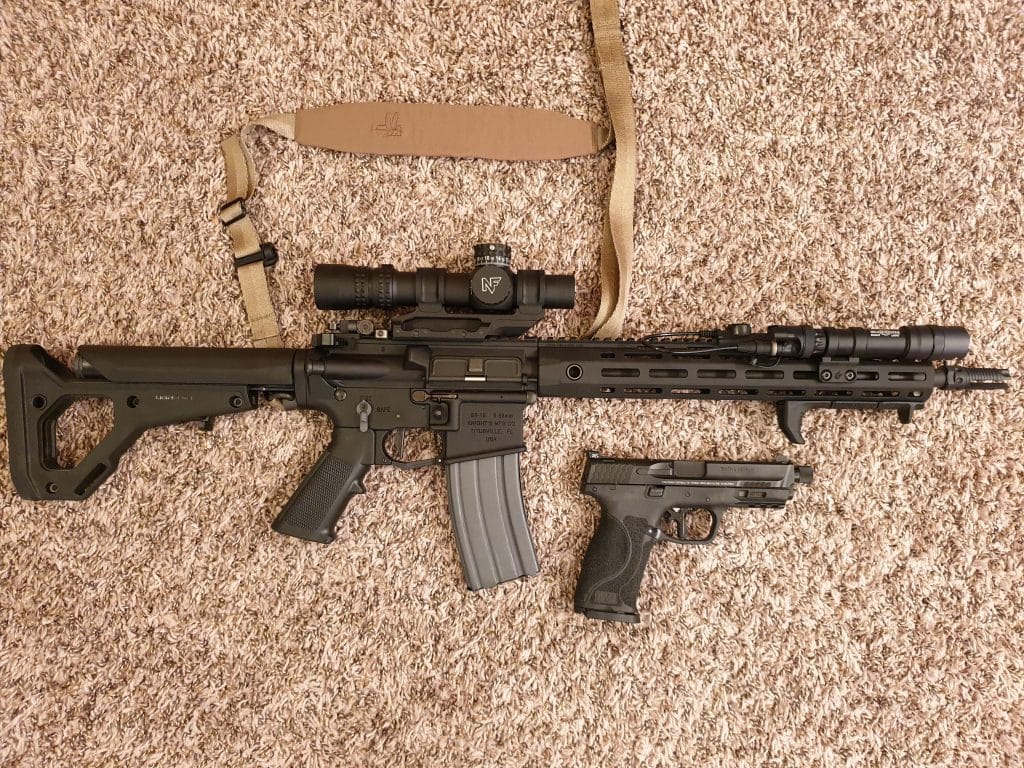
Track record and numbers back the feel. The 16-inch SR-15 weighs 6.55 lb bare and has credible long-form use, including deep dives on the Mod 2 gas block and retention scheme over high round counts. Run thousands of rounds across varied conditions and you can expect it to keep running predictably.
Flaws but Not Dealbreakers: Price is the first speed bump. Typical retail hovers around $3,000+, which places the SR‑15 well above mainstream duty rifles. If you’re counting dollars per feature, others will look better on paper. If you’re counting time saved and rounds between parts drama, the value case gets clearer, but the sticker still stings.
Second, is the proprietary ecosystem. The E3.2 bolt only mates with KAC E3 barrel extensions, and the SR‑15’s intermediate gas tube is unique to the platform. That means spares and barrels are KAC‑specific and not as cheap or ubiquitous as mil‑spec parts. It’s the trade for the reliability gains the system delivers.
Finally, the ambi control map is different enough to fumble on day one. Ten minutes of dry reps locking and dropping the bolt from both sides sorts it out. After that, most shooters don’t want to go back.
Bottom Line: Buy the SR‑15 Mod 2 if you want the pinnacle of DI: a smoother‑than‑mid gas system, a long‑life E3/E3.2 bolt, real ambi controls, and a rail that stays honest when you push the gun. It’s expensive and proprietary, but it’s also the rifle that keeps working, suppressed or not, class after class. If you want a DI carbine with zero excuses, this is the one to beat.
13. BEST SHORT-STROKE PISTON: LWRC IC‑A5
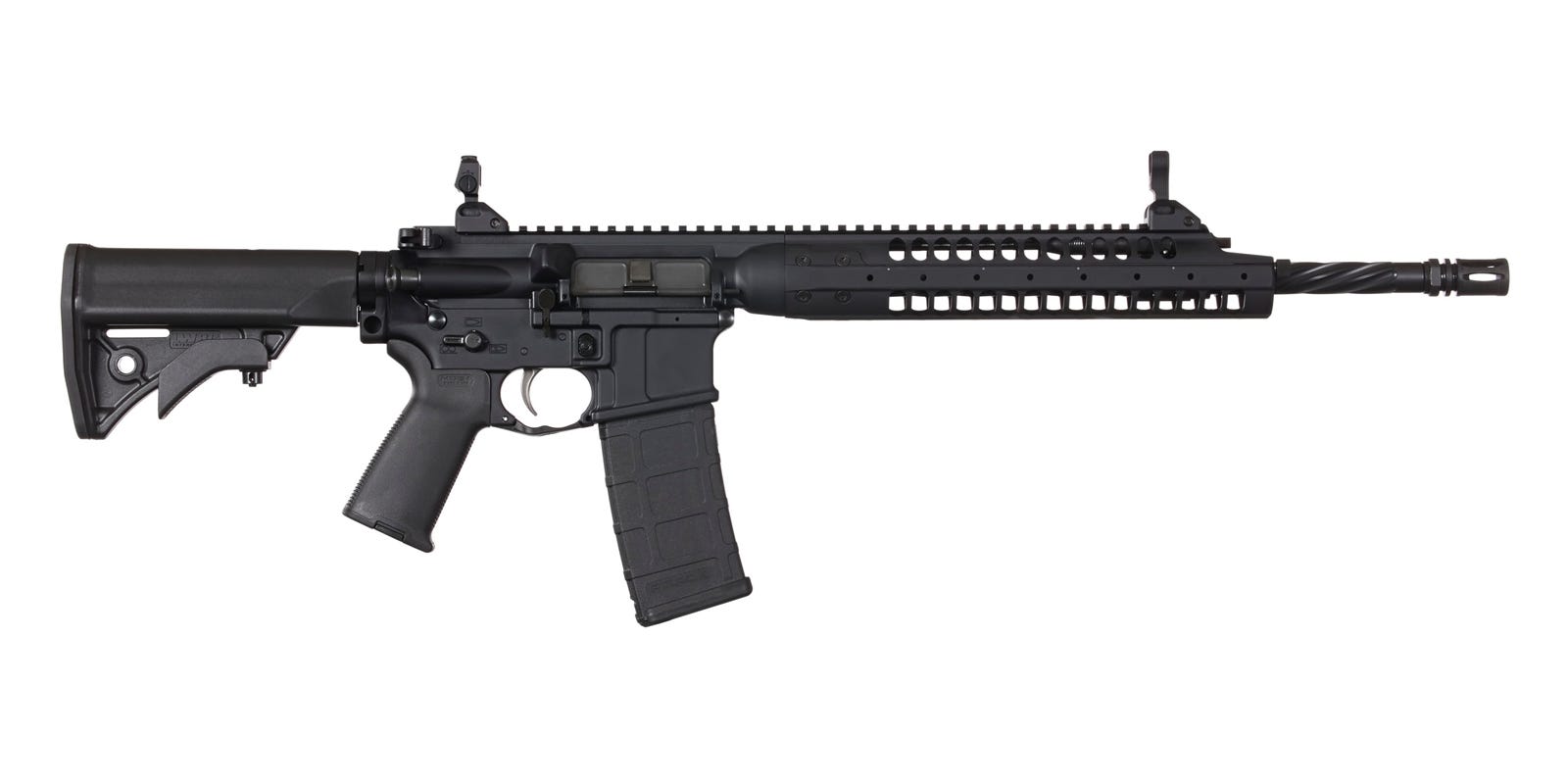
LWRC IC‑A5
The short-stroke piston pick for buyers who want to run the rifle wet, dirty, or suppressed without complaints. Cleaner than DI, less reciprocating mass than long-stroke.
A short-stroke piston gives you the best of both worlds: most of the “keep-the-gunk-out” advantages of a piston system—less heat and carbon in the receiver, friendlier suppressed behavior, and steadier cycling—without turning the rifle into something that feels like an AK in recoil. It’s the pragmatic choice for people who shoot a lot, run cans, or need a gun that stays reliable and relatively clean between services.
LWRC’s IC-A5 leans into that practical promise. Its short-stroke piston and two-position gas block (Normal / Suppressed) are hand-flippable on the line, and the MonoForge one-piece upper with a free-float rail keeps the front end rigid when you load the sling or push into a barricade. In short: if your range life mixes high round counts, bad weather, and regular can time, this is the piston AR that behaves like it should.
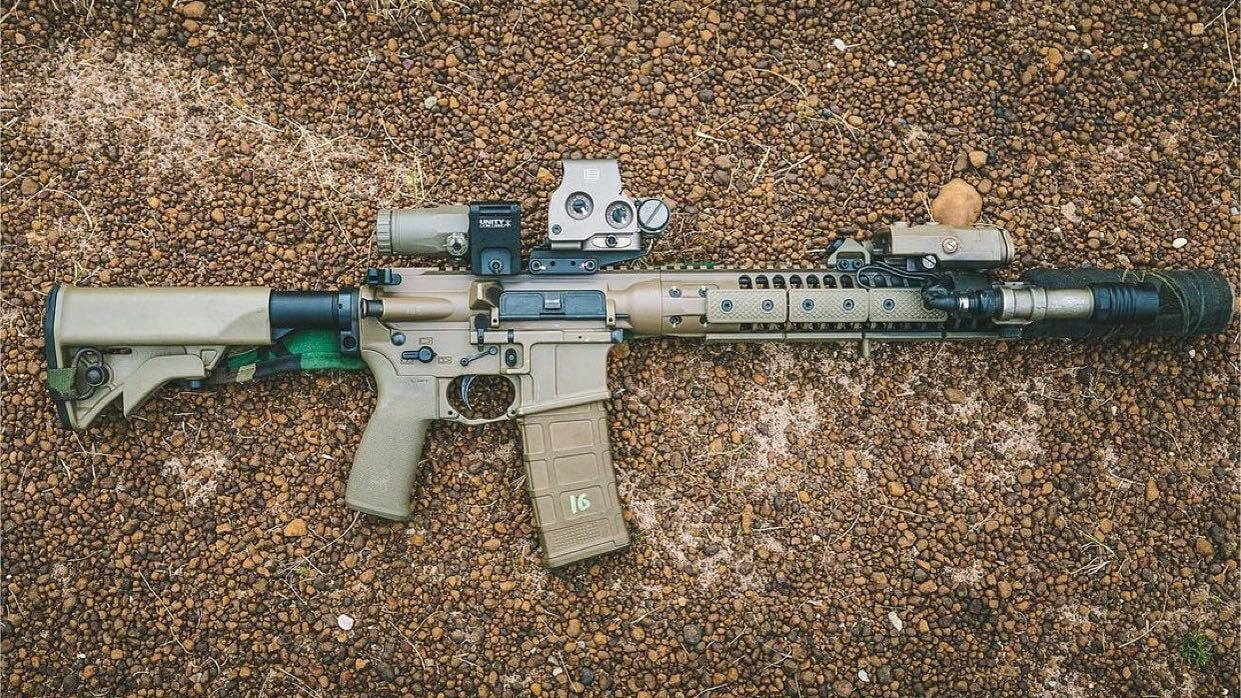
What We Like: Shootability and cleanliness are the point. The short‑stroke piston keeps heat and carbon out of the receiver, so the action runs cooler and fouling is easier to manage over long strings.
Flip the gas block to Suppressed and you’ll feel the rifle settle down, with less blowback and a more predictable cycle. The lever rotates by hand; if the gun is hot, a cartridge tip on the detent works without tools. It’s simple and it works.
The MonoForge one‑piece upper with LWRC’s free‑float rail adds meaningful stiffness. You can load a sling hard or drive into barricades without wandering your zero, and the scalloped rail window keeps the gas block accessible for quick mode changes. It’s a tidy solution that feels purpose‑built.
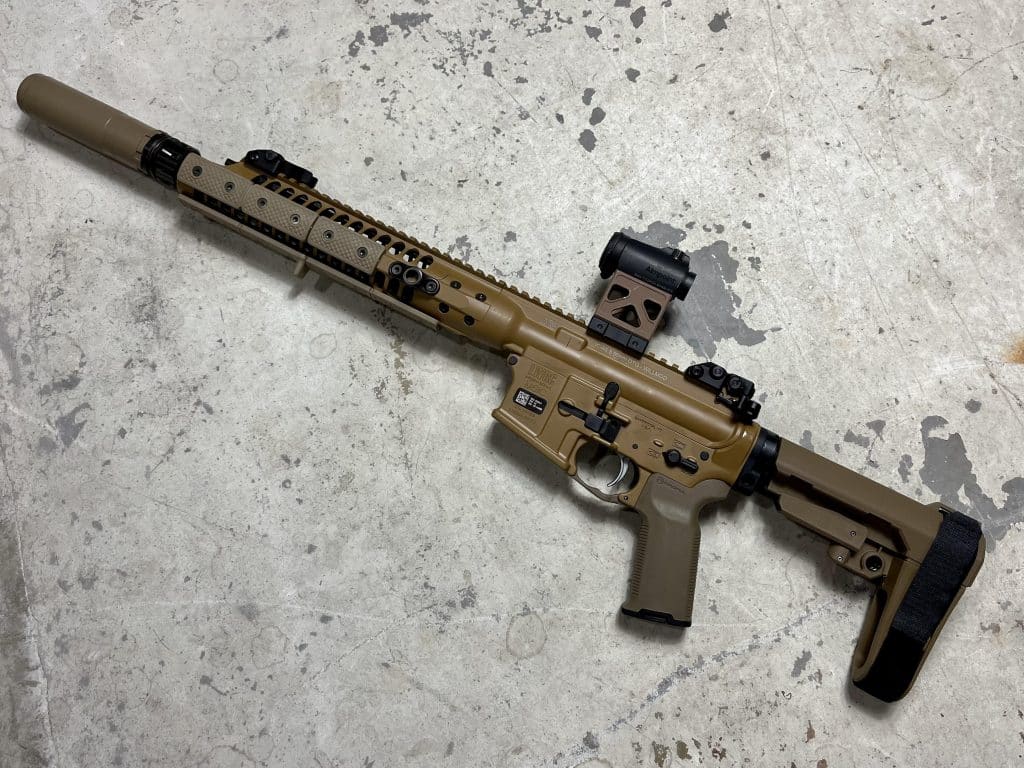
Barrel and carrier choices match the mission. LWRC’s cold‑hammer‑forged, spiral‑fluted barrels shed weight and dump heat efficiently, and the NiB‑coated bolt carrier shrugs off abrasion and cleans easily.
Pick 14.7″ or 16.1″ 5.56 for general use, or go .300 BLK if you’re suppressor‑heavy. Either way, the core parts are built for high round counts and ugly conditions.
Controls are genuinely ambidextrous. Bolt catch/release, mag release, safety, and the charging handle are mirrored, so left‑handed shooters stop working around right‑hand doctrine and right‑handers gain speed on admin and clears. It’s the same control map across the modern IC line, which keeps training consistent.
The weight and reliability feel right where they should be. Expect roughly 7.3 lbs bare depending on configuration, and user reports of multi‑thousand‑round runs (including suppressed time) back the on‑paper promise with range reality. It behaves like a hard‑use carbine that just happens to stay cleaner.
Flaws but Not Dealbreakers: Street numbers for 16‑inch 5.56 IC‑A5 rifles commonly land around $2.35K–$2.85K, with color and config pushing up or down. If you’re counting dollars‑per‑feature, a good DI rifle will look cheaper; if you’re counting time between cleanings and suppressed manners, the value case improves.
Proprietary bits come with the architecture. The monolithic upper uses LWRC’s rail interface, and barrels/gas blocks are LWRC‑specific—great for rigidity and reliability, less great for mix‑and‑match builders. Factory support exists, but don’t expect to buy an adjustable gas block à la carte at every shop. That’s the trade for a piston system that’s pinned, durable, and simple to run.
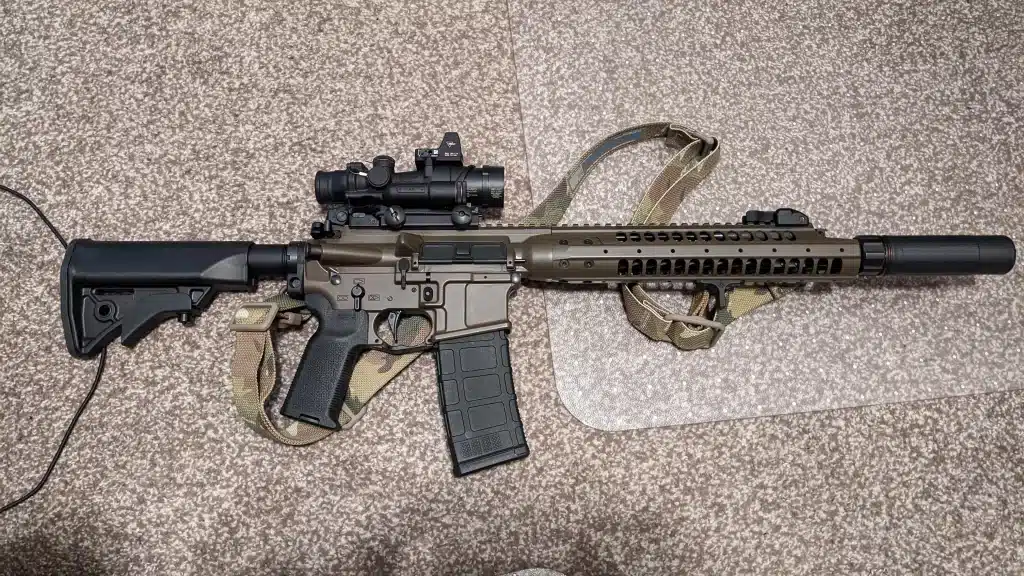
Finally, piston hardware adds a touch of front‑end mass. It’s not unwieldy, but compared with featherweight DI builds you’ll feel the gun “planted” up front. Many shooters prefer that when shooting fast; ounce‑counters may not.
Bottom Line: Choose the IC‑A5 if you want a piston AR that’s easy to live with day‑to‑day and even easier to tune for a suppressor. The short‑stroke system runs cleaner, the two‑position gas block keeps behavior predictable, the MonoForge upper holds zero under pressure, and the controls are truly ambi. It costs more and plays best inside its own ecosystem, but for hard‑use, can‑friendly reliability, this is the benchmark.
14. BEST LONG-STROKE PISTON: PWS MK116 Mod 2-M
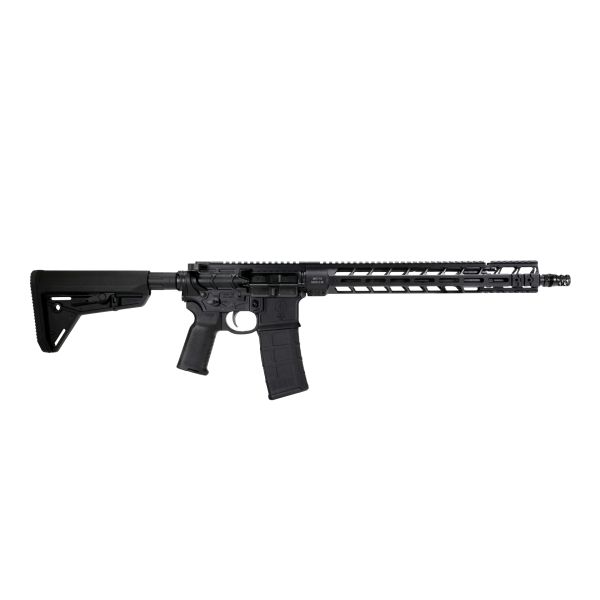
PWS MK116 Mod 2-M
The long-stroke piston pick for buyers who want AK-style reliability in an AR-15 platform. Heavier, smoother, and the most over-built operating system in the lineup.
Short‑stroke systems are great at keeping the receiver clean, but the brief “tappet” hit can feel snappier and sometimes needs more tuning across ammo and suppressors. With long‑stroke, the operating parts move together through the full cycle, which tends to deliver a more linear impulse and consistent carrier speed. That often means softer tracking in rapid strings, less dot hop, and fewer weird vibes when you add a can.
The PWS MK116 Mod 2‑M uses a long‑stroke system—think AK‑style op‑rod that rides with the carrier—so the recoil comes as one smooth push instead of the quick “tap” you get from a short‑stroke setup. Add the 3‑position adjustable gas block and you can dial it for bare muzzle, suppressed, or gassy ammo in a couple of seconds.
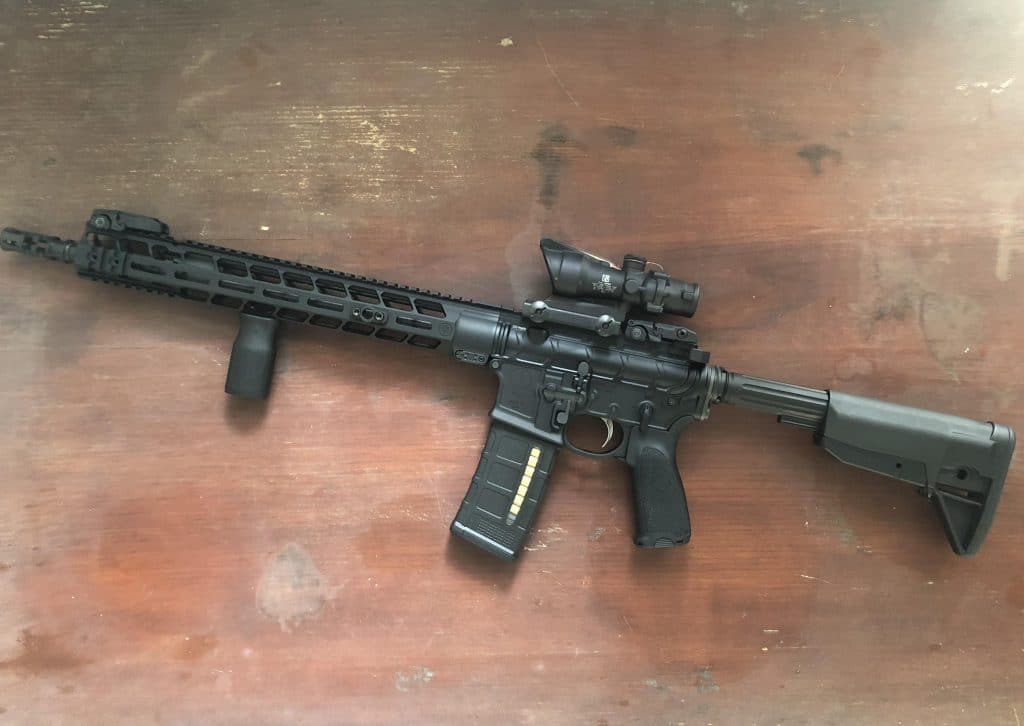
What We Like: The impulse is the hook. Because the op‑rod rides with the carrier (long‑stroke), the gun pushes straight back instead of giving you the quick “tap” you feel in many short‑stroke designs. On the line it feels planted and easy to track, especially during fast transitions and strings.
Add the 3‑setting regulator and you can tailor behavior for unsuppressed, suppressed with hot loads, or suppressed with standard ammo. It’s quick, obvious, and works well.
Even after 1,000 rounds, there’s minimal residue on the BCG and zero stoppages. That tracks with what the long‑stroke system promises: less hot gas in the receiver, easier maintenance cadence, and reliable cycling when the gun is actually dirty.
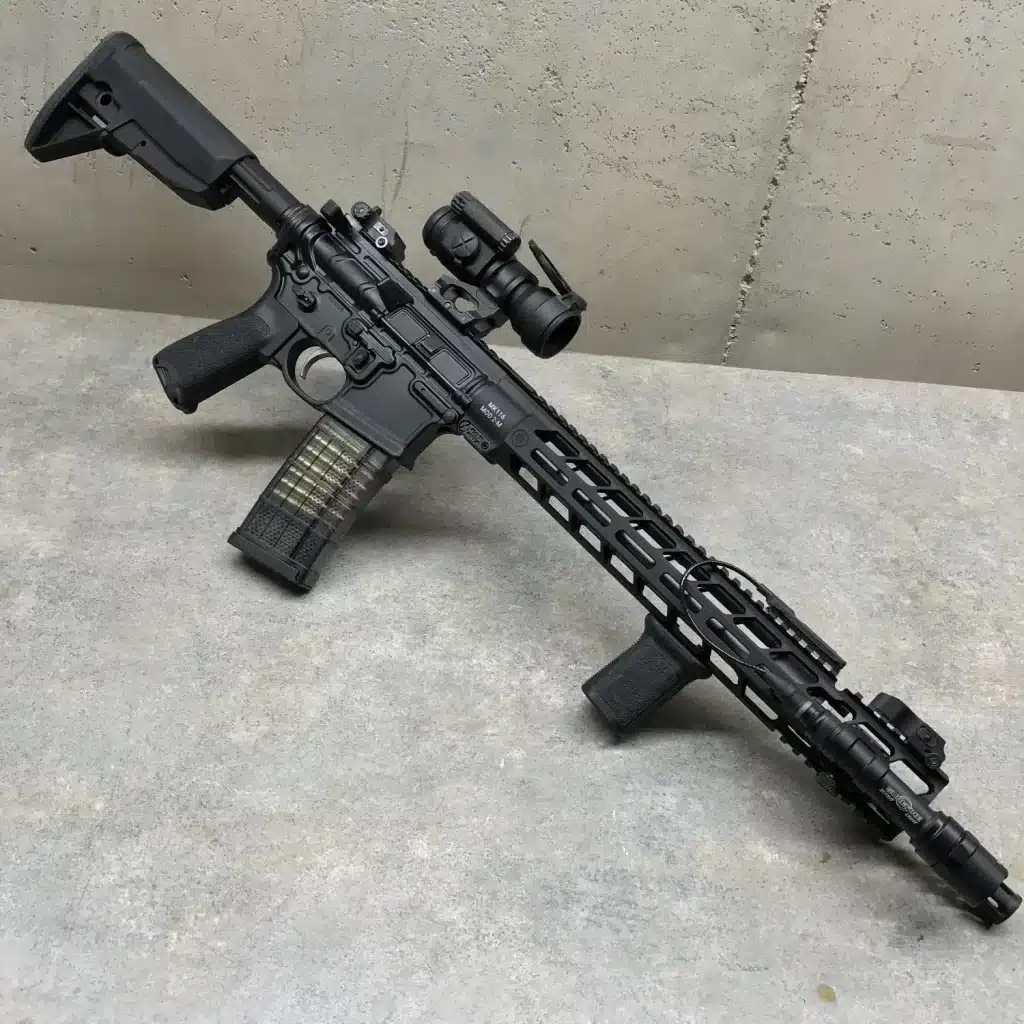
Accuracy is better than you expect from a piston gun. Current factory rifles carry a sub‑MOA guarantee with match ammo, courtesy of PWS’s Boise‑made barrels. The MK116 uses a .223 Wylde chamber with a 1:8 twist and weighs about 6.8 lb bare, so you’re not dragging around a nose‑heavy brute to get that performance.
The ecosystem feels finished. The 15‑inch PicLok handguard lets you mount either Picatinny or M‑LOK accessories wherever it makes sense; a Radian Raptor charging handle and PWS’s enhanced buffer tube/H2 buffer setup round out the user experience. Depending on SKU you’ll see the FRC 2‑port or the familiar FSC 556 on the muzzle—both are competent at keeping the gun flat and play well with suppressor mounts.
How it differs from short‑stroke (LWRC IC‑A5): The LWRC’s tappet system is great for cleanliness and simplicity, but the PWS’s single moving mass gives a more linear recoil feel and adds a third gas position for finer suppressed tuning. If you want the softest, most DI‑like push from a piston AR, the MK116 is the one that feels “right” to a lot of DI shooters.

Flaws but Not Dealbreakers: Uppers, handguards, and gas parts are PWS‑specific, so it’s not the sandbox for mix‑and‑match builders. The flip side is you get a cohesive system that’s designed to run together and is covered by PWS’s warranty if anything’s off.
Price sits above most DI rifles. Current factory MSRP is ~$2,099 and street prices tend to hover in that neighborhood depending on finish and availability.
Also, the weight is competitive for a piston gun, but you’ll still feel more mass up front once you add light/laser—keep accessories tight to the receiver and you’re fine.
Bottom Line: Pick the MK116 Mod 2‑M if you want a piston AR that runs clean, tunes fast for a can, and keeps a linear, DI‑friendly impulse. The long‑stroke system, 3‑position regulator, Wylde‑chambered barrel, and finished feature set make it a standout for high‑round‑count training and suppressed use. If you’d rather prioritize minimal parts and lowest cost, stick with DI; if you want piston perks without a weird recoil signature, this is the one.
15. BEST FACTORY DMR: FN 15 DMR3
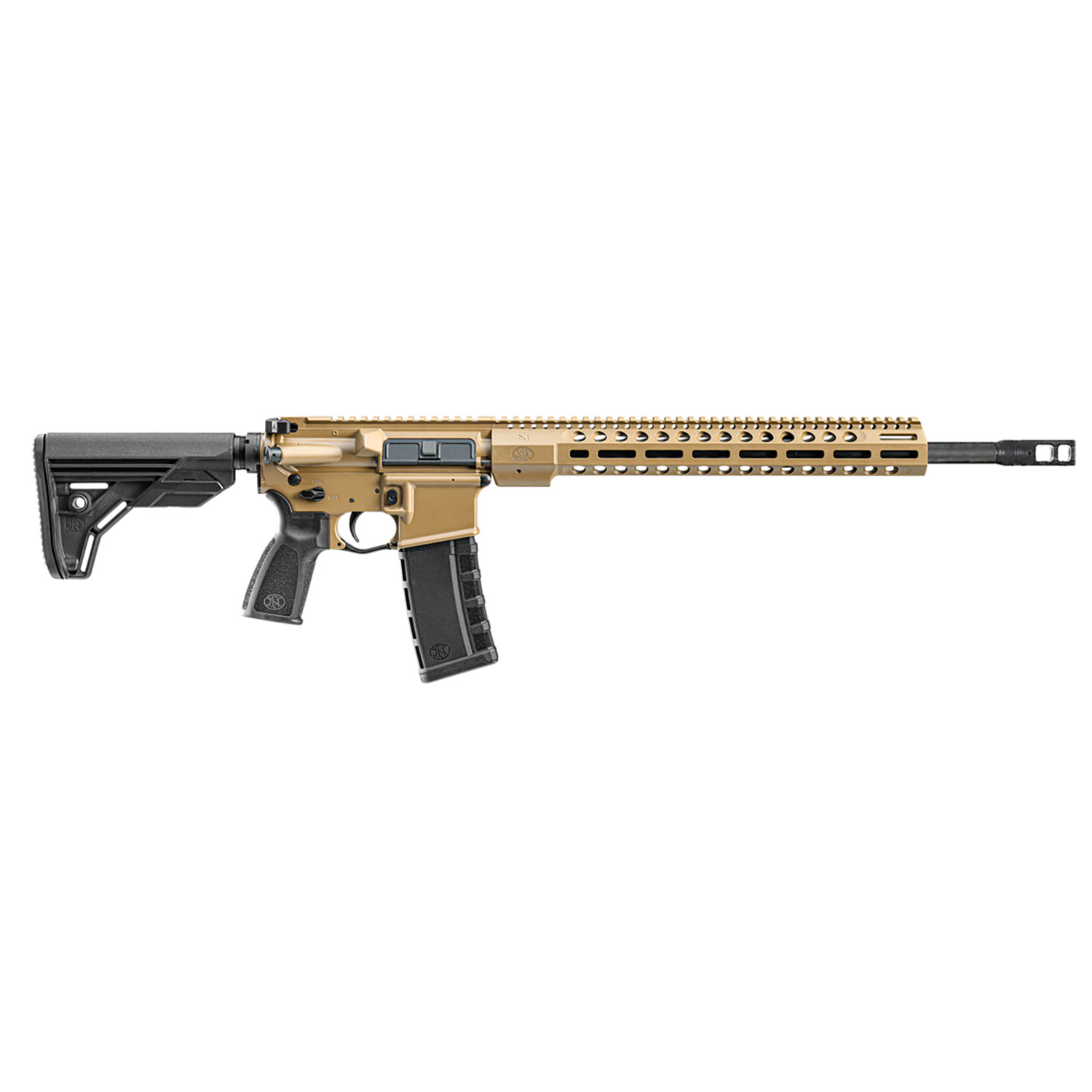
FN 15 DMR3
Precision out to 600 yards straight from the factory. The pick when you want a designated marksman rifle without sourcing a custom upper.
In AR‑speak, a DMR is a Designated Marksman Rifle: an accuracy‑leaning, carryable 5.56 that bridges fast carbine work and confident hits at distance. FN’s 15 DMR3 is one of the best to do it straight from the factory. It’s built around an 18‑inch, cold‑hammer‑forged barrel and rifle‑length gas, then finished with a trigger and brake that make precision work feel easy without turning the gun into a bench queen.
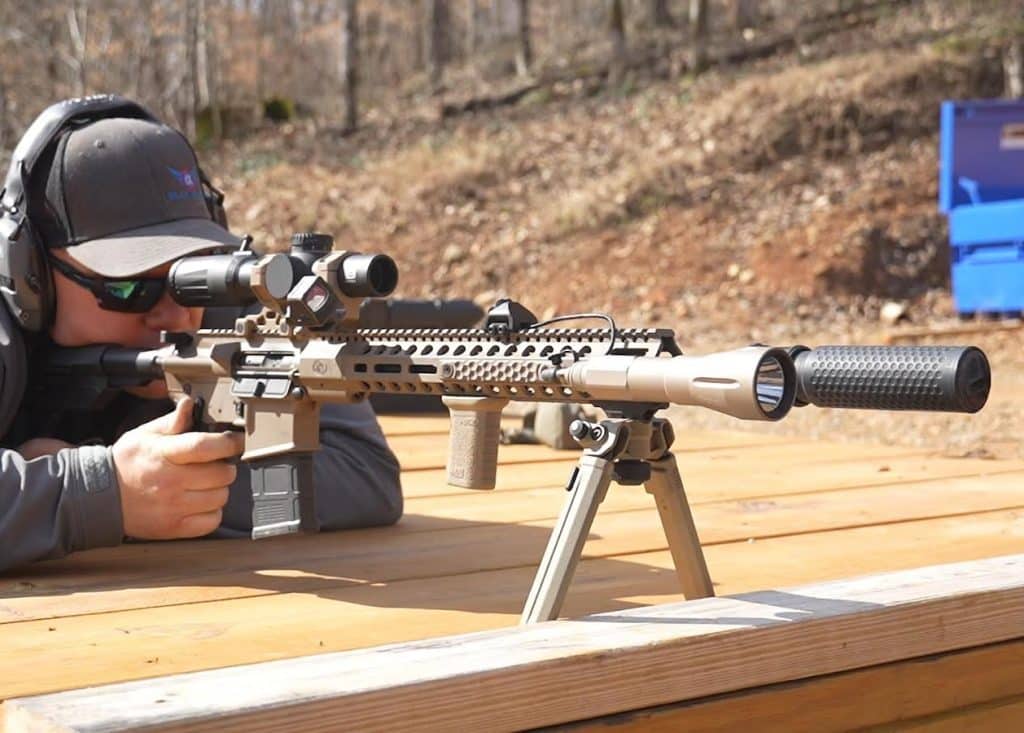
What We Like: Shootability first. Rifle‑length gas plus a SureFire ProComp keeps the impulse flat and the dot calm, which shows up as cleaner splits and easier corrections on small targets. FN themselves pitch the combo for faster shot‑to‑shot recovery—and it tracks on the line.
The barrel is good. FN’s 18″ chrome‑lined, CHF “machine‑gun‑steel” Hybrid profile can handle high round‑count and heat while still holding precision. We we took it to the range, the DMR3 produced sub‑MOA groups with 77‑gr Black Hills TMK. That’s exactly what we want from a DMR.
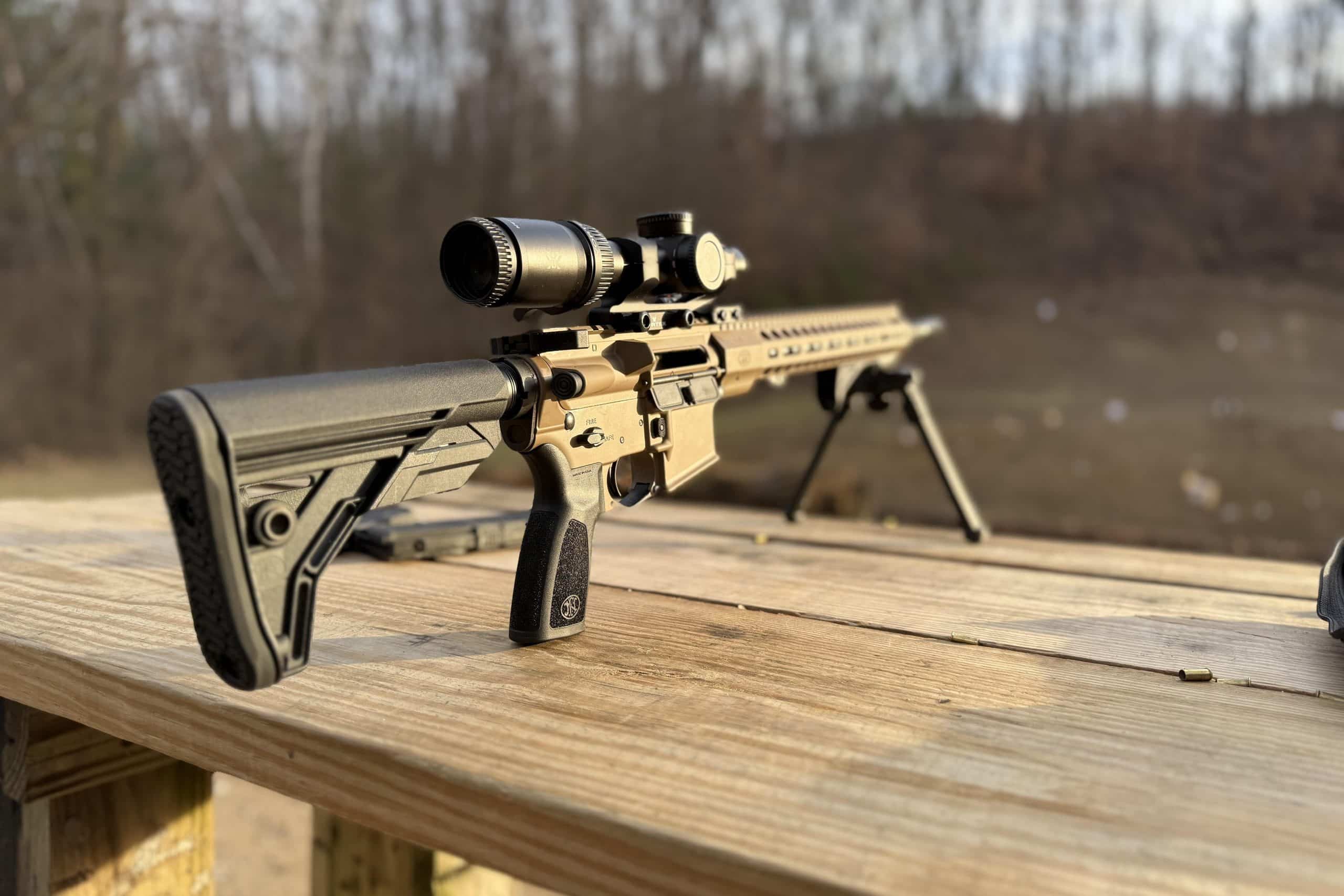
The handguard is a 14.6″ Hodge Defense wedge‑lock free‑float that keeps the front end stiff when you load a sling or drive into barricades. It’s a nice purpose-built touch that gives you the real estate for an offset optic, light, and laser without crowding. It helps the rifle keep its zero honest under pressure.
Out‑of‑box parts are the ones you’d upgrade anyway. A Geissele G2S two‑stage trigger and Radian Raptor‑LT charging handle come standard, with ambi safety on the lower.
The small stuff is squared away. You get a pinned low‑profile gas block, H‑buffer, M16 carrier with a Carpenter 158 HPT/MPI bolt, and overall weight right around 7.4 lb, so the rifle balances like a serious SPR rather than a boat anchor. Reliability and ejection were uneventful, so good news there.
Flaws but Not Dealbreakers: Balance and blast are part of the package. The 18″ tube puts the balance point a bit forward, and the ProComp is effective but loud to neighbors. The gas system is fixed, not adjustable; heavy suppressor use may warrant a different muzzle device and buffer tune. None of that undermines the DMR3’s mission, but it frames who will love it most.
Bottom Line: Buy the FN 15 DMR3 if you want a factory 5.56 DMR/SPR that’s ready to work: a long‑life CHF barrel, rifle‑gas manners, a Geissele two‑stage, and a stiff Hodge rail—all dialed from the factory. It costs more than piecing one together, but you get a cohesive rifle with verified precision and no guesswork. If your plan is distance‑biased training, coyotes, or match‑style stages with a carbine, this is the turn‑key answer.
Why You Can Trust CAT Outdoors
This guide was put together by our team at CAT Outdoors.
Justin Trump is the head honcho of CAT Outdoors, a Glock-certified armorer with years of hands-on experience tuning, testing, and tearing down nearly every model in the lineup. He’s also the inventor of two patented AR-15 cleaning tools, and has written extensively on firearms and gear trusted by law enforcement, military, and civilian shooters alike. Every pick in this list was personally tested at the range to evaluate reliability, shootability, and performance, so when we say an AR-15 is worth your money, it’s because we’ve put it through its paces.

This article was also reviewed and contributed to by Jeff Burns, a best-selling author and subject matter expert with over 20 years of experience in close protection and covert operations across both government and private sectors. Jeff is Board Certified in Dignitary & Executive Protection (CDEP) by the American Board for Certification in Homeland Security and holds a Certified Master Anti-Terrorism Specialist (CMAS) designation from the Anti-Terrorism Accreditation Board.
He’s trained in Advanced Urban Warfare, Special Operations, and Hostage Rescue for Hostile Environments, and is qualified to U.S. Department of State WPS2 standards. In addition to his operational experience, Jeff holds multiple firearms instructor and armorer certifications. His review helps ensure this guide reflects not just technical know-how, but real-world insight from high-risk environments.
Final Thoughts on the Best AR-15 Rifles
The best AR-15 really comes down to personal preference, budget, and goals.
If you want a solid, top-notch firearm, the DDM4 V7 or Recce-16 are great options. They are widely loved and considered some of the best on the market. If you’re looking for an affordable, starter AR-15, the PSA models or M&P15 are great choices.
Though not the most beautiful of firearms, they’re still great options for first-time buyers. If you just want to blow up your bank account, the Geissele Super Duty Rifle or FN M249S models will certainly do the trick.
And once you’ve picked your rifle, don’t forget a secure gun safe—and the right tools. Check out our picks for the Best Gun Safes and our review of the Fix It Sticks All-in-One Torque Driver Kit.

What rifles did we miss? Where did we get it wrong? What is the best AR-15 in your arsenal? Let us know in the comments. Also: don’t miss our list of the Best AR-10s.
Change Log
- January 29, 2026 – Added the Quick Picks and Comparison charts.
Keep the research going.
![The 7 Best AR-15 Red Dot Optic Setups [2026]](https://catoutdoors.com/wp-content/uploads/2024/04/vortex-optics-red-dot-768x432.webp) PAIR IT WITH
PAIR IT WITHThe 7 Best AR-15 Red Dot Optic Setups [2026]
A red dot is the fastest optic you can run on an AR — if you pick the right one. We tested everything from $150...
![Best AR-15 Accessories [2026]: Stocks, Grips, Bipods & More](https://catoutdoors.com/wp-content/uploads/2024/06/Best-AR-15-Accessories-Furniture-1-768x512.jpg) GO DEEPER
GO DEEPERBest AR-15 Accessories [2026]: Stocks, Grips, Bipods & More
From triggers and stocks to bipods and handguards, AR-15 accessories turn a stock rifle into your rifle. Here's the master list of what we've tested,...

Justin Trump is the managing editor and owner of CAT Outdoors. The son of a Vietnam veteran, he’s a Certified Glock Armorer, an avid gun enthusiast and 2A advocate. He holds two firearm patents for the CAT M4 and Talon tools. When not managing CAT Outdoors, he enjoys spending time with his family and friends, rooting for Michigan sports teams, and serving his church.