SIG Romeo 5 Review: Best Bang for the Buck Red Dot?
The SIG Romeo 5 has lived on our rifle for a few years now: north of a thousand rounds, 200-yard range work, and one deliberate trip underwater. Here is what all that time taught us.
The Romeo 5 went on our rifle in 2024 and never came off: north of a thousand rounds, 200-yard work, and one trip underwater with the dot still lit. Around $120 buys shake-awake, a battery you replace every few years, and a 2 MOA dot that holds at 200. The glass is entry-level; nothing else about it behaves that way.
Reasons to Buy
- MOTAC shake-awake means the dot is on the moment the rifle moves and asleep two minutes after it stops
- One CR2032 battery runs about 40,000 hours, roughly four and a half years
- Passed our submersion test with the dot lit the entire time underwater
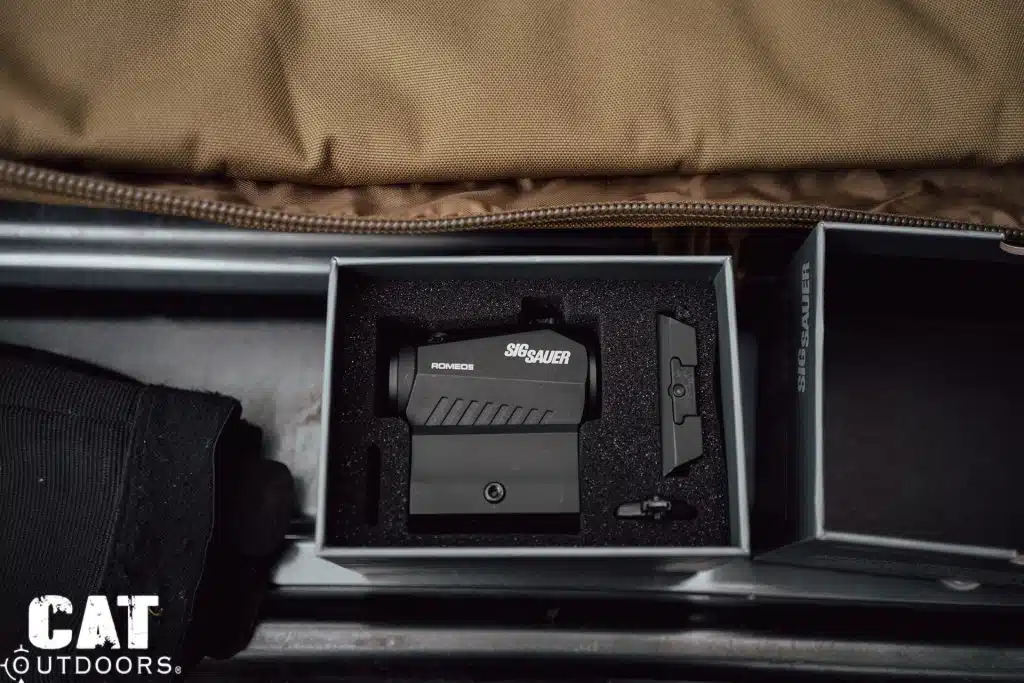
- Low mount and 1.41 inch co-witness riser both come in the box
- Aimpoint T2 footprint, so aftermarket mounts and risers are everywhere
- 2 MOA dot is fine enough for precise hits at 200 yards
Reasons to Skip
- Slight blue tinge through the glass until your eye settles in
- No quick detach mount included, and a good one runs about $105
- Wants the Juliet 3 magnifier for anything past 200 yards
- Entry-level glass: it is a value optic and it does not pretend otherwise
This SIG Romeo 5 review comes from a few years of living with the thing: it went on our rifle in 2024 and it is still there, north of a thousand rounds later, with 200-yard range work and one deliberate trip underwater in its logbook.

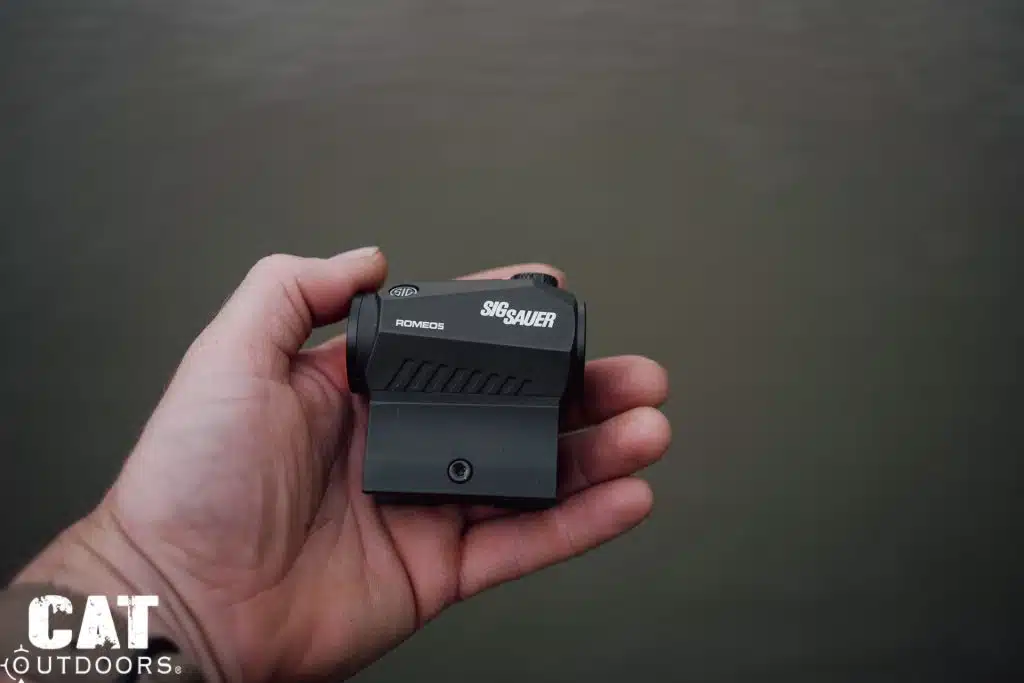
The Romeo 5 is the answer almost everyone gives when a new AR owner asks which red dot to buy first. A reputation like that deserves more than a weekend with a loaner, so we did it the slow way: we bought one and lived with it.
Short version: the reputation holds. Here is what stood up over the years, what we would change, and who should skip it.
Before we get into it: SIG now sells the Romeo5 Gen II, which adds a green-dot option, moves the controls to the top for ambidextrous use, bumps the daylight brightness settings from 8 to 10, and swaps the included mounts for SIG’s new I-BEAM system. A full Gen II review is on the list as soon as we can get one on a rifle; everything below is about the original.
Why You Can Trust This Review
We have been using this optic for a few years now, and that kind of time with a product teaches you things a weekend cannot. Everything below comes from our own rifle, not a spec sheet.
- Rounds and timeframe: north of a thousand rounds since 2024, all on the same rifle
- Distance: zeroed and shot out to 200 yards, from the bench and from field positions
- Water: fully submerged to test the IPX-7 rating, with the dot lit
- Provenance and mounting: we bought this Romeo 5 ourselves on Amazon at the regular price, and we have run it on both included mounts
Photography by Bradley Lanphear.
The Poll
Where does your carry gun ride?
This week's holster coverage has us curious. Tap your pick.
The Poll · Live Standings
Your vote is in.
0 votes so far. Winner announced in next week’s issue.
Want to Know the Final Results?
We tally the votes and name the winner in next week’s email. Sign up and the final standings come straight to your inbox, and you’ll be first to hear when the review goes live.
By signing up you agree to our Terms of Service and Privacy Policy. No spam, and we never sell your address. Unsubscribe anytime.
That didn’t go through. Check the address and try again.
Done. Watch your inbox.
You’re on the list. The final standings land in next week’s issue, and if your pick loses, take it up with the other voters.
Romeo 5 Specs
- Weight: 5.1 oz
- Run time: 40,000 hours, about 4.5 years
- Illumination: 8 daytime settings, 2 night vision
- Dot size: 2 MOA
- Objective lens: 20mm
- Adjustments: 0.5 MOA increments
- Travel: 100 MOA windage and elevation
- Waterproof: IPX-7, one meter for 30 minutes
- Footprint: Aimpoint T2
- Battery: one CR2032
- Mounts included: M1913 low profile and 1.41 inch co-witness riser
- Street price: about $120 to $150
Who the Romeo 5 Is For
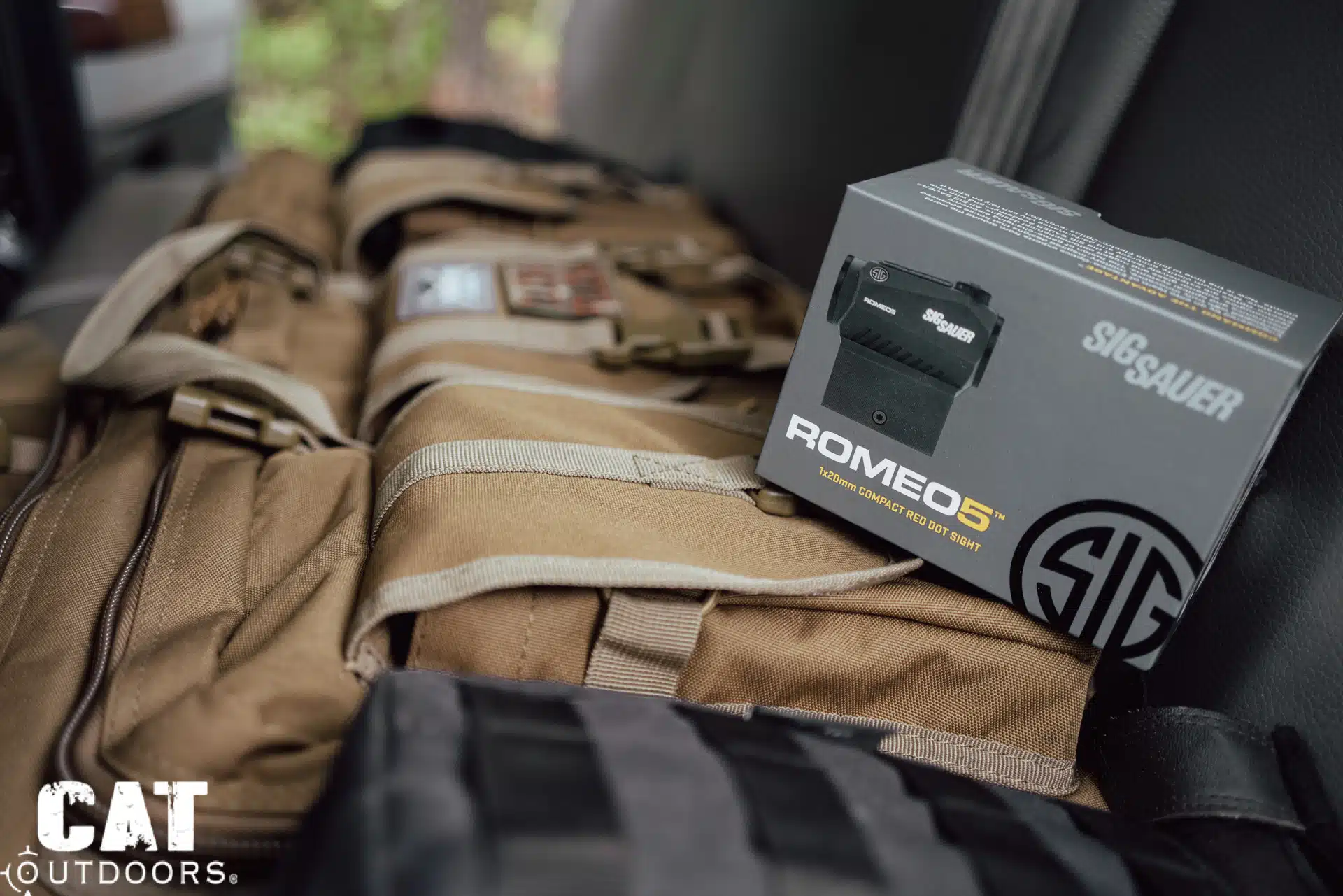
SIG Sauer built the Romeo 5 as the entry point: a compact, affordable micro dot meant to fit almost anything you own. Airguns, large caliber pistols, shotguns, AR-15s, it mounts to all of them. Its small size also suits compact builds, like an AR with a folding stock adapter.
Price out an Aimpoint or an EOTech and the appeal snaps into focus. If you are new to ARs, working with a budget, and want an optic that turns on and stays on, this is the one people keep recommending.
A few years in, we can tell you the recommendation is not just herd behavior.

The Features That Matter
MOTAC is the headline, and years of ownership have not dulled it. Motion wakes the dot, two minutes of stillness puts it back to sleep, and it returns at the brightness you left it on.
Press a +/- button once to set it and the optic runs itself from there; hold the button down to power off for storage. That is the whole control scheme, and it used to be a feature you paid triple for.
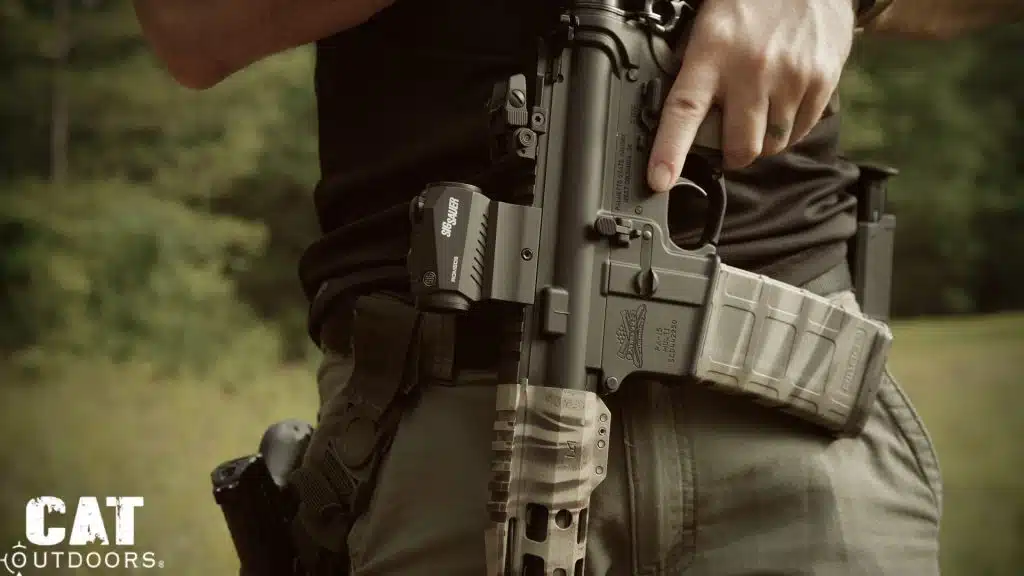
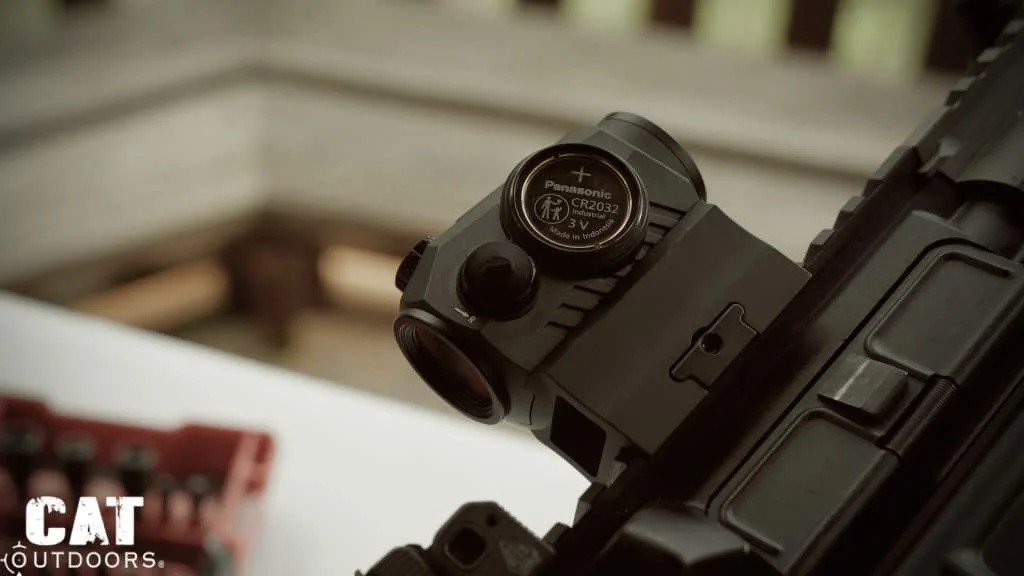
Runtime is the other half of the story. One CR2032, about a dollar to replace, is good for roughly 40,000 hours, which works out to four and a half years of the dot just being on.
The lens wears SIG’s Spectracoat, an anti-reflection coating that improves light transmission and resists fogging. In practice that means a lower brightness setting does the job, which saves battery and keeps the dot crisp instead of blooming.
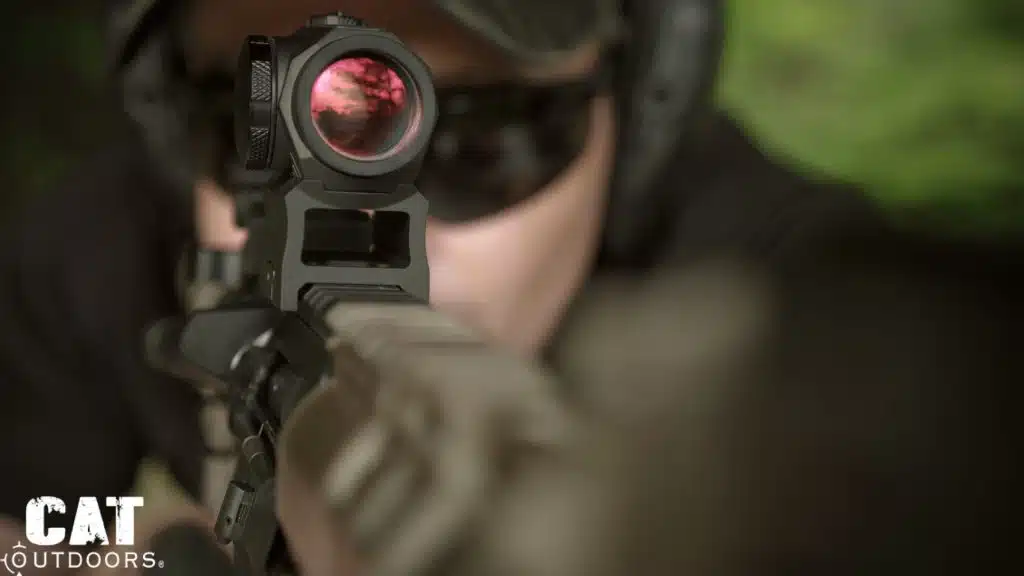
And then there is Stealth ID, the trapezoidal housing shape. It looks sharp. As far as we can tell, that is the entire job description.

Installation and Mounting
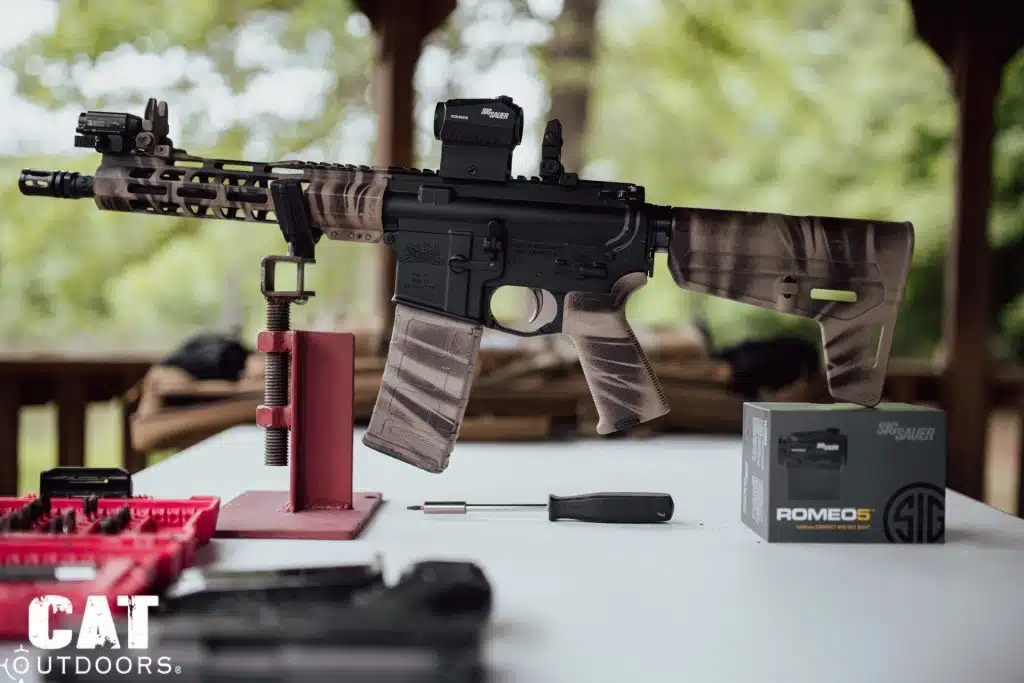
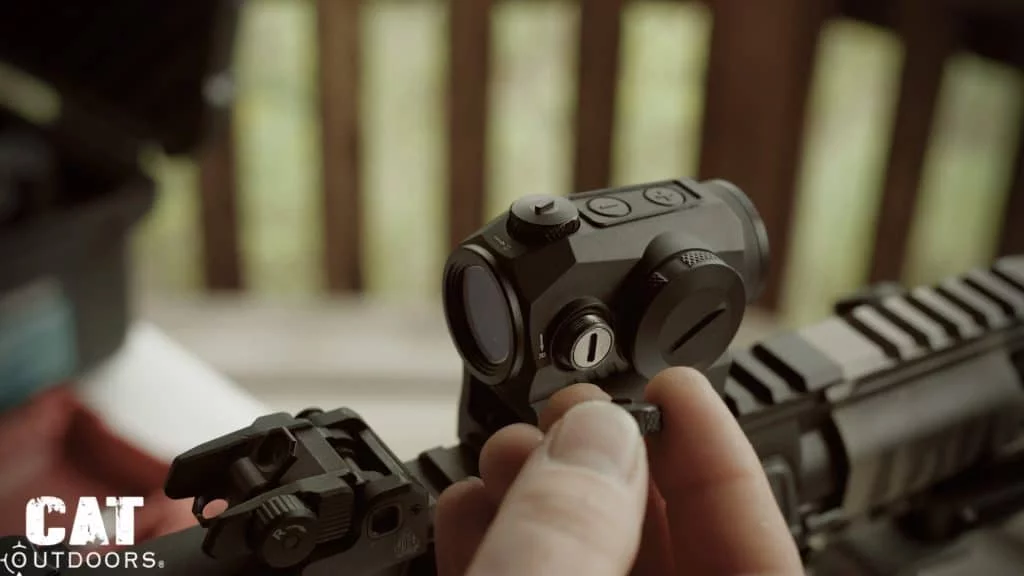
Two mounts come in the box: a low profile M1913 mount and a 1.41 inch co-witness riser. For an AR, the riser is the one you want.
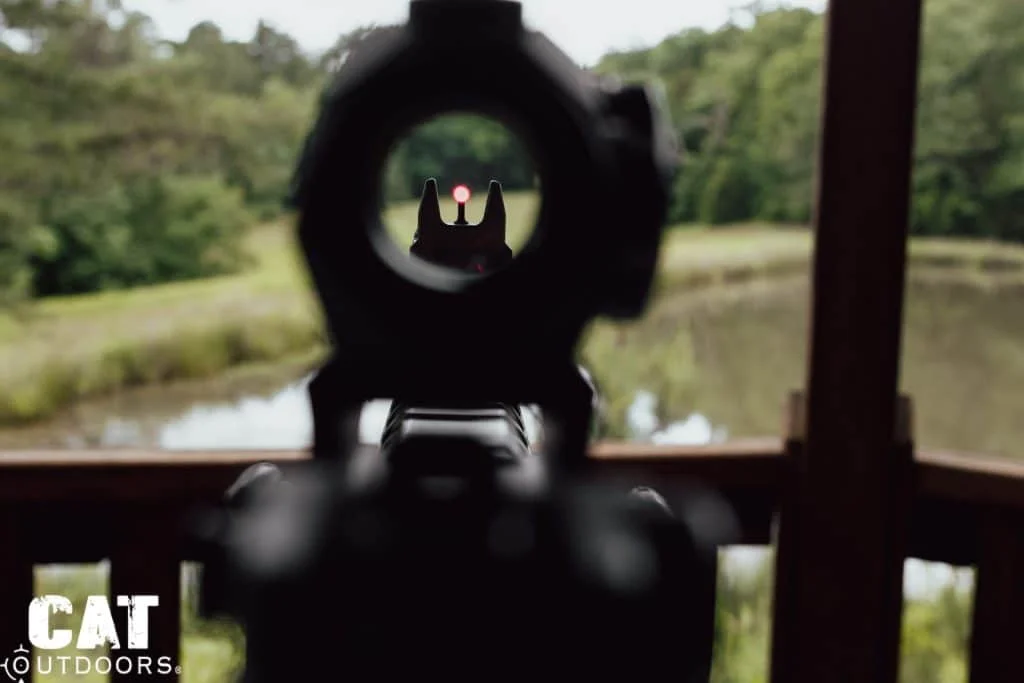
Co-witness means the dot sits in line with your iron sights. If the electronics ever quit, your backup sight picture is already waiting, same cheek weld, no adjustment.
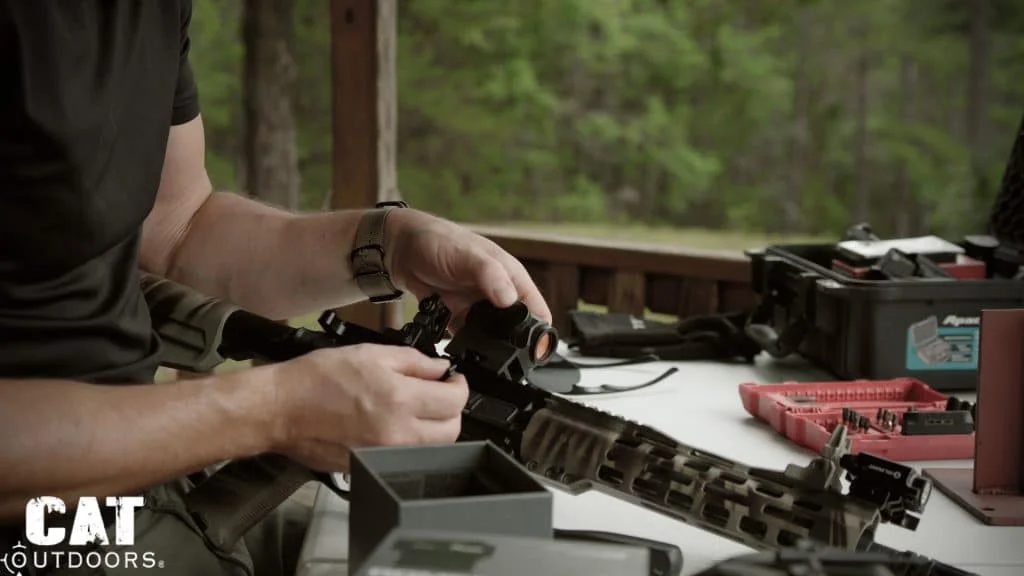
Installation is one screw: place the optic where you want it on the rail, tighten, go shoot. There is also a protective cover in the box for rifles that spend more time in the safe than at the range.
The base uses the Aimpoint T2 footprint, the most common micro dot pattern out there, so risers and QD mounts are everywhere if you change your mind later. Battery swaps are a cap and a coin.
At the Range
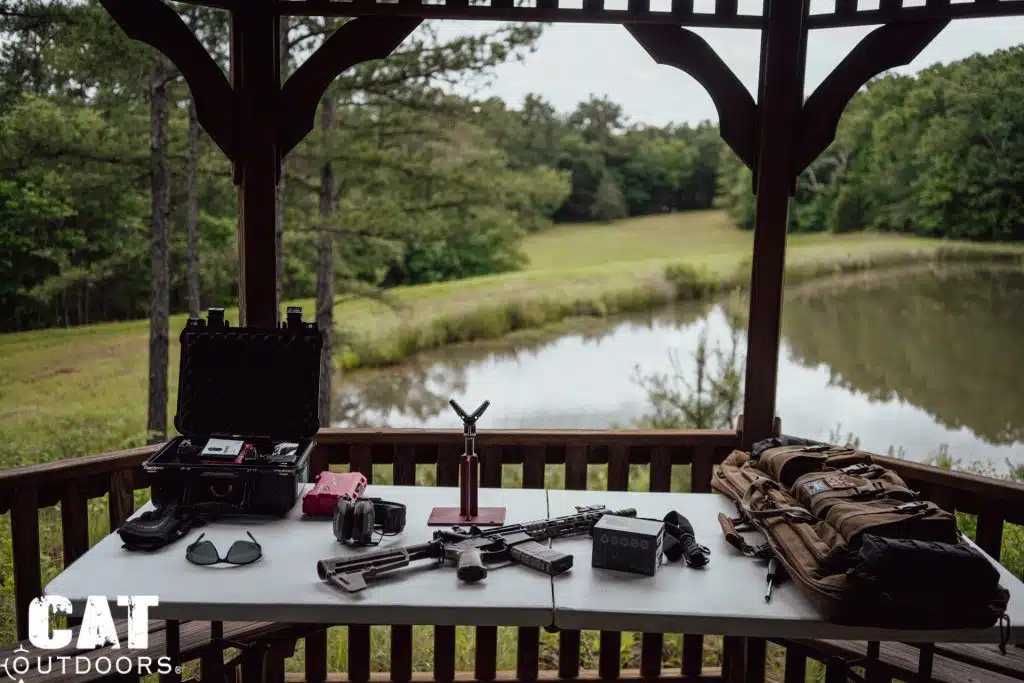
We zeroed it, and then the review turned into ownership: bench sessions, field positions, moving between targets on the ground, year after year.
Targets sat out to 200 yards, and the 2 MOA dot is the right compromise for that job. Small enough to aim precisely at distance, big enough to find in a hurry up close. Much past 200 yards, the LPVO vs red dot debate starts in earnest, and a magnifier is one way to put it off.
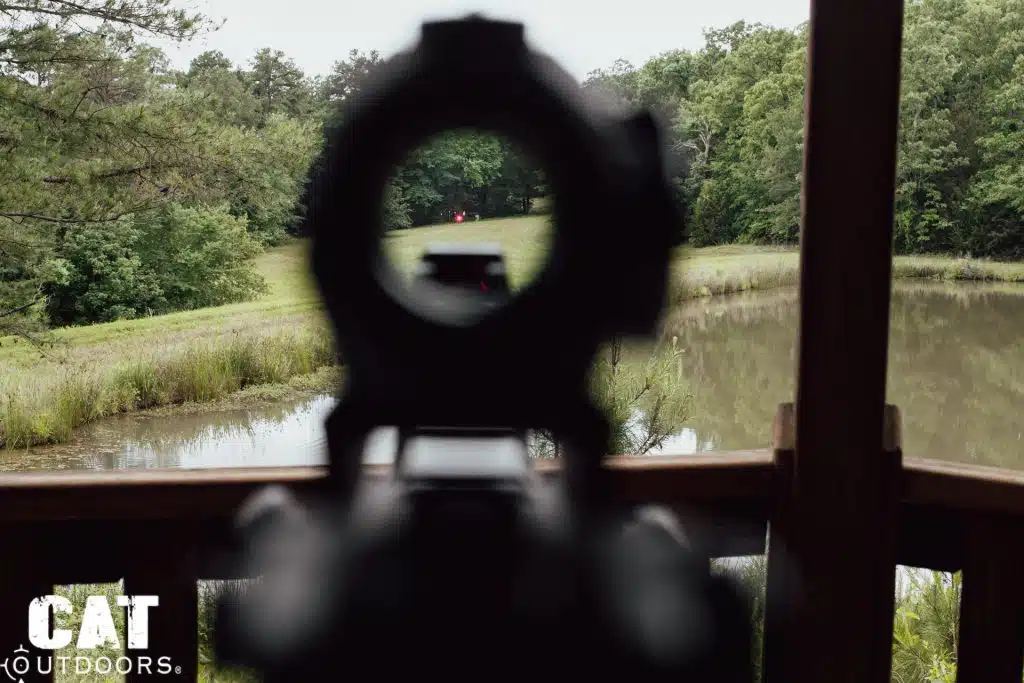
The honest knock is the tint. There is a slight blue cast through the glass when you first mount up, then your eye adjusts and it stops registering. Eye relief is unlimited, and long strings behind it stayed comfortable.
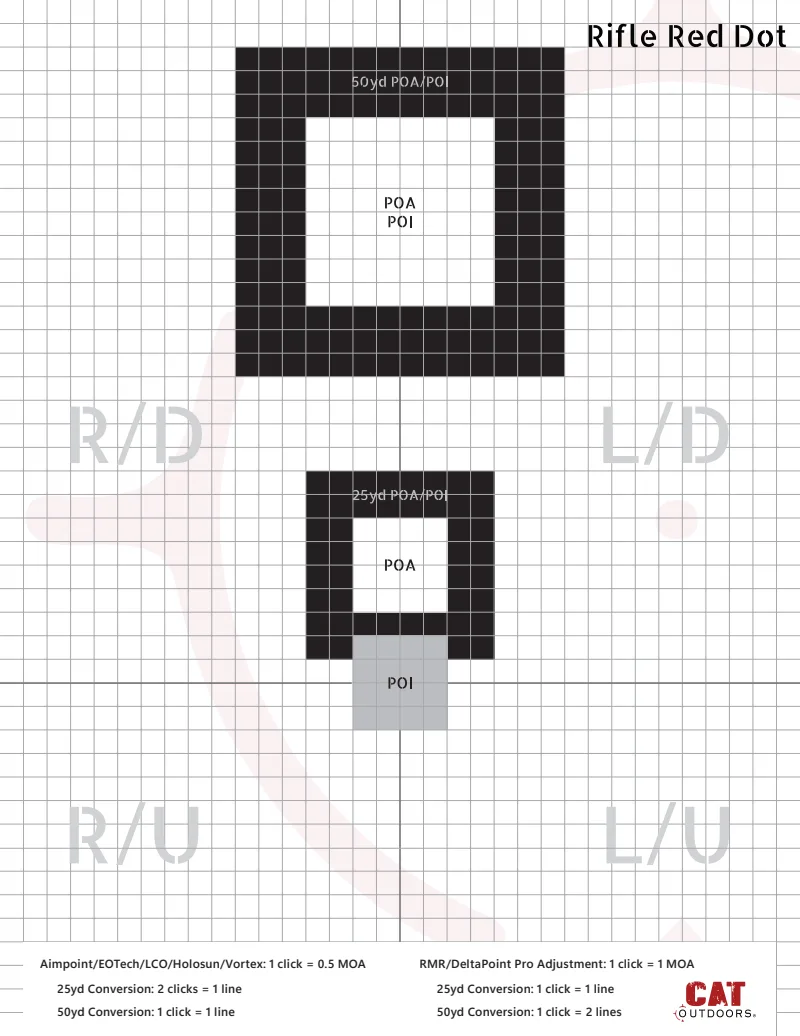
The turrets click in 0.5 MOA increments under removable caps, and they are tactile enough to count by feel. You get 100 MOA of travel in each direction, which is more correction than any zero should ever need.
Because the dot is an LED rather than a hologram, it does not wander as your head moves behind the optic. Every transition was parallax-free, and that is the practical difference between a dot you trust and a dot you keep interrogating.

The Bathtub Test
IPX-7 means one meter of water for 30 minutes. SIG printed that on the box, we own a bathtub, and the rest of this section wrote itself.
Under it went, dot on. It came out running like nothing had happened.
If you skimmed past the photo, go back: the dot is lit in it, underwater. The optic went back on the rifle afterward and has been there since.
Liking this one? Add CAT Outdoors as a preferred source on Google and stories like it show up first.
Add on Google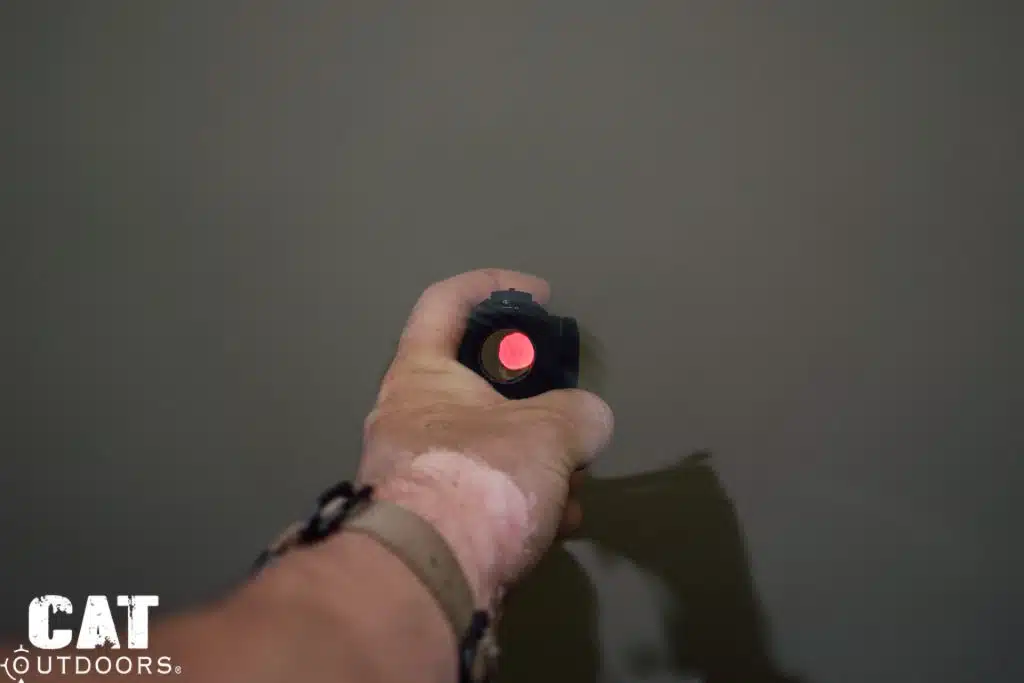
One buying note before the links: SIG has moved the line to the Romeo5 Gen II, and the original is getting scarce, partly thanks to a January 2025 battery-packaging recall (the optic itself was never the problem; details in the FAQ). Everything in this review is the original Romeo 5. We have not tested the Gen II yet, for now we’re just scoring the original that we own.
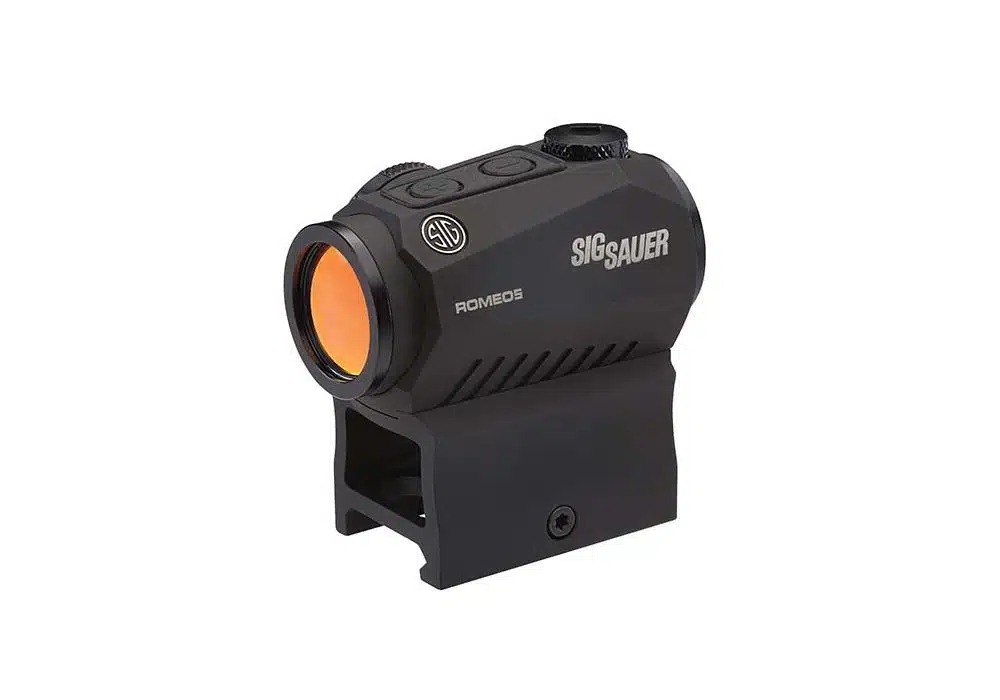
Sig Sauer Romeo 5 Red Dot
If you are new to the world of AR-15s and don’t have a huge budget, but want an effective and durable optic, the Romeo 5 might be the red dot for you.
Upgrades Worth Considering
The big one is the SIG Juliet 3 magnifier. It stretches the practical range of this setup from 200 yards to past 300, and it flips out of the way the moment you want the naked dot back.
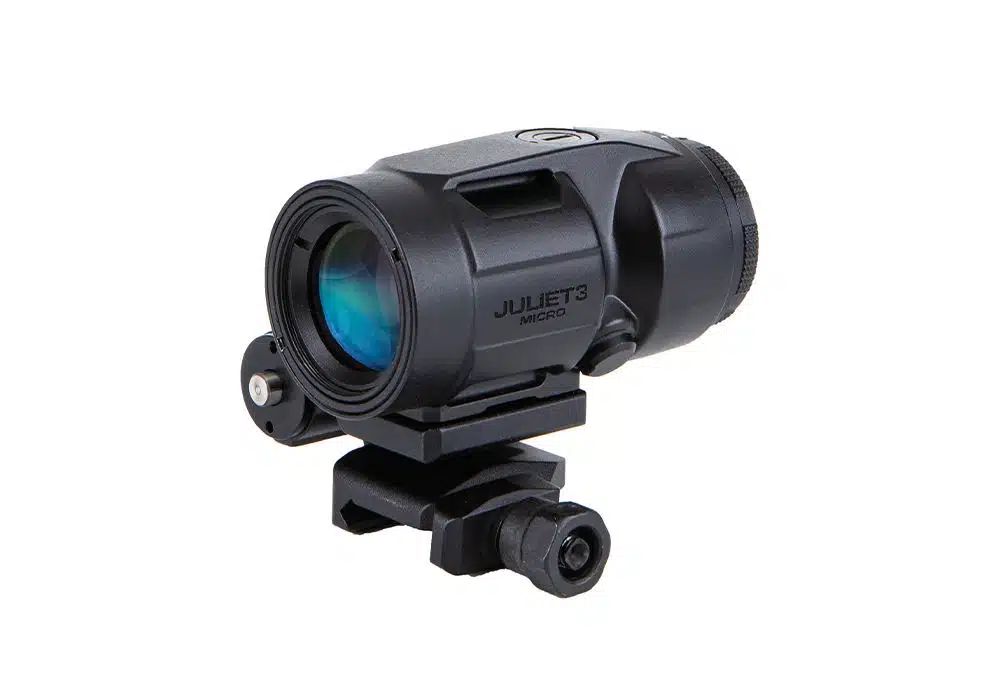
Sig Sauer Juliet 3 Micro Magnifier
The biggest upgrade we'd recommend is combining the Romeo 5 with the Sig Juliet 3 magnifier. This expands the visibility range from 200 to 300+ yards.
The other is a quick detach mount, which SIG leaves out of the box. A QD lets you pull the optic in seconds to get to your irons, and it clamps more securely than the standard screw. Budget about $105 aftermarket.
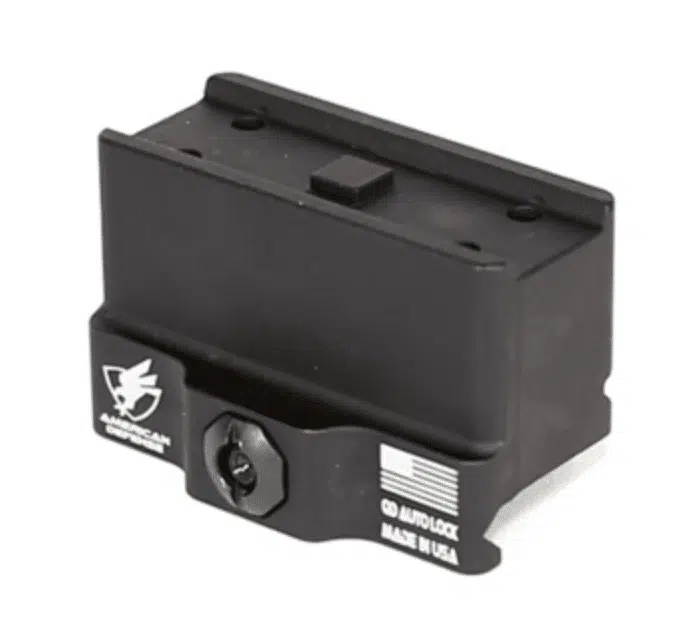
American Defense QD Mount
You can add this as an after-market upgrade for about $105.
Who It’s For (and Who It’s Not For)
After a few years with it, the lines are easy to draw.
Buy it if:
- This is your first red dot and you would rather spend the difference on ammo
- You want shake-awake and a battery measured in years without paying a premium for them
- Your shooting lives inside 200 yards
- You want an optic you can mount, zero, and stop thinking about
Look elsewhere if:
- You need duty-grade glass and are ready to pay Aimpoint or EOTech money for it
- Most of your shooting happens past 200 yards and you do not want to run a magnifier
- You want a quick detach mount in the box rather than on a shopping list
If you are weighing a step up, we scored a pricier micro dot in our Primary Arms GLx MD-21S review, and the full field lives in our best AR-15 red dots guide.
Our Verdict
We put the Romeo 5 on trial back in 2024, and a few years, north of a thousand rounds, and one bathtub later, it walked. Around $120 buys shake-awake that used to be a premium feature, a battery you will forget exists, and a 2 MOA dot that stays honest at 200 yards.
The glass is entry-level, the tint is real, and past 200 yards you will want the Juliet 3. At this price those are footnotes. Reliability is the part that matters, and in years of ownership the Romeo 5 has never once made us think about it.
Final score: 8.8/10
If this is your first red dot, buy it and put the savings into ammunition. It does its best work on a carbine worth mounting it to, and if you are still shopping for that half of the equation, start with our best AR-15 rifles list.
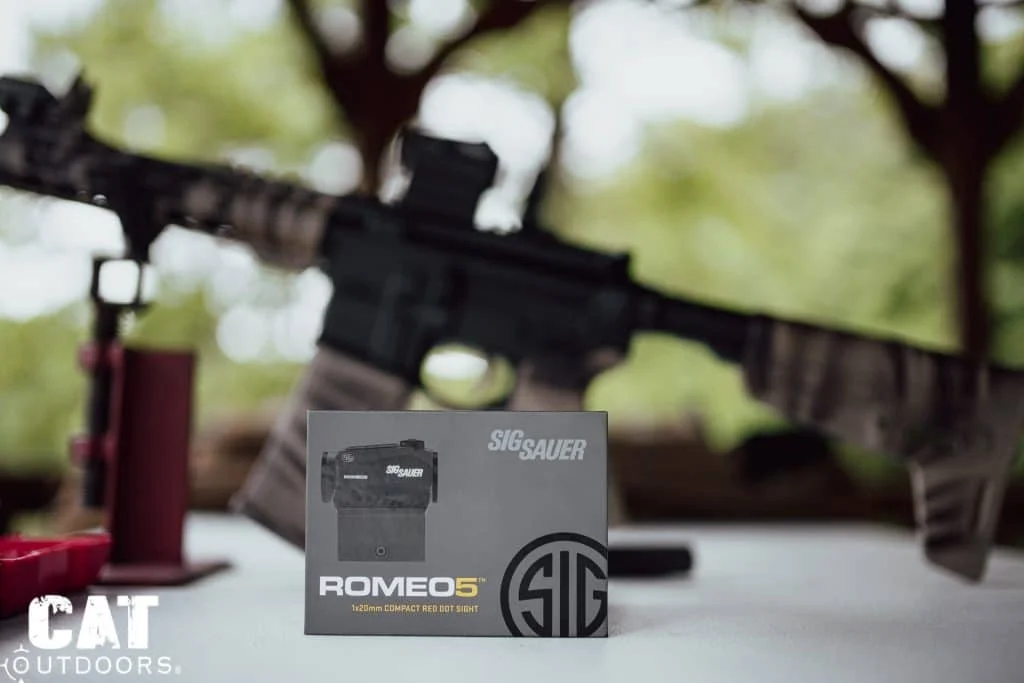
Rather build the carbine than buy it whole? Pin one of our favorite complete uppers to an assembled lower and you have a rifle.
Frequently Asked Questions
Is the SIG Romeo 5 waterproof?
It carries an IPX-7 rating, good for one meter of water for 30 minutes. We tested that claim by submerging ours with the dot on, and it came out running. The photo in our bathtub test shows the dot lit underwater.
How long does the SIG Romeo 5 battery last?
About 40,000 hours on a single CR2032, which works out to roughly four and a half years of runtime. MOTAC stretches that by putting the dot to sleep after two minutes of stillness and waking it the moment the rifle moves.
Does the SIG Romeo 5 come with a riser?
Yes, both mounts are in the box: a low profile M1913 mount and a 1.41 inch co-witness riser. Most AR shooters want the riser, because it lines the dot up with your iron sights.
Is the SIG Romeo 5 good at 200 yards?
Yes. We have shot ours at 200 yards over several years of ownership, and the 2 MOA dot is small enough to aim precisely without covering the target. Past 200, pair it with the Juliet 3 magnifier.
What footprint does the SIG Romeo 5 use?
The Aimpoint T2 footprint, the most common micro dot pattern out there. Risers and quick detach mounts are easy to find whenever you want a different setup.
Was the SIG Romeo 5 recalled?
Yes, in January 2025, and it is less dramatic than it sounds. The CPSC recall covered about 230,000 optics for battery-packaging rules under Reese’s Law: the included CR2032 was not in child-resistant packaging and required warning labels were missing. The optic itself was never defective. SIG offers a free fix kit with a new labeled battery cap and manual; contact SIG Sauer to claim it.
Keep the research going.
![The 7 Best AR-15 Red Dot Optic Setups [2026]](https://catoutdoors.com/wp-content/uploads/2024/04/vortex-optics-red-dot-768x432.webp) THE ROUNDUP
THE ROUNDUPThe 7 Best AR-15 Red Dot Optic Setups [2026]
The Romeo 5 is our top budget pick — but see how it compares against the Aimpoint, Holosun, and Trijicon options worth considering at every price point.
![Best LPVO for AR-15s [2026]: Long Range, Defense, Competition & More](https://catoutdoors.com/wp-content/uploads/2024/04/cat-outdoors-lpvo-ar15-field-shooting-kneeling-768x512.jpg.webp) STEP UP
STEP UPBest LPVO for AR-15s [2026]: Long Range, Defense, Competition & More
The Romeo 5 handles close-range fast. If you need to reach past 100 yards, our LPVO roundup covers the 1-6x and 1-8x options that replace a red dot entirely for medium-range work.

Justin Trump is the managing editor and owner of CAT Outdoors. The son of a Vietnam veteran, he’s a Certified Glock Armorer, an avid gun enthusiast and 2A advocate. He holds two firearm patents for the CAT M4 and Talon tools. When not managing CAT Outdoors, he enjoys spending time with his family and friends, rooting for Michigan sports teams, and serving his church.