Ninety Years of NFA Registration Ends With a Deadline the DOJ Was Ordered to Miss
The DOJ has until October 5 to appeal the ruling that ended NFA registration for suppressors and short-barreled rifles. CBS reports the order to stand down came from the president himself.
The NFA appeal deadline is October 5, and the Justice Department intends to let it pass without filing a thing. CBS News reported last Thursday that President Trump personally ordered the DOJ not to appeal the Texas ruling that ended NFA registration for suppressors, short-barreled rifles, and short-barreled shotguns, and that he has been telling Republican members of Congress he would make sure the department stood down.
The registration system that survived every constitutional challenge since 1934 is not losing another case. It is being allowed to die.
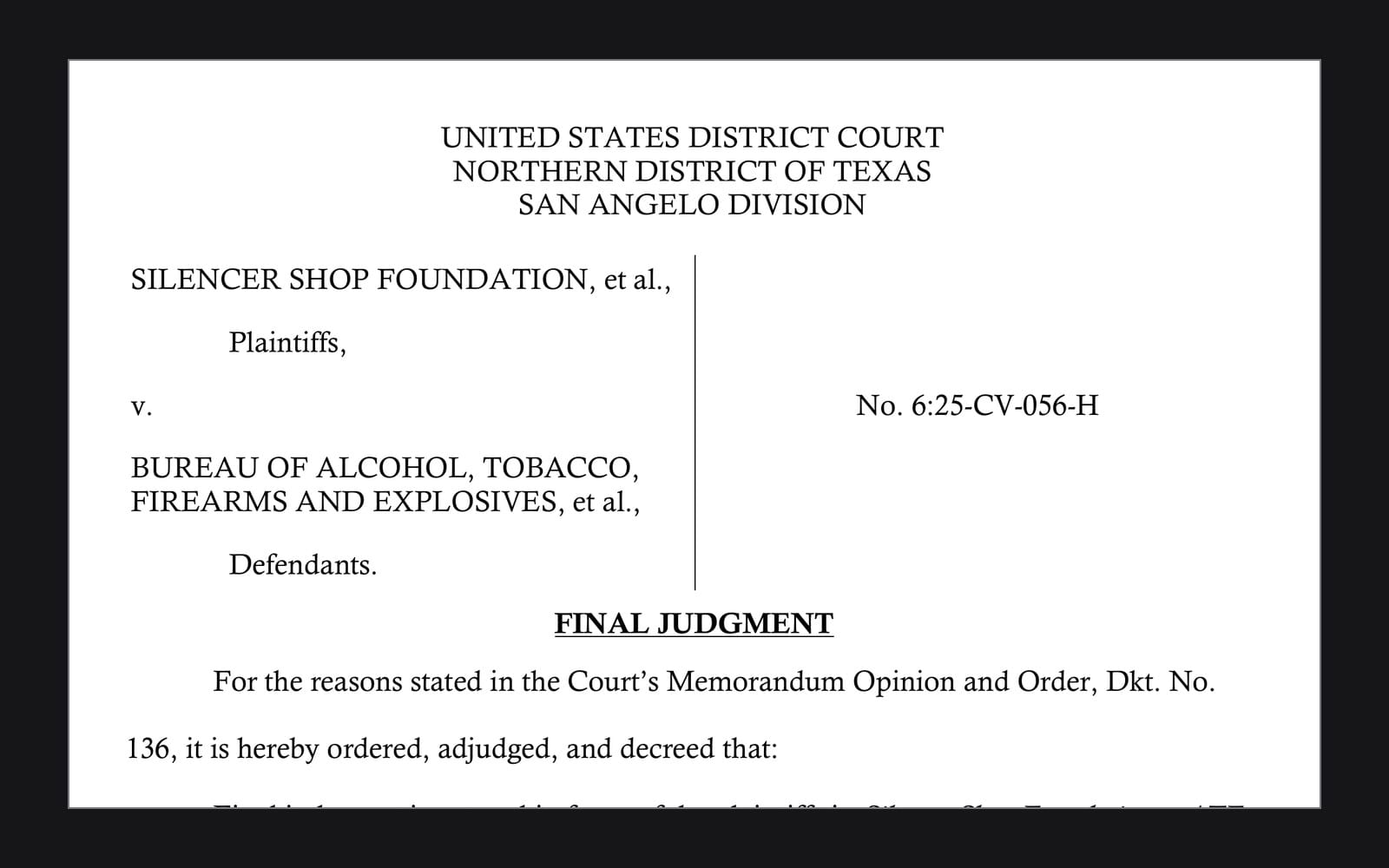
The ruling that started this: On August 5, U.S. District Judge James Wesley Hendrix entered final judgment in Silencer Shop Foundation v. ATF, the consolidated case brought by the Silencer Shop Foundation, Gun Owners of America, Gun Owners Foundation, the Firearms Regulatory Accountability Coalition, the Texas State Rifle Association, the Citizens Committee for the Right to Keep and Bear Arms, FPC Action Foundation, and fifteen states. The judgment permanently bars ATF and the DOJ from enforcing the NFA’s registration, making, and transfer provisions for suppressors, SBRs, and SBSs “against the plaintiffs and, where applicable, the plaintiffs’ agencies, political subdivisions, members, and customers,” and it spells out that the protection reaches future members and customers, not just current ones.

The reasoning was never about the Second Amendment; the plaintiffs abandoned those claims along the way. It was about taxing power. Congress zeroed out the $200 stamp effective January 1, and Hendrix ruled that “because today’s NFA does not generate any revenue from untaxed firearms, its regulatory provisions cannot be upheld under the taxing power.” A tax-collection apparatus with no tax left to collect is paperwork without a constitutional job, and that is exactly how it lost in August.
The government got a seven-day stay to run to the Fifth Circuit, and it let the week expire without a single filing. The injunction has been live since August 12.
The deadline math: When the United States is a party to a civil case, it gets 60 days from the judgment to file a notice of appeal. Sixty days from August 5, adjusted for the weekend, is Monday, October 5. As of this weekend the docket shows nothing, and CBS reports the DOJ will formally tell Congress it is not filing. That is what the NFA appeal deadline really is: not a hearing date, an expiration date.
Once it passes, the judgment is final in a way no election can reverse. A future attorney general cannot appeal a deadline that expired years earlier. Pistol braces, receivers, and bump stocks all bounced between administrations because somebody could always keep litigating; here the White House is deliberately burning the government’s only ticket to a higher court.
Who’s actually covered: The injunction protects the named plaintiffs, the fifteen plaintiff states along with their agencies and political subdivisions, and the members and customers of the plaintiff organizations, including people who join after the fact. It does not touch machine guns or destructive devices, and the court kept “any other weapon” items outside the injunction for one subset of plaintiffs, so AOW coverage depends on which group you belong to. If you are not in a plaintiff state and not a member of a plaintiff organization, ATF still considers you fully subject to the NFA.
Where it’s already a mess: Kansas, writing for the plaintiff states, filed a motion for clarification on September 11 that reads like a dispatch from a gun counter. State attorney general offices report being “deluged with inquiries from licensed dealers and prospective firearms purchasers,” while dealers who call ATF say the agency “refused to advise whether the prospective purchaser must complete a Form 4.” The states say the injunction covers every transfer inside their borders; the government told them in conference that it disagrees.
Nine attorneys general demanded written answers back on August 13 and have not gotten them. Rep. Tracey Mann of Kansas sent his own letter to ATF Director Robert Cekada, writing that “law-abiding gun owners and businesses should not be left guessing about what federal law requires of them.” The White House says ATF guidance is coming soon. Until it lands, the same suppressor transfer can be a routine 4473 sale for one buyer and a federal felony risk for the next one in line, depending on membership cards and the map.
Want the next one the day it lands? Add CAT Outdoors as a preferred source on Google and our coverage shows up first.
Add on GoogleThe friction is live on the criminal side too. In an Alabama prosecution, Justice Department lawyers rejected the idea that “a District Judge in the Northern District of Texas has the power to stop the United States Attorney in the Middle District of Alabama from enforcing the criminal laws of the United States,” per CBS. The department is walking away from the appeal while its own prosecutors argue about how far the ruling reaches. Both of those things are true at once, and that tension is the next year of NFA litigation.
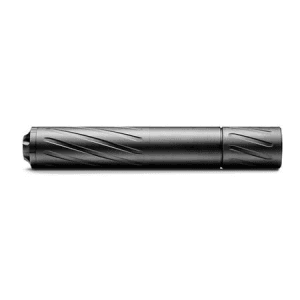
Banish 30 Multi-Caliber Suppressor (.17 to .300 Wby.)
A modular .30-cal can that runs everything from rimfire up to .300 Weatherby and configures to 7 or 9 inches. The $200 stamp is already $0, and for buyers the injunction covers, the registration wait went with it.
The objection worth taking seriously: Giffords’ Emma Brown told CBS the administration “could bring us back to the days of Al Capone, where silencers and short-barreled shotguns were used to recklessly kill people.” Strip away the 1934 imagery and the argument is that deregistration means impunity. The White House answer is the correct one on the law: “Anyone who would have been prohibited from buying a firearm under the old structure is still prohibited from buying a firearm under the structure that now exists.” Every background check still runs, and every felon-in-possession statute still applies. What died is a registry and a wait, not the criminal code.
The sharper objection is that all of this is reversible, and some of it is. Congress could re-impose the tax and rebuild the taxing-power foundation Hendrix knocked out, and Hendrix himself could still read his injunction narrowly when he rules on the clarification motion. What is not reversible, after October 5, is the judgment itself. The government does not get its appeal back.
Your takeaway: NFA registration for suppressors and short-barreled guns is functionally dead for millions of covered buyers, and once the appeal window closes it stays dead no matter who wins the next election. The live fight is scope, not survival: whether the injunction runs statewide in the fifteen plaintiff states, and when ATF finally puts its obligations in writing. Watch three things: October 5, Hendrix’s ruling on the clarification motion, and whatever guidance Cekada’s ATF publishes.
If the paperwork was the only thing standing between you and your first can, that wall is down for covered buyers. Our best 9mm suppressors guide is where to spend the research time the ATF just handed back to you.
Would you buy a suppressor on a plain 4473 tomorrow, or wait for ATF to put it in writing? Let us know in the comments.
Sources: CBS News reporting on the appeal decision; the final judgment, the states’ motion for clarification, and the attorneys general letter in Silencer Shop Foundation v. ATF, No. 6:25-cv-56 (N.D. Tex.); Rep. Tracey Mann’s August 27 letter to ATF.

Justin Trump is the managing editor and owner of CAT Outdoors. The son of a Vietnam veteran, he’s a Certified Glock Armorer, an avid gun enthusiast and 2A advocate. He holds two firearm patents for the CAT M4 and Talon tools. When not managing CAT Outdoors, he enjoys spending time with his family and friends, rooting for Michigan sports teams, and serving his church.