
Every Felon-in-Possession Case Rests on One Sentence: “The Gun Crossed State Lines.” The Fifth Circuit Just Put It on Trial.
The full Fifth Circuit voted Monday to rehear United States v. Squire, and with it a question no federal appeals court has seriously entertained in thirty years: whether Congress has the constitutional power to ban gun possession at all. The July 20 order in case No. 25-30324 wipes out the three-judge panel ruling from June…
The full Fifth Circuit voted Monday to rehear United States v. Squire, and with it a question no federal appeals court has seriously entertained in thirty years: whether Congress has the constitutional power to ban gun possession at all.
The July 20 order in case No. 25-30324 wipes out the three-judge panel ruling from June 2 and sends the case to the full court of seventeen active judges, with oral argument on a date still to be set.
What walked into the courthouse as one man’s Second Amendment appeal walks out as a facial Commerce Clause challenge to 18 U.S.C. § 922(g)(1), the statute behind the federal felon-in-possession charge.
A month earlier, Justice Clarence Thomas had mailed the invitation. Writing alone in United States v. Hemani, the June 18 Supreme Court decision that struck down a marijuana user’s prosecution under § 922(g)(3), Thomas closed with a dare: “the Court, and lower courts, should revisit the constitutionality of § 922(g).”
His theory: the Commerce Clause does not let Congress “regulate or ban possession of any item that has ever been offered for sale or crossed state lines,” and reading it that way hands Washington “a general police power of the sort retained by the States.” No other justice joined the opinion.
Thirty-two days later, the Fifth Circuit RSVP’d.
What actually happened: A three-judge panel rejected Squire’s Second Amendment appeal on June 2, holding that the nation’s historical tradition of firearm regulation supports disarming drug traffickers as dangerous. Monday’s per curiam order vacates that opinion in two sentences and explains nothing.
Judge Stephen Higginson’s dissent fills in the blank. “Today, we grant a petition for rehearing in what was a Second Amendment as-applied challenge to § 922(g)(1), now reframed as a facial Commerce Clause challenge,” he wrote, adding that his court “has welcomed the possibility of finding that Congress’s Commerce Clause authority cannot support § 922(g).”
The backstory: The case started with a February 15, 2024 shooting in New Orleans. Ten days later, NOPD officers searched Curtis Squire’s home under a warrant alleging his involvement and found a handgun; testing cleared the gun of any connection to the shooting, and the state charges were dismissed.
Federal prosecutors indicted him anyway in March 2024 under § 922(g)(1), citing prior felony convictions that include heroin trafficking, possessing a firearm with controlled substances, obstruction of justice, and burglary. Squire pleaded guilty without a plea agreement, kept his right to appeal, and drew 52 months in federal prison plus three years of supervised release.
The commerce hook: Section 922(g) forbids prohibited persons from possessing firearms or ammunition “in or affecting commerce,” and for three decades courts have held that element satisfied if the gun ever crossed a state line. Squire conceded the point in his plea: his handgun and his ammunition were both manufactured outside Louisiana.
That admission has been the least interesting sentence in every federal gun indictment since the mid-1990s: boilerplate, recited, forgotten by lunch. Not anymore. Squire’s petition asks the court to make it the entire case.
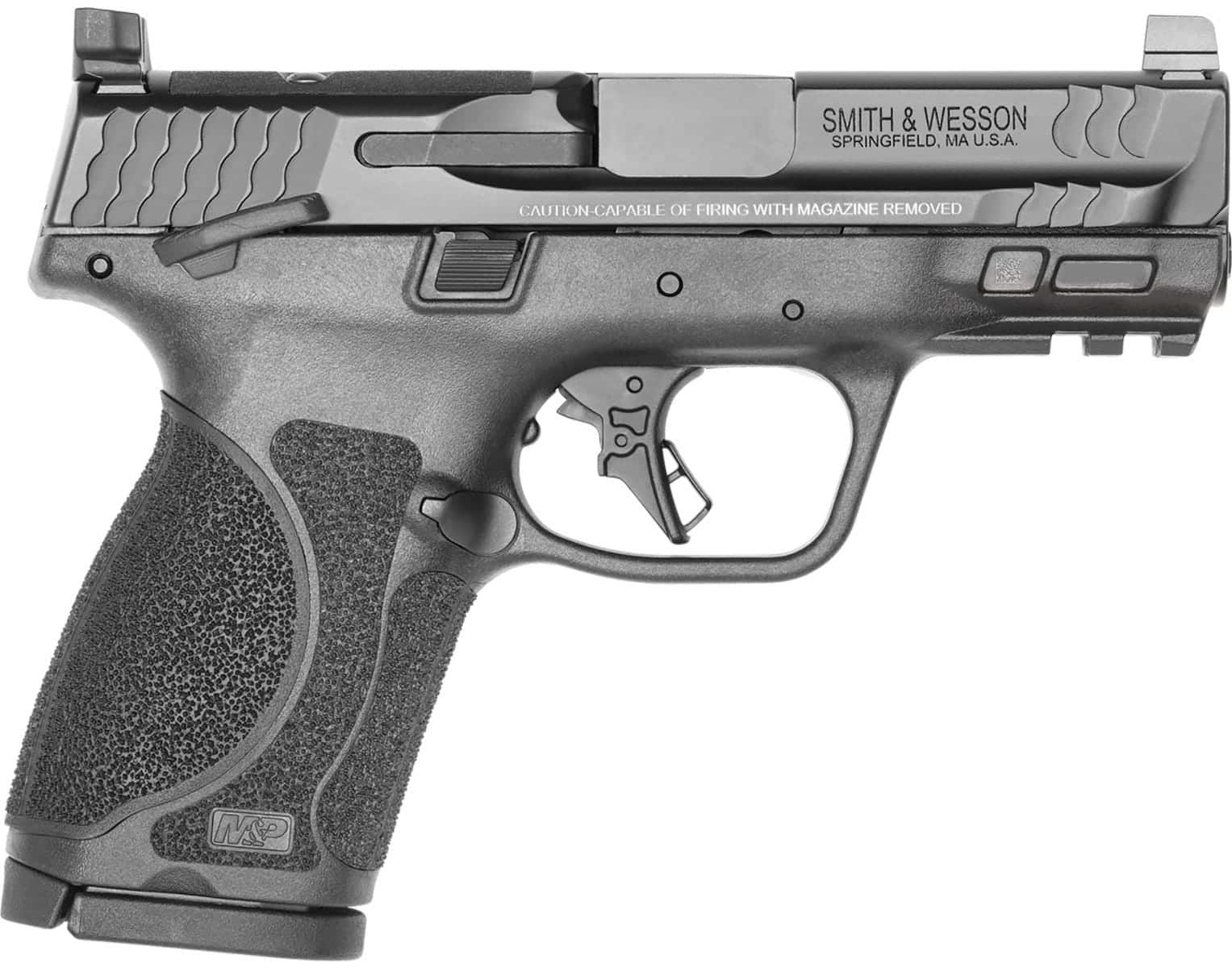
Smith & Wesson M&P9 M2.0 Compact (3.6-inch, 15+1, optics-ready)
Squire and Hemani both started with an ordinary handgun kept at home. The optics-ready M2.0 Compact is that gun in 2026 trim: 15+1 of 9mm with a manual thumb safety, and like nearly every pistol sold in America, it will cross a state line before it reaches you.
If your own defensive pistol lives in a nightstand drawer, our Best Gun Safes guide covers better drawers.
Who feels it: A ruling for Squire would knock the legal floor out from under every § 922(g) prosecution in Texas, Louisiana, and Mississippi, the three states the Fifth Circuit covers. Higginson names the stakes himself: such a holding “would have massive import for federal law.”
Every other federal circuit has upheld § 922(g) under the Commerce Clause, so a contrary en banc ruling creates a clean circuit split and a fast track to a Supreme Court that already has a blockbuster gun case waiting on its docket.
The dissent games out the rest in a string of open questions: whether felons could “flood the Gulf Coast to rearm themselves,” whether every § 922(g) defendant in the circuit gets a fresh challenge, and whether federal bans on possessing explosives and biological weapons rest on the same footing. Any future federal gun law, from a registry to a national “assault weapons” ban, would lean on the exact commerce power now under review.
What to watch: The clerk will set a supplemental briefing schedule, and the amicus list should be a show of its own; Higginson predicts the Solicitor General, state solicitors general, and Commerce Clause scholars all turn up. No argument date exists yet.
Thomas sent the invitation. The Fifth Circuit answered it. The next reply card goes to the Supreme Court.
Does the Commerce Clause challenge survive, or does § 922(g) hold? Let us know in the comments.
Want rulings like this in your inbox the morning they drop? Sign up for the CAT Outdoors newsletter below.
Sources: the Fifth Circuit’s en banc order and Higginson dissent; the vacated panel opinion; the Supreme Court’s slip opinion in United States v. Hemani; additional reporting via Law Dork.

Justin Trump is the managing editor and owner of CAT Outdoors. The son of a Vietnam veteran, he’s a Certified Glock Armorer, an avid gun enthusiast and 2A advocate. He holds two firearm patents for the CAT M4 and Talon tools. When not managing CAT Outdoors, he enjoys spending time with his family and friends, rooting for Michigan sports teams, and serving his church.