The ATF Couldn’t Ban Forced Reset Triggers. So It’s Backing Patent Lawsuits That Can.
The government lost its machine-gun case against forced reset triggers in 2024. A new DOJ filing in a Texas patent court shows the strategy that replaced it.
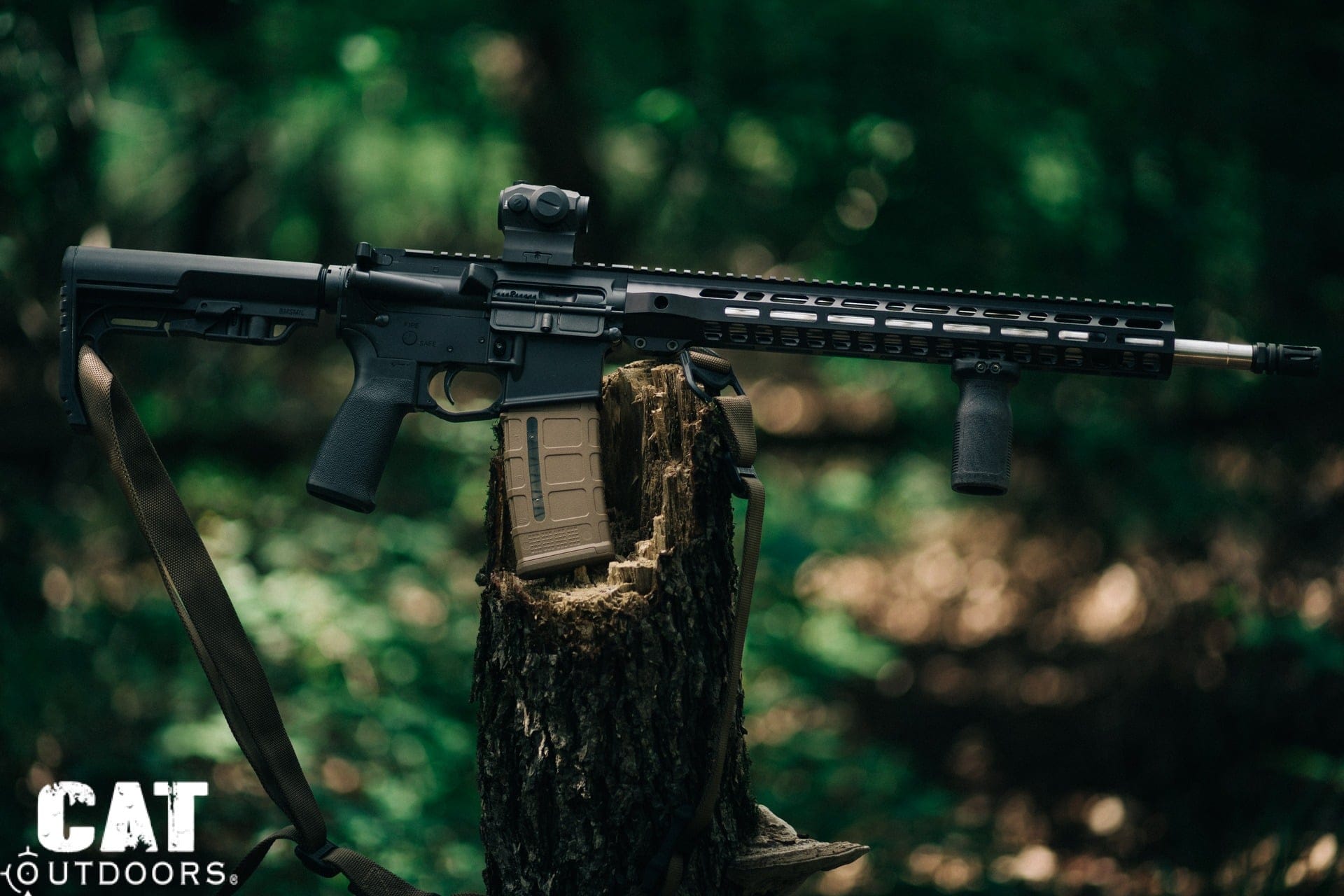
The forced reset trigger lawsuits consolidated in a Texas federal court picked up an unusual supporter on August 31: the federal government. The Department of Justice, filing on ATF’s behalf, formally asked the judge overseeing Rare Breed Triggers’ patent campaign against its competitors to count “public safety” on Rare Breed’s side of the scale.
This is the same agency that tried to ban forced reset triggers outright and lost in federal court. Now it is asking a patent judge to accomplish a version of the same thing: fewer FRT makers, removed from the market by injunction instead of by regulation.
What the government filed: The document is a seven-page Statement of Interest, entered as docket item 44 in In re: Rare Breed Triggers Patent Litigation, the multidistrict case pending before Chief U.S. District Judge Amos L. Mazzant III in the Eastern District of Texas. Rare Breed and its patent affiliate ABC IP have filed more than 130 infringement suits against makers and sellers of forced-reset devices, and roughly 95 of them now sit in this single consolidated docket, according to an analysis by the patent-law site Patently-O.

The filing says the government “has a strong interest in promoting the safe use of firearms by the public, and in this particular case, in discouraging unregulated manufacture of forced reset triggers that allegedly infringe Rare Breed’s patents.” Its argument section opens even more plainly: “The ATF has an interest in limiting the sale and distribution of FRTs.” The ask at the end is that the public-interest factor “be weighed heavily in Plaintiffs’ favor.”
The government is careful about what it doesn’t say. Its lawyers take no position on whether any defendant copied a valid patent, and no position on whether Rare Breed should win its cases. The entire filing exists to make one point to the judge: when he weighs the public-interest factor, he should treat fewer companies selling these triggers as a public good.
Why the ATF needs a workaround at all: In July 2024, Judge Reed O’Connor of the Northern District of Texas ruled in NAGR v. Garland that forced reset triggers are not machine guns, because they fire one shot for each function of the trigger, and that ATF exceeded its statutory authority when it classified them otherwise. A Brooklyn federal court had reached the opposite conclusion in 2023, and rather than keep litigating the split, the government signed a settlement agreement with Rare Breed on May 9, 2025 resolving three lawsuits at once. Under that deal, DOJ agreed to return seized triggers and stop treating qualifying FRTs as machine guns.
The settlement carried a less-noticed term going the other direction. Rare Breed, per DOJ’s announcement of the deal, “will not develop or design FRTs for use in any pistol and will enforce its patents to prevent infringement that could threaten public safety.” The new filing states the obligation in fuller terms: Rare Breed agreed to take “all reasonable efforts to enforce its patents and seek injunctions against any person or entity that manufactures, sells, or distributes any FRT.”
In plain terms, the government’s settlement with the company it failed to regulate includes a promise that the company will sue everyone else in the market. Patently-O describes the arrangement this way: Rare Breed got federal non-enforcement for qualifying triggers and agreed to seek injunctions against other sellers, while DOJ agreed to consider filing statements supporting those injunctions. The August 31 filing is the government keeping its half of that bargain.
Want the next one the day it lands? Add CAT Outdoors as a preferred source on Google and our coverage shows up first.
Add on GoogleThis isn’t a one-off: The government tested the play in January, filing what it calls a “substantively parallel” Statement of Interest in Rare Breed’s suit against Hoffman Tactical in the Eastern District of Tennessee (No. 1:25-cv-389), a case over Hoffman’s 3D-printable Super Safety design, before that case was folded into the MDL. Same “strong interest” language, same public-safety framing, same request that the court weigh the government’s regulatory preferences inside a private infringement action. The August filing goes one step further: it warns that the absence of a government statement in any individual case shouldn’t be read as a lack of interest. In other words, every defendant in every FRT suit is now on notice that the government considers itself a stakeholder in the outcome.
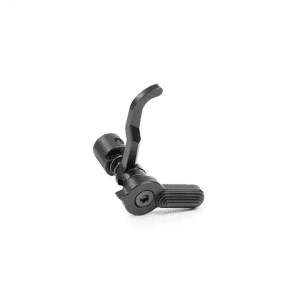
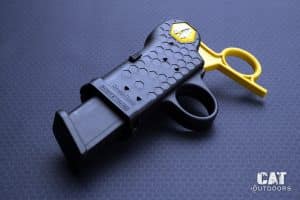
Atrius Forced Reset Selector (FRS)
The selector at the center of this story: lawful under NAGR v. Garland, drop-in install, made in the USA. Black Rifle Depot and BattleHawk carry the mil-spec lever; AR-15 Discounts has the G-Lever ambi. Check your state's law first.
Who feels it: Every company selling a forced-reset device that isn’t Rare Breed, and every buyer who benefits from them competing. The concrete example is already in front of the Federal Circuit: Rare Breed spent September 10 arguing ABC IP v. Peak Tactical, its appeal from a denied preliminary injunction against the Disruptor, a $299 competing FRT. Rare Breed’s own trigger runs about $450. When the government tells a court that enjoining competitors serves the public interest, the practical output is that the $299 option leaves the market and the $450 one stays.
The appeal of this route, from the agency’s side, is easy to see. A federal rule restricting FRTs would require notice and comment, statutory authority, and survival in front of judges who have already ruled against the agency once. A patent injunction requires none of that, and the products it removes from the market are just as gone.
The pushback: Atrius Development Group, one of the MDL defendants, answered the government’s filing in public on September 24. Atrius sells what it calls a Forced Reset Selector, maintains the design doesn’t infringe the asserted patents, and did not soften its view of the government’s appearance: “Executive agencies never serve the public interest when they manipulate private patent enforcement to create a government-backed monopoly.”
ATF leadership has been unusually talkative this month either way. The same director who won’t put the agency’s name on an FRT rule spent a Dallas dealer summit promising suppressor and SBR guidance within weeks, which we covered on Friday.
The honest counterargument: Patents are property rights. Rare Breed spent years and real money defending both its triggers and its patents, nobody should be shocked that it enforces them, and the government files Statements of Interest in private cases all the time. All of that is true. None of it answers the actual question, which is whether ATF’s policy preferences belong on the scale in a patent case after a federal court held the agency has no authority over these triggers. A product that’s lawful under NAGR v. Garland doesn’t become a public-safety problem because the government would prefer it were scarce, and “unregulated manufacture” is a strange complaint to make about a product a court said the agency can’t regulate.
The takeaway: The classification fight over forced reset triggers ended in 2024 and the gun owners won it. What replaced it is quieter and harder to challenge: a settlement that turned the winning company into the enforcement arm, and a Justice Department that now argues public safety to patent judges instead of arguing machine-gun definitions to appellate ones. If it works, expect to see it again, and not just on triggers.
Judge Mazzant has not ruled on the pending injunction motions, and the Federal Circuit’s decision in the Peak Tactical appeal will signal how far the patent campaign itself can reach. Both are worth watching into the fall.
Should a federal agency be allowed to put its thumb on the scale in a private patent case it has no stake in? Tell us what you think in the comments.
If all this has you thinking about your own fire control group, start with the drop-in AR-15 triggers we’ve tested, and grab the newsletter below for the next move in this fight.
Sources: In re: Rare Breed Triggers Patent Litigation, No. 4:26-md-03176 (E.D. Tex.), via CourtListener; the government’s August 31 Statement of Interest (Dkt. 44); NAGR v. Garland, No. 4:23-cv-00830 (N.D. Tex. July 23, 2024); DOJ’s May 16, 2025 settlement announcement; Rare Breed Triggers’ settlement announcement; Patently-O’s analysis of the Federal Circuit appeal; Atrius Development Group’s September 24 response.

Justin Trump is the managing editor and owner of CAT Outdoors. The son of a Vietnam veteran, he’s a Certified Glock Armorer, an avid gun enthusiast and 2A advocate. He holds two firearm patents for the CAT M4 and Talon tools. When not managing CAT Outdoors, he enjoys spending time with his family and friends, rooting for Michigan sports teams, and serving his church.