
CVLIFE Bipod Review – Hands-On Testing
A $67 Chinese-made bipod that’s surprisingly close to the $200 name brands in build quality — if you can live with a few compromises.
It's $67. It's built well. Buy it.
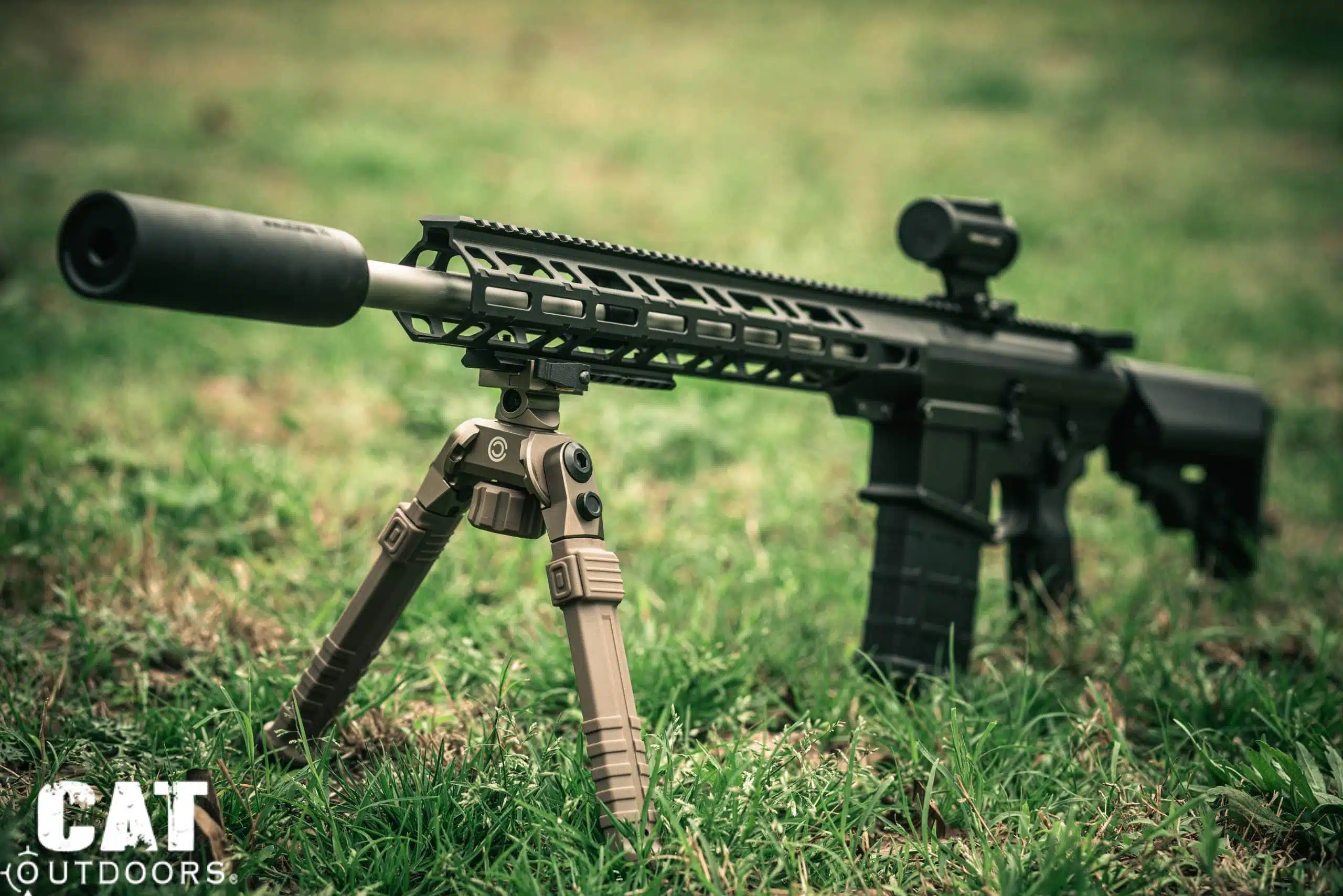
The CVLIFE Bipod is the rare budget bipod where out-of-the-box feel matches the marketing copy. It has an aluminum body, real detents, a Picatinny clamp that locks with thumb pressure and stays locked. Two compromises (shared pan/tilt knob, 1.1 lb heft) are things you notice once and stop thinking about. Not a Magpul. Not an Atlas. At this price, it doesn't have to be.
Reasons to Buy
- Aluminum build punches above the $67 price
- Quick-release clamp is fast, tool-free, holds tight
- Wide adjustment range: 360 pan, tilt, 8"-11" legs, foldable
- Rubber feet with good grip
Reasons to Skip
- Heavy for the class at 1.1 lbs
- Shared pan/tilt knob, no independent locks
- Folded-leg alignment quirk on first mount
- Made in China
Budget bipods give something up. Sometimes it’s sturdiness. Sometimes it’s fit and finish. Sometimes it’s the basic ergonomics of getting the thing onto a rail.
The CVLIFE Bipod gives up less than most. After a range session with the $67 quick-release Picatinny model, I came away thinking it gets more right than wrong. It’s not the lightest. It’s not the most compact. I’ve got a couple of complaints. But the build, the adjustability, and that quick-release clamp put it in a different conversation than the $25 Amazon specials it shares thumbnails with.
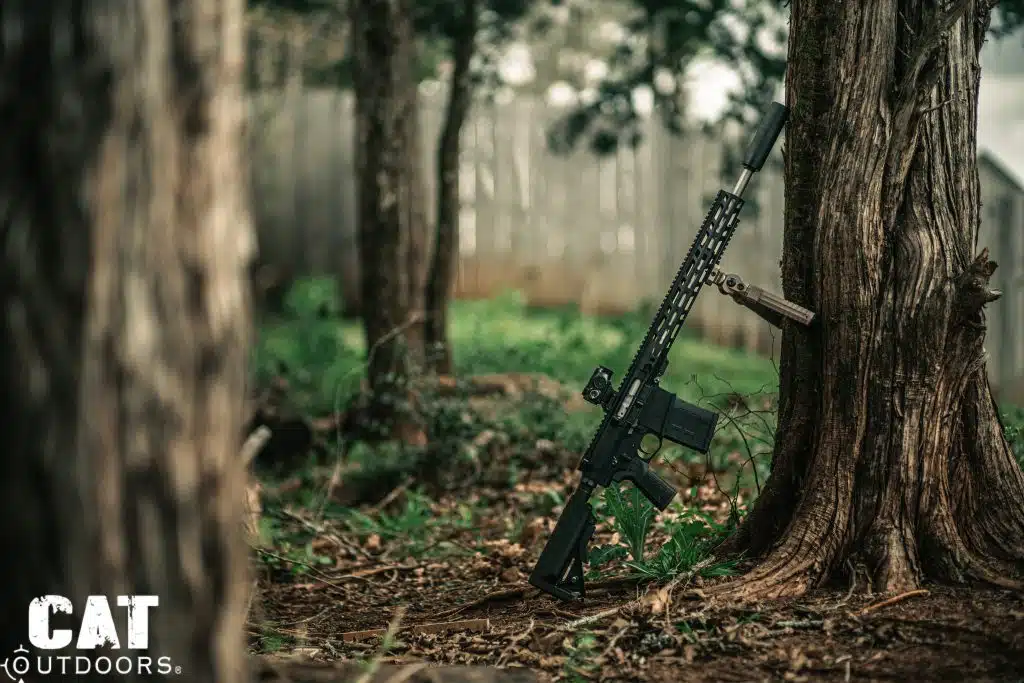
Here’s what a few hundred rounds with it taught me.
Why You Can Trust This Review
Full disclosure – this bipod was sent to us by CVLIFE and they requested we write a review for it. We were not paid for the review but we do get to keep the bipod. We explicitly tell manufacturers that we won’t tip the scales with our thumb in their favor.
This is our honest assessment of the product.
- Bipod Tested: CVLIFE Rifle Bipod Quick Release Picatinny Bipod Flat Dark Earth
- Price Paid: $0
- Date “Purchased”: January 23, 2026
The Poll
Where does your carry gun ride?
This week's holster coverage has us curious. Tap your pick.
The Poll · Live Standings
Your vote is in.
0 votes so far. Winner announced in next week’s issue.
Want to Know the Final Results?
We tally the votes and name the winner in next week’s email. Sign up and the final standings come straight to your inbox, and you’ll be first to hear when the review goes live.
By signing up you agree to our Terms of Service and Privacy Policy. No spam, and we never sell your address. Unsubscribe anytime.
That didn’t go through. Check the address and try again.
Done. Watch your inbox.
You’re on the list. The final standings land in next week’s issue, and if your pick loses, take it up with the other voters.
Which CVLIFE Bipod Is This?
CVLIFE sells a confusing number of bipods that look nearly identical in Amazon thumbnails. They are not the same product and they do not perform the same. Before clicking buy on anything, make sure you’re ordering the one you actually want.
This review covers the CVLIFE Quick Release Picatinny Bipod in Flat Dark Earth. The $67 aluminum-bodied variant with the quick-release Picatinny clamp and the shared pan/tilt knob.
CVLIFE also sells cheaper polymer-heavy bipods in the $25 to $45 range that share the same rough silhouette but use plastic where this one uses aluminum. Those are genuinely different products. They’ll be lighter, less rigid, and less durable. If you’re specifically trying to save money by dropping to a $30 CVLIFE, understand you’re not getting the bipod described in this review.
If you’re shopping the broader category, our best AR-15 accessories guide covers bipod picks across the price spectrum.
First Impressions and Build Quality
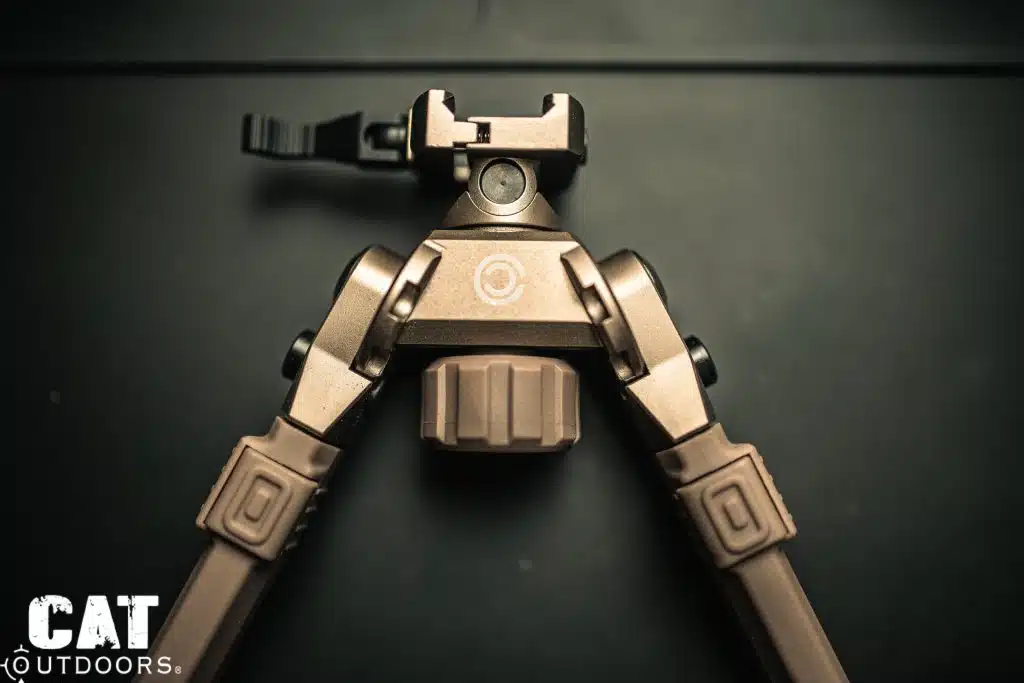
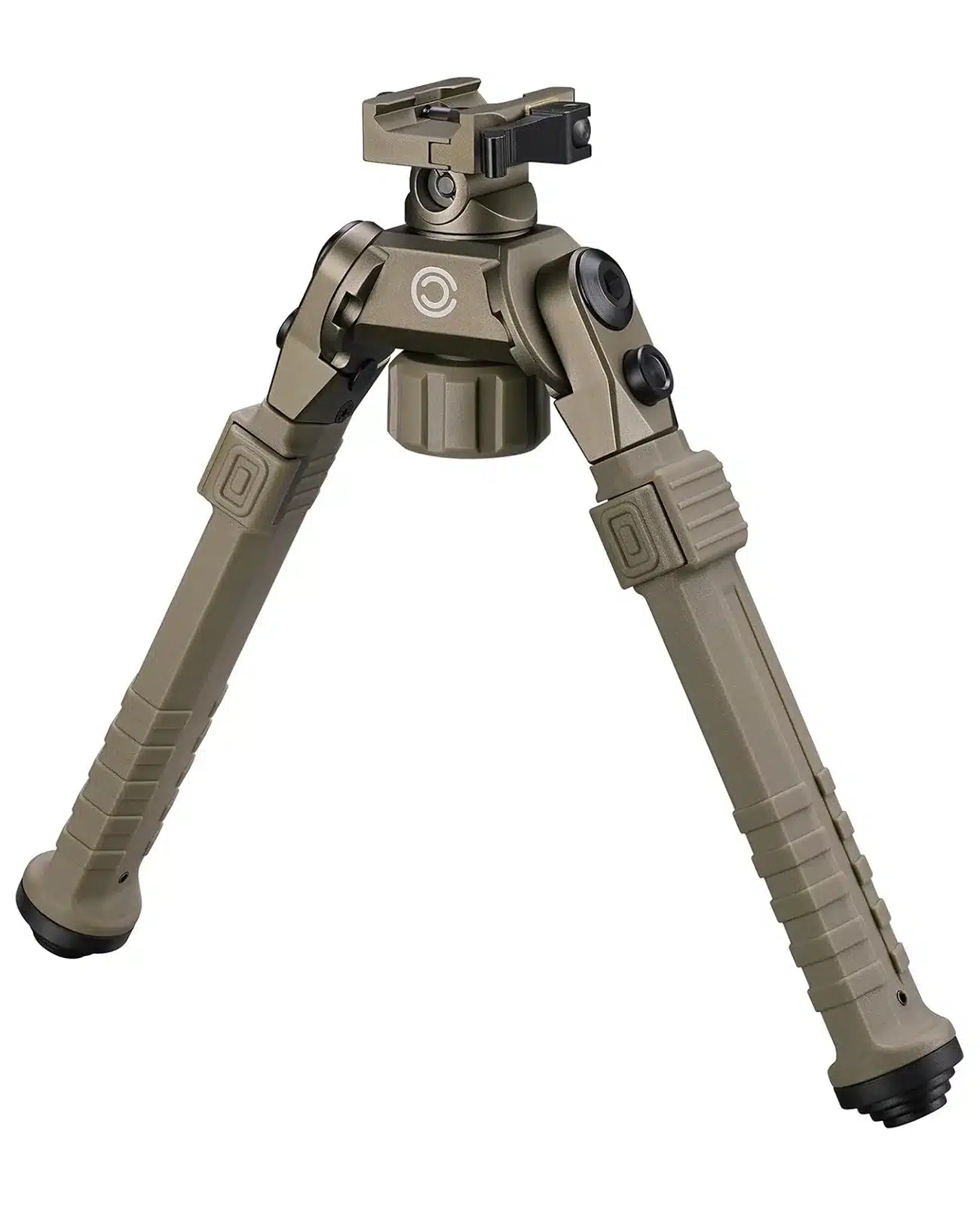
Open the box. Pick it up. First thing you notice: it has weight. This isn’t a featherweight polymer toy. The body is anodized aluminum with polymer where polymer is fine (the outer leg sleeves, the leg-lock housings). Everything that needs to be metal is metal. The anodizing is even and matte, not glossy. No casting flash. No sloppy machining marks. No wobbly hardware.
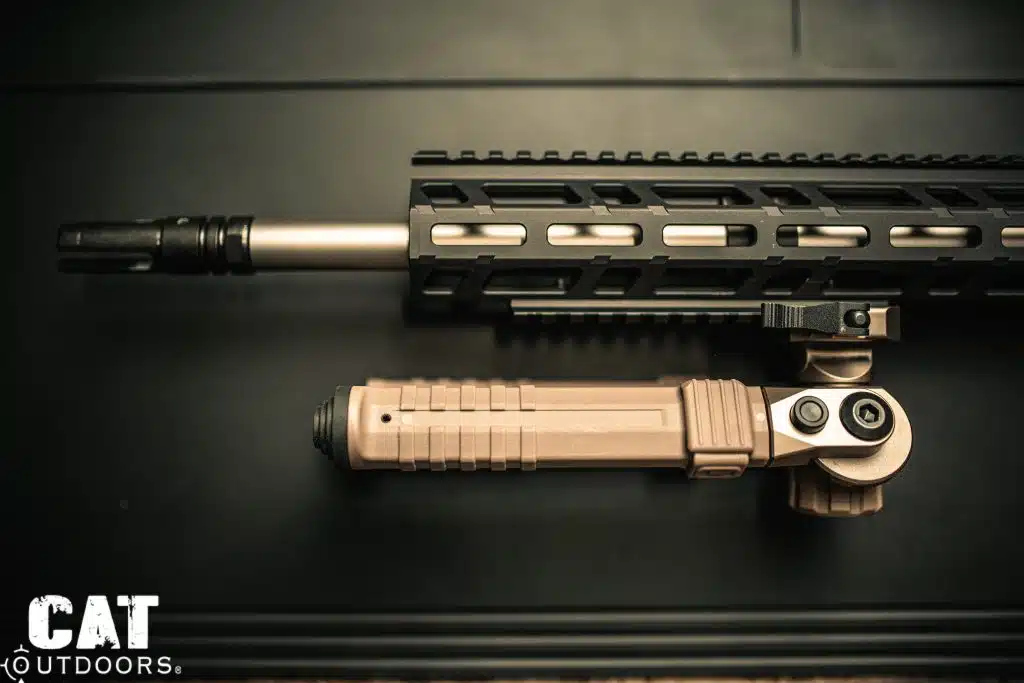
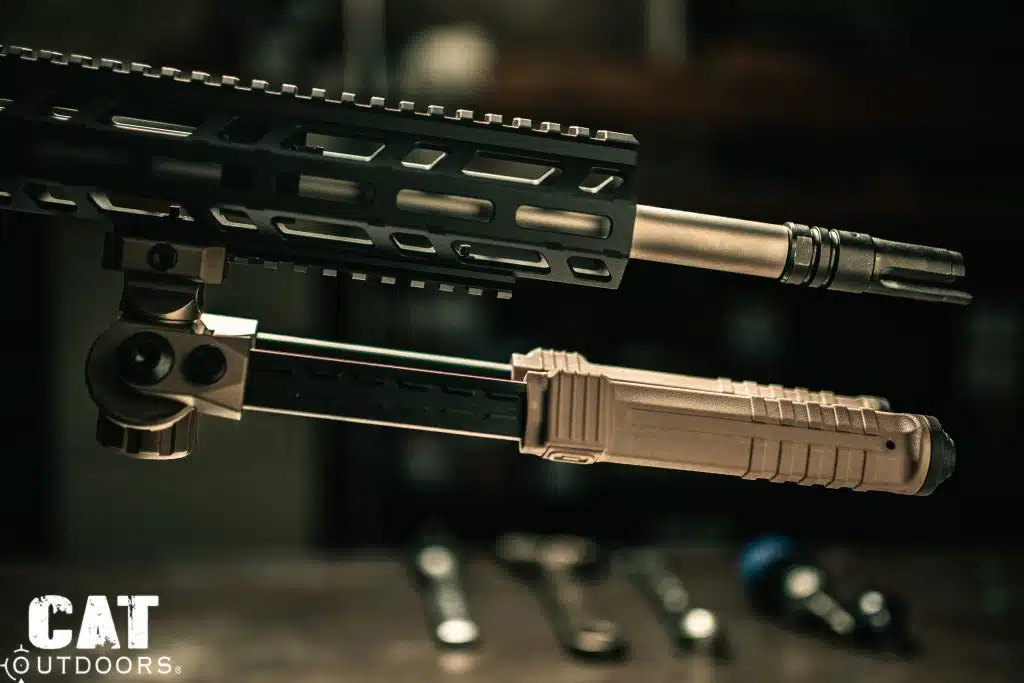
The quick-release clamp runs the show up top. Throw the lever, it opens. Seat it on a Picatinny rail, close the lever, it cinches down. No coin, no tool, no adjustment screw to fiddle with mid-range-session. The clamp jaws are metal and the tension holds. Push the rifle side-to-side with the bipod mounted and you get no detectable play on the rail.
One small note on fit-and-finish: there’s a CVLIFE logo cleanly etched into the main body. Small thing, but it’s not something you see on the really cheap stuff.
The Alignment Quirk (Read This)
Here’s the weird part. When you mount the bipod on the rail for the first time, fold the legs up against the rifle for transport, and depending on which way you happened to orient it when you clamped it down, the folded legs might sit at a noticeable off-angle instead of lying parallel to the barrel. Looks wrong. Feels wrong.
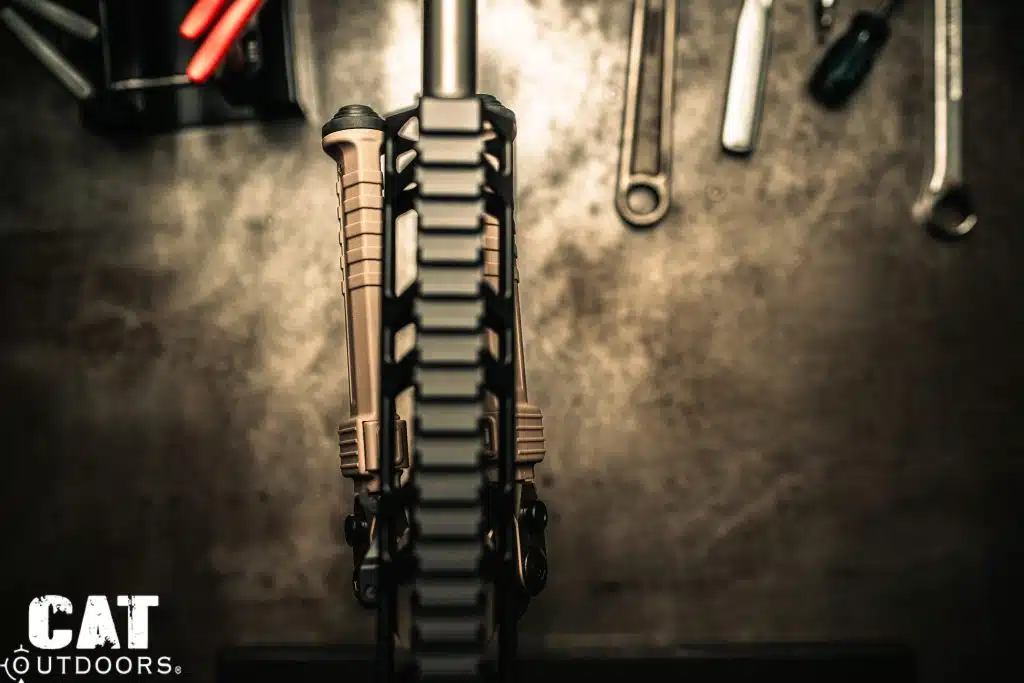
I was ready to dock this hard for manufacturing quality. The clamp has position detents, so you can’t just loosen the knob and straighten it by hand. The bipod sits where the detents let it sit.
Then I realized the fix. Loosen the quick-release, rotate the whole bipod 180 degrees on the rail, re-clamp. Folded legs now lie perfectly parallel to the rifle. The thing is symmetric. It just has a “correct” orientation that CVLIFE doesn’t label anywhere. Once you know, you know. If you don’t know, you’ll think you got a lemon. Fixing the instruction card would cost them nothing and save a percentage of their returns.


Performance / Hands-On
Attachment & Rail Fit
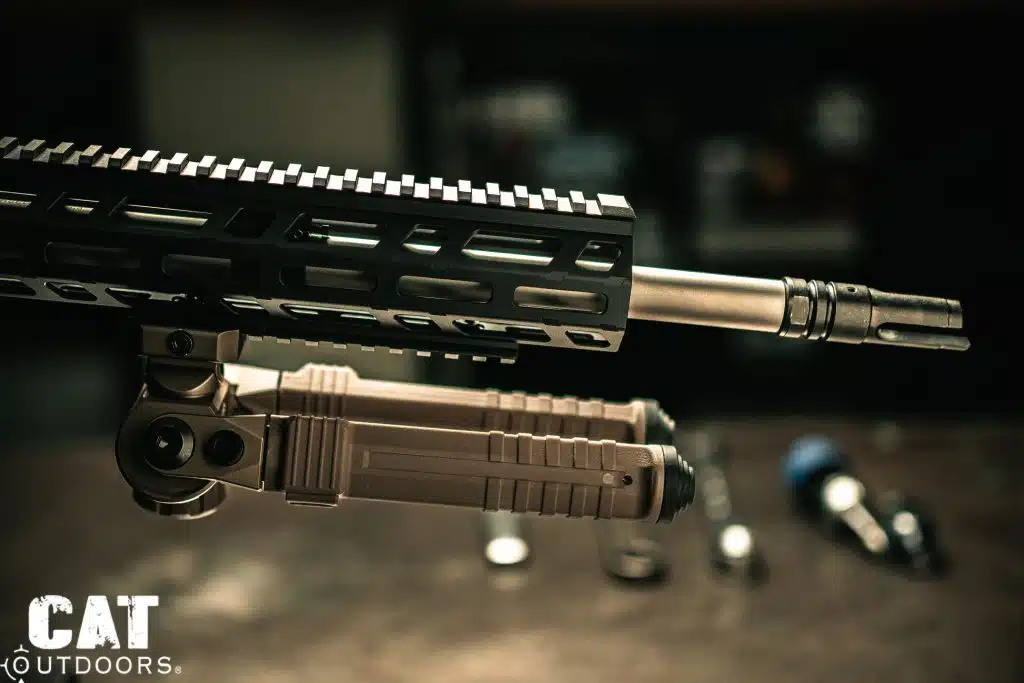
The quick-release clamp is the primary interface between bipod and rifle. It’s the interface most budget bipods flub. CVLIFE didn’t. Throw the lever open, drop it on a MIL-STD-1913 rail, close the lever, done. Thumb-tension on the lever is enough to get the clamp to a fully locked state. No Allen key, no coin, no torque wrench. Removal is the same operation in reverse.
Because the mount is a full rail clamp rather than a sling-stud adapter, repositioning along the handguard is a ten-second affair. Push the rifle forward or back in prone and the legs don’t always land in the ideal spot. Being able to unclamp, slide, reclamp without tools is a bigger deal than the product page lets on.
Stability & Point-of-Impact Behavior
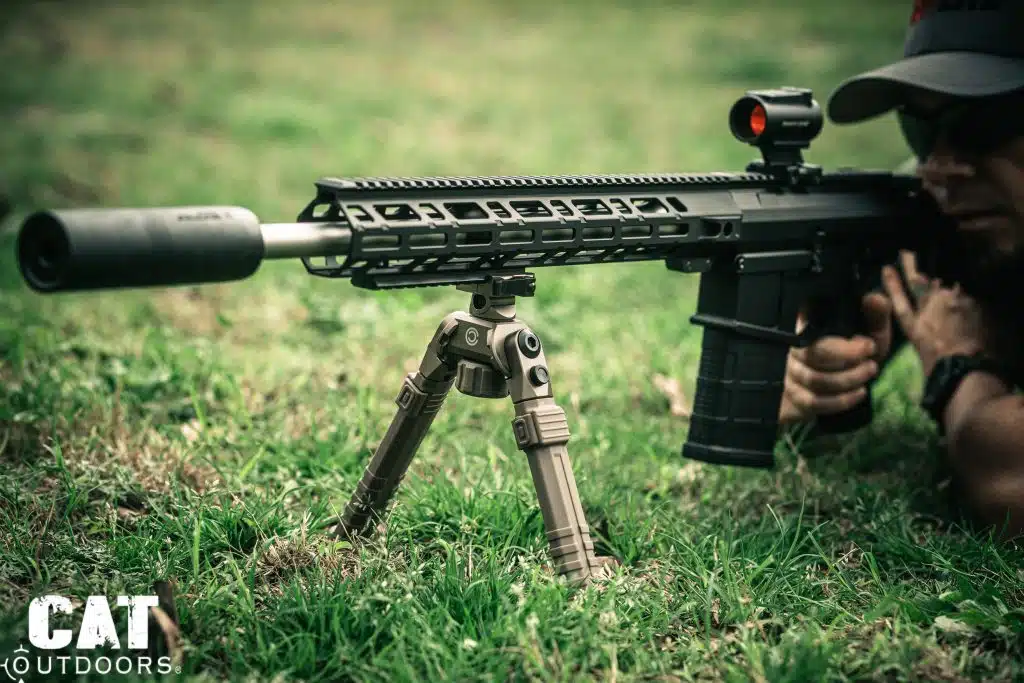
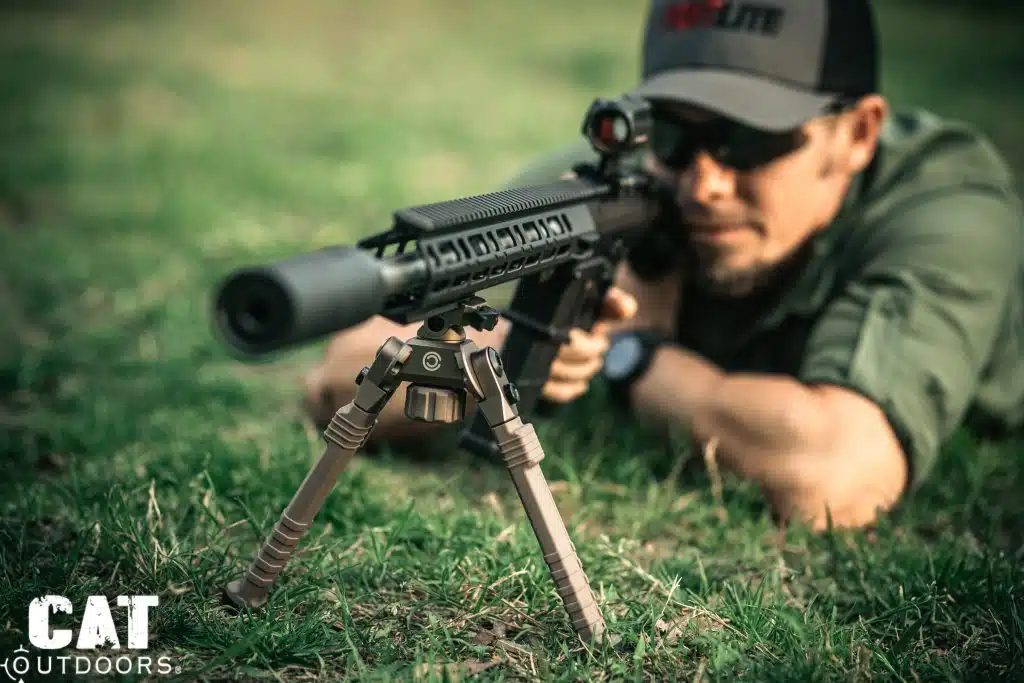
Preloaded into the shoulder, the bipod doesn’t squirm. The legs stay in whatever detent position you set them to, the pan/tilt knob holds its angle, and nothing visibly flexes during the firing cycle. There’s no polymer sponginess you sometimes feel on cheaper all-plastic units. The aluminum core carries the load and you can feel the difference.
The one honest caveat. With a shared knob for pan and tilt (more on this in the next section), if that knob isn’t cranked firmly before you start shooting, both axes can drift together during a string. Cinch the knob. That’s the fix.
Adjustability, Swivel & Tilt
Three inches of leg adjustment across spring-loaded detents. Press the thumb button, the leg drops or extends, release the button, the detent catches. Positive feel, no vague “is it locked?” moment. Spring return is firm but not violent. You can one-hand it.
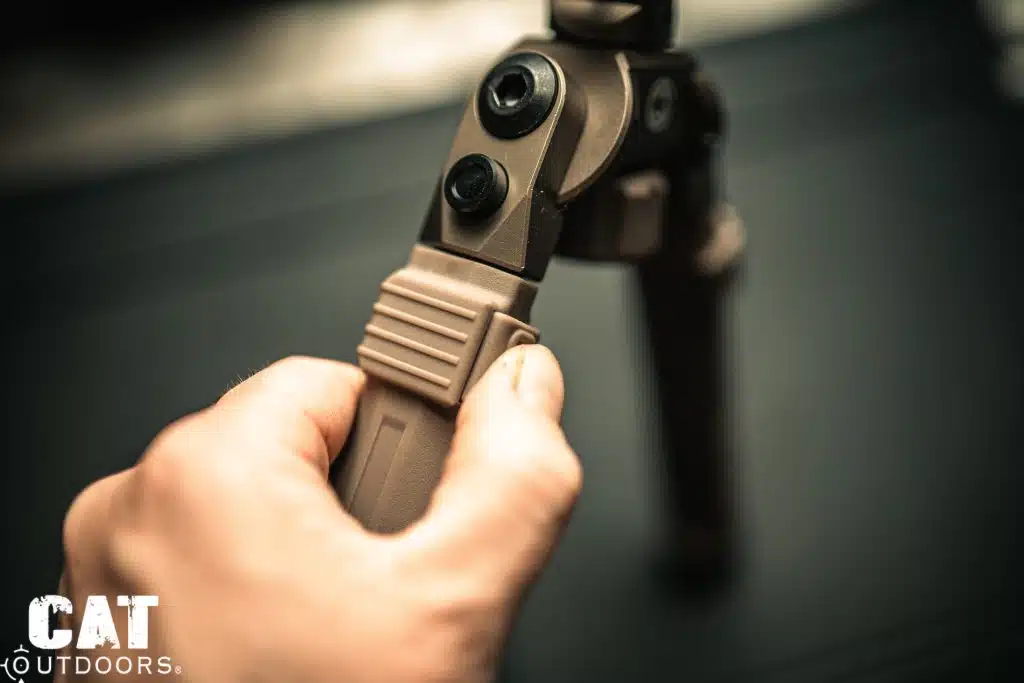
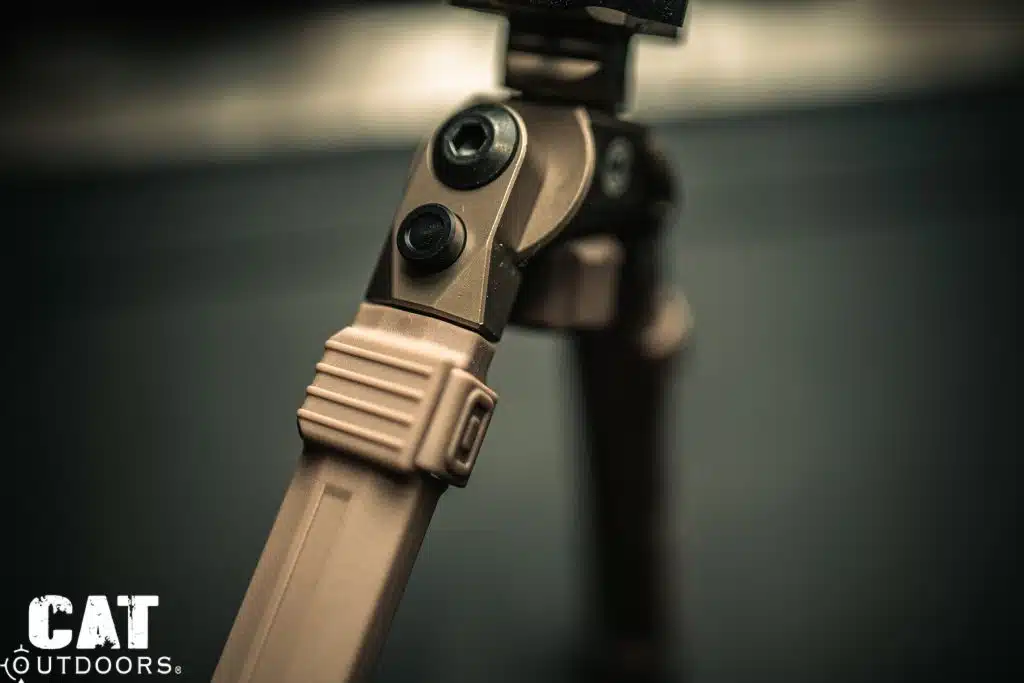
Here’s the design decision that’s going to define your relationship with this bipod: one knob, two axes. The big knurled wheel under the body controls both the 360 degree pan and the left/right tilt. Loosen it, both float. Tighten it, both lock.
Is that a dealbreaker? No. Is it the way I’d design it? Also no. What you lose is the ability to leave pan loose for tracking a moving target while keeping tilt rigidly locked, or vice versa. What you gain is one fewer thing to forget to tighten, and one less failure point. For a rifle that’s shooting static targets from prone, this tradeoff is basically free. For anything involving tracking or active repositioning, you’ll feel it.
Ergonomics & Usability
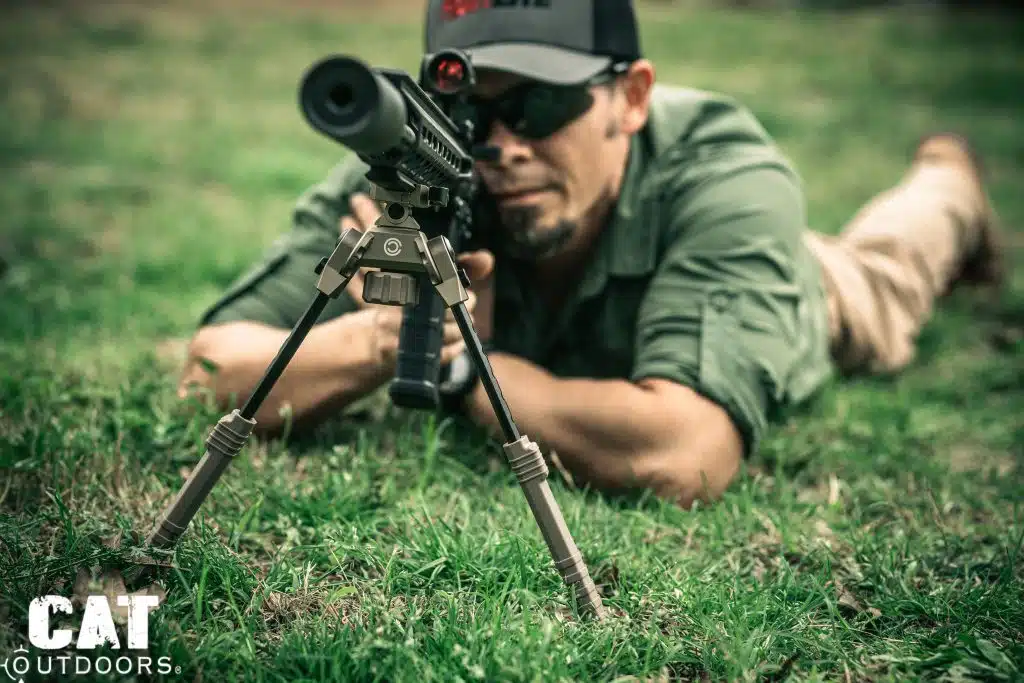
The quick-release clamp is the single best ergonomic feature on this bipod. Cold hands, gloves, wet range. Doesn’t matter. Lever, on/off. You can reposition mid-session without putting the rifle down.
The leg thumb buttons are large and tactile enough to find by feel. The locking knob is oversized and knurled. You can reef on it with gloves on and it doesn’t slip.
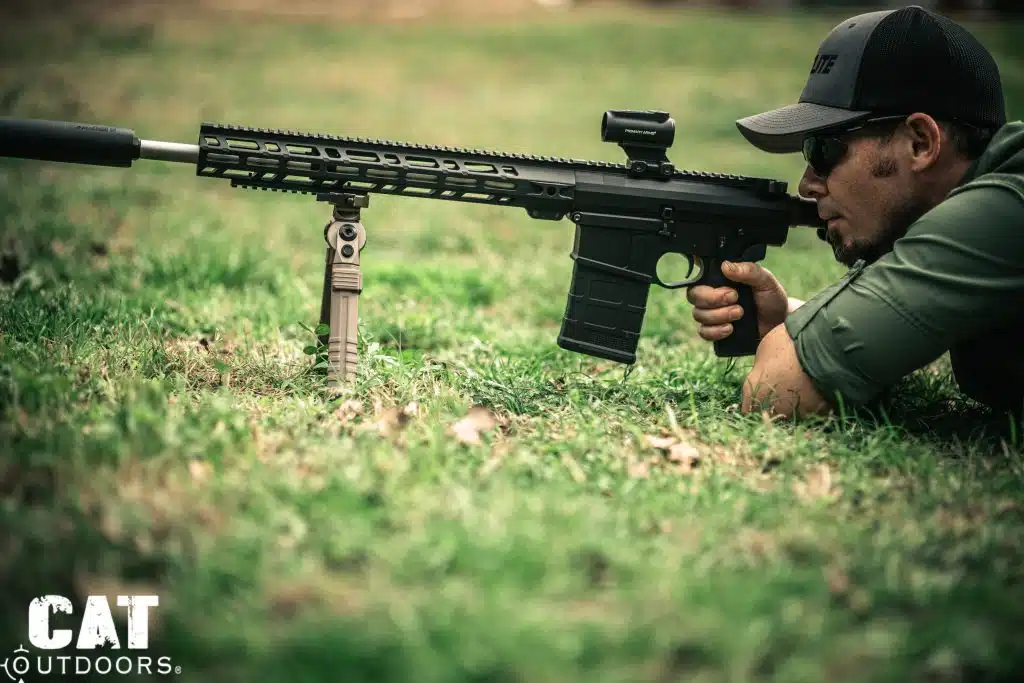
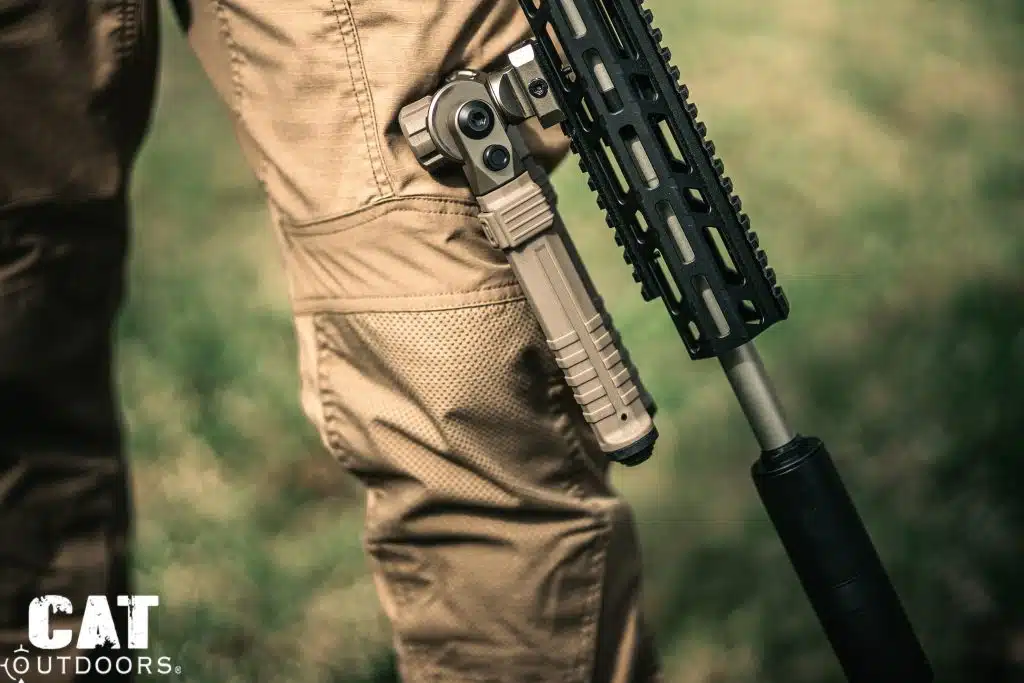
One small thing worth mentioning. The legs can deploy at multiple fixed angles, including folded fully forward (toward the barrel) for a very low prone profile. If you’re shooting over a low berm or out of a hide, you can run it with the legs essentially collapsed against the rifle body and still have a stable shooting rest.
Reliability & Durability
Short-term testing doesn’t prove durability, so I won’t claim it does. What’s true: the construction is aluminum where it counts, the hardware is snugged down out of the box and stayed that way, the rubber feet are glued cleanly and show no signs of wanting to peel. The anodizing took handling without scratching.
Liking this one? Add CAT Outdoors as a preferred source on Google and stories like it show up first.
Add on GoogleCVLIFE publishes a 1-year warranty per their Amazon listing. Specifics of what’s covered are not well-documented on either the Amazon page or the CVLIFE site. Translation: if something fails, you’re going to rely on Amazon’s return policy more than the manufacturer’s warranty process.
Mounting / Fit / Compatibility
Direct Picatinny mount, no adapter needed. Compatible with standard MIL-STD-1913 rails, which covers nearly every AR-15 handguard currently in production. Drop-in quad rails, free-float tubes, M-LOK handguards with a section of Pic rail up front, the usual suspects.
If you’re running a hunting rifle with a sling stud instead of a rail, this bipod won’t mount without a separate Pic-rail-to-stud adapter. CVLIFE does not bundle one in the box.
Improvements We’d Like to See
Two suggestions. Neither is the end of the world.
Mark the “correct” orientation on the clamp. The 180 degree rotation thing is a tiny usability fix. A printed arrow, a single line of text on the instruction card. It costs CVLIFE nothing and saves a percentage of buyers from thinking they got a defective unit.
Offer a split-knob version as a variant. Separate locks for pan and tilt. Same bipod otherwise. Charge $10 more for it. Shooters who want precision tracking would pay it, and the people who don’t care could stick with the current model.
Who It’s For
- AR-15 builders on a middle-tier budget. You already spent real money on the upper, the optic, and the trigger. The bipod is the last thing on the list. You want “good,” not “great at any cost.”
- Range-day shooters and truck-gun owners. Reliable, quick to mount, doesn’t care if it gets tossed around.
- Anyone stepping up from a $25 no-name bipod. The jump in build quality from the cheapest tier to this one is more meaningful than the jump from this to a Magpul MOE.
Who It’s Not For
- Competitive precision shooters. If you’re shooting groups at 600+ yards and preloading heavily, you want independent pan and tilt locks and probably a better return-to-zero than any $67 bipod will give you.
- Weight-obsessed minimalist builds. 1.1 lbs is a chunk of weight on a setup where people count ounces.
- Hunters running non-Picatinny rifles. Without a stud adapter, this is a rail-gun bipod only.
Our Verdict
At $67, the CVLIFE Bipod is doing the thing budget gear is supposed to do and rarely actually does. It delivers real build quality, real features, and real usability without making you tolerate obvious cost-cutting. It’s not the lightest. It’s not the most precise. The shared pan/tilt knob is a compromise you’ll occasionally notice. And the alignment quirk on first mount is going to scare a percentage of buyers into returning it before they figure out the rotation trick.
But for the reader asking “is this a reasonable bipod to bolt to my AR, or do I need to save up for a Magpul MOE?” the answer is: this one’s fine. Buy it, shoot with it, and if in a year you find yourself hitting its limits, upgrade then. For most shooters, that day isn’t coming.
CVLIFE Bipod
It's $67. It's well built. Buy it.
Quick Specs
| Attribute | Measured | Manufacturer Stated |
|---|---|---|
| Weight | 1.025 lbs | 1.1 lbs |
| Leg Range | 8″-11″ | 8″-11″ |
| Material / Finish | Anodized aluminum & polymer | Anodized aluminum & polymer |
| Mount | Direct Picatinny QR (MIL-STD-1913) | Direct Picatinny QR |
| Pan / Tilt | 360 pan + left/right tilt, single shared knob | 360 pan + tilt |
| Warranty | 1 year (coverage details unpublished) | |
| Country of Origin | China | |
| MSRP | ~$67 |
Frequently Asked Questions
The questions people actually Google about this bipod, answered as directly as we can answer them.
Is the CVLIFE bipod worth the $67?
For an AR that shoots from prone and doesn’t need precision-grade return-to-zero, yes. The build is aluminum where it matters, the quick-release clamp works, and nothing about it feels like a $30 product. If you want better, you’re jumping to the Magpul MOE at $90 or a used Harris at $120.
What’s the difference between the $67 CVLIFE bipod and the cheaper ones?
Construction. The $67 aluminum version reviewed here uses metal where the $25 to $45 versions use polymer. They share the same silhouette in thumbnails but are meaningfully different products. If you’re buying on price alone, know that you’re getting a different product than this review covers.
Will it hold up to .308 or other magnum calibers?
We tested it on an AR-15 chambered in 5.56. We didn’t put magnum rounds through it and we wouldn’t recommend anyone buy a $67 bipod for a heavy magnum rifle. For 5.56, .223, .22 LR, and similar, it’s fine.
Does the bipod work on non-Picatinny rifles?
Not directly. The mount is a quick-release Picatinny clamp. If your rifle has a traditional sling stud instead of a rail section, you’ll need a Pic-rail-to-stud adapter, and CVLIFE doesn’t include one in the box.
How does it compare to a Magpul MOE bipod?
Different products, different price brackets. Magpul’s MOE is $90, polymer-heavy, lighter, and has independent pan/tilt locks. CVLIFE’s $67 aluminum bipod is heavier, has the shared-knob compromise, but feels more rigid in hand. If the $23 gap is meaningful to you, the CVLIFE is fine. If it isn’t, the Magpul is worth it.
Can I adjust the leg angles for uneven ground?
Yes. The legs have multiple fixed detent positions including a fully-forward (toward the muzzle) stance, a standard spread, and intermediate angles. Leg height is independently adjustable across the 8″-11″ range on each leg, so you can compensate for slope.
Is the folded-leg alignment quirk a defect?
No. The bipod is symmetric on the rail, but it has a “correct” orientation that CVLIFE doesn’t label. If your folded legs sit off-axis to the barrel, loosen the clamp, rotate the whole bipod 180 degrees, and re-clamp. It’ll sit straight. A percentage of returns on this product are almost certainly from people who didn’t know this.
Keep the research going.
![Best AR-15 Accessories [2026]: Stocks, Grips, Bipods & More](https://catoutdoors.com/wp-content/uploads/2024/06/Best-AR-15-Accessories-Furniture-1-768x512.jpg.webp) THE ROUNDUP
THE ROUNDUPBest AR-15 Accessories [2026]: Stocks, Grips, Bipods & More
See how the CVLIFE stacks up against 10 other accessories we tested for the AR-15 build.
![Best LPVO for AR-15s [2026]: Long Range, Defense, Competition & More](https://catoutdoors.com/wp-content/uploads/2024/04/cat-outdoors-lpvo-ar15-field-shooting-kneeling-768x512.jpg.webp) PAIR IT WITH
PAIR IT WITHBest LPVO for AR-15s [2026]: Long Range, Defense, Competition & More
Bipods are half the precision equation. Here's what to put on top — we ranked 8 LPVOs head-to-head.
Brad Lanphear is a professional videographer by day and a gun enthusiast by night. When he’s not behind a camera, he’s usually at the range, in the workshop, or testing gear he probably didn’t need but wanted anyway. He enjoys practical firearms setups, well-designed tools, and helping others avoid common (and expensive) mistakes.