ATF Chief Counsel Robert Leider Resigns With 27 Proposed Gun Rules Still Unfinished
The lawyer behind ATF’s 34-rule rollback resigned October 30. Twenty-seven of those proposals, including the brace and “engaged in the business” rescissions, still aren’t final rules.

ATF chief counsel Robert Leider resigned on Friday, October 30, and the agency says he’s going back to teaching law at George Mason University’s Antonin Scalia Law School. He stays on ATF’s payroll through January, but he goes on administrative leave starting Monday, November 2, according to a source CBS News described as having direct knowledge.
Leider was the lawyer overseeing the rewrite of ATF’s firearms regulations that the Justice Department and ATF announced on April 29. That package held 34 rulemaking notices: seven final rules and 27 proposals that still had to be finished. Six months later, the Federal Register shows that none of those 27 has been finalized.
What ATF said: The agency’s release runs four sentences. It credits Leider with “supporting the agency’s development and release of more than 40 proposed and final rules, a significant body of work that strengthened ATF’s regulatory framework,” and wishes him well back in academia. It gives no reason for the exit and names no successor.
Leider joined ATF in early 2025, shortly after Pam Bondi, then the attorney general, fired the agency’s previous chief counsel. He clerked for Justice Clarence Thomas and taught law at George Mason before taking the job, which put a Second Amendment scholar at the top of ATF’s legal office.
The friction CBS reported: Multiple sources have told CBS News that Leider didn’t always agree with Justice Department leadership on the positions it took in lawsuits pro-gun groups brought against ATF. The most recent dispute inside the department was over senior leadership’s decision not to appeal the Texas ruling in Silencer Shop Foundation v. ATF that blocked NFA registration requirements for suppressors, short-barreled rifles and short-barreled shotguns.
The same report is careful about cause, though. A source told CBS that Leider’s decision to step down was not related to the no-appeal call, and Leider couldn’t be reached for comment. The no-appeal decision itself played out on the record: the Solicitor General told Congress DOJ would not appeal, and on October 9 ATF stopped enforcing NFA registration for those items nationwide.
What’s still on the table: The 27 proposals were published in the Federal Register on May 6 and May 8. They include the ones gun owners have been waiting on: removing the 2023 brace rule’s “factoring criteria” from the definition of a rifle, rolling the 2024 “engaged in the business” rule back to the definition Congress wrote in the Bipartisan Safer Communities Act, dropping the requirement to notify your chief law enforcement officer on NFA applications, letting spouses register NFA items jointly, and writing a definition of “willfully” for firearms violations.
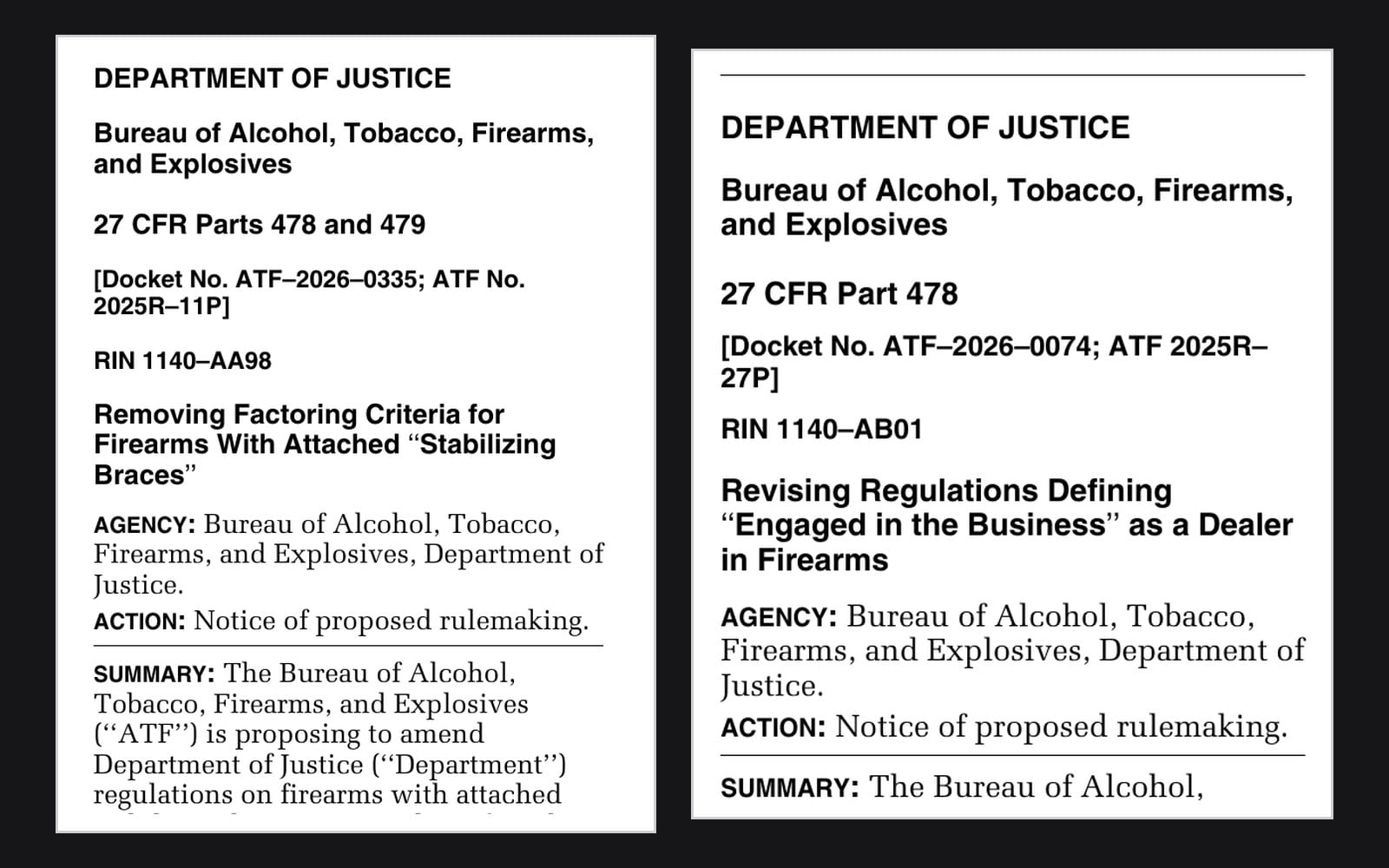
Comment periods closed August 4 for the May 6 batch and August 6 for the May 8 batch. ATF has published other rules since, including a final rule on relief from firearms disabilities on August 20 and a set of explosives rules on September 25, but nothing that finalizes any of the 27. One of the seven final rules, the eZ Check verification rule, was withdrawn on July 6.
Why a proposal isn’t enough: A proposed rule changes nothing by itself. To finish one, the agency has to read the comments, answer the significant ones, write the final text and the legal reasoning behind it, and publish it knowing someone will probably sue. That’s lawyers’ work, and the chief counsel’s office is where it lands.
How much that matters depends on the rule. Brace owners aren’t waiting on this one: the proposal’s own summary says courts have “enjoined, stayed, or vacated the final rule, which has rarely been in effect.” The exposure is bigger on the NFA side, where suppressor and SBR owners are relying on an October 9 letter, a guidance document that a future letter can reverse. A final rule takes another full rulemaking to undo.

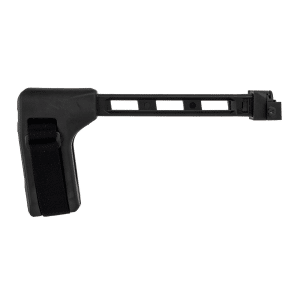
SB Tactical FS1913 Folding Pistol Brace (1913 rail interface)
The side-folding brace for pistols with a Picatinny rear interface, about $160 at every retailer we checked. The 2023 brace rule is already blocked in court and ATF has proposed stripping its criteria from the regulations, but that proposal isn’t final, and state law still applies, so check yours before you buy.
The fair objection: The package was never one lawyer’s project. It was conducted under Executive Order 14206, announced with the acting attorney general, and signed by ATF Director Robert Cekada, who is still in the job. If the people setting the direction stay put, the reasonable bet is that the direction stays put too.
That’s fair, and it’s the best reason to think the package survives. But direction isn’t the bottleneck. Three months after the comment periods closed, the agency hasn’t produced a single final rule out of the 27, and the official who was supposed to carry them across the line is now on leave with no named replacement.
Our takeaway: The rollback has been announced, proposed and commented on, but it isn’t finished. Until final rules appear in the Federal Register, the 27 proposals ATF chief counsel Robert Leider oversaw are drafts, and a later administration can drop a draft without writing a new rule to do it.
What to watch: a named successor, the first of the 27 to show up as a final rule, and Leider’s formal exit in January.
Which of the 27 proposals do you most want ATF to finish? Tell us in the comments.
Get the gun-law stories that matter in your inbox. Sign up for the CAT Outdoors newsletter.
Sources: ATF news release, Oct. 30, 2026; CBS News, Oct. 30, 2026; DOJ and ATF announcement, Apr. 29, 2026; Federal Register: 91 FR 24453, 91 FR 24424, 91 FR 24471, 91 FR 25243, 91 FR 25201, 91 FR 40879, 91 FR 54054. Featured photo: ajay_suresh, CC BY 4.0, via Wikimedia Commons (ATF National Headquarters).

Justin Trump is the managing editor and owner of CAT Outdoors. The son of a Vietnam veteran, he’s a Certified Glock Armorer, an avid gun enthusiast and 2A advocate. He holds two firearm patents for the CAT M4 and Talon tools. When not managing CAT Outdoors, he enjoys spending time with his family and friends, rooting for Michigan sports teams, and serving his church.