The Supreme Court Just Left Your Gun Waiting Period Up to Your Zip Code
The justices turned away Beckwith v. Frey without a word, leaving Maine’s 72-hour wait in force and a First Circuit vs. Tenth Circuit split on waiting periods unresolved. Here is what the ruling below held and what it means for buyers.
Maine’s 72-hour waiting period on gun purchases will stay in force after the Supreme Court declined on Monday to hear Beckwith v. Frey, No. 26-258. The denial came on the regular order list, with no opinion and no justice noting a dissent. It leaves in place an April ruling from the First Circuit that a three-day wait never reaches the Second Amendment at all, and it leaves a direct conflict with the Tenth Circuit, which struck down New Mexico’s seven-day wait last year, sitting unresolved.
What the law does: Maine passed the waiting period in 2024, six months after the Lewiston shooting that killed 18 people. Under 25 M.R.S. §2016, a seller may not deliver a firearm “sooner than 72 hours after the agreement,” even when the buyer’s background check clears in minutes. The penalty falls on the seller, a civil fine of $200 to $500 for a first violation. Police, corrections officers, dealers, family transfers and curios are exempt. There is no exception for a buyer with a carry permit, and none for a buyer who is being threatened. The law took effect August 9, 2024, without Gov. Janet Mills’ signature.
Who sued: Andrea Beckwith, a domestic-violence survivor who runs a training school for other survivors, along with three Maine gun shops and a buyer named Nancy Coshow. Their petition describes what the law looks like at the counter. Days after it took effect, a woman came into A&G Shooting in Fairfield because a stalker was harassing her at home and local police had told her to buy a gun. She passed her background check instantly and paid. The owner had to send her home unarmed, and because the store was closed Sunday and Monday, she picked the gun up on Tuesday. A week later a couple who had just been burglarized at midnight went through the same wait.

U.S. District Judge Lance Walker blocked the law in February 2025. A waiting period, he wrote, “impairs conduct presumptively covered by the Second Amendment,” and “any interpretation to the contrary requires the type of interpretative jui jitsu that would make Kafka blush.”
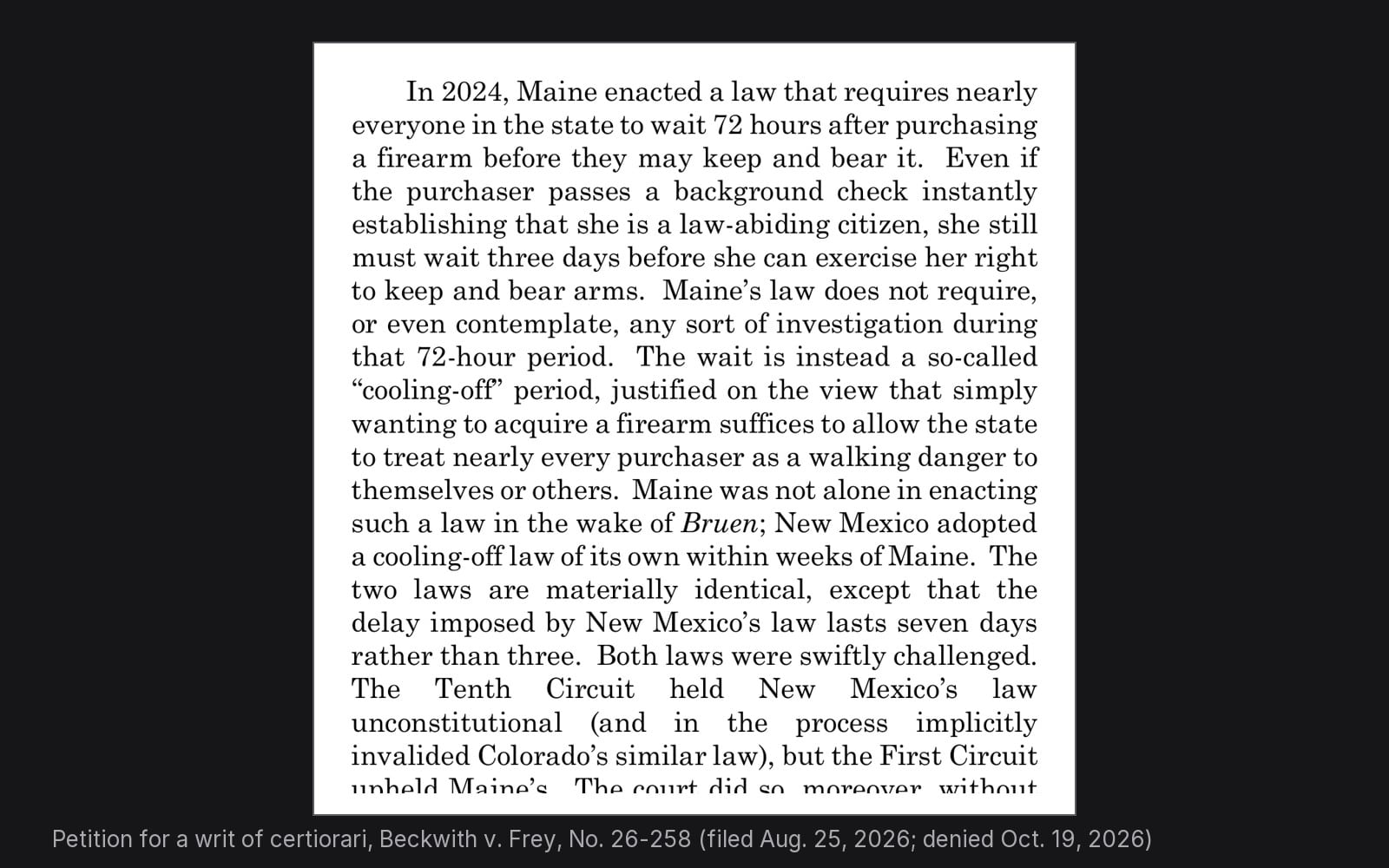
What the First Circuit did with that: It reversed him without ever asking whether a waiting period fits the nation’s history of gun regulation, the question Bruen requires once a law touches the right. The panel held that “laws regulating the purchase or acquisition of firearms do not target conduct covered by the Second Amendment’s ‘plain text,'” because buying a gun happens before keeping or bearing it. The law “briefly delays acquisitions of firearms from commercial dealers,” the court wrote, and that “likely renders the Act a burden on, but not an infringement of, the Second Amendment right to keep and bear arms.” Under that rule, a law on acquiring a gun is presumptively lawful unless the challenger proves it is being used for “abusive” ends. Maine’s three days, the court said, is “no longer than federal law already permits” for a background check.
The other circuit: Eight months earlier, the Tenth Circuit had looked at New Mexico’s seven-day wait and reached the opposite conclusion in Ortega v. Grisham. “Cooling-off periods infringe on the Second Amendment by preventing the lawful acquisition of firearms,” Judge Timothy Tymkovich wrote. A waiting period “is not a ‘condition’ on a sale any more than the price of a firearm is. The sale happens regardless, and the waiting period is just an artificial delay on possession.” The court rejected New Mexico’s “attempt to declare the entire population of New Mexico presumptively dangerous to themselves or others only because they want to acquire firearms,” and ordered the law enjoined. The full Tenth Circuit declined to rehear the case in December.
So the record going into Monday was clean. Two states passed nearly identical laws within a month of each other. One appeals court struck its law under Bruen; the other upheld its law by holding Bruen doesn’t apply. The First Circuit’s own opinion acknowledged the conflict. Twenty-five states, led by Montana, filed a brief asking the Court to resolve it, and the NRA and Second Amendment Foundation filed another. Maine’s attorney general didn’t bother to respond to the petition, and no justice asked him to. That is usually the sign that the four votes needed to hear a case were never there.
Liking this one? Add CAT Outdoors as a preferred source on Google and stories like it show up first.
Add on Google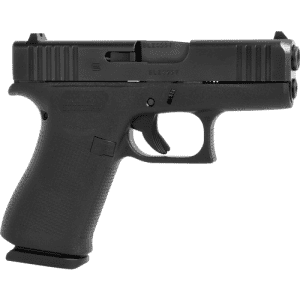
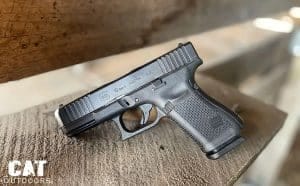
Glock 43X (9mm, 3.41-inch, 10+1)
The slim 9mm that survivors in Beckwith's classes most often walk out with. In 37 states you take it home the day your check clears; in Maine you come back Tuesday. Our Glock 43X review covers why it carries so well.
What the denial means, and what it doesn’t: It is not a ruling that waiting periods are constitutional. The Court turned away an appeal of a preliminary injunction, the earliest stage of a case, and the First Circuit’s decision binds only Maine, Massachusetts, New Hampshire, Rhode Island and Puerto Rico. The lawsuit now returns to Judge Walker, where it had been paused since April waiting on this petition. Nacole Palmer of the Maine Gun Safety Coalition told the Sun Journal the law “has already worked to save lives from preventable gun deaths in our state.” Joshua Raines of Gun Owners of Maine said the denial “wasn’t a surprise” because the case “is only an injunction.”
What it does mean is that the split stays. Thirteen states and the District of Columbia impose a waiting period, from three days in Maine, Florida, Colorado, Illinois and Vermont to 30 days in Minnesota. In the Tenth Circuit’s territory, Colorado’s three-day law is now on borrowed time under Ortega. In Florida, the state’s own attorney general conceded in a June court filing that its 1991 three-day wait is unconstitutional, according to the petition. The Justice Department sued Minnesota over its 30-day wait last month. The federal executive branch, the Tenth Circuit and Florida’s top lawyer are all on one side of this question, the First Circuit is on the other, and the Supreme Court has now declined to settle it twice, the first time in 2018 over California’s 10-day wait, when only Justice Thomas dissented. This time no one did.

What to watch: The Maine case proceeds to a full record and a final judgment, which is the vehicle the Court may be waiting for. The Supreme Court hears the two rifle-ban cases on December 2, and how it defines the “plain text” step there will decide whether the First Circuit’s approach to acquisition laws survives. And the Colorado law is the next waiting period likely to fall, in a circuit where the ruling striking New Mexico’s is already binding.
Bottom line: If you buy a gun in Maine, you wait three days, the Supreme Court has no interest in changing that right now, and whether a buyer two time zones west waits at all depends on which appeals court sits over her state.
Should a passed background check end the wait? Tell us in the comments.
The Maine case goes back to the district court and Colorado’s law is next in line. Sign up for the CAT Outdoors newsletter and we’ll send you both when they move.
Sources: Supreme Court order list, Oct. 19, 2026 and docket No. 26-258; Petition for a writ of certiorari, Beckwith v. Frey; Beckwith v. Frey, No. 25-1160 (1st Cir. Apr. 3, 2026); Ortega v. Grisham, No. 24-2121 (10th Cir. Aug. 19, 2025) and order denying rehearing en banc (Dec. 22, 2025); Brief of Montana and 24 States; Brief of the Second Amendment Foundation and NRA; 25 M.R.S. §2016; D. Me. docket 1:24-cv-00384; Sun Journal. Courthouse photo: Everbruin via Wikimedia Commons, CC BY-SA 4.0. Other photos: CAT Outdoors.

Justin Trump is the managing editor and owner of CAT Outdoors. The son of a Vietnam veteran, he’s a Certified Glock Armorer, an avid gun enthusiast and 2A advocate. He holds two firearm patents for the CAT M4 and Talon tools. When not managing CAT Outdoors, he enjoys spending time with his family and friends, rooting for Michigan sports teams, and serving his church.