The ATF’s Defense of Its 1.4 Billion Gun Records Is That It Chose Not to Search Them
ATF confirmed to Congress it holds 1.41 billion pages of out-of-business dealer records, nine in ten of them digital. Eight senators and Rep. Michael Cloud now want the Justice Department to investigate and destroy them.

The ATF gun registry debate finally has an official number attached to it: 1,414,088,513. That is how many pages of out-of-business dealer records the Bureau of Alcohol, Tobacco, Firearms and Explosives told Congress it holds, and 92 percent of them already exist as digital images on federal systems at the National Tracing Center in Martinsburg, West Virginia.
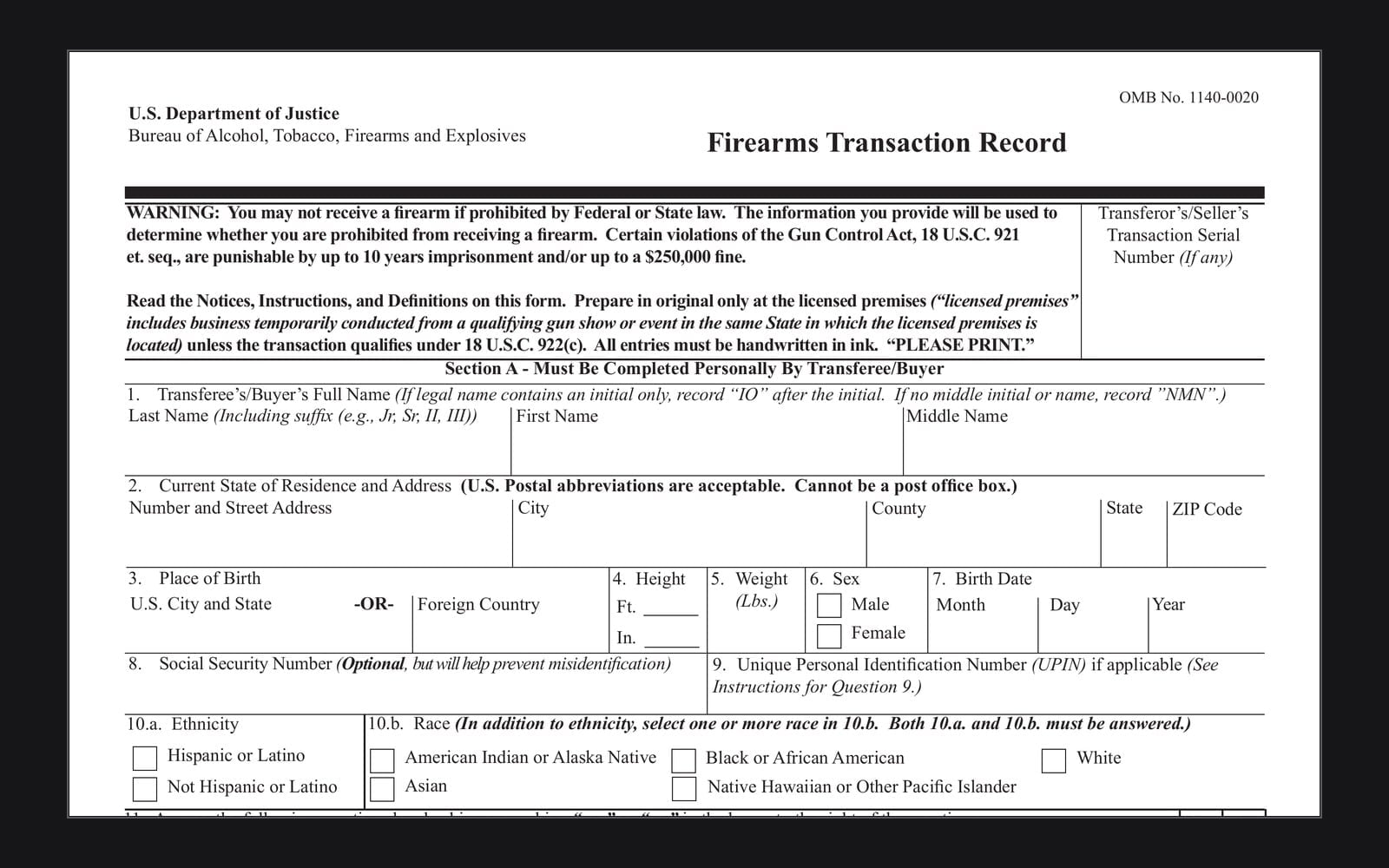
If you ever bought a gun from a shop that later closed, your Form 4473 is in that pile: name, address, date of birth, and the make, model and serial number of what you bought. Federal law says the government may not keep a registry of gun owners. The bureau’s position is that this isn’t one, because it has chosen not to make the images searchable by name.
How the number surfaced: Rep. Michael Cloud (R-Texas) has been trying to get a current count out of the bureau since February 2025, when 18 House members first asked. That request sat unanswered for more than 290 days, and in a February 3 follow-up letter Cloud and 26 colleagues demanded a total.
The bureau’s written answer, which Gun Owners of America posted this week, put the figure at 1,414,088,513 pages and images, and described the files as static, non-searchable images indexed by the closed dealer’s federal firearms license number. In the letter’s words, the bureau “does not utilize optical character recognition or similar technologies to capture purchaser names or other personally identifiable information.”
Then the letters started: On September 24, Sen. Jim Risch (R-Idaho) and seven Republican colleagues (Mike Crapo, Marsha Blackburn, Ted Budd, Tom Cotton, Steve Daines, Cindy Hyde-Smith and Pete Ricketts) sent Attorney General Todd Blanche a three-page letter asking for “an immediate, independent investigation of ATF’s Martinsburg database,” the “prompt and verifiable destruction” of any records held in violation of federal law, and a final retention rule that complies with it. “American citizens are entitled to exercise their Second Amendment rights without the federal government compiling searchable lists of their names and firearms,” the senators wrote.
Five days later, Cloud sent President Trump and Vice President Vance a letter with the same three asks, according to Just the News, which obtained it.
What the law actually says: The Firearms Owners’ Protection Act of 1986, codified at 18 U.S.C. § 926(a), bars any rule that would require dealer records to be “recorded at or transferred to a facility owned, managed, or controlled by the United States,” or that would establish “any system of registration of firearms, firearms owners, or firearms transactions or dispositions.” On top of that, Congress has attached a spending rider to the bureau’s budget every year since 1979 and made it permanent in the fiscal 2012 appropriations act: no funds “for salaries or administrative expenses in connection with consolidating or centralizing, within the Department of Justice, the records, or any portion thereof, of acquisition and disposition of firearms maintained by federal firearms licensees.”
A third rider, on the books since the 1997 appropriations act and carried into the permanent language, forbids using funds to electronically retrieve out-of-business records “by name or personal identification code.” The bureau’s answer to all three is that a database with the name search turned off is not a registry.
The growth curve, in the bureau’s own numbers: In a 2022 FOIA response, ATF said it held 461,235,863 pages of out-of-business records as of September 25, 2020. In late 2021 it told Cloud the count was 920,664,765, with 865,787,086 of them already digitized. In its own proposed rule published May 6, the bureau reported “approximately 1.3 billion images of records” and an intake of “approximately 6.8 million OOB records per month.”
Now it’s 1.41 billion, growing by roughly 80 million pages a year, and the bureau estimates 500 million of the images it holds are more than 20 years old. One caveat: ATF counts pages and images, not transactions, so nobody outside Martinsburg knows how many individual buyers the pile represents.
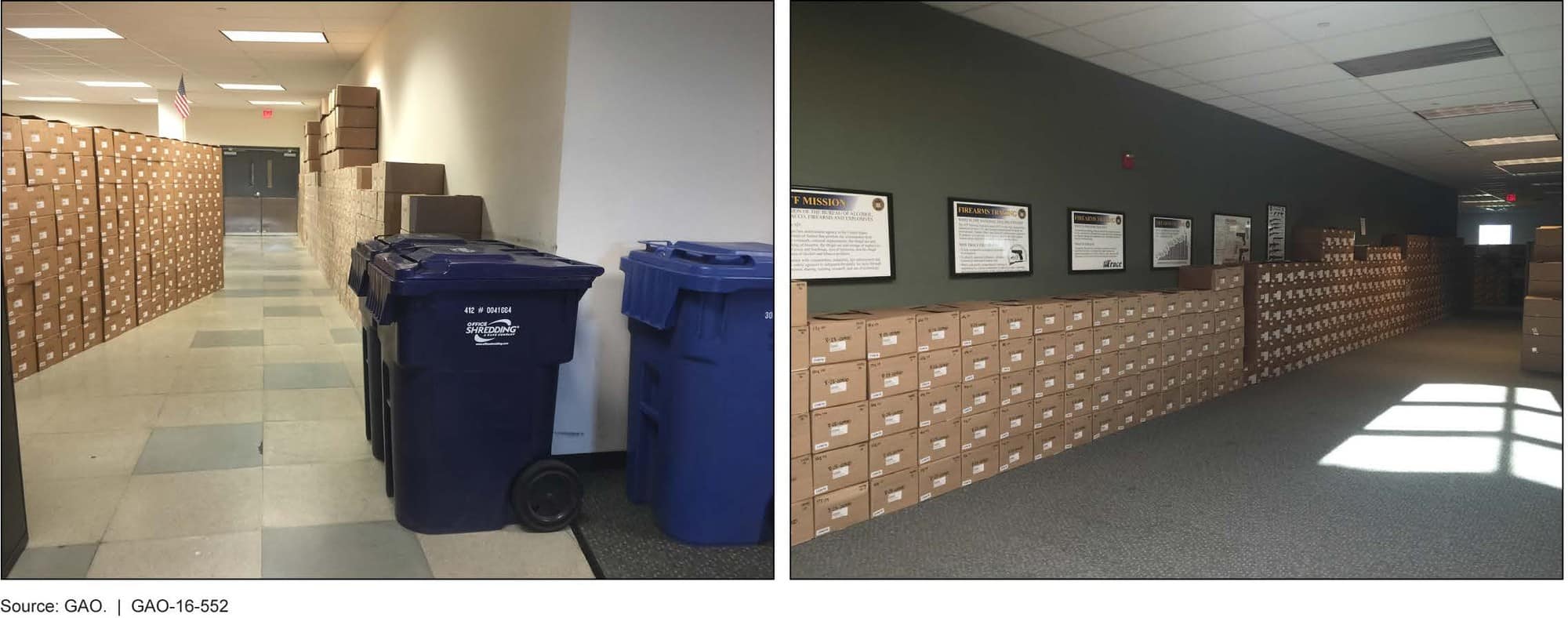
Can’t search it, or won’t: The same FOIA response explains the pipeline: paper records arriving from closed dealers are scanned on “high-speed IBML scanners” into TIFF images, converted to PDF, and “stored as images (with no optical character recognition software).” The files “cannot be searched using free-form text queries” and are “indexed (tagged) by FFL number.”
The senators’ letter recounts what former ATF Director Steven Dettelbach told Congress about the setup: the bureau is, “as far as I know the only customer that pays additional money to have search function taken out of Adobe Acrobat.” A search function that has been switched off is a setting, not a safeguard, and the distance between “can’t” and “don’t” is a purchase order.
Want the next one the day it lands? Add CAT Outdoors as a preferred source on Google and our coverage shows up first.
Add on GoogleThe compliance record: GAO-16-552, published June 30, 2016, audited the bureau against these exact rules and found that ATF kept the records of closed Access 2000 dealers “on a single server” at the National Tracing Center from as early as late 2000 through mid-2012, roughly 20 million records by the agency’s own estimate, and concluded that violated the consolidation rider.
A separate 2007 to 2009 program along the southwest border collected dealer firearms data with no link to any investigation; ATF’s own Chief Counsel called it unlawful and the program was cancelled in October 2009. Both data sets sat until March 2016, while GAO was auditing, and GAO concluded both violations triggered the Antideficiency Act, which requires a report to the President and Congress.
The same audit found a defect in eTrace 4.0 that let any ATF agent view or print up to 500 purchaser-name records at a time, a bug ATF flagged to its contractor in December 2008 and shipped anyway, with “no audit logs or access listings” to show how often anyone used it. Twice in one audit the bureau was found holding data the law told it not to hold, and both times the cleanup came after the auditors arrived.
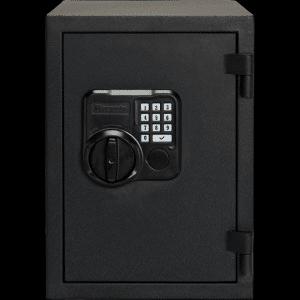
Hornady Fireproof Keypad Safe (2 handguns, fire-rated)
The only copy of your purchase paperwork you control is the one you keep. Hornady's fireproof keypad box holds two handguns and the folder with your bills of sale and serial numbers, and it starts around $165 at BattleHawk.
Now add the breach: On August 26, the Qilin ransomware group listed ATF on its leak site, and the bureau confirmed a cyber “major incident” on what it called a standalone system the same day, per BleepingComputer. On August 31 the gang posted roughly 6.3 gigabytes of investigation files, then pulled the links a day later, per Hackread.
ATF identified the system as a legacy standalone platform used for court-authorized wiretaps and said it “cannot confirm the authenticity, nature, or extent of the published material.” There is no evidence the dealer-records archive was touched, and by the bureau’s account the two systems don’t connect. Texas Gun Rights put it in one sentence on September 1: “The government cannot lose information it never collected in the first place.”
The bureau’s best argument: Old records get used. In the May proposed rule, ATF reports that in 2011, 39 percent of traces run on out-of-business records relied on files more than 20 years old, and in 2024 the figure was still about 21 percent. Its response to Cloud, per Just the News, pointed to the rifle from the July 2024 Butler attack, traced in 30 minutes through a dealer that had closed 11 years earlier.
That is a real argument. Tracing is exactly why dealers keep their books for 20 years and why closed dealers send them in; Congress wrote both requirements. What Congress did not write is permission to pool every one of those books in one building, digitize them, and index them, and it said so in 1986 and in every appropriations bill since.
The bureau’s own rule concedes the problem in its own words: a shorter retention period would “significantly reduce the volume of records retained by ATF and alleviate concerns that ATF might have established or will establish a registry of firearms, firearms owners, or firearms transactions.” The bureau would not be writing a rule to alleviate that concern if it considered the concern baseless.
The takeaway: One building, one index, 1.4 billion pages, and one disabled search field standing between that and a registry. Whether to call it a registry is a semantic fight. Whether it complies with 18 U.S.C. § 926(a) and the riders is a legal question, and as of this week the Attorney General has been formally asked to answer it.
Three things to watch: whether Blanche orders the investigation the senators requested, whether the final retention rule (RIN 1140-AA95, comments closed August 4) lands at 20 years or 30, and whether the House’s defund language for the archive survives the next appropriations cycle. The same bureau told dealers last week a revised Form 4473 is coming after the holidays, so the form that feeds this archive is about to change too.
Do 1.4 billion pages with the search turned off count as a registry? Tell us in the comments.
Want the Attorney General’s answer the day it lands? Sign up for the CAT Outdoors newsletter below. And if the story has you thinking about where your own paperwork lives, our Best Gun Safes guide covers which fire ratings actually matter for documents.
Sources: Senate letter to Attorney General Blanche (Sept. 24, 2026) and Sen. Risch’s release; Rep. Cloud’s Feb. 3, 2026 letter to ATF; Sen. Cornyn’s March 9, 2026 questions to ATF; ATF proposed rule, Firearm Records Retention Periods, 91 FR 24413 (May 6, 2026); ATF FOIA response 2020-0802 (March 2, 2022); GAO-16-552 (June 30, 2016); 18 U.S.C. § 926; Just the News (Sept. 29, 2026); BleepingComputer; Hackread; Texas Gun Rights. Featured photo: ATF national headquarters, Washington, D.C., by ajay_suresh, CC BY 4.0.

Justin Trump is the managing editor and owner of CAT Outdoors. The son of a Vietnam veteran, he’s a Certified Glock Armorer, an avid gun enthusiast and 2A advocate. He holds two firearm patents for the CAT M4 and Talon tools. When not managing CAT Outdoors, he enjoys spending time with his family and friends, rooting for Michigan sports teams, and serving his church.