
Buying a Handgun From an Out-of-State Dealer Has Been Illegal Since 1968. The Fifth Circuit Just Struck That Ban Down.
A 2-1 Fifth Circuit panel struck down the 1968 rules that force out-of-state handgun buyers through a second dealer and a transfer fee. Here is who the ruling covers now, and the circuit split it just created.
The interstate handgun purchase ban is dead in the Fifth Circuit. On September 18, a 2-1 panel in Elite Precision v. ATF struck down the federal provisions that have made it a crime since 1968 to buy a handgun directly from a licensed dealer in another state, holding that the whole scheme violates the Second Amendment.
If you’ve ever bought a handgun from an out-of-state shop or an online retailer, you know the ritual. The gun can’t come home with you or ship to your door; it goes to a second licensed dealer in your home state, who charges you $30 to $40 to hand over the same Form 4473 you could have filled out at the first counter.
That detour was never a safety measure anyone could explain. The buyer passes the same background check either way; the only things the second dealer adds are a fee, a delay, and another trip across town.
What the law said: Three provisions of the Gun Control Act of 1968 operate together, and the court treated them as a single scheme it simply called the Ban. Section 922(a)(3) makes it unlawful to bring home a firearm you obtained in another state, section 922(a)(5) bars unlicensed sales across state lines, and section 922(b)(3) forbids dealers from selling to out-of-state residents. Congress wrote an exception into that last one for rifles and shotguns, which is why you can buy a long gun over the counter anywhere in the country but not a pistol.
Read the three together and the message is plain: when it comes to handguns, your money is only good in the state printed on your driver’s license.
Who sued: Elite Precision Customs, a Texas dealer that told the court it would sell handguns to nonresidents if the law allowed it, joined two individual buyers, Tim Herron of New Mexico and Freddie Blish of Arizona, and the Firearms Policy Coalition. Herron attested that intermediary dealers typically charge him $30 to $40 per transfer and delay every purchase. A federal district judge in Fort Worth sided with the government and dismissed the case; the panel didn’t just reverse, it rendered judgment for the plaintiffs outright rather than sending the case back for another round.
How the court got there: Judge Jerry E. Smith, writing for himself and Judge Kurt Engelhardt, started from the Fifth Circuit’s 2025 holding in Reese v. ATF that the right to “keep and bear arms” surely implies the right to purchase them. Once buying a gun sits inside the Second Amendment’s text, Bruen puts the burden on the government to prove the restriction fits the nation’s historical tradition of firearms regulation.
The government offered eighteen colonial and founding-era laws. The panel walked through every one and found nothing resembling a tradition of stopping Americans from buying arms in a neighboring state. Exhibit eight was a New York law from 1652, passed when the colony was still Dutch-ruled New Amsterdam, and the opinion notes its full text “has been lost to history.”
Sit with that for a second. A law nobody alive can read, from a colony that predates the Second Amendment by well over a century, was part of the government’s best case for a felony statute it enforces today. The panel gave it the weight it deserved, which was none.
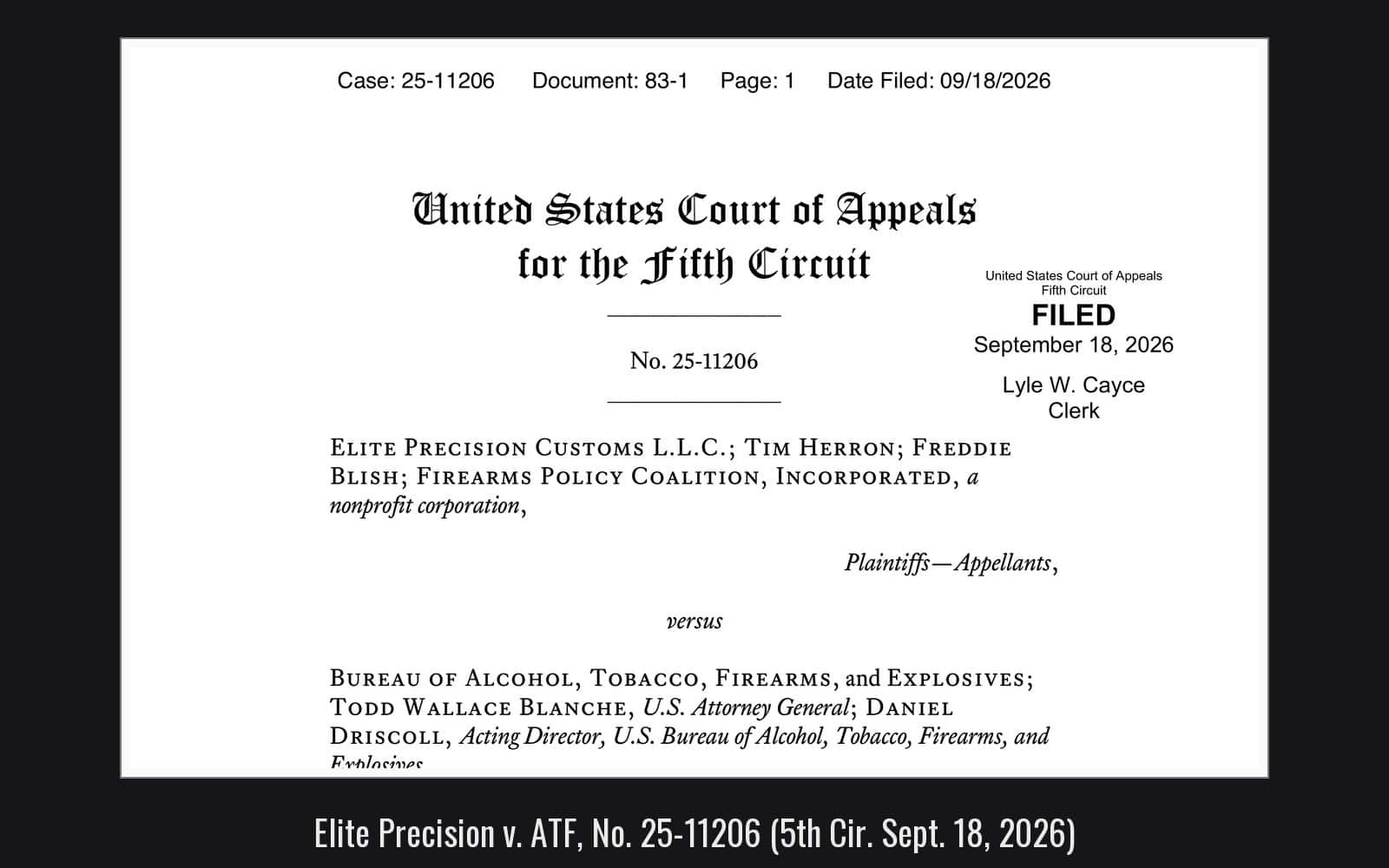
“The Ban sullies the plain text of the Second Amendment and is inconsistent with the nation’s tradition of firearms regulation,” Smith wrote. Judge Catharina Haynes dissented in three sentences, saying she agreed with the district court that the provisions are constitutional.
Glock 19 Gen 5 (9mm, 15+1)
The G19 is the handgun more Americans cross-shop than any other, and it’s $539 flat at all three retailers below. Wherever you buy, it still transfers through your local FFL until this ruling settles.
What changes at the counter: Be careful with the word “changes,” at least this week. The ruling covers the Fifth Circuit, which is Texas, Louisiana, and Mississippi, and it isn’t yet clear what interim guidance ATF will give dealers or exactly when the judgment takes effect. If you run an FFL in those states, talk to your compliance attorney before you sell a single handgun to a nonresident. If you’re a buyer anywhere else, nothing has changed for you at all; the ban still stands in the other 47 states until a higher court or Congress says otherwise.
The Second Circuit problem: Here’s the strongest objection, and it deserves a straight answer. The Second Circuit upheld this exact scheme last year in United States v. Vereen, and the Supreme Court declined to review that decision earlier this year. Doesn’t that mean the justices are content to leave the ban alone? It did, right up until September 18. When Vereen came up, every circuit to rule had agreed the ban was fine, and the Court rarely spends a slot on a question the lower courts have settled. Now two circuits sit on opposite sides of the constitutionality of a federal statute, and that’s the precise situation certiorari exists to resolve.
What Washington does next: The government can ask the full Fifth Circuit to rehear the case, petition the Supreme Court, or do nothing. Don’t rule out nothing. Two weeks ago this same Justice Department let the deadline pass to appeal the Texas ruling that ended NFA registration, on the President’s explicit instruction. If it swallows this loss the same way, the interstate handgun purchase ban dies in three states and survives everywhere else, and groups like FPC, whose president Brandon Combs called the ruling “a massive victory for the People,” will carry the same argument into the next circuit.
Bottom line: The 1968 Congress built a two-tier gun market where rifles cross state lines and handguns don’t, the government defended it with a stack of laws that included one nobody can read, and the first appeals court to run the question honestly through Bruen threw it out. What happens next depends on whether the DOJ would rather bury this loss quietly or gamble it in front of a Supreme Court that now has a genuine circuit split staring at it.
Watch the docket for a rehearing petition or a cert filing, and watch ATF for any guidance to Fifth Circuit dealers in the meantime.
What do you think of the ruling? Drop your take in the comments.
If you’re shopping for your next handgun, transfer fee or not, check out today’s verified gun deals.
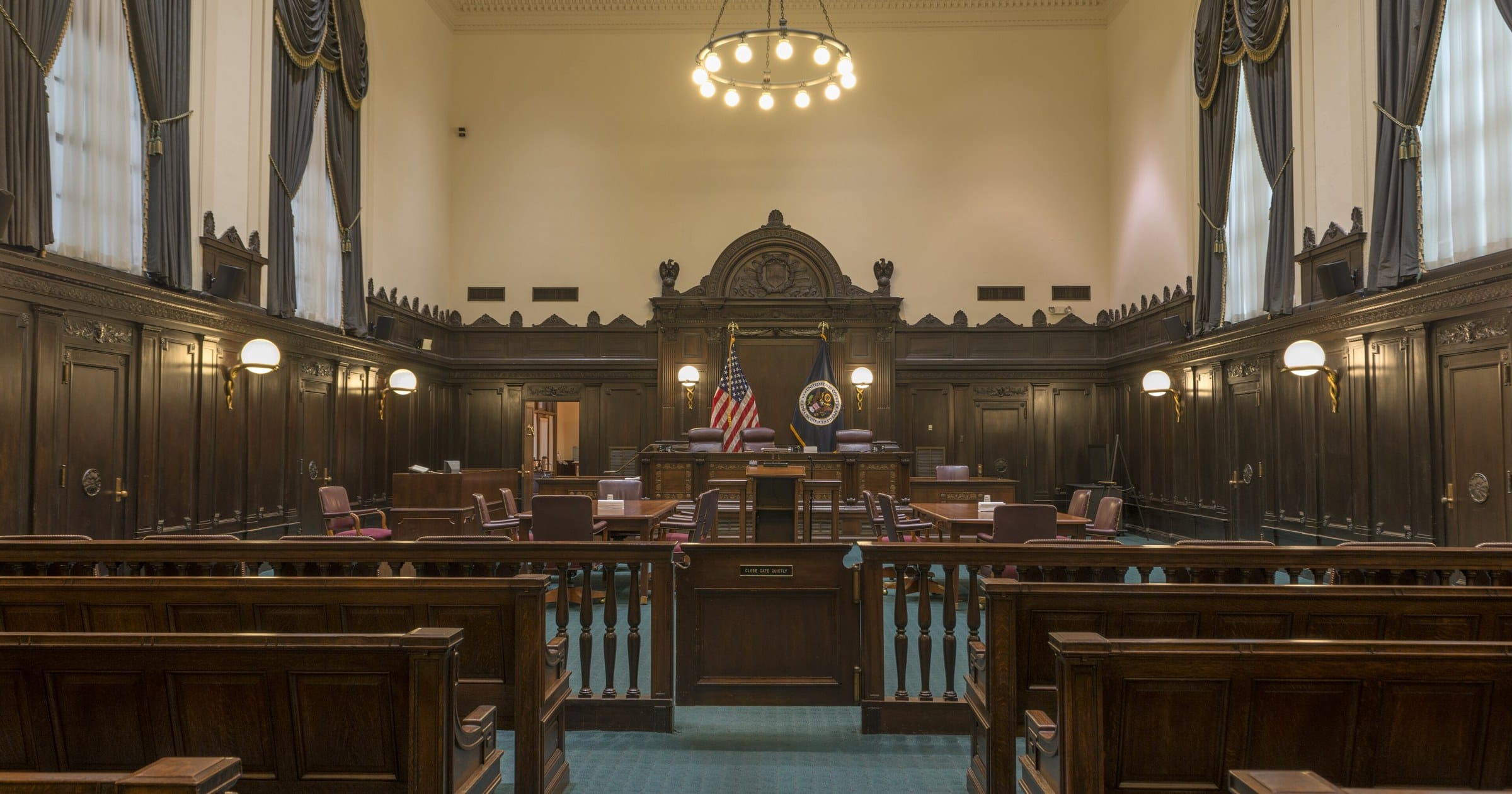
Sources: Fifth Circuit opinion, Elite Precision v. ATF, No. 25-11206 (Sept. 18, 2026); 18 U.S.C. § 922; Firearms Policy Coalition statement. Featured photo: Fifth Circuit courtroom, John Minor Wisdom U.S. Court of Appeals Building, Carol M. Highsmith, Library of Congress, public domain.

Justin Trump is the managing editor and owner of CAT Outdoors. The son of a Vietnam veteran, he’s a Certified Glock Armorer, an avid gun enthusiast and 2A advocate. He holds two firearm patents for the CAT M4 and Talon tools. When not managing CAT Outdoors, he enjoys spending time with his family and friends, rooting for Michigan sports teams, and serving his church.