
The DOJ Just Sued the Maryland County Where Your Own Backyard Can Be a Gun-Free Zone
The Justice Department says Bill 23-26’s exclusion zones swallow more than a quarter of Montgomery County, and it wants a federal judge to stop enforcement now.
The Montgomery County carry ban just drew the biggest plaintiff in American law. The Justice Department sued the Maryland county Monday in federal court (Case 8:26-cv-03025, District of Maryland), naming the county, its police department, its sheriff’s office, and Sheriff Maxwell C. Uy, and alleging that enforcing the ban is a pattern of unconstitutional policing under 34 U.S.C. § 12601.
The law in question is Bill 23-26. It bans selling, transferring, possessing, or transporting handguns, rifles, ammunition, and undefined “major components” at places of public assembly, a list that covers parks, places of worship, schools, libraries, recreational facilities, fairgrounds, and government buildings. It applies even if you hold a valid Maryland carry permit, and even if the property owner says yes.
Then it adds a 100-yard buffer around every one of those places.
The map problem: By the county’s own GIS data, quoted in the complaint, Montgomery County holds 605 houses of worship, 693 public parks, 42 recreation centers, 13 Metro stations, and 11 MARC commuter-rail stops. Draw a 100-yard circle around each one and see what’s left. A mapping analysis cited in the complaint counts more than 10,000 parcels and over 7,900 acres inside the exclusion zone, over 26 percent of the county, before a single buffer is drawn.
The DOJ’s complaint puts it in two sentences: “Bill 23-26 is breathtaking in scope. For all practical purposes, it prevents law-abiding citizens from carrying firearms as they go about their daily lives.”
The backyard clause: The law does contain an exception for firearms and ammunition kept “in the person’s own home.” The complaint walks through what that leaves out. Live within 100 yards of a park and the exception ends at your back door. And because the carve-out never mentions “major components,” a term the ordinance never defines, the DOJ reads it to make a spare magazine at home a violation, citing Duncan v. Bonta for the point that the right to bear arms covers the parts a firearm needs to run.
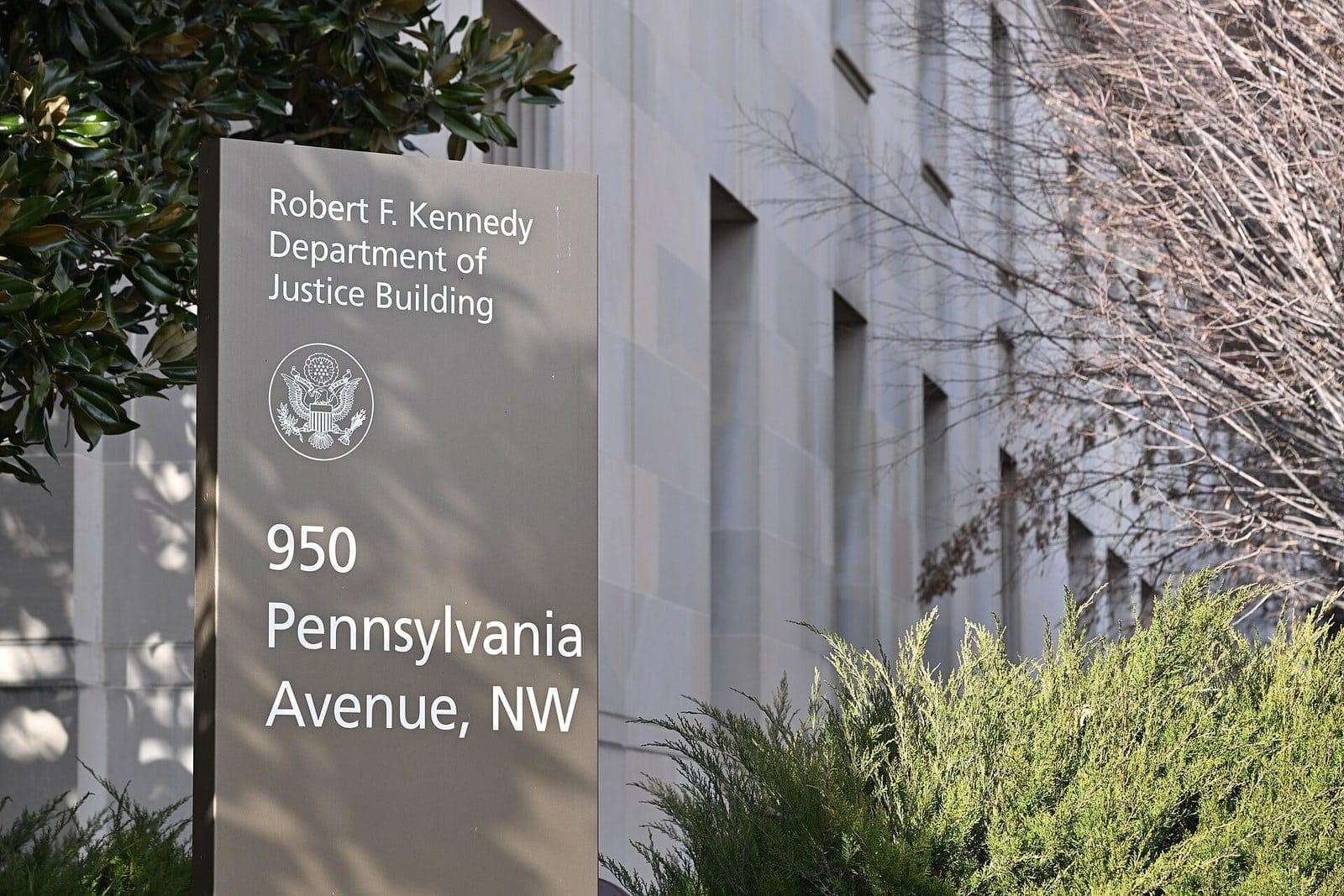
The legal hook: Section 12601 is the pattern-or-practice statute, the tool the DOJ has historically used to put troubled police departments under consent decrees. Here it’s pointed at a police department for enforcing a gun ordinance. “The Second Amendment does not allow local governments to ban law-abiding citizens from carrying firearms in public places as they go about their daily lives,” said Assistant Attorney General Harmeet K. Dhillon, whose Civil Rights Division now runs a dedicated Second Amendment Section.
The precedent: In June, the Supreme Court decided Wolford v. Lopez, striking Hawaii’s rule that made every private business a no-carry zone by default. That regime, the Court wrote, “hobbles what the Second Amendment protects: the right of Americans to carry arms for self-defense as they go about their daily lives.” The DOJ argues Montgomery County built something stricter than what fell in Wolford: here, even the property owner’s consent can’t save you.
One honest wrinkle: the Fourth Circuit upheld Maryland’s state-level park carry restrictions in January in Kipke v. Moore, and this case lands in that same circuit. The DOJ’s answer is to lean on Judge G. Steven Agee’s Kipke dissent, argue the decision was wrong, and note that a cert petition asking the Supreme Court to review it is already on file.
Three suits in eight days: Maryland Shall Issue and five carry-permit holders sued over Bill 23-26 on July 27 in Barreto v. Montgomery County. The Silver Spring Jewish Center filed its own challenge on July 30. The DOJ arrived August 3. Same ordinance, three sets of federal plaintiffs, and the DOJ’s complaint openly borrows the mapping evidence developed in Barreto. Maryland’s gun laws are collecting federal courtrooms this summer.
And the DOJ didn’t just file a complaint. It moved for a preliminary injunction the same day, asking Judge Theodore Chuang to halt enforcement while the case plays out.
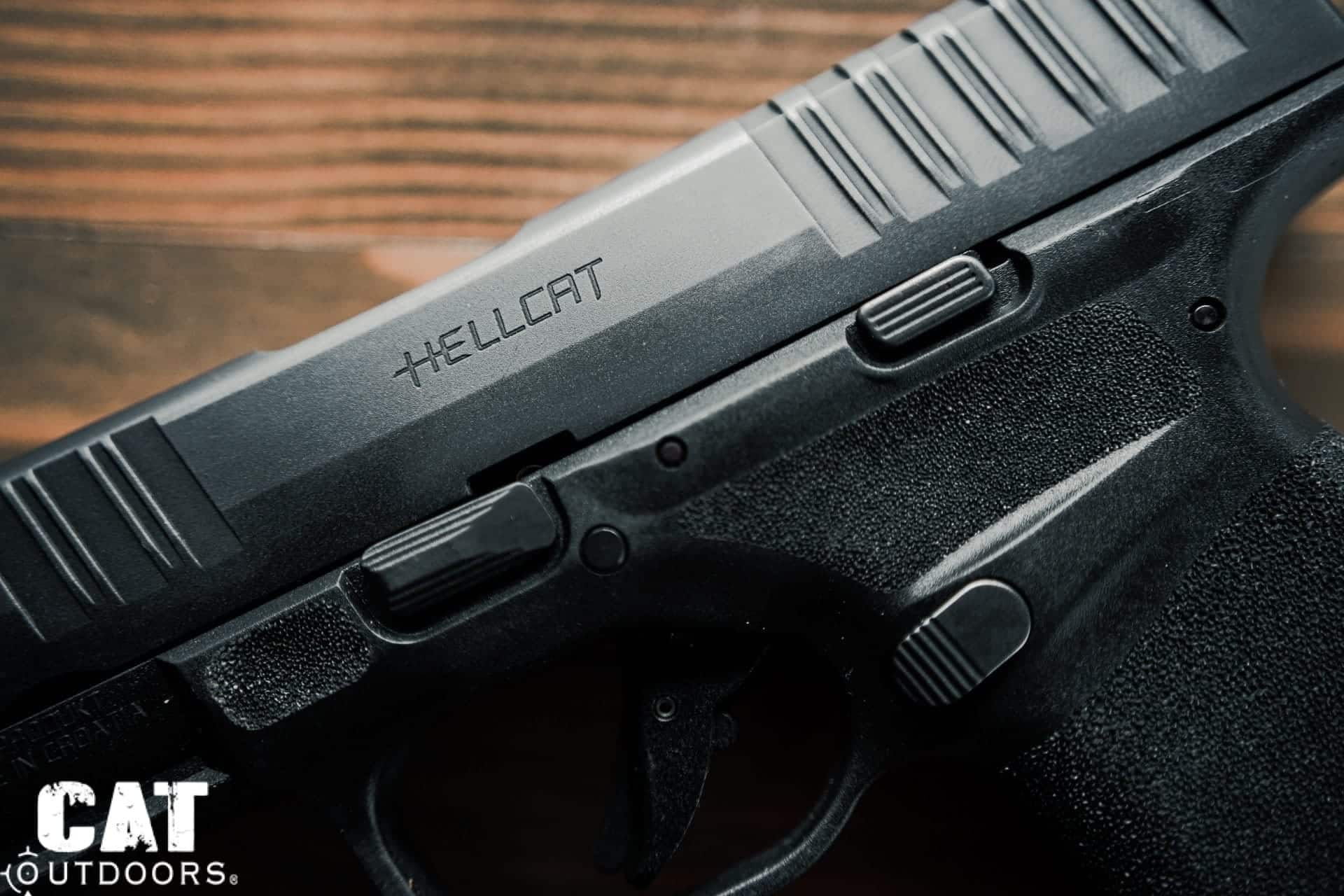
Springfield Hellcat 9mm Micro-Compact
The class of pistol Bill 23-26 zones out of daily life. Street prices are all over the map right now: police trade-ins under $380 at Sportsman's, used and optic-ready guns in the mid-$400s. Check condition notes before you buy.
What to watch: the county’s response, the injunction briefing, and whether other restrictive jurisdictions quietly shelve their own copies of this ordinance while the DOJ is in a suing mood.
Montgomery County put a quarter of itself off-limits and called it public safety. The federal government showed up with the county’s own map and a tape measure.
Does the county fold or fight the DOJ? Tell us in the comments.
Carrying compact is still legal in most of Maryland. Our Glock 43X review covers the pistol we’d trust for it.
Sources: Justice Department press release; DOJ complaint, United States v. Montgomery County (PDF); Wolford v. Lopez, Supreme Court opinion (PDF); Kipke v. Moore, Fourth Circuit opinion (PDF); Barreto v. Montgomery County docket.

Justin Trump is the managing editor and owner of CAT Outdoors. The son of a Vietnam veteran, he’s a Certified Glock Armorer, an avid gun enthusiast and 2A advocate. He holds two firearm patents for the CAT M4 and Talon tools. When not managing CAT Outdoors, he enjoys spending time with his family and friends, rooting for Michigan sports teams, and serving his church.