Sight-Rite Laser Bore Sighter Review: Worth the $30?
The Sight-Rite laser bore sighter is a $30 brass cartridge that gets a newly mounted optic on paper, then hands you off to the range. It’s good to get you started, but the sun kills its use and it’s limited to the caliber you choose.
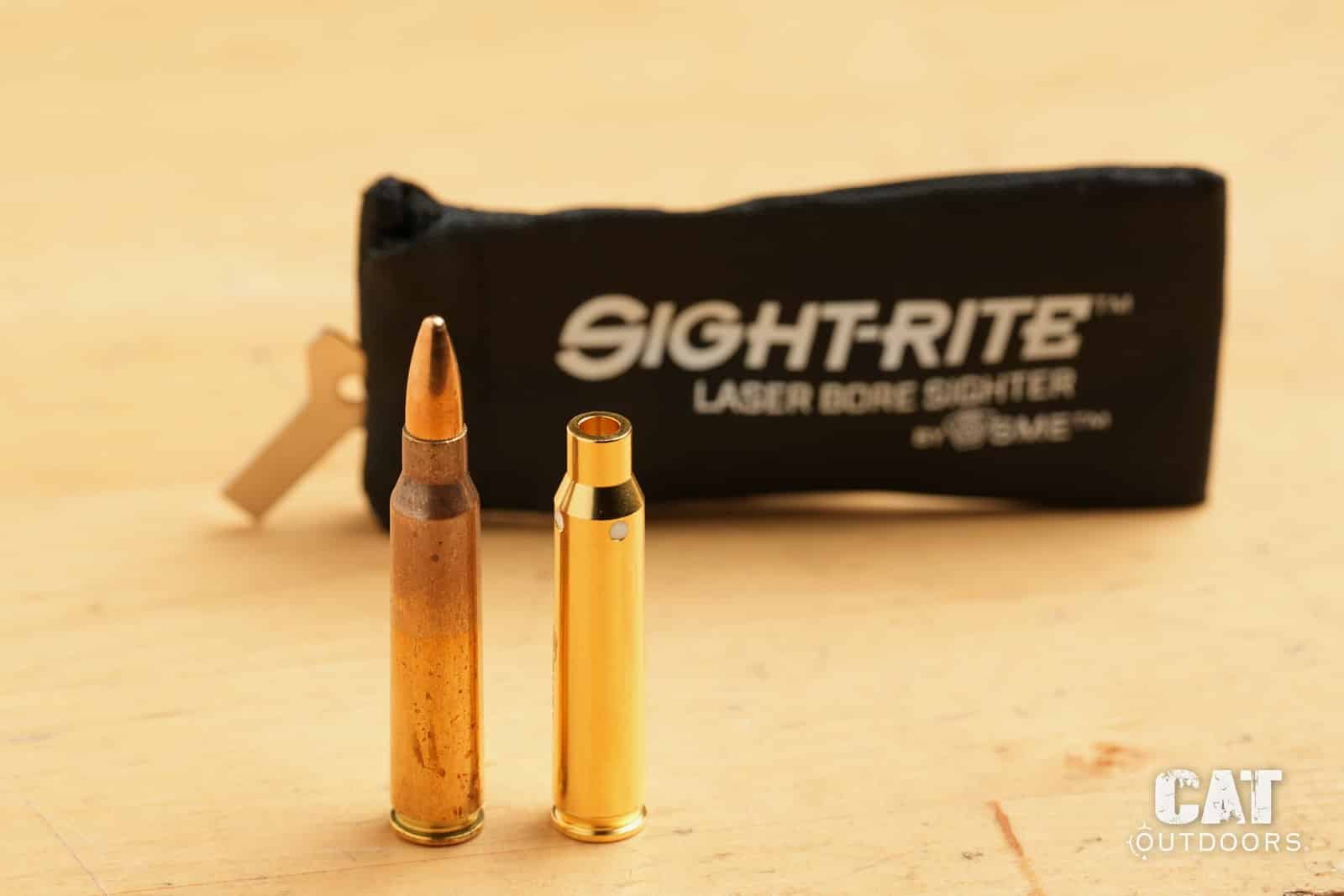
For $30, this laser bore sighter easily gets you on paper and can save you a box of ammo, but it's not perfect. You'll still need to zero in at the range. It also disappears in direct sunlight, prevents the bolt from closing, and uses hard-to-find LR754 batteries.
Reasons to Buy
- Gets a new or moved optic on paper at 30 yards without burning ammo
- Drops into the chamber like a round, nothing hangs off the muzzle
- Dot lands in the same spot every time you re-seat it
- A fingernail turns it on, the keyring tool is optional
- $15 to $34, less than a box of 5.56
Reasons to Skip
- Dot is invisible in daylight, with or without the optic
- You can't close the bolt on it
- LR754 button cells are hard to find locally
- The end cap can unscrew while you feel for the on position
- One caliber per laser
Looking to get your optic on paper so you can zero in?

One of your options is to use a $30 piece of brass that promises to save you a box of ammo: the Sight-Rite laser bore sighter.
We review it below. By the end you’ll know more about how it works, what it does, and why you still aren’t completely zeroed in until you get to the range…all that to say, it may still be worth the price of admission.
Sight-Rite Laser Bore Sighter Specs & Features
Specs
- Model: XSI-BL-222
- Caliber: .222 Rem and .223 Rem (fits 5.56 NATO chambers)
- Type: chamber cartridge, machined brass
- Laser: red, Class IIIR, under 5 mW
- Batteries: three LR754 (AG5) button cells, installed
- Switch: threaded end cap, keyring tool included
- In the box: laser, batteries, tool, pouch
- Price: $29.99
Features
- Factory aligned brass case, cut for one caliber
- Drops into the chamber like a round, no muzzle adapter
- One moving part: the end cap
- Small enough for a watch pocket
- Same laser sold from .17 HMR up to 12 gauge
- A universal muzzle version covers .17 to .50
Source: the package and retailer listings. SME does not publish a spec sheet for this one, and the box does not say what cells are inside. We unscrewed the end cap and read them: LR754.
Why You Can Trust This Review
I bought this Sight-Rite with my own money. It was sitting on a shelf at Dunham’s and I thought, why not give it a try. These seem popular, let’s see what the fuss is about. I paid $29.99 + tax in July 2025. So, nobody at SME or GSM Outdoors had any input on this.
- Product Tested: SME Sight-Rite laser bore sighter, .222/.223, model XSI-BL-222
- Price Paid: $29.99 + tax at Dunham’s (online it runs $15 to $34)
- Used On: PSA Sabre-15 lower with a Geissele upper
- Optic: EOTECH 512
Everything below is my hands-on experience using the bore sighter.
What the Sight-Rite Bore Sighter Is
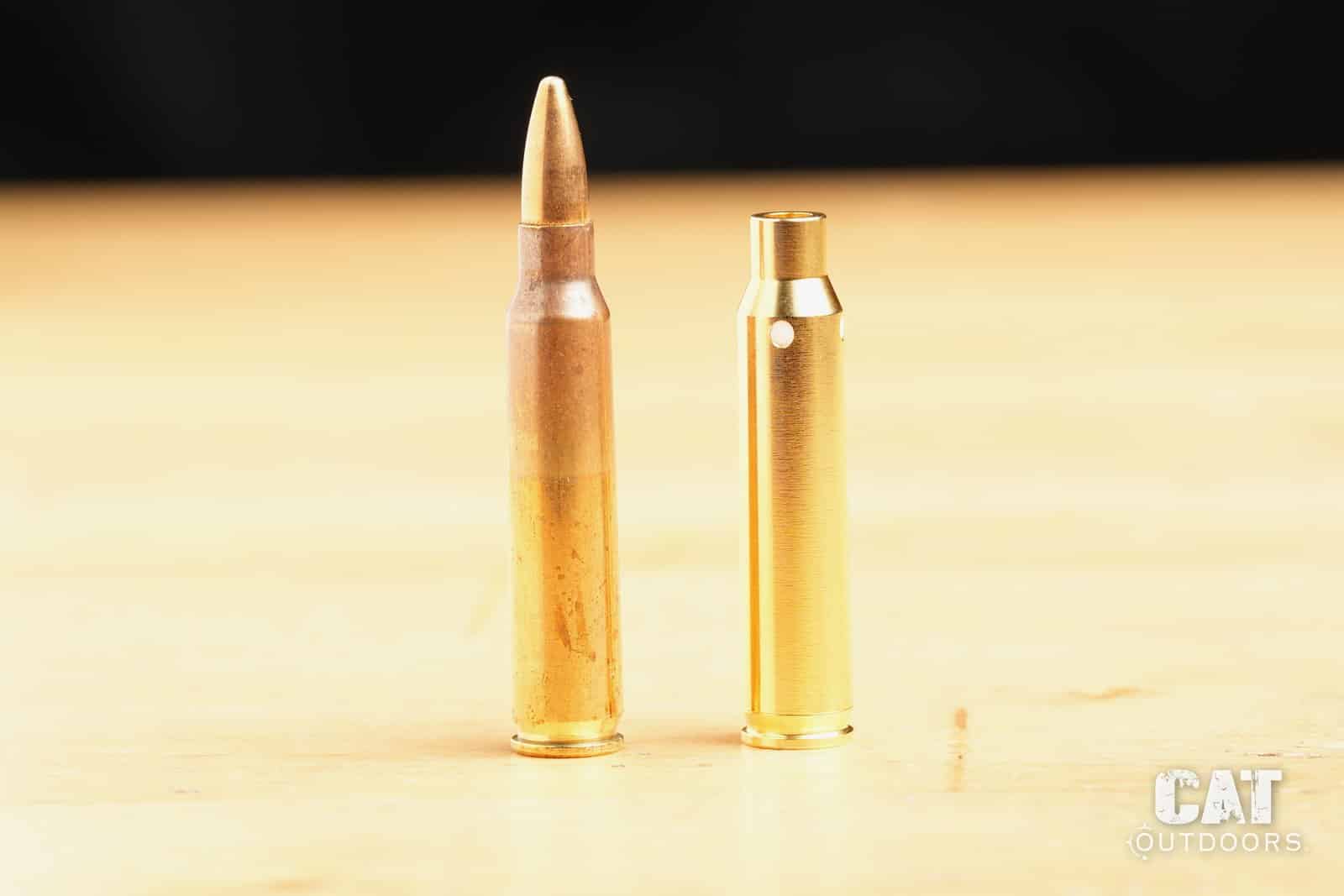
There’s two types of laser bore sighters out there. One where the muzzle kind hangs off the end of the barrel on an arbor and works for every caliber you own. The other is this, the chamber kind: a dummy cartridge with a laser where the primer would be, cut for one caliber.
The one I tested here is the .222/.223 model that works in your standard AR-15 (Model XSI-BL-222).
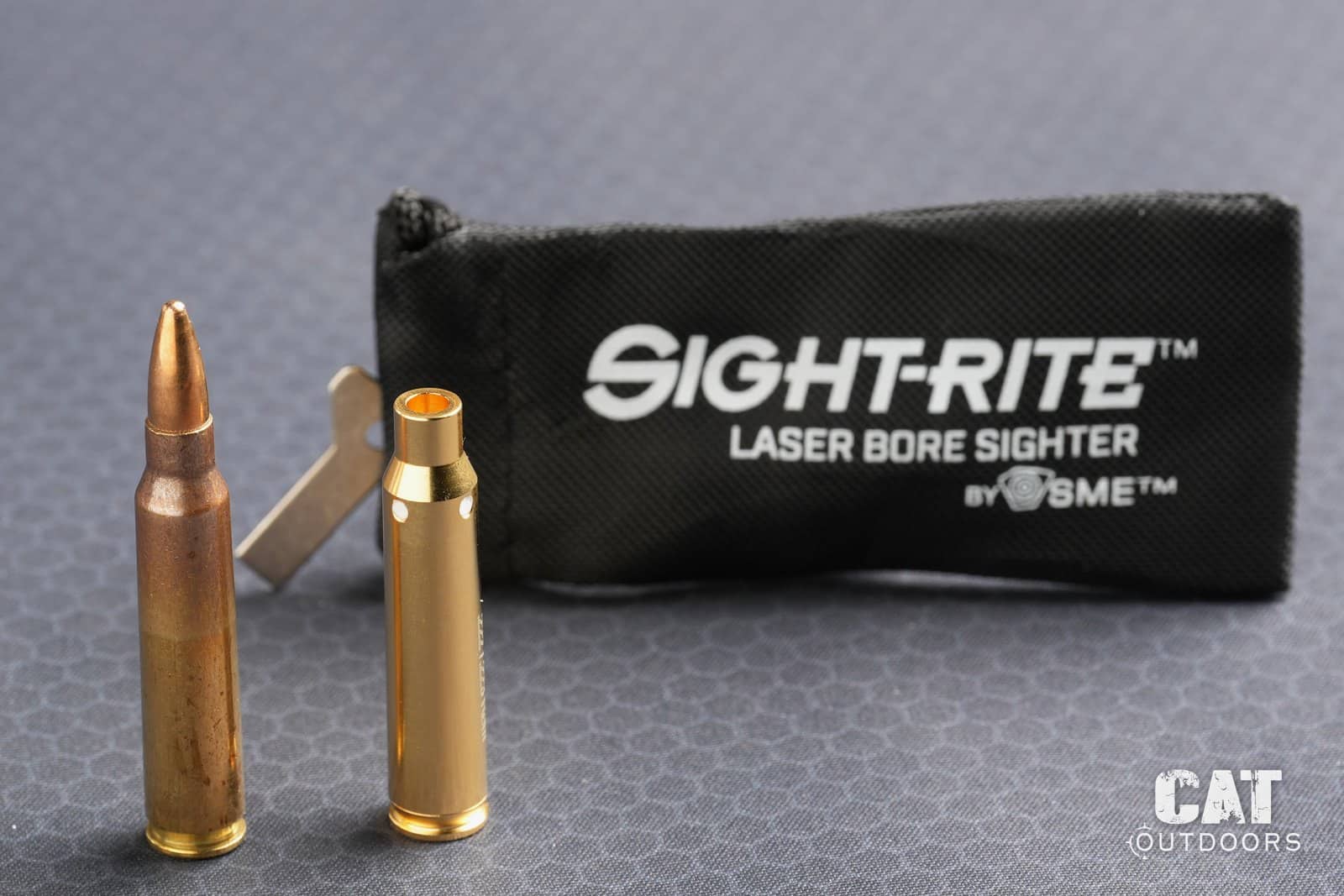
SME stands for Shooting Made Easy. It’s one of the brands owned by GSM Outdoors. The Sight-Rite line runs from .17 HMR up to 12 gauge, plus a universal muzzle laser, and older ones were labelled SSI. It’s the same brass, but a different sticker. Some stores even spell it Site-Rite.
I bought this a while back and hadn’t used it until I recently bought an EOTECH 512 holographic sight off a friend. I needed to get it zeroed in and this was the perfect opportunity to test this out.
How I Tested the Sight-Rite Laser Bore Sighter
Using it is pretty straightforward, but I fumbled the first couple of steps. Starting off, I put the EOTECH 512 on one of my rifles, a PSA Sabre-15. I’d used a Primary Arms red dot on it before, but haven’t picked this rifle up in a while.
The tough part is, as you will see, finagling the AR into position to drop this in the chamber.
Turning It On Is Half the Manual
First, is turning it on. There’s no button, but that’s not a problem. You turn a plastic plug out until the batteries touch the metal of the case, and that turns the laser on. It includes a little tool with a hole in it to put on a key ring; however, you can just use your fingernail to turn the laser on and off.
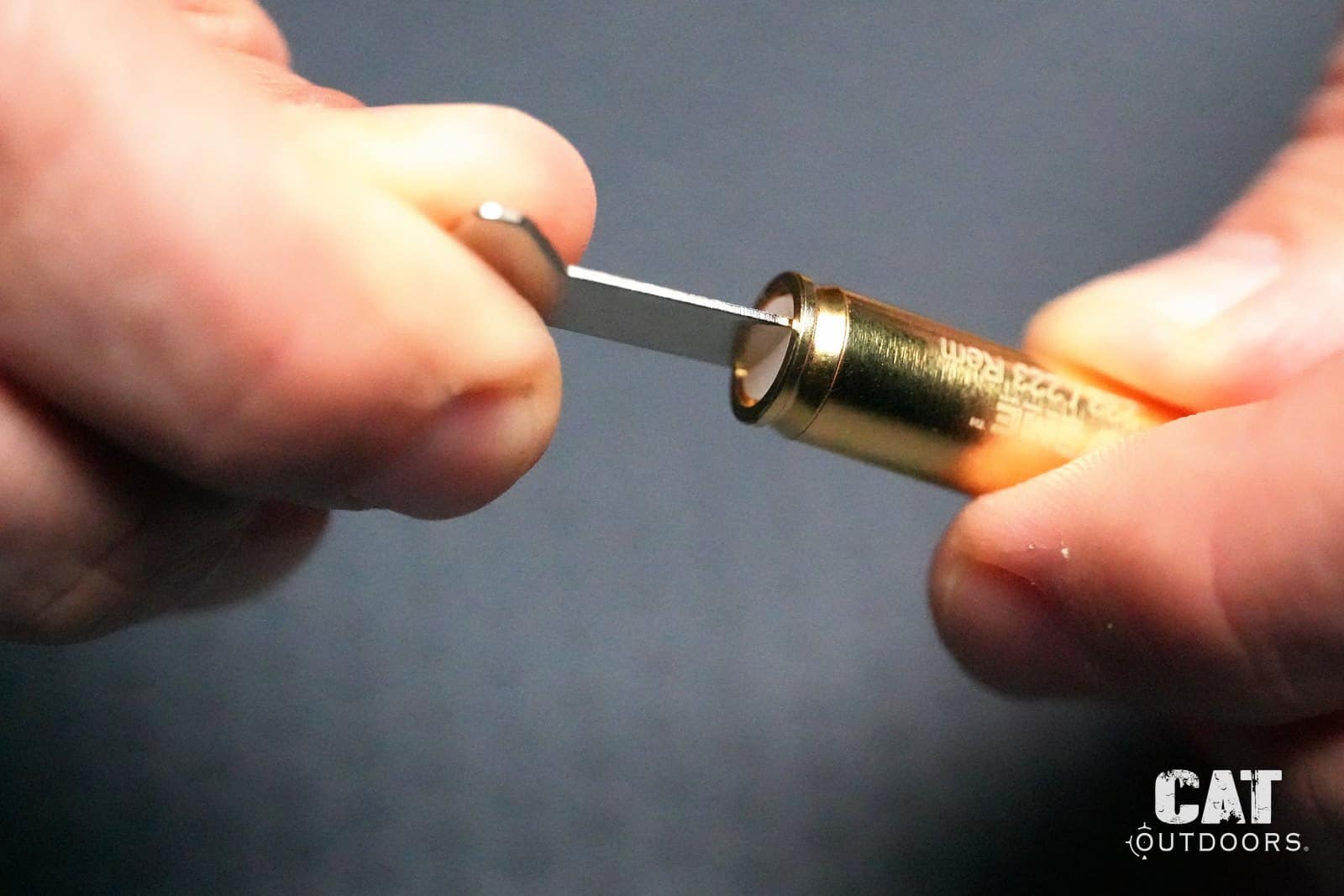
The batteries do behave, but out of the package you have to remove them to get a plastic divider out, then reinstall the batteries before the laser will turn on. Do it over a table. The cells are LR754 button cells, three of them, and they are tiny.
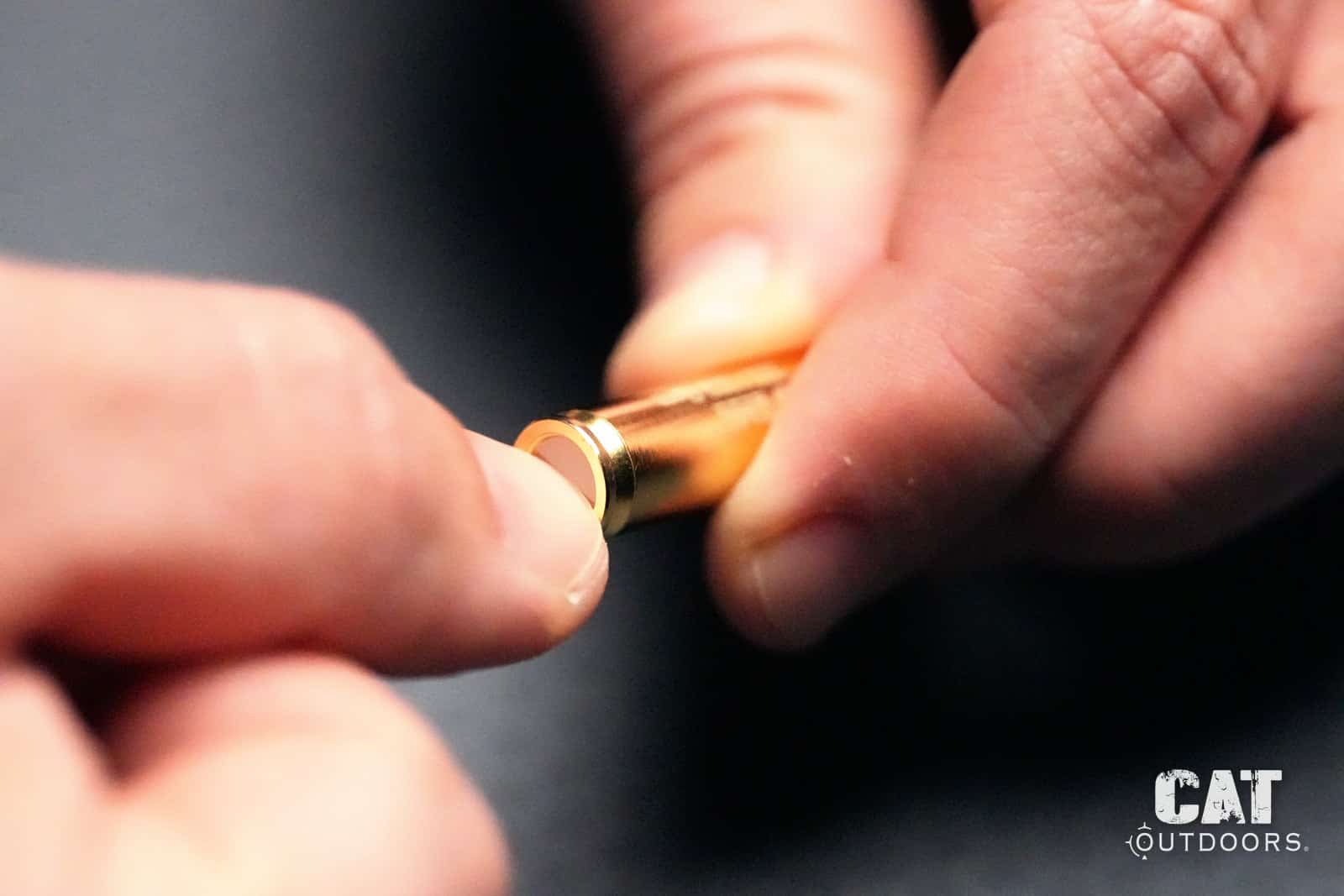
The cells were one of the factors in our Build score. Good luck finding replacements for the batteries. LR754 aren’t super common. If you have a Harbor Freight in town, you might be able to find them, but they sell them in a mixed pack and you’re buying a bunch of other batteries that you don’t need.
Something else to pay attention to…you can accidentally unscrew the switch plate if you’re trying to turn the laser on. There’s a point where you’ve turned it one thread too far and then the end cap falls off.
The battery life so far isn’t a problem. I haven’t used this extensively, but it hasn’t died or quit on me yet.
Into the Chamber, But Don’t Close the Bolt
Basically, to get this thing seated I had to prop the stock against my hip, pull the charging handle back and lock the bolt open. I then aimed the gun downward and slipped the bore sighter into the chamber.
I know from previous experience with these types of bore sight lasers to not close the bolt on them, because you can actually break it that way. So, I slowly closed the bolt enough to get some pressure on the laser. Just enough to make sure it doesn’t move around as I adjust the rifle or the optic.
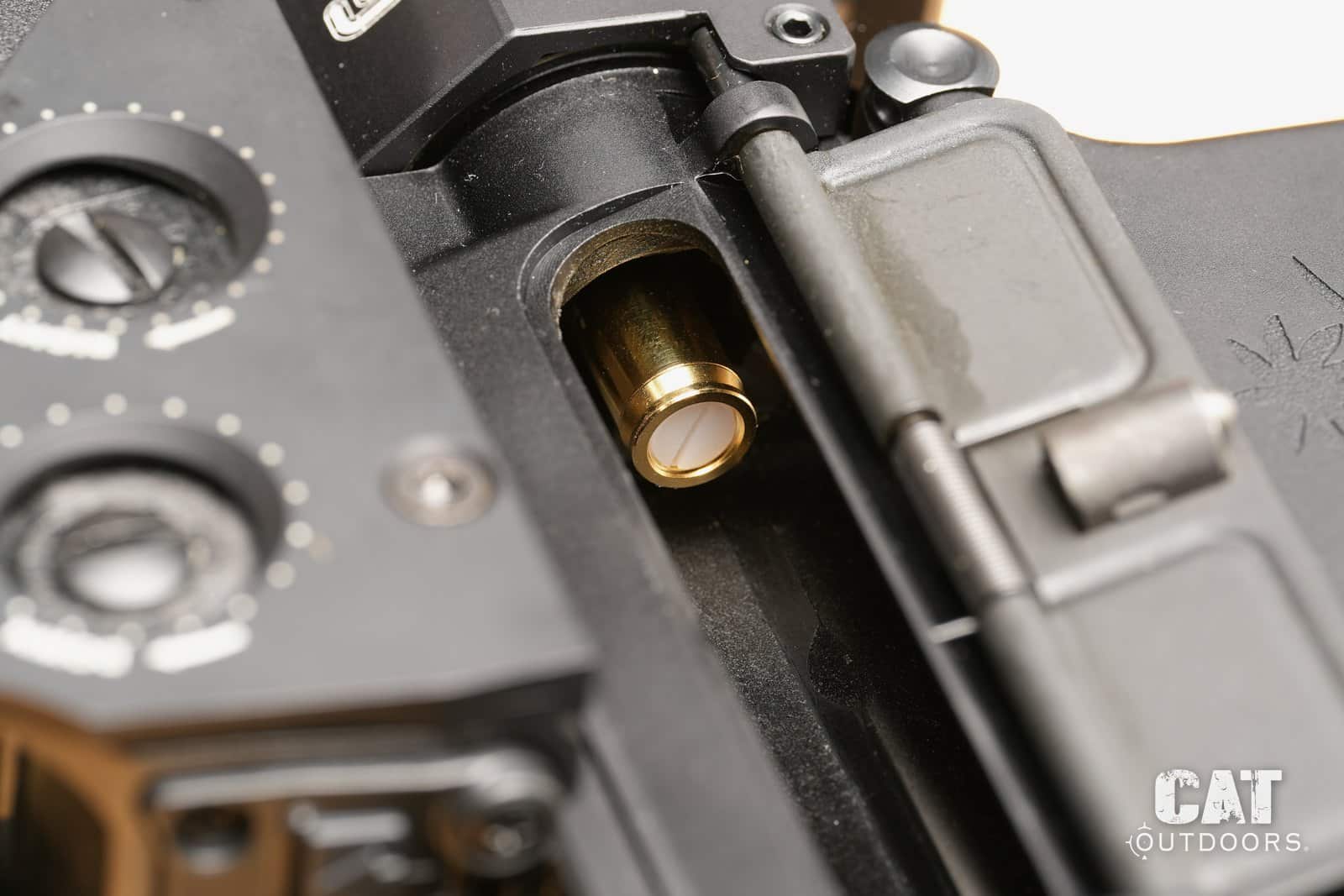
Getting it out is easy. Lock the bolt back and tip the muzzle skyward to have the laser slide out of the chamber. No need for a rod or extractor.
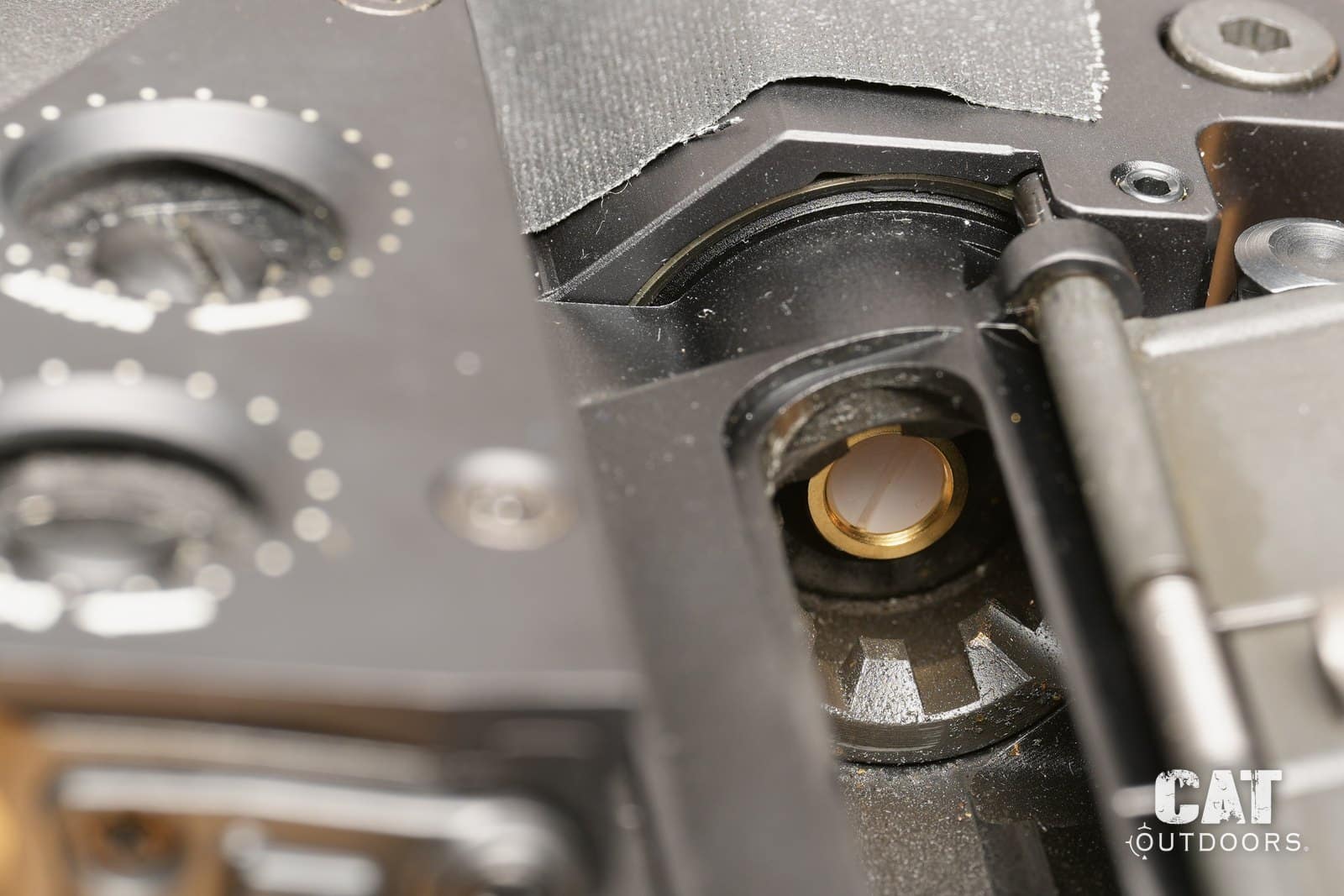
The fact that I couldn’t put the bolt fully into battery was kind of annoying. The bolt does provide pressure to keep the laser in place, but I’d have more peace of mind if it was fully seated.
Safety recommendation: put the laser in its pouch before you bring any ammo near the rifle. It looks like a cartridge. Don’t mix it up with real ammo.

Across the Shop to a Steel Beam
Here’s what we did to get my red dot on target: with the laser in and the rifle on the bench, I put the dot on a steel beam on the far side of the building. I didn’t exactly tape measure the distance, but I figured it was about 30 yards. I then simply walked the 512’s reticle onto it. 5 clicks up and 5 clicks to the left.
That’s good enough to get me on paper at the range, but truth be told, it’s not perfect.
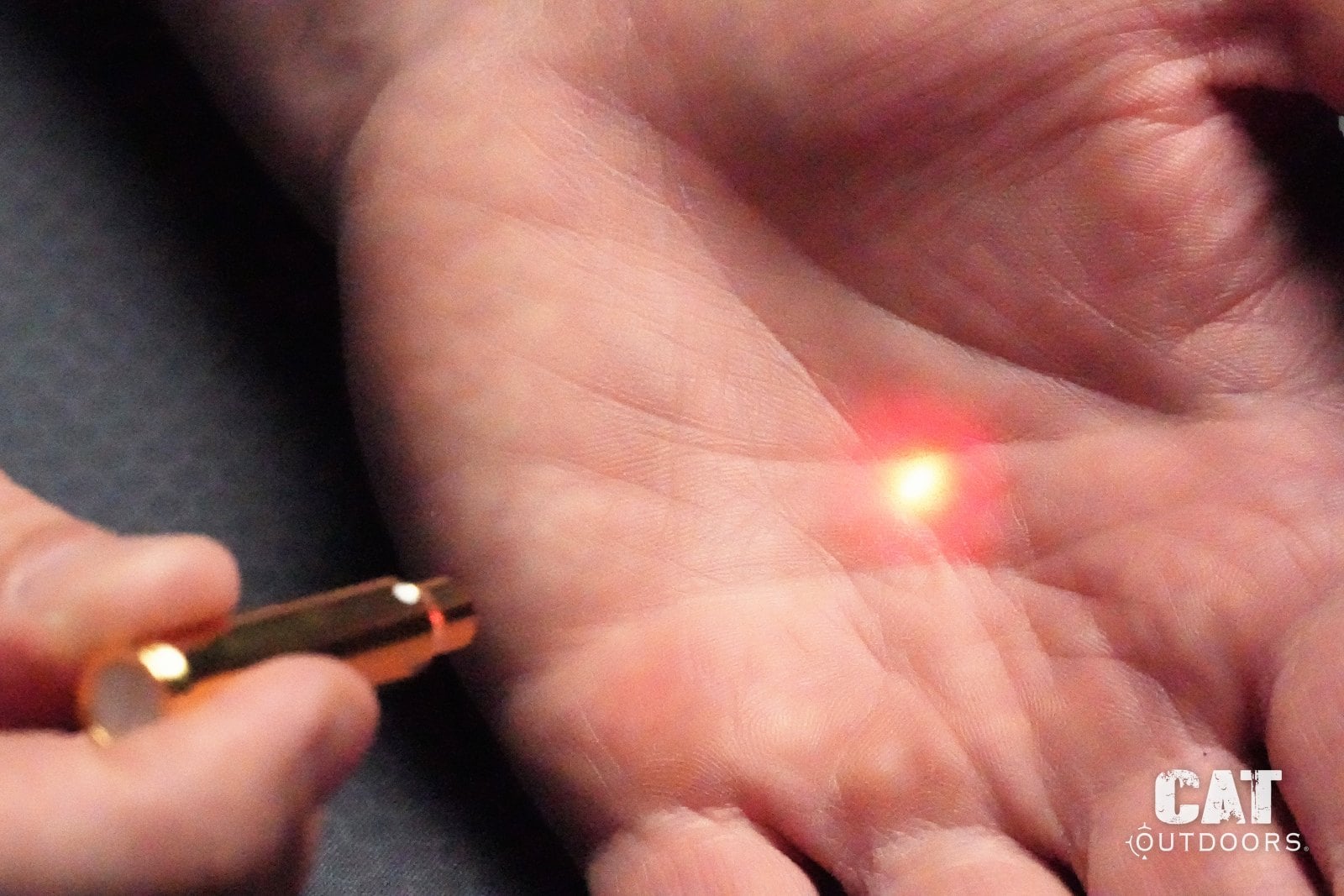
When I took the rifle to the range, those first few rounds hit the target at 30 yards without a problem. From there, I just dialed in the final adjustments the old-fashioned way.
That’s really the core value of this tool. It’s not a replacement for live-fire zeroing; it’s a shortcut that saves you from burning a box of ammo just to find the target. If you’re zeroing for 50- or 100-yards, then you’ll still have to put in the range time and do a proper zero.
So, why couldn’t I get it sighted in to 50 yards or more?
Daylight Kills It
Here is where you really start to see the problem with these kinds of sight-in tools. The big problem with relying on this is that the dot gets lost in ambient light. I tested on multiple sides of my building outside on a bright, sunny day. The beam just gets washed out by the sunlight.
Which makes this a cloudy-day or inside device. That really limits how much I can use it. Not everyone is going to have a 30 yard steel building to work with.
For us, that’s a 4 on Visibility.
Does the Dot Come Back to the Same Spot?
Yes. I pulled it out and dropped it back in several times, and the dot landed in the same place on the beam each time. The brass is machined to fit the chamber the way a round does, so as long as the bolt is putting some pressure on it, it indexes.
The other check is the one that tells you whether the laser itself is straight. On the Sabre-15 after the range zero, with the reticle on the bull at about 30 yards, the dot sat a little to the left. A dot that sits low is normal, because the bore is under the optic. Left or right is the laser or the chamber being a hair off, and a little left at 30 yards is a couple of clicks of windage, not a problem.
I give it an 8 for Accuracy: it does its one job, but that job has a ceiling.
Sight-Rite vs. Sightmark vs. a Muzzle Laser
The Sightmark .223 chamber laser is the same idea in the same brass for about the same money. We haven’t run this one next to the Sight-Rite, so I can’t tell you its dot is any brighter, but I wouldn’t expect it to be.
The one I’d probably buy next is the muzzle kind, mostly because you can buy one for all your different caliber firearms. Again, I wouldn’t rely on it to get you a perfect zero but to at least get you on paper. SME’s own universal muzzle laser is the multi-caliber option, covering .17 to .50 for about $22 to $30.
For not all that much money, and if you have a bunch of different firearms chambered in the selected caliber, it’s a good option. If you have multiple firearms in a multitude of calibers, I’d still go with a muzzle style bore sighter.
Improvements I’d Like To See
I’d like to see the bolt close all the way. I’d feel more confident that I was doing it right. A chamber laser that can take the bolt going into battery, or a clear line in the instructions on exactly how far to go, would fix my biggest annoyance.
Print the battery size on the box and the pouch. LR754 should not be a secret you learn with the end cap off. Not sure if it’s possible, but switching to a more popular, easy-to-find battery would also be appreciated.
Put a stop on the end cap so it cannot unscrew all the way while you are feeling for the on position. And if SME ever puts a green laser in this brass, I would pay the difference for daylight.
Who It’s For (and Who It’s Not For)
Buy it if you’ve never sighted in an optic before, if you don’t want to spend the money to have your optic sighted in to whatever the gun store might zero it to, or if you want to learn a new skill. This is for you. It also suits anyone moving one optic between a couple of .223 rifles, since the brass fits any of them.
Skip it if you’re a professional, if you are comfortable sighting in your optics with confidence, or if you’re okay with a gun store sighting in your rifle to whatever it typically does and adjusting from there. This isn’t for you. Skip it too if you own more than one caliber, and buy the muzzle kind once instead.
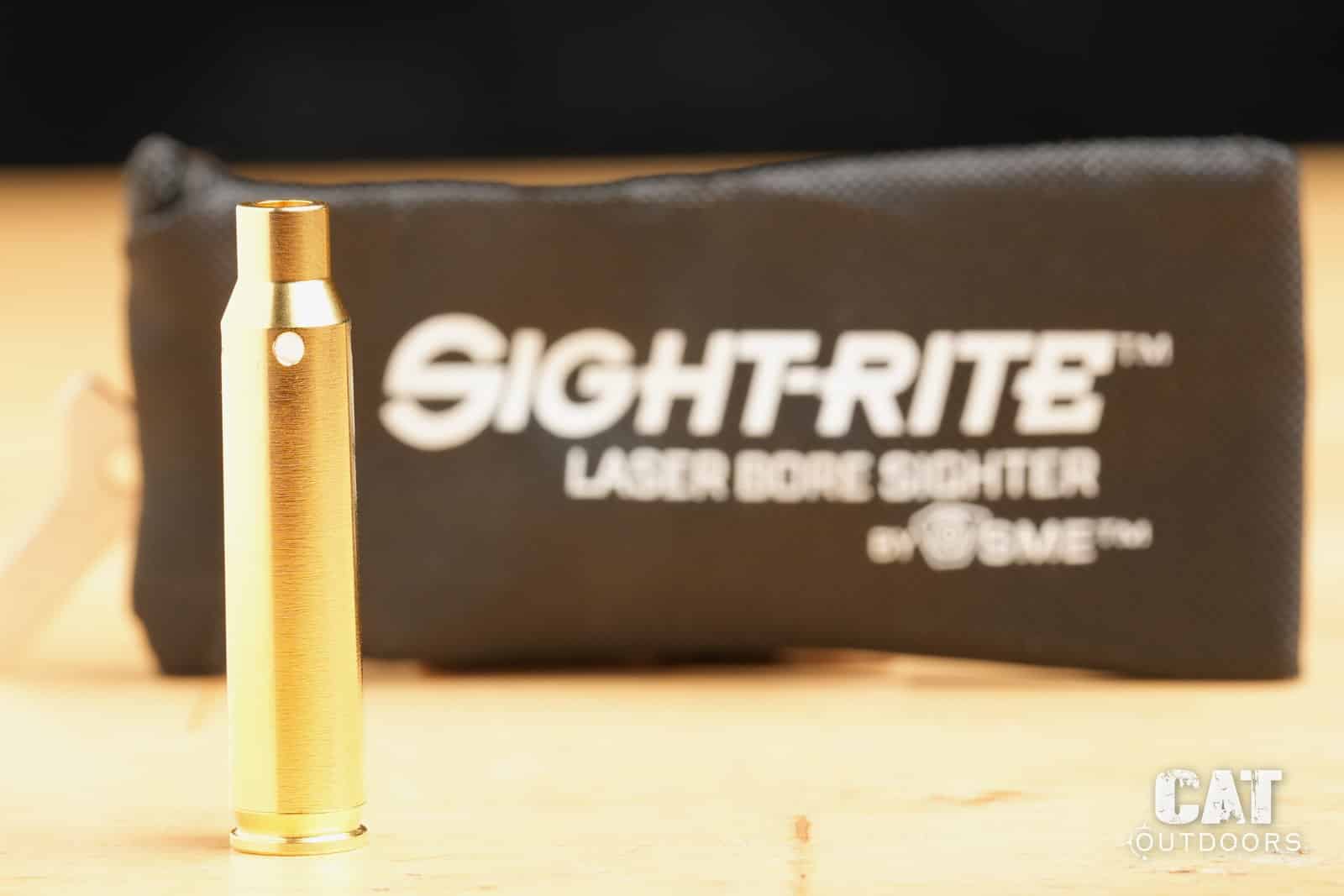
SME Sight-Rite Laser Bore Sighter (.222/.223)
Good enough to start. Finish at the range.
Our Verdict on the Sight-Rite Laser Bore Sighter
For shooters wanting to get on paper without wasting a bunch of rounds to do so, this is a great option. But if you’re an experienced shooter with confidence in your ability to zero your rifle, I would stick to your experience rather than a $30 tool that might help you.
That about sums up my thoughts on the Sight-Rite laser bore sighter. It’s cheap, it’s repeatable, it got my EOTECH on paper, but it didn’t finish the job, and it’s useless in the sun.
Would I buy it again? Not this one. I’d buy the muzzle version, for the reason above: one laser for every rifle in the safe.
Where it lost points:
- Invisible in daylight, with or without the optic
- You cannot close the bolt on it, so you are trusting bolt pressure to index it
- LR754 button cells are hard to find locally, and the box does not tell you the size
- The end cap can unscrew all the way while you are feeling for the on position
- One caliber per laser
Final Score: 7.0/10
Good enough to start. Finish at the range.
Do you bore sight before a zero, or just walk it in? Let us know in the comments below. And if you like cheap tools that do one job, our Speed Beez Lever Loader review is the same kind of story.
FAQ
Does the Sight-Rite .223 bore sighter work in a 5.56 chamber?
Yes. The .222/.223 brass dropped into the 5.56 NATO chamber of our Geissele upper and seated the way a round does. SME sells the same laser cut for other calibers, from .17 HMR to 12 gauge, so check the caliber on the package before you buy. So yes, it doubles as a 5.56 bore sight.
Can you close the bolt on a chamber laser bore sighter?
We don’t. Closing the bolt fully on these can break them. I ease the bolt forward until there is pressure on the laser, which holds it still while I adjust the optic, then lock the bolt back and tip the muzzle up to slide it out.
How far away can you see the Sight-Rite dot?
Indoors, about 30 yards across our shop, with no trouble. In direct sunlight we could not find the dot at all, with or without the optic. That’s why we bore sight at 25 to 30 yards and leave 100 yards to live fire.
What batteries does the Sight-Rite laser bore sighter use?
Three LR754 button cells, which also sell as AG5. Unscrew the end cap to get at them. They are hard to find in town, so order spares online before you need them.
Is a laser bore sighter accurate enough to zero a rifle?
No. It gets the optic close enough that your first rounds hit the paper at 25 to 30 yards. The zero still comes from firing groups and adjusting. Think of it as skipping the box of ammo you would burn finding the paper.
How do you use a laser bore sight on an AR-15?
Unload the rifle and check the chamber twice. Drop the laser in and ease the bolt forward until it holds. Rest the rifle on a bag or a bench and put the dot on a target at 25 to 30 yards, or a wall across the shop. Adjust the optic until the reticle sits on the dot. Lock the bolt back, tip the muzzle up, and put the laser in its pouch before you load. Then confirm with live fire. The steps are the same whether you’re bore sighting a red dot or a scope.
Chamber laser or muzzle laser: which should I buy?
If you own one caliber, the chamber laser is cheaper, has nothing hanging off the muzzle, and lives in a pocket. If you own several, buy a universal muzzle laser once. That’s what I’d do next time.

Justin Trump is the managing editor and owner of CAT Outdoors. The son of a Vietnam veteran, he’s a Certified Glock Armorer, an avid gun enthusiast and 2A advocate. He holds two firearm patents for the CAT M4 and Talon tools. When not managing CAT Outdoors, he enjoys spending time with his family and friends, rooting for Michigan sports teams, and serving his church.