‘Presumptively Unconstitutional’: A Federal Judge Blocks Connecticut’s Glock Ban the Day Before It Took Effect
Judge Kari Dooley’s order stops Connecticut from enforcing its felony ban on newly made Glock-pattern pistols. Here is what she blocked, why the state’s history argument failed, and what could still reverse it.
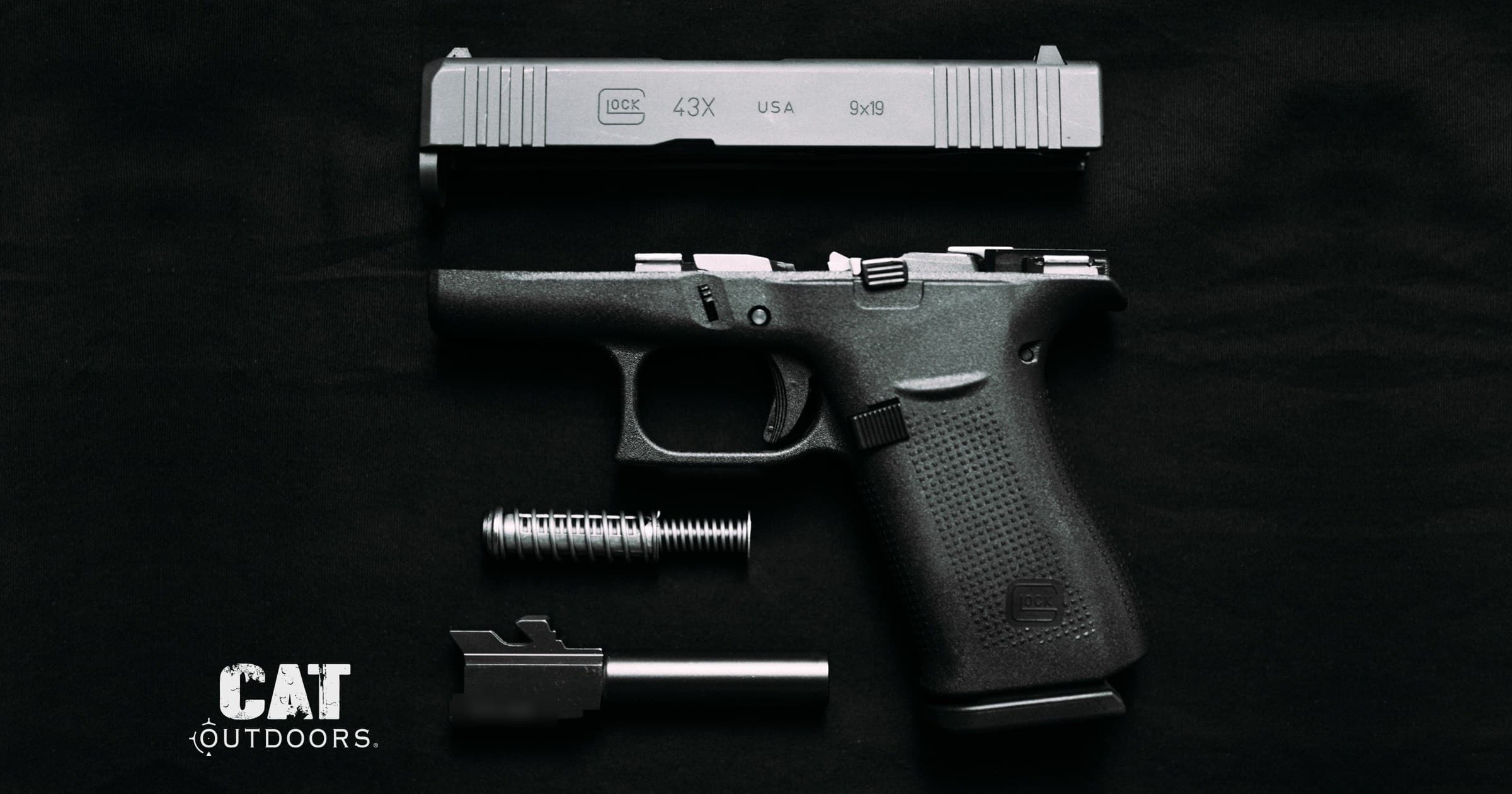
The Connecticut Glock ban is on hold. On September 30, one day before it was set to take effect, U.S. District Judge Kari A. Dooley granted a preliminary injunction that bars the state’s prosecutors from enforcing the heart of Public Act 26-41, the law that would have made it a Class D felony to sell a newly built pistol that uses Glock’s trigger design.
Her 12-page order covers both lawsuits filed against the law: one from Glock, and one from the National Shooting Sports Foundation, Texas pistol maker Shadow Systems, and Connecticut’s Blue Trail Range. The judge found the plaintiffs “are likely to succeed on the merits of their Second Amendment challenge.” For now, new Glocks and Glock-pattern pistols can keep shipping to Connecticut gun shops.
What the judge blocked: A quick refresher from our coverage of the lawsuits. The law invented a category called the “convertible pistol,” meaning any semiautomatic pistol with a cruciform trigger bar that can be “readily converted by hand or with a common household tool” into a machine gun by attaching an illegal conversion device. The cruciform trigger bar is the cross-shaped part that links the trigger to the firing pin in Glocks and in most of the striker-fired pistols built like them.

Starting October 1, knowingly importing, advertising, or selling one of those pistols, if it was manufactured on or after that date, would have been a felony. Dooley’s separate two-page injunction stops the state from enforcing exactly that provision, which it calls “likely unconstitutional under the Second Amendment.” The injunction is aimed at one section of the act. That section happens to be the whole sales ban.
How the state lost: Connecticut accepted, for purposes of this motion, that the law touches conduct the Second Amendment’s text protects. Under the Supreme Court’s Bruen test, that concession makes the statute “presumptively unconstitutional” and hands the state the burden of proving the law fits the country’s historical tradition of firearm regulation.
The state offered two traditions. The first was a set of Founding-era “proving laws” from Pennsylvania, New Jersey, New Hampshire, and Massachusetts, which required guns to pass inspection before they could be sold. The second was the long history of restricting machine guns. Together, the state argued, they justify banning a pistol that can be turned into one.
Dooley didn’t buy the fit. “Each of the proving laws discussed were designed to ensure safety before the firearm enters the stream of commerce,” she wrote. “They were not designed to, and indeed could not, forestall future misuse of the firearm (even if predictable) after it enters the stream of commerce.” An inspection law asks whether a gun is safe to sell. Connecticut’s law bans a gun that, in the judge’s words, is “not only safe, but extremely popular for purposes of self-defense,” because of what a criminal might illegally do to it later.
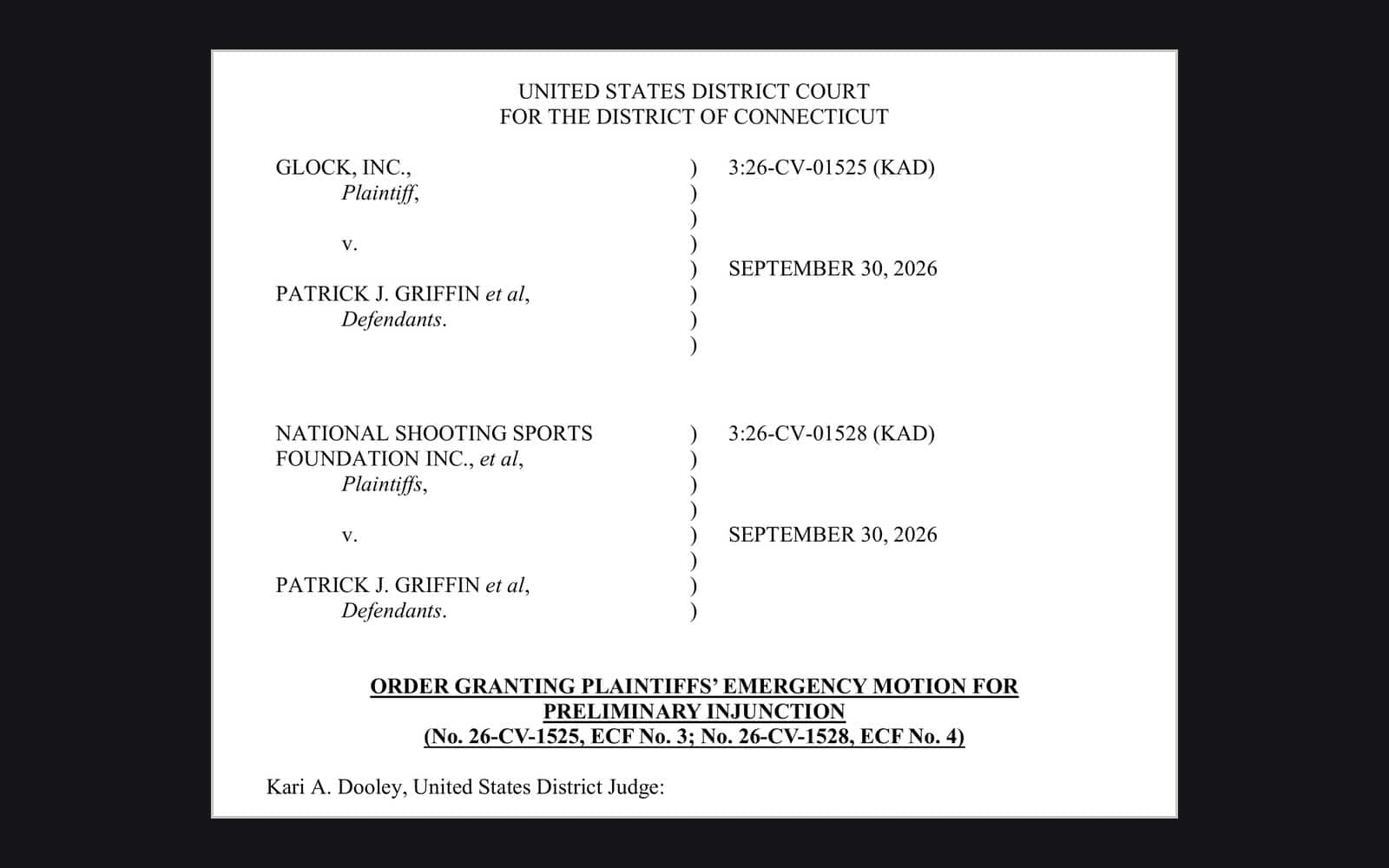
The 24-hour question: The sharpest passage in the order turns the law’s own design against it. The ban applies only to pistols manufactured on or after October 1, 2026. Every identical pistol built before that date stays legal to sell. Dooley wrote that the state offered “no adequate explanation as to how the sale of a firearm manufactured on September 30, 2026 needs no safety regulation but the same firearm manufactured 24 hours later is sufficiently dangerous so as to be properly restricted and regulated by the state.”
That question has no good answer. If the trigger design itself were the danger, the date stamped at the factory wouldn’t matter. A safety law that waves through every existing copy of the product it calls unsafe isn’t operating as a safety law.
Want the next one the day it lands? Add CAT Outdoors as a preferred source on Google and our coverage shows up first.
Add on GoogleThe tradition that does exist: The plaintiffs argued that American law has always handled this problem from the other direction, by outlawing the illegal modification and leaving the lawful gun alone. The order recounts their example: when the country confronted the sawed-off shotgun, “the response was to ban the modified shotgun, not to ban shotguns altogether.” Conversion devices are already illegal under federal law, which treats the device itself as a machine gun, and so is any pistol converted with one. The injunction leaves both of those prohibitions untouched.
Dooley also reached for a sentence Connecticut’s lawyers know well. In 2025, the Second Circuit let the state’s rifle ban stand in National Association for Gun Rights v. Lamont, noting along the way that “Connecticut residents remain able to . . . own and possess popular semiautomatic handguns like the Glock 17.” We flagged that line when the lawsuits were filed. The judge quoted it in her order, on the way to enjoining a law that made selling a new Glock 17 a felony.
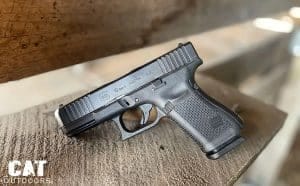
Glock 17 Gen 5 (9mm, 17+1)
The pistol both the Second Circuit and Judge Dooley's order name as the popular handgun Connecticut residents can own. It's the full-size original of the design the law targeted, and outside Connecticut it never stopped shipping.
What it was already costing: The state argued nobody was being harmed yet, since dealers could keep selling pistols made before October 1. Dooley’s answer: “That is true, and not in dispute. But it does not end the inquiry.” Blue Trail Range told the court it holds roughly $25,000 in cruciform-trigger handguns, expects to sell through that stock by the end of October, and had already stopped ordering new ones because of the law.
The plaintiffs also pointed out that the law doesn’t exempt law enforcement, which put police sales in Connecticut on the same clock. And the order lists one more harm, flagged as perhaps the most important: “the impact upon Connecticut citizens whose Second Amendment rights are likely violated.”

The caveat worth taking seriously: This is a preliminary ruling on a rushed record, and Dooley said so. The lawsuits were filed September 21 and decided nine days later. She wrote that the state’s argument “is not without some force,” and that “upon further development of the record, the outcome may well be different.” She ruled only on the Second Amendment claim and left Glock’s other challenges for later. Connecticut could come back with more history and win.
But the weakness she identified isn’t a shortage of old statutes. It’s a mismatch of purpose. More briefing can add inspection laws to the pile. It can’t change what an inspection law was for, and it can’t explain the 24 hours.
The state isn’t conceding anything. Gov. Ned Lamont said in a statement reported by CT News Junkie: “We passed a commonsense law: you should not be able to turn a handgun into a machine gun with a simple piece of plastic.” He added, “We will evaluate all legal options to protect our state.” Attorney General William Tong said Connecticut “will continue to defend the law,” per Courthouse News. On the other side, NSSF general counsel Lawrence G. Keane said, “The Second Amendment is not a second-class right.”
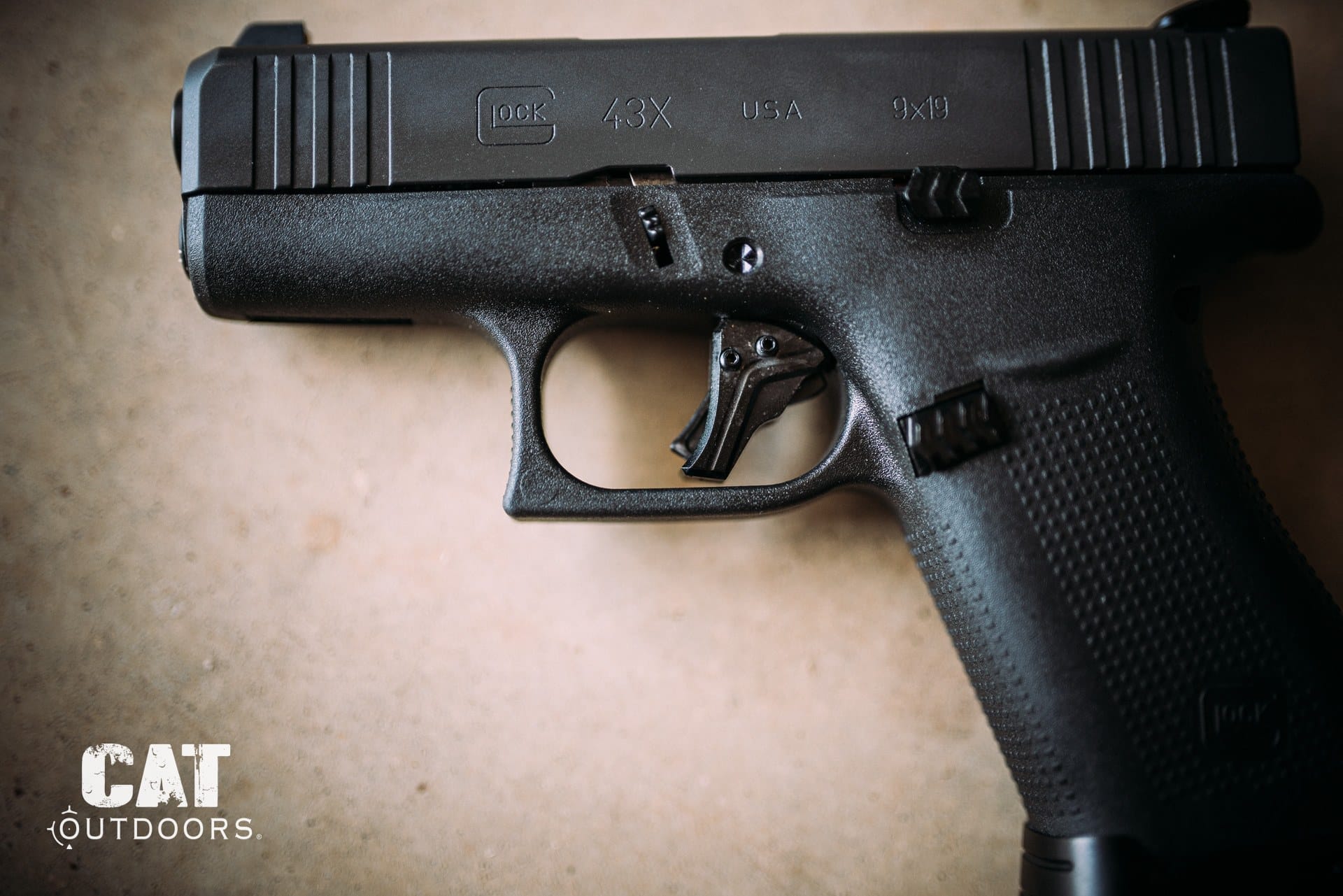
The question still hanging: One issue went undecided. Glock argues that its Slimline and Series VI pistols fall outside the law’s definition entirely. That would include the Glock 43X, a Slimline. Dooley didn’t rule on it, but a footnote records that the state’s lawyers said an assessment “is underway,” and that the court is “optimistic” a decision is coming. Another footnote says the attorney general “was clearly on notice” the lawsuit would come if those talks failed. On the day the injunction issued, the state still couldn’t say which of the country’s best-known pistol maker’s guns its new felony covered.
The takeaway: A federal court has now looked at the theory behind the Connecticut Glock ban, that a state can outlaw a lawful and common handgun because criminals can illegally modify it, and found it likely unconstitutional. That matters beyond Connecticut. California, Maryland, and New York have passed their own versions, and every one of them rests on the same theory.
What happens next: Connecticut can appeal the injunction to the Second Circuit, the same court that refused to block the state’s rifle ban last year, or it can stay in Dooley’s courtroom and build the fuller record she invited. It hasn’t announced which. If an appeals court stays the injunction, the felony provision comes back, so Connecticut dealers should treat this as a pause and not a repeal.
Does Connecticut appeal, or does it try to fix the record first? Tell us what you think in the comments.
We’ll cover the next filing the day it lands. Sign up for the CAT Outdoors newsletter below so it doesn’t slip past you.
Sources: Order granting preliminary injunction and injunction order, Glock, Inc. v. Griffin (D. Conn. 3:26-cv-01525) and NSSF v. Griffin (3:26-cv-01528); Public Act 26-41; NSSF statement; CT News Junkie; Courthouse News Service; NAGR v. Lamont (2d Cir. 2025); 26 U.S.C. § 5845.

Justin Trump is the managing editor and owner of CAT Outdoors. The son of a Vietnam veteran, he’s a Certified Glock Armorer, an avid gun enthusiast and 2A advocate. He holds two firearm patents for the CAT M4 and Talon tools. When not managing CAT Outdoors, he enjoys spending time with his family and friends, rooting for Michigan sports teams, and serving his church.