
The Case for Banning the AR-15 Has an 800-Warship Problem
The Supreme Court hears the biggest Second Amendment case since Bruen on December 2. The lower courts’ “too military” theory has to get past 800 privately owned warships the Founders licensed.
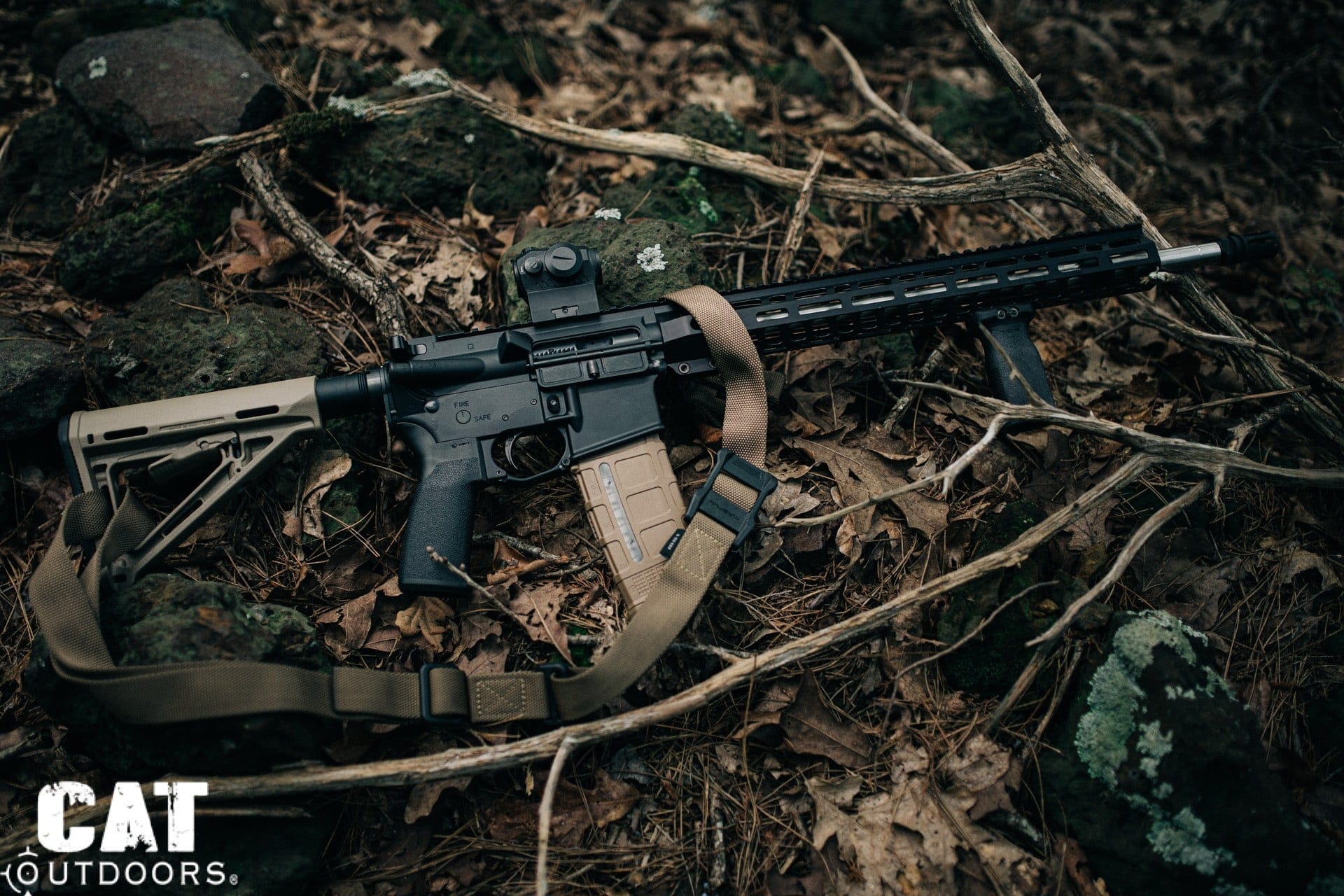
The Supreme Court AR-15 case gets its hour of argument on Wednesday, December 2, and it is the biggest Second Amendment case since Bruen. The consolidated challenges, Viramontes v. Cook County (No. 25-238) and Grant v. Higgins (No. 25-566), will decide whether a state or county can ban the most popular rifle in America. And the legal theory the lower courts used to bless those bans has a problem the Founders wrote directly into the Constitution.
Start with what’s on the table. Cook County, Illinois makes it illegal to possess, acquire, or transfer “assault weapons,” a category that names roughly 125 specific models with the AR-15 at the top of the list. Connecticut has restricted AR-platform rifles since 1993, tightened the screws in 2013, and tightened them again in the 2020s.
In both places, walking into a store and buying a new AR-15 is off the table. Everywhere else, this case decides whether your state gets to try the same thing.
The theory under review: The Seventh Circuit blessed the Cook County ban on the strength of its 2023 decision in Bevis v. City of Naperville, where Judge Diane Wood wrote that there is “a long tradition, unchanged from the time when the Second Amendment was added to the Constitution, supporting a distinction between weapons and accessories designed for military or law-enforcement use, and weapons designed for personal use.” Judge Frank Easterbrook laid the same foundation back in 2015 in Friedman v. City of Highland Park: some banned weapons “are commonly used for military and police functions; they therefore bear a relation to the preservation and effectiveness of state militias,” and so “states, which are in charge of militias, should be allowed to decide when civilians can possess military-grade firearms.” The Second Circuit kept Connecticut’s ban in force on a related theory, holding the challengers unlikely to win because the law imposes “targeted restrictions on unusually dangerous weapons” consistent with historical tradition.
Read that again. The claim is that ever since 1791, America has kept military-grade arms out of private hands, and that the AR-15 is simply too much like a soldier’s weapon for you to own.
That tradition does not exist, and the document that proves it is the Constitution.
The privateer problem: Article I, Section 8 gives Congress the power to “grant Letters of Marque and Reprisal,” which were licenses for privately owned, privately armed warships to hunt enemy shipping. Article I, Section 10 then forbids the states from keeping “Troops, or Ships of War in time of Peace” without congressional consent. Sit with that pairing for a second, because it inverts the Seventh Circuit’s history: the Founders restricted the states’ military hardware and expressly provided for war-grade arms in private hands.
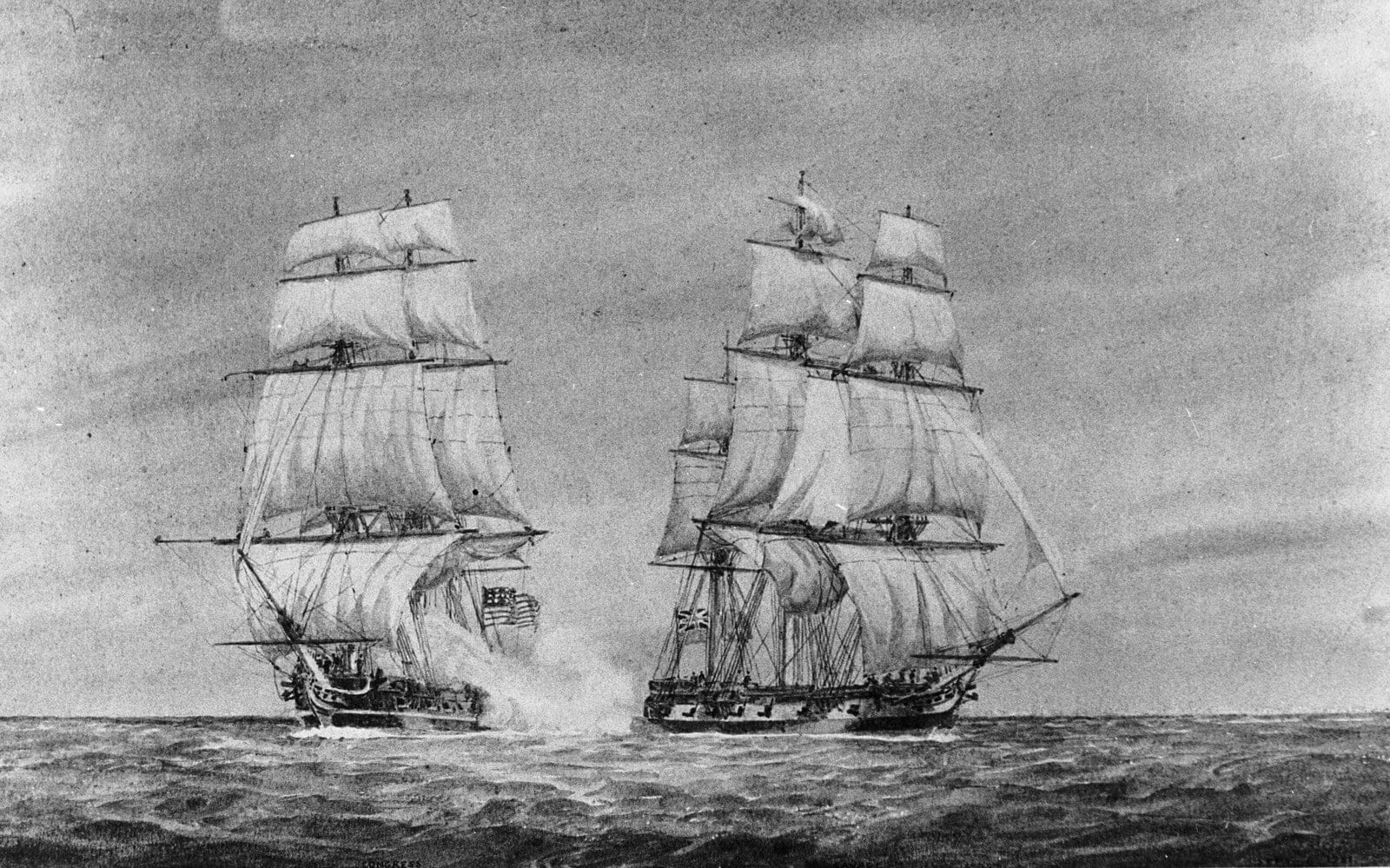
They didn’t just provide for it on paper. According to the National Park Service, about 1,700 letters of marque were granted during the Revolution and nearly 800 privately owned vessels were commissioned as privateers, credited with capturing or destroying some 600 British ships and inflicting about $18 million in damage, over $302 million in today’s dollars. The Caesar of Boston was a 600-ton private ship carrying 26 guns, and a large privateer could put more than 200 men aboard. The generation that wrote the Second Amendment fought its war for independence substantially with privately owned artillery platforms, then wrote the licensing mechanism for them into Article I.
So when a court says the founding generation drew a clean line between military weapons and personal ones, and always kept the former away from civilians, it is describing a founding era that never happened. A private citizen in 1781 could own a warship. The theory that his descendants can’t own a rifle because it looks too martial has to explain that, and it can’t.
The strongest counterargument, taken seriously: There’s a sharper version of the anti-AR argument making the rounds right now. Law professor Rory Little argued at SCOTUSblog this month that Heller protects arms “in common use at the time,” and that “the time” means 1791, when semi-automatic rifles undisputedly did not exist. If that reading holds, the AR-15 never even enters Second Amendment territory. Constitutional scholar Jonathan Turley pushed back this week, and he has the better of it, because the Supreme Court has already answered the question twice.
Justice Scalia answered it in Heller itself: “Some have made the argument, bordering on the frivolous, that only those arms in existence in the 18th century are protected by the Second Amendment. We do not interpret constitutional rights that way.” The Second Amendment, he wrote, “extends, prima facie, to all instruments that constitute bearable arms, even those that were not in existence at the time of the founding.” And in Caetano v. Massachusetts in 2016, the Court vacated a Massachusetts ruling that upheld a stun-gun ban because stun guns weren’t around in 1791, calling that reasoning flatly “inconsistent with Heller’s clear statement.” A frozen-in-1791 Second Amendment is not a live option under current precedent. It’s the argument Scalia pre-buried.

Ruger AR-556 5.56 NATO (16.1-inch, Model 8500)
The entry point to the platform this whole case is about: mil-spec construction, a 16.1-inch barrel, and sights on the gun out of the box. If December goes the way Kavanaugh's statement reads, prices won't be getting friendlier.
Where the votes are: Justice Kavanaugh told us where he stands in June 2025, when the Court passed on an earlier rifle-ban case. “Given that millions of Americans own AR-15s and that a significant majority of the States allow possession of those rifles,” he wrote in his Snope v. Brown statement, “petitioners have a strong argument that AR-15s are in ‘common use’ by law-abiding citizens and therefore are protected by the Second Amendment under Heller.” He predicted the Court would take the issue “soon, in the next Term or two.” It took exactly one.
The Justice Department has filed as amicus on the challengers’ side, arguing that “this country’s regulatory tradition precludes banning arms that are ‘in common use’ among law-abiding citizens for lawful purposes,” and the Solicitor General has asked for a share of the December 2 argument time, a motion the Court hasn’t ruled on yet. Even the old chestnut from United States v. Miller in 1939, which asked whether a weapon bears “some reasonable relationship to the preservation or efficiency of a well regulated militia,” cuts against the bans here: it’s the gun-control side insisting the AR-15 is a militia-grade arm.
What happens between now and December 2: Cook County and Connecticut file their merits briefs by October 21, and a respondent-side amicus wave will follow. Watch for the Court to grant the Solicitor General argument time, and watch whether the states’ briefs defend the Bevis “too military” tradition or quietly retreat to the Second Circuit’s “unusually dangerous” framing. That choice will tell you how confident they are.
The takeaway: This Supreme Court AR-15 case rests on a historical claim, and the historical claim is false. A country whose founding charter licensed 26-gun private warships did not hand down an unbroken tradition of keeping “military-style” arms away from its citizens. On December 2 the Supreme Court gets to say so, and with Kavanaugh already on record, millions of these rifles lawfully owned, and the federal government now arguing the owners’ side, the ban states are running out of history to stand on.
Do you think the Court finally settles the AR-15 question this term? Let us know in the comments.
And if you’re shopping before the ruling instead of after it, start with our guide to the best AR-15s.
Sources: Supreme Court docket, No. 25-238; brief of the United States as amicus curiae; Bevis v. Naperville (7th Cir. 2023); Friedman v. Highland Park (7th Cir. 2015); NAGR v. Lamont / Grant v. Rovella (2d Cir. 2025); U.S. Constitution, Article I; National Park Service, “Privateers in the American Revolution”; District of Columbia v. Heller; Caetano v. Massachusetts; United States v. Miller; Kavanaugh statement, Snope v. Brown; SCOTUSblog; Jonathan Turley. Naval art: Naval History and Heritage Command (NH 56473), public domain.

Justin Trump is the managing editor and owner of CAT Outdoors. The son of a Vietnam veteran, he’s a Certified Glock Armorer, an avid gun enthusiast and 2A advocate. He holds two firearm patents for the CAT M4 and Talon tools. When not managing CAT Outdoors, he enjoys spending time with his family and friends, rooting for Michigan sports teams, and serving his church.