
Ruger Just Killed Its Own Poison Pill So Beretta Can Buy a Quarter of the Company
Beretta’s $107.5 million tender offer for a quarter of Sturm Ruger is live through October 15, at a 21 percent premium. What the deal is, what it isn’t, and what it means at the gun counter.
“Beretta buying Ruger” is the headline making the rounds this week, and it’s about one quarter true. The oldest gunmaker still in business, an Italian family operation that dates its founding to 1526, started writing checks Thursday morning for up to 25 percent of Sturm, Ruger & Co. at $44.80 a share.
That comes to roughly $107.5 million for a piece of one of America’s biggest firearms makers. The strangest part isn’t the buyer, though. It’s that Ruger’s own board spent Wednesday tearing down the last defense standing in the way.
How we got here: Beretta Holding, the Luxembourg-registered parent of the Beretta family’s gun empire, quietly built a stake of just under 10 percent in Ruger over the past year. Ruger’s board answered last October with a shareholder rights plan, better known as a poison pill. (Quick refresher: a poison pill lets every shareholder except an unwelcome buyer scoop up discounted shares once that buyer crosses a set ownership line, diluting the buyer badly enough that a hostile run stops making financial sense.)
Beretta didn’t blink. On February 24 it filed notice to nominate its own slate of candidates for Ruger’s board, which is how a proxy fight starts, and by late March it was publicly pitching a premium buyout offer in a letter to Ruger’s directors.
The peace treaty: On May 2 the two companies signed a cooperation agreement that reads less like a surrender and more like a fence-building contract. Beretta withdrew its board challenge and accepted a standstill that runs into 2029. In exchange, Ruger agreed to raise Beretta’s ownership cap from 10 percent to 25 percent once federal regulators signed off, and to give Beretta the right to seat two directors, with a catch: both have to be independent of Beretta itself.
And that 25 percent cap is permanent. If Beretta ever drifts above it, even passively through a Ruger stock buyback, it has to sell back down, and it votes the excess shares however Ruger’s board recommends until it does. That isn’t contract language you write for a conqueror. It’s language for a large, well-funded, thoroughly fenced-in neighbor.
What happened this week: On Wednesday, Ruger announced that the regulatory conditions had been satisfied, including clearance from CFIUS, the federal committee that screens foreign investment in American companies for national security problems. Ruger’s board then voted unanimously to kill the poison pill a month ahead of schedule, effective that evening. “These actions represent the natural, next steps outlined in the Agreement we announced in May,” CEO Todd Seyfert said in the company’s release.
Thursday morning, Beretta commenced the tender offer: up to 2,400,184 shares at $44.80 each, in cash, open until just before midnight New York time on October 15. There’s no financing condition and no minimum number of shares that must be tendered. Ruger stock, which closed Wednesday at $37.08, jumped on the news.
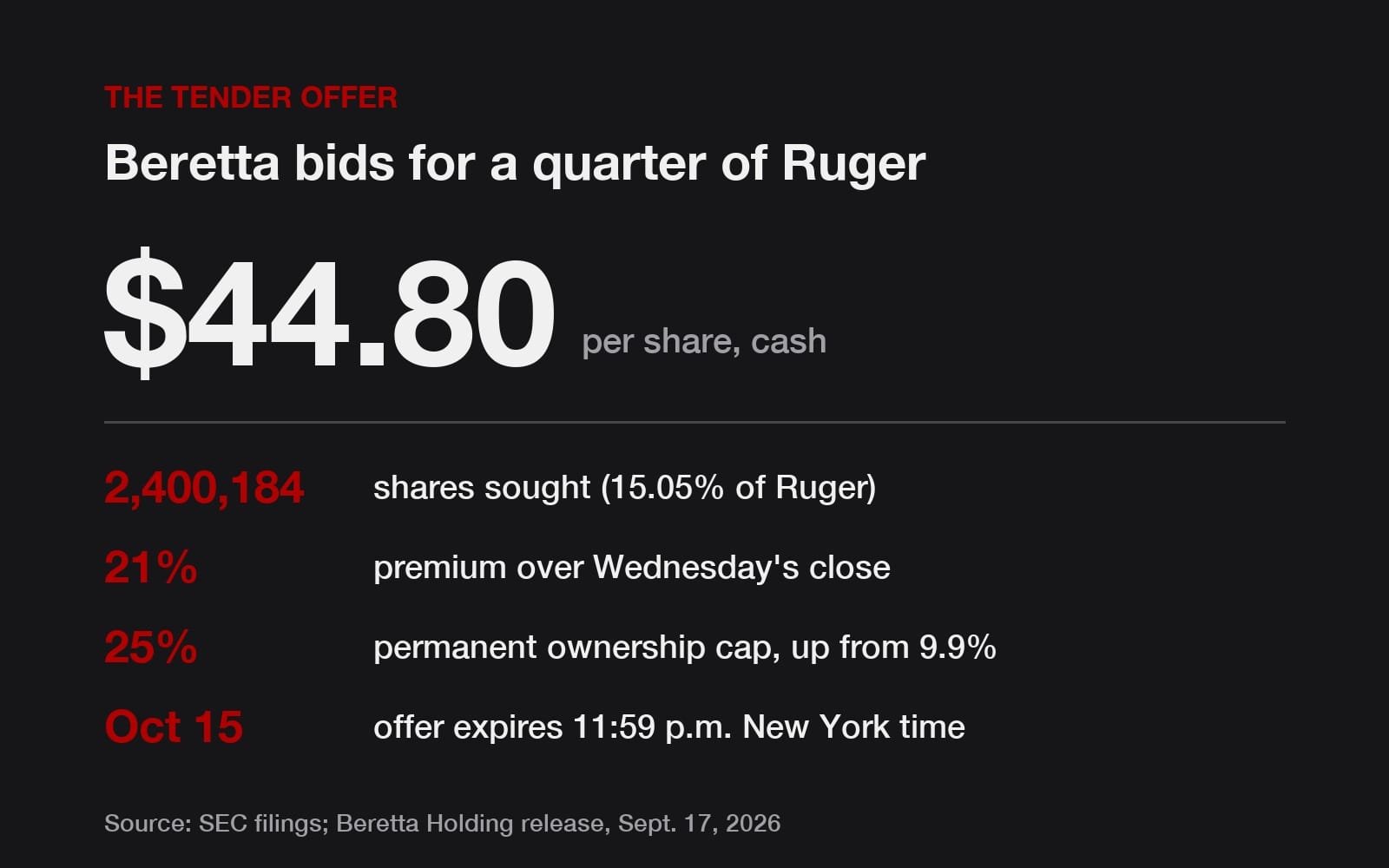
Read the price tag closely: That $44.80 was pegged back in the spring at roughly 20 percent over Ruger’s 60-day average trading price as of late March. Ruger shares drifted lower through the summer, so by Wednesday’s close the same number had grown into a 21 percent premium. Beretta wrote that floor price into the May agreement and honored it in a cheaper market, which tells you the point was never bargain hunting. The point is the seat at the table.
What changes at the gun counter: Nothing, tomorrow. Ruger stays a publicly traded American company run by the same board majority, building roughly 800 product variations across the Ruger, Marlin, and Glenfield brands in the same U.S. factories. Your 10/22 doesn’t acquire an Italian accent.
So no, “Beretta buying Ruger” outright isn’t what happened, and under this agreement it can’t happen before 2029 at the earliest. What did happen is consolidation. Beretta Holding already owns Benelli, Franchi, Sako, Tikka, Stoeger, Uberti, Burris, and Steiner; add a quarter of Ruger with two board seats, and one family in Italy now holds a position in a startling share of the guns and glass Americans actually buy.
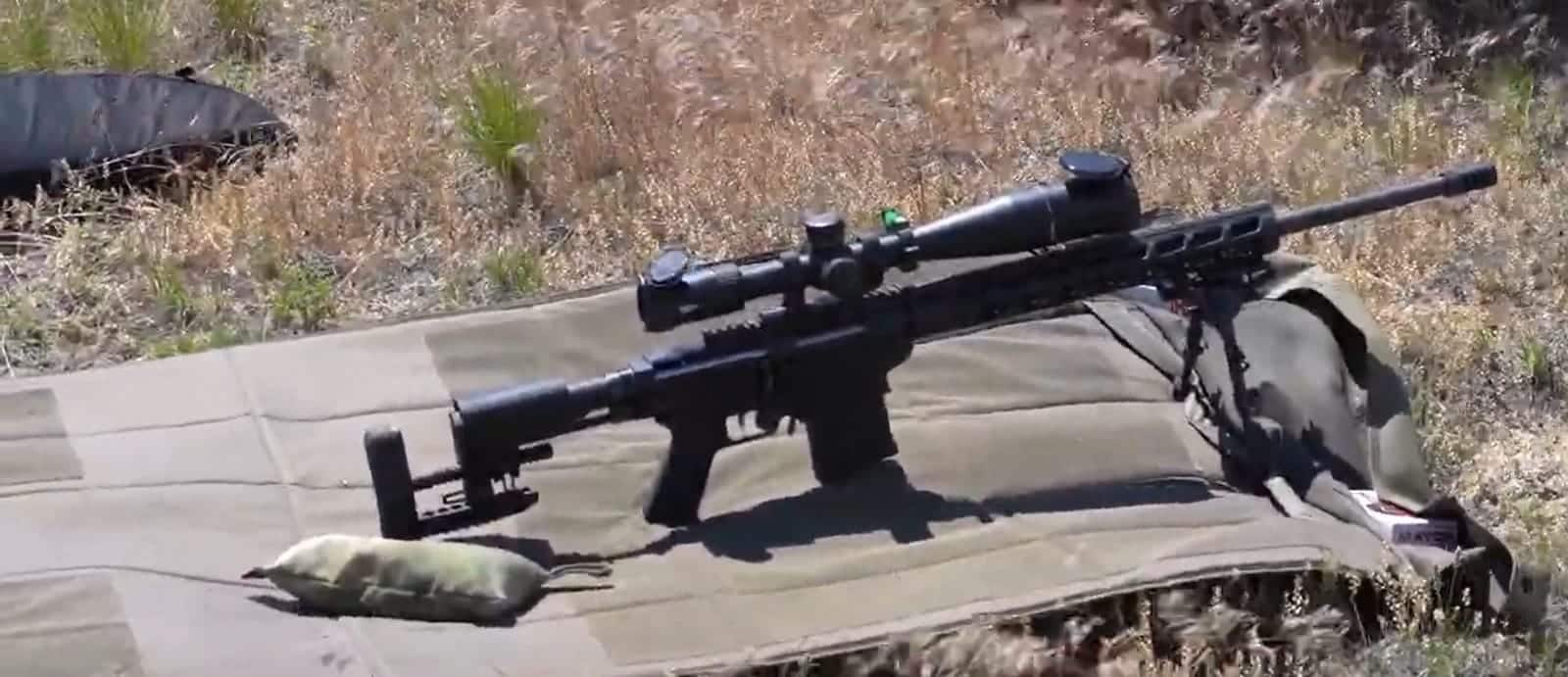
We know the catalog Beretta is buying into because we’ve shot a lot of it. Ruger’s AR-556 MPR holds down a slot in our best AR-15s guide, and the Mark IV and the Lite Rack LCP II both earned places in our best .22LR pistols roundup.
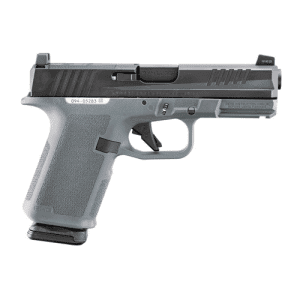
Ruger RXM (9mm, 15+1, Optics-Ready)
The RXM is the newest face of the catalog Beretta just bought into: Magpul frame, optics-ready slide, and street prices under $390. A lot of pistol for the money.
The objection worth answering: A foreign company buying into an iconic American gunmaker sounds like exactly the thing this audience should worry about, so let’s take it seriously instead of waving at it. CFIUS exists to catch national security problems with foreign ownership, and its approval wasn’t a courtesy here; it was a precondition written into the deal. The cap, the forced sell-down, and the independent-director requirement mean 25 percent buys Beretta influence and profit, not control.
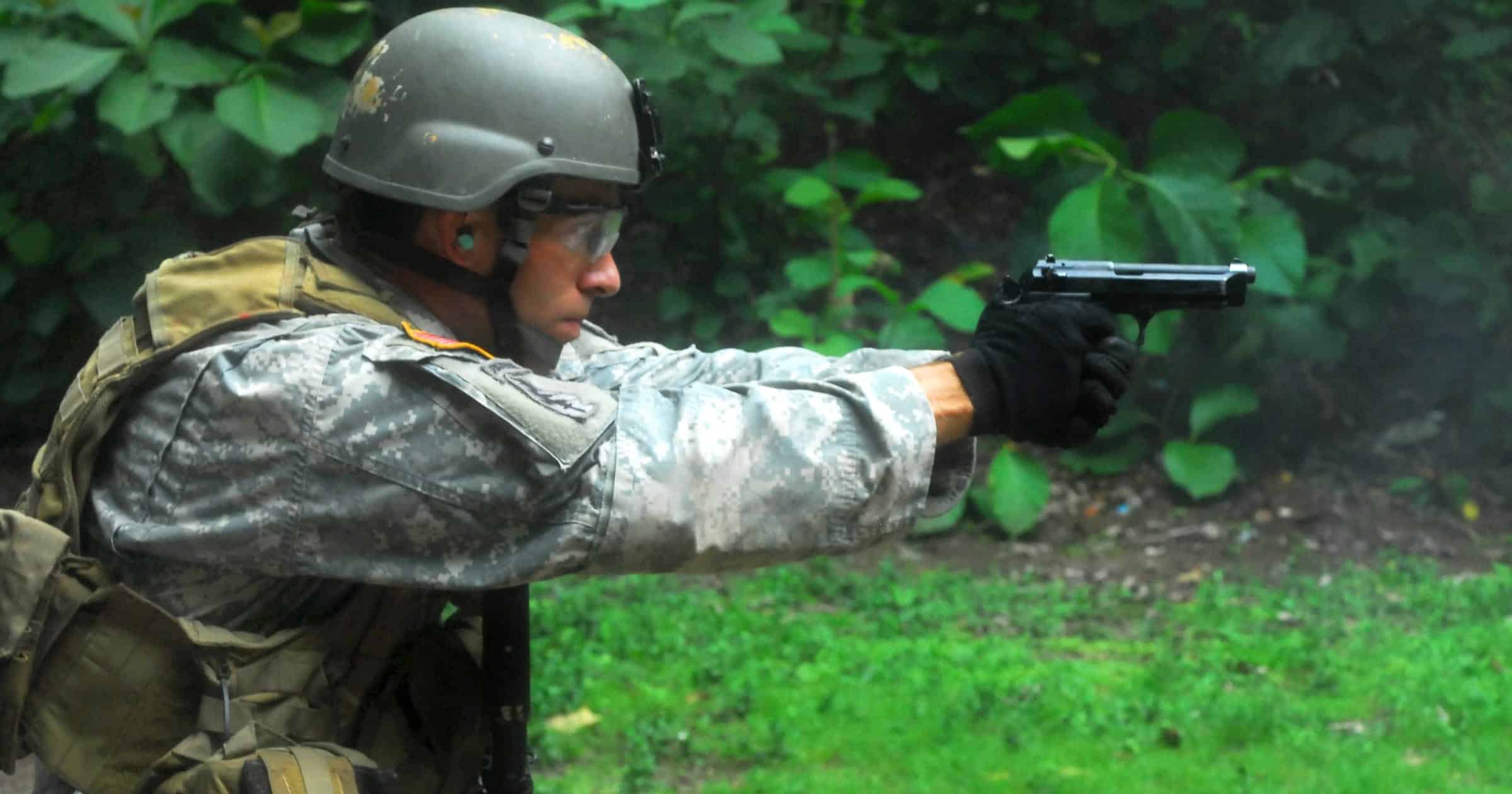
There’s also the part the worry skips: Beretta has been manufacturing on American soil since the 1980s. Its M9 served as the U.S. military’s standard sidearm for roughly three decades, built for most of that run in Maryland and later at Beretta’s plant in Gallatin, Tennessee. The buyer isn’t a stranger walking the fence line. It’s the neighbor who’s worked the next field since the Reagan administration.
The takeaway: The biggest strategic realignment the firearms industry has seen in years just happened without a takeover, without a bankruptcy, and without a single factory changing hands. Beretta paid a premium, in cash, for a permanently capped minority stake in American gun manufacturing. Sit with that for a second: the oldest gunmaker on the planet looked at the U.S. market, in this political climate, and decided a nine-figure bet on an American manufacturer was the smart play. That’s the story.
What to watch now: whether more than 2,400,184 shares get tendered by October 15 (if so, sellers are prorated), and who ends up in those two board seats. If you own the stock and you’re weighing whether to tender, that’s a question for your broker, not a gun site.
Would you be comfortable with Beretta holding a quarter of Ruger? Tell us in the comments.
And if the deal has you eyeing Ruger hardware, our deals page tracks verified prices from 25+ retailers, updated all day.
Sources: Ruger’s September 16 announcement and Form 8-K (SEC); the May 2 Cooperation Agreement Form 8-K (SEC); Beretta Holding’s September 17 tender offer release (PR Newswire). Featured photo: U.S. Army photo by Sgt. 1st Class Alejandro Licea, public domain.

Justin Trump is the managing editor and owner of CAT Outdoors. The son of a Vietnam veteran, he’s a Certified Glock Armorer, an avid gun enthusiast and 2A advocate. He holds two firearm patents for the CAT M4 and Talon tools. When not managing CAT Outdoors, he enjoys spending time with his family and friends, rooting for Michigan sports teams, and serving his church.